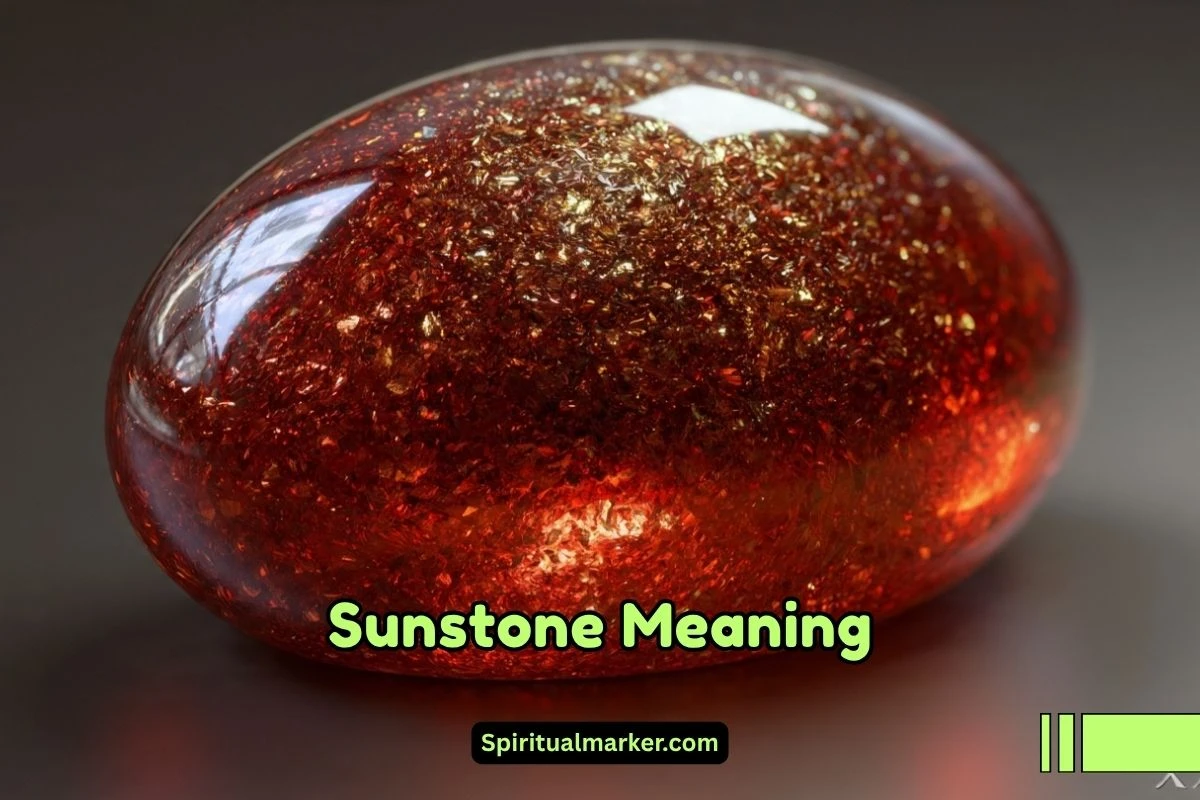
Have you ever picked up a sunstone and felt a sudden rush of warmth? Many people describe a quiet but noticeable shift the moment they hold this glittering gemstone for the first time. Its golden shimmer feels alive, almost like holding a fragment of sunlight captured in mineral form.
For centuries, people across multiple cultures have linked sunstone with the power, energy, and life-giving force of the sun. Ancient Viking navigators used it for direction. Norse mythology honored it as a sacred solar stone. Indigenous cultures across North America treated it with deep spiritual reverence. These traditions are not coincidental. They reflect a consistent human experience of sunstone’s radiant, warming, and uplifting energy.
Unlike stones associated with calm and stillness, sunstone carries a noticeably active quality. Its energy feels bright, motivating, and emotionally clearing. People dealing with low confidence, emotional fatigue, seasonal sadness, or creative blocks often feel drawn toward sunstone in ways that are difficult to explain logically. Crystal healers and spiritual practitioners across traditions consistently connect it with joy, personal power, vitality, and emotional liberation.
This article covers sunstone meaning, its spiritual symbolism, healing properties, historical background, and practical ways to use sunstone for personal and spiritual growth. You will also learn how to care for sunstone jewelry to preserve both its beauty and energetic quality.
5 Key Takeaways
- Sunstone symbolizes joy, personal power, confidence, vitality, and solar energy.
- Many spiritual traditions connect sunstone with the sacral and solar plexus chakras.
- People often use sunstone during meditation, confidence work, creative pursuits, and emotional healing.
- Sunstone contains a distinctive optical phenomenon called aventurescence, which creates its glittering, sun-like appearance.
- Wearing sunstone jewelry regularly may support feelings of warmth, self-worth, courage, and positive energy.
What is Sunstone?
Sunstone is a naturally occurring feldspar gemstone known for its dazzling metallic glitter effect. This visual quality comes from tiny reflective platelets of minerals embedded within the stone. When light hits those platelets, it scatters in warm, sparkling flashes that resemble sunlight dancing on water. Geologists call this optical effect aventurescence.
Most sunstones display warm colors ranging from pale golden yellow to deep orange, copper, and reddish brown. Some rare specimens even show green or blue tones, which are highly prized among collectors. The stone belongs to the feldspar mineral group, which includes several well-known gemstones such as moonstone and labradorite.
Many people draw comparisons between sunstone and moonstone because both belong to the feldspar family and carry strong spiritual symbolism. However, their energy feels notably different. Moonstone connects with feminine energy, intuition, and emotional tides. Sunstone carries masculine solar energy, associated with action, willpower, warmth, and outward expression.
Origins and Formation
Sunstone forms deep within the earth under conditions that involve slow cooling of mineral-rich magma. As magma cools, feldspar crystals develop and tiny copper, hematite, or goethite platelets align within the crystal structure. These platelets create the stone’s signature glittering appearance.
Several countries produce quality sunstone deposits. Oregon in the United States is one of the most celebrated sources globally. Oregon sunstone is unique because many specimens contain actual copper inclusions rather than hematite, giving them an unusually vivid shimmer. Other important sources include Norway, India, Canada, Russia, and Tanzania.
Norwegian sunstone holds particular cultural significance because of its historical connection with Viking maritime traditions. India produces large quantities of sunstone used widely in both jewelry and crystal healing markets today.
The stone’s formation inside volcanic rock adds to its symbolic meaning. Rising from heat, pressure, and geological force, sunstone literally forms within some of earth’s most energetically intense environments. This physical origin reinforces its reputation as a stone of strength, transformation, and radiant energy.
Key Properties
| Property | Details |
|---|---|
| Color | Golden yellow, orange, peach, copper, red-brown |
| Composition | Feldspar with copper, hematite, or goethite inclusions |
| Hardness | 6 to 6.5 on the Mohs scale |
| Chakra Association | Sacral chakra and solar plexus chakra |
| Symbolism | Joy, confidence, personal power, vitality, solar energy |
| Common Sources | Oregon (USA), Norway, India, Canada, Tanzania |
| Transparency | Transparent to translucent |
| Energy Style | Warm, motivating, empowering, emotionally uplifting |
Historical Use and Cultural Significance
Sunstone carries an extraordinarily rich historical background. Its connection with human civilization stretches back thousands of years across multiple cultures and continents.
Viking navigators reportedly used sunstone as a directional tool at sea. By holding the stone toward an overcast sky, they could reportedly locate the sun’s position even through dense clouds. Modern researchers at the University of Rennes in France conducted studies suggesting this technique was scientifically plausible based on sunstone’s polarizing light properties. This historical detail reveals that sunstone was not only spiritually meaningful but practically vital to one of history’s greatest seafaring civilizations.
In ancient Norse mythology, sunstone held sacred status. It appeared in the “Saga of King Olaf,” a medieval Norse text, as a navigational tool trusted in critical maritime situations. Norse culture viewed the sun as a divine force governing life, strength, and seasonal cycles. Connecting a gemstone with that solar power gave sunstone deep cultural and spiritual significance within those traditions.
Native American tribes in Oregon treated sunstone as a sacred gift from the earth. The Paiute people believed that sunstone carried the blood of a great warrior whose spirit passed into the stone. This belief gave Oregon sunstone a deeply personal spiritual meaning tied to courage, sacrifice, and enduring strength.
Ancient Greek and Roman civilizations associated sun-colored stones with solar deities such as Apollo and Sol. Golden, glittering stones were often offered at solar temples as symbols of divine radiance, abundance, and illumination.
In later metaphysical traditions spanning the 18th through 20th centuries, sunstone became associated with abundance, luck, and positive life force. Spiritual practitioners began using it to amplify personal energy, clear emotional blockages, and encourage confidence during personal reinvention.
5 Spiritual Meanings of Sunstone
1. Personal Power and Self-Confidence
Sunstone carries one of its most recognized spiritual meanings through its connection with personal power and self-confidence. People who feel emotionally diminished, uncertain about their direction, or trapped in patterns of self-doubt often find themselves drawn toward this stone with noticeable intensity.
Confidence is rarely a constant state. Most people experience fluctuating periods of self-assurance and self-doubt throughout their lives. Emotional setbacks, failed relationships, professional disappointments, or prolonged stress can quietly erode a person’s sense of inner strength over time. The damage often happens gradually and subtly. A person may not immediately recognize how significantly their confidence has shifted until they notice patterns of avoidance, hesitation, or emotional withdrawal.
Within crystal traditions, sunstone spiritually symbolizes the reclamation of personal power. Its bright, solar energy is believed to reconnect people with their natural vitality and inner authority. Rather than borrowing confidence from external validation, sunstone represents an internal rekindling. Many practitioners describe its energy as helping people remember their own strength when circumstances or emotions have temporarily obscured it.
This meaning carries particular importance because genuine confidence develops from emotional authenticity rather than performance. People sometimes confuse confidence with arrogance or emotional invulnerability. Sunstone’s symbolism reflects a different understanding. True personal power in sunstone traditions involves emotional honesty, willingness to act despite fear, and a steady belief in one’s inherent value. The stone represents empowerment rooted in self-awareness rather than emotional armor.
Many people also associate sunstone with leadership energy. Leaders, teachers, parents, and individuals in positions of responsibility frequently carry significant emotional weight. Sunstone symbolically supports those who must maintain personal strength while guiding, encouraging, or inspiring others. Its radiant energy reflects outward warmth alongside inner resilience.
2. Joy and Emotional Optimism
Sunstone holds strong spiritual symbolism connected with joy, emotional warmth, and optimism. Its radiant appearance naturally evokes sunny skies, warm light, and the emotional uplift that often follows periods of darkness. Within spiritual traditions, joy is rarely treated as a superficial emotion. It carries deep energetic significance as a sign of emotional alignment, authentic living, and inner peace.
Prolonged emotional heaviness can leave people feeling disconnected from their natural enthusiasm for life. Grief, disappointment, burnout, anxiety, or chronic stress may slowly dull emotional brightness. People may continue functioning outwardly while feeling emotionally flat, uninspired, or quietly hopeless about the future. Sunstone spiritually represents the return of authentic emotional warmth after difficult periods.
This connection with joy differs from artificial emotional positivity. Sunstone does not symbolize emotional denial or forced happiness. Its energy is often described as emotionally honest brightness, the kind that emerges when emotional burdens begin lifting rather than when they are simply ignored. That distinction makes its symbolism feel meaningful rather than hollow to many people.
Ancient solar traditions across multiple cultures recognized sunlight as the ultimate source of life, warmth, and renewal. Sunstone carries this solar symbolism internally. Its glittering appearance suggests light that radiates outward, which many practitioners interpret as the natural expression of inner joy that becomes visible once emotional blockages clear.
For many people, sunstone also symbolizes permission to feel good. After sustained difficult periods, some individuals feel unconsciously guilty about experiencing happiness. They may worry that feeling hopeful is naive, or that positive emotions will be quickly taken away. Sunstone’s spiritual meaning encourages releasing that emotional guardedness and allowing joy to be present without apology.
3. Abundance and Manifestation
Across spiritual traditions, sunstone carries a strong reputation as a stone of abundance and manifestation. Its association with solar energy connects it with themes of growth, fertility, harvests, and the expansion of life. Ancient cultures literally depended on the sun for agricultural survival, which created deep symbolic links between solar imagery and material abundance.
Manifestation in spiritual contexts refers to the process of aligning intention, energy, and action toward desired outcomes. It is not passive or purely magical in most serious spiritual frameworks. Rather, it involves emotional clarity about what one truly wants, release of conflicting fears or beliefs, and consistent movement toward meaningful goals. Sunstone is believed to support each of these stages in different ways.
Many practitioners associate sunstone with removing energetic and emotional obstacles that block personal progress. Fear of failure, fear of success, emotional ambivalence, or deeply rooted self-doubt may prevent people from pursuing their goals with full commitment. Sunstone symbolically clears these obstructions by strengthening confidence, brightening emotional outlook, and supporting decisive action.
Its connection with abundance is not limited to material wealth. Sunstone also symbolizes abundance of joy, vitality, creativity, love, and meaningful opportunity. Different people may feel drawn toward the stone for different forms of abundance depending on their personal needs and spiritual intentions.
This meaning becomes especially significant during transitions. Career changes, creative projects, business ventures, relationship beginnings, or personal reinvention all involve moving from a known position toward uncertain but potentially expansive territory. Sunstone spiritually supports this leap by reinforcing confidence, positive expectation, and emotional resilience.
4. Freedom and Independence
Sunstone holds a distinctive spiritual meaning connected with freedom, independence, and liberation from emotional restriction. Many people carry invisible emotional limitations created by past experiences, other people’s expectations, internalized criticism, or cultural pressures. These limitations often operate unconsciously, shaping behavior and emotional choices without the person fully recognizing their influence.
Within crystal traditions, sunstone represents the burning away of emotional restrictions. Much like sunlight disperses shadows and darkness, sunstone is believed to illuminate and dissolve emotional patterns that keep people feeling small, trapped, or emotionally dependent. This does not happen instantly. Most spiritual practitioners describe it as a gradual process of increasing emotional clarity and personal authenticity.
The symbolism of freedom appears across many cultures’ solar traditions. Sunrise represents the end of darkness and the beginning of possibility. Sunstone carries this same symbolic meaning into personal emotional experience. People often report feeling more energetically clear, more emotionally decisive, and more willing to act authentically after working with sunstone regularly.
Independence in sunstone traditions refers primarily to emotional self-sufficiency. This means developing a stable sense of self-worth that does not constantly depend on external approval, validation, or other people’s emotional management. Emotionally dependent patterns often develop during childhood or formative relationship experiences and may persist throughout adulthood. Sunstone symbolically encourages developing internal emotional strength alongside healthy external connections.
This freedom symbolism also extends into creativity. Creative independence involves the courage to express original ideas, perspectives, and artistic visions without excessive self-censorship or fear of judgment. Many artists, writers, musicians, and creative practitioners feel drawn toward sunstone because its energy symbolizes bold, authentic self-expression.
5. Vitality and Life Force
Sunstone is perhaps most consistently associated with vitality, physical energy, and life force across spiritual traditions and cultures. This connection feels almost instinctive because sunlight literally sustains biological life on earth. Every living organism depends on solar energy in some form. Sunstone’s visual resemblance to captured sunlight made ancient cultures associate it naturally with this same life-sustaining force.
Vitality differs from simple physical energy. It encompasses emotional enthusiasm, mental engagement, physical aliveness, and a general sense that life holds meaning and interest. Many people experience periods when these qualities collectively diminish, leaving them feeling exhausted, uninspired, emotionally flat, and physically depleted even without obvious illness. Spiritual practitioners often describe this state as depleted life force rather than specific disease.
Sunstone symbolically addresses vitality restoration on multiple levels simultaneously. Its energy is often described as warmly stimulating without being overwhelming. Unlike crystals associated with intense energetic activation, sunstone tends to provide consistent, sustainable uplift rather than sharp energetic peaks followed by crashes. This quality makes it particularly valued by people managing chronic fatigue, seasonal affective patterns, or extended emotional recovery periods.
Its connection with vitality also reflects purposeful living. True vitality in many spiritual traditions is not simply the absence of fatigue. It involves living in alignment with one’s genuine values, interests, and sense of purpose. Sunstone symbolically supports this alignment by strengthening both the emotional clarity to recognize genuine purpose and the personal power to pursue it actively.
6 Healing Properties of Sunstone
1. Emotional Upliftment and Depression Support
Sunstone is widely recognized in crystal healing traditions for its capacity to lift emotional heaviness and support people moving through depression, grief, and emotional darkness. Its bright, solar energy carries qualities directly opposite to the dense, withdrawn feeling states associated with emotional depression. Many practitioners describe it as one of the most emotionally brightening stones in crystal healing.
Depression and prolonged emotional heaviness affect a significant portion of the global population. The World Health Organization estimates that over 280 million people worldwide experience depression. While crystal healing traditions are not a replacement for professional mental health care, many people supplement their emotional healing journeys with supportive spiritual tools including gemstones. Sunstone occupies a notable position within these traditions because of its consistent association with joy, warmth, and emotional restoration.
One reason sunstone resonates strongly during depressive periods involves its symbolic contradiction of emotional darkness. When emotional heaviness makes the world feel gray, cold, and meaningless, sunstone’s warm glittering appearance provides a tactile and visual reminder of warmth and light. Many people find that working with sunstone during meditation or daily life gradually supports a subtle emotional shift toward greater brightness.
Crystal practitioners particularly associate sunstone with seasonal affective patterns, the emotional heaviness many people experience during dark winter months when sunlight becomes scarce. Its solar symbolism makes it a natural energetic companion during these periods, supporting warmth and vitality when the natural solar source temporarily retreats.
Importantly, sunstone’s support for emotional upliftment does not require people to suppress or deny difficult emotions. Its symbolism encourages genuine emotional movement rather than forced positivity. Many practitioners describe its energy as helping emotions begin moving again after periods of emotional stagnation, which is a fundamentally different experience from emotional masking.
2. Boosting Confidence and Overcoming Self-Doubt
Sunstone carries a strong healing reputation for rebuilding confidence and dismantling self-doubt. Many emotional wounds directly erode a person’s sense of self-worth over time. Persistent criticism, emotional manipulation, rejection, failure, or internalized shame may gradually convince people that they lack value, ability, or the right to pursue meaningful goals.
Within crystal traditions, sunstone symbolizes direct energetic opposition to self-diminishment. Its bright, assertive energy is believed to remind people of their inherent strength and capacity. This does not mean sunstone creates artificial bravado. Instead, many practitioners describe its energy as helping people reconnect with genuine self-trust that difficult experiences temporarily buried beneath layers of doubt.
Confidence healing with sunstone often involves regular intentional use during self-reflection practices. Holding the stone during journaling, affirmation work, meditation, or quiet contemplation may strengthen the emotional impact of these exercises. Sunstone’s solar symbolism reinforces messages of personal power and self-acceptance in ways that feel warm and emotionally grounded rather than performative.
The stone’s healing association with confidence also extends into social situations and communication. Many people with diminished self-worth struggle to speak honestly, assert needs, establish emotional boundaries, or share genuine opinions. Sunstone is often used by practitioners specifically to support clearer, more confident communication rooted in emotional authenticity rather than anxiety-driven accommodation.
3. Energizing the Body and Supporting Physical Vitality
Beyond emotional healing, sunstone carries a reputation in crystal traditions for supporting physical vitality, energy levels, and bodily warmth. While this remains within metaphysical rather than medical understanding, many people report noticeable shifts in their sense of physical aliveness when working regularly with sunstone.
Physical vitality in spiritual healing frameworks is often discussed alongside circulation, metabolic warmth, and digestive energy. Sunstone is frequently associated with these physical systems because of its warm orange and golden coloring, which practitioners connect symbolically with heat, activation, and physical fire. The stone is sometimes placed on the lower abdomen or solar plexus area during energy work focused on digestive strength and physical warming.
Crystal practitioners also associate sunstone with seasonal energy support. During winter months or extended periods of physical fatigue, sunstone’s solar symbolism makes it a popular choice for people seeking energetic support. Its warmth-associated qualities may help people feel more physically activated and less prone to the heaviness and inertia that often accompanies cold, dark seasons.
Sunstone’s physical healing associations should always be understood as complementary rather than medical. People experiencing serious physical health concerns should work with qualified medical professionals. Crystal healing traditions offer a parallel layer of symbolic and energetic support rather than clinical treatment.
4. Clearing Emotional Blockages
Sunstone holds a specific healing identity in crystal traditions as a stone that clears emotional and energetic blockages. Emotional blockages generally refer to stuck or suppressed emotional energy that prevents natural emotional flow. They may develop from unprocessed trauma, habitual emotional suppression, fear of emotional vulnerability, or prolonged emotional stress.
The consequences of emotional blockages vary widely between individuals. Some people notice emotional numbness or disconnection, struggling to feel genuine enthusiasm, joy, or emotional depth. Others experience chronic emotional irritability, emotional reactivity, or physical tension that seems disproportionate to their immediate circumstances. In spiritual healing frameworks, these patterns often reflect emotional energy that has not been allowed to process, move, and resolve naturally.
Sunstone is believed to bring emotional energy into movement through its warming, activating, solar qualities. Rather than forcing emotional confrontation, its energy is often described as gradually warming frozen emotional spaces until they become more fluid. This is similar to how sunlight slowly thaws frozen ground in early spring, a gradual, patient process of warming that enables life to begin moving again.
Many practitioners use sunstone during energy clearing sessions, combining it with breathwork, meditation, movement practices, or journaling to support emotional release. The stone’s warming energy is believed to create a safe internal environment where stuck emotions can surface and move without overwhelming the person experiencing them.
5. Supporting Creativity and Inspired Action
Sunstone carries strong associations with creative expression, artistic inspiration, and the courage to act on original ideas. Creative blocks are a common experience, affecting artists, writers, musicians, entrepreneurs, and anyone who engages in meaningful original work. These blocks often involve emotional components rather than purely intellectual limitations.
Fear of judgment, perfectionism, self-doubt, and emotional fatigue are among the most common roots of creative blocks. People may have genuinely exciting ideas while feeling emotionally unable to pursue them confidently. The internal critic grows louder than the creative impulse, and creative energy stagnates. Sunstone symbolically addresses this exact dynamic by strengthening the personal power and confidence necessary to create despite fear.
Within crystal traditions, sunstone is often called upon during creative projects that require bold, original expression. Its solar energy supports the kind of emotional openness and courageous visibility that authentic creative work demands. Many creative practitioners describe working with sunstone as helping them feel more emotionally engaged, more willing to experiment, and less paralyzed by fear of imperfection.
The stone’s connection with sacral chakra energy reinforces this creative association. The sacral chakra governs creativity, pleasure, passion, and emotional expression. Sunstone’s energetic relationship with this chakra supports the creative flow that emerges when passion and confidence align.
6. Strengthening Leadership and Purposeful Direction
Sunstone is frequently associated with leadership energy, purposeful direction, and the courage to lead with authentic authority. Leaders across all contexts including parents, teachers, business owners, community figures, and personal mentors carry significant emotional and energetic responsibility. Maintaining clarity, warmth, decisiveness, and personal grounding while guiding others requires considerable inner strength.
Crystal traditions connect sunstone with the qualities that effective, compassionate leadership requires. Confidence without arrogance. Warmth alongside firm decision-making. Visionary clarity combined with practical action. These qualities mirror sunstone’s symbolic identity as a stone that radiates outward warmth while maintaining a strong, stable center.
Many practitioners working in leadership development, coaching, or intentional personal growth use sunstone as a symbolic anchor for leadership intentions. Holding or wearing it during important decisions, challenging conversations, or periods requiring decisive action serves as an energetic reminder of personal strength and purposeful direction.
Sunstone’s healing role for leaders also involves replenishing emotional and energetic reserves. Leadership frequently draws from personal energy in demanding ways. Without consistent renewal, even naturally capable leaders may feel depleted, emotionally reactive, or increasingly uncertain. Sunstone’s solar symbolism represents the regenerative power of sunlight itself, offering consistent energetic renewal to those who carry significant personal responsibility.
How to Wear Sunstone Jewelry for Spiritual Growth
Wearing sunstone jewelry is one of the most popular and practical ways to maintain consistent energetic connection with the stone throughout daily life. The proximity of the stone to the body in wearable form allows its energy to remain present during moments of stress, creative work, social interaction, and personal reflection.
Sunstone pendants and necklaces worn at chest level align the stone with the solar plexus and heart area, combining its empowering and warming qualities with emotional openness. Many people find this placement particularly supportive during emotionally demanding workdays or challenging interpersonal situations.
Sunstone bracelets allow constant skin contact throughout daily activities. Many practitioners choose bracelet form specifically because they can glance at or touch the stone during moments when they need a confidence reminder or energetic grounding point. The stone remains visible and accessible without requiring deliberate ritual or pause.
Sunstone rings carry significance in traditions connected with personal authority and decisive action. Wearing sunstone on the dominant hand may symbolically support confident communication, clear decision-making, and purposeful expression during daily interactions.
Many people combine sunstone with complementary stones to create balanced energetic combinations. Carnelian amplifies creative energy and physical vitality alongside sunstone. Citrine strengthens abundance and positive manifestation themes. Clear quartz may amplify sunstone’s energy broadly. Moonstone creates an interesting solar-lunar balance that some practitioners find emotionally harmonizing.
Intention matters greatly in crystal traditions. Wearing sunstone with a clear personal intention related to confidence, creativity, joy, or vitality may strengthen its energetic significance in your daily experience.
Caring for Sunstone Jewelry
Sunstone requires thoughtful care to preserve both its physical beauty and long-term structural integrity. With a hardness rating of 6 to 6.5 on the Mohs scale, it is moderately durable but still susceptible to scratching from harder gemstones and surfaces.
Store sunstone separately from diamonds, sapphires, rubies, and other hard gemstones that could scratch its surface. Individual soft fabric pouches or padded jewelry compartments work best for preventing damage during storage or travel.
Clean sunstone gently using warm soapy water, a soft cloth, and a gentle brush. Avoid ultrasonic cleaners and steam cleaning, as these can damage the stone’s internal structure or cause fracturing. Harsh chemicals, bleach, and household cleaners should never contact sunstone.
Recharging sunstone energetically is a common practice in crystal traditions. Because sunstone carries solar energy, many practitioners recharge it by placing it in direct morning sunlight for short periods — usually one to two hours. Avoid prolonged intense sun exposure, which may fade its color over time. Other recharging methods include placing it on a selenite plate, with clear quartz clusters, or under the light of a full moon for a gentler energetic reset.
Cleansing sunstone removes accumulated energetic residue from daily wear. Running water, moonlight, sound cleansing (singing bowls, bells, or chanting), or smoke from sage or palo santo are all traditional methods. Many people prefer smoke cleansing for sunstone because the element of fire aligns with its solar nature.
Sunstone at a Glance
| Aspect | Summary |
|---|---|
| Primary meaning | Joy, personal power, confidence, vitality, solar energy |
| Best for | Confidence building, emotional upliftment, creative expression, leadership support |
| Chakra connection | Sacral chakra (second) and solar plexus chakra (third) |
| Complementary stones | Carnelian, citrine, clear quartz, moonstone, amber |
| Care level | Moderate — avoid hard gemstones, harsh chemicals, and prolonged intense sun |
| Hardness | 6–6.5 on Mohs scale |
| Common forms | Tumbled stones, pendants, bracelets, rings, raw specimens, meditation grids |
A Final Note
Sunstone is not a magical cure for life’s difficulties. No crystal is. What sunstone offers instead is something quietly powerful: a tangible, beautiful symbol of warmth, confidence, and the radiant energy that already exists within you. Its glittering flash of light mirrors the inner brightness that difficult seasons, emotional wounds, or self-doubt may have temporarily hidden from view.
Working with sunstone — whether through meditation, daily wear, or simply keeping a small piece on your desk — can gently remind you of your own resilience. The same sun that rises reliably each morning, warming the earth and sustaining all life, also lives symbolically within this ancient stone. And within you.
If you feel called to sunstone, trust that call. Sometimes the stones we reach for are exactly the ones that hold the energy we most need to remember in ourselves.
Let its warmth remind you: you are already enough, already bright, already powerful. Sunstone just helps you see what has always been true.