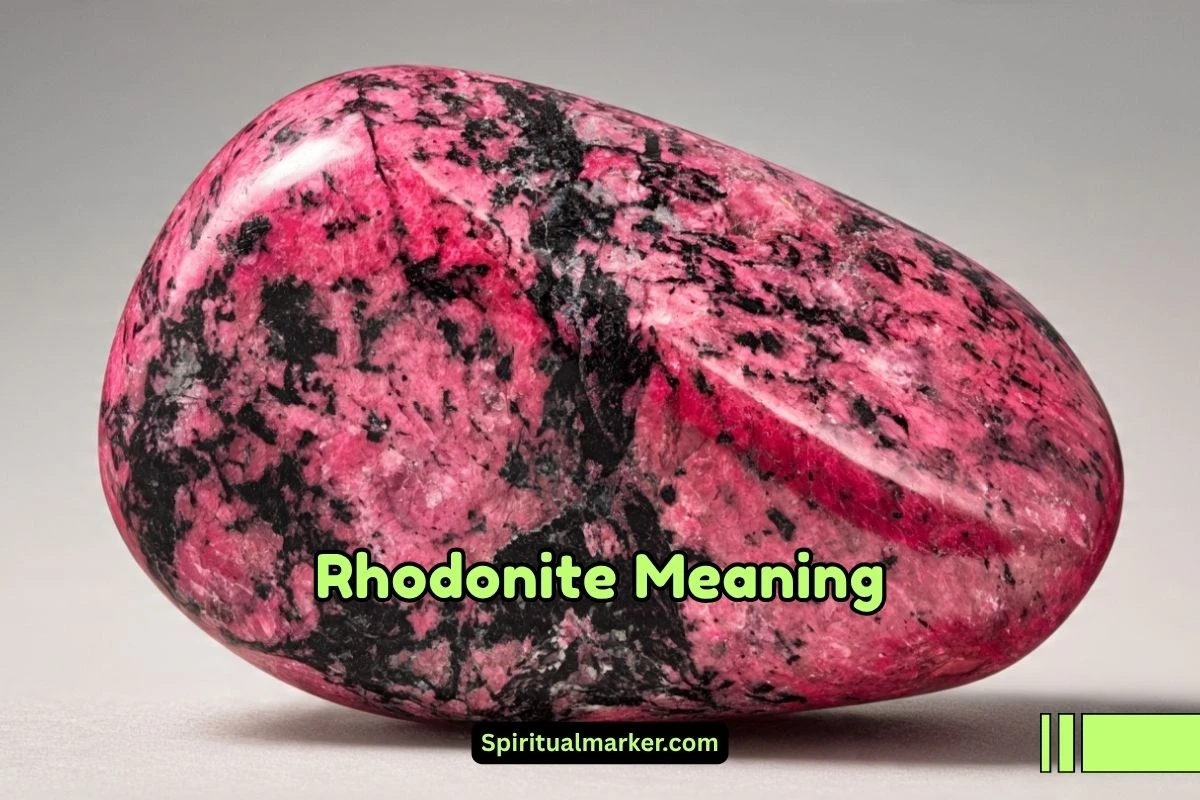
Have you ever picked up a piece of rhodonite and felt something shift quietly inside you? Many people describe a warm, grounding sensation the first time they hold this deep pink stone. That feeling is rarely accidental. Rhodonite carries a kind of emotional weight that feels both steady and comforting.
For centuries, people across different cultures have connected rhodonite with emotional healing, forgiveness, and compassionate love. It is not a stone that shouts for attention. Its beauty is rooted in contrast. Rich pink and deep black veins move across its surface like a map of emotional complexity. That visual story mirrors its spiritual meaning closely.
Crystal healers, spiritual practitioners, and gemstone enthusiasts recognize rhodonite as one of the most powerful stones for heart-centered healing. While rose quartz is often the first stone people associate with love, rhodonite carries a deeper, more mature energy. It does not simply open the heart. It helps the heart survive, recover, and grow stronger through pain.
This article covers the full meaning of rhodonite, its spiritual symbolism, healing properties, historical roots, and practical ways to use it for personal growth. You will also learn how to wear rhodonite jewelry and care for it properly.
5 Key Takeaways
- Rhodonite symbolizes emotional healing, forgiveness, compassion, and personal strength during adversity.
- The stone is strongly connected with the heart chakra and supports emotional recovery after grief, heartbreak, or trauma.
- Many spiritual traditions link rhodonite with self-worth, emotional balance, and compassionate communication.
- Rhodonite contains manganese silicate and ranges from pale pink to deep rose, often marked with striking black veins of manganese oxide.
- Wearing rhodonite jewelry close to the heart or skin may deepen feelings of emotional steadiness, compassion, and inner strength.
What is Rhodonite?
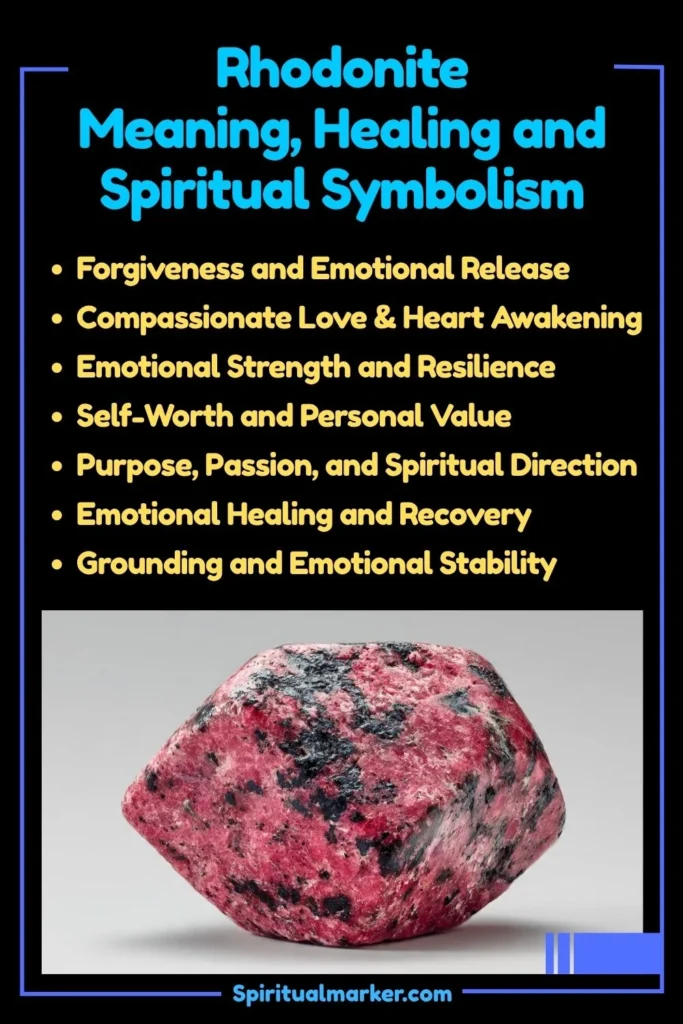
Rhodonite is a naturally occurring manganese silicate mineral prized for its rich pink to rose-red tones. Black veins of manganese oxide run through most specimens, creating a bold visual contrast that makes each piece entirely unique. No two pieces of rhodonite look identical, and that quality feels fitting for a stone so closely tied to personal emotional journeys.
The name rhodonite comes from the Greek word “rhodon,” meaning rose. That etymology reflects the stone’s most recognizable feature. Its colors range from soft blush pink to vivid crimson, sometimes deepening toward raspberry or brownish-rose depending on mineral composition and origin.
Many people confuse rhodonite with rhodochrosite because both are pink and both contain manganese. However, rhodonite tends to be darker, more opaque, and marked with dramatic black veining. Rhodochrosite is typically banded in lighter pink and white. Spiritually, rhodonite also carries a more grounded, emotionally resilient character compared to rhodochrosite’s softer, more dreamy energy.
Rhodonite sits at a hardness of 5.5 to 6.5 on the Mohs scale, making it moderately durable. It takes a good polish and appears frequently in rings, pendants, cabochons, and carved decorative pieces. Its combination of visual drama and emotional symbolism has kept it popular across many generations and cultural traditions.
Origins and Formation
Rhodonite forms through metamorphic and metasomatic processes in manganese-rich environments. It typically develops where hydrothermal fluids interact with sedimentary or volcanic rock containing high manganese concentrations. Over geological time, heat and pressure transform raw mineral deposits into the polished pink stone people value today.
Major rhodonite deposits exist across several countries. Russia has historically produced some of the finest specimens, particularly from the Ural Mountains where rhodonite was once carved into decorative objects for royalty. Other significant sources include Australia, Sweden, Peru, Tanzania, Canada, the United States, and Brazil.
Russian rhodonite holds particular cultural and historical importance. During the 19th century, the Tsars considered it a prestigious ornamental stone. Russian craftsmen carved it into vases, columns, picture frames, and decorative panels. This elevated its status beyond a simple gemstone and cemented its reputation as a stone worthy of deep cultural investment.
The black veining visible in most rhodonite specimens results from the natural oxidation of manganese at or near the surface. Some rare specimens appear nearly pure pink without significant black markings. These tend to be especially prized by collectors and often command higher prices in the gemstone market.
Key Properties
| Property | Details |
|---|---|
| Primary Color | Pink, rose-red, raspberry, sometimes brownish-pink |
| Composition | Manganese silicate |
| Hardness | 5.5 to 6.5 Mohs |
| Chakra Association | Heart chakra (primary), root chakra (secondary) |
| Primary Symbolism | Emotional healing, forgiveness, compassion, strength |
| Common Sources | Russia, Australia, Peru, Sweden, Canada, Brazil |
| Transparency | Opaque to translucent |
| Energy Style | Grounding, emotionally balancing, heart-centered |
Historical Use
Rhodonite’s history is rich with cultural significance. In ancient Russia, the stone was considered so precious that it was nicknamed the “Eagle Stone.” Russian folklore claimed eagles placed rhodonite near their nests to strengthen their offspring. Peasants adopted the tradition, carrying rhodonite as a protective talisman for newborns and travelers.
During the Romanov era, Russian imperial craftsmen used rhodonite extensively for decorative stonework in palaces and aristocratic homes. Sarcophagi, decorative urns, and wall panels made from rhodonite became symbols of prestige and refined taste. The stone’s beauty clearly impressed even the most powerful members of Russian society.
In South America, indigenous Andean communities recognized pink and red stones as symbols of deep emotional significance. While direct historical records specifically naming rhodonite are limited, the cultural tradition of valuing rose-colored stones for emotional and spiritual purposes remained consistent across the region.
In metaphysical traditions that developed through the 19th and 20th centuries, rhodonite became specifically associated with forgiveness, self-love, and emotional recovery. Healers began incorporating it into grief rituals, reconciliation ceremonies, and emotional balancing practices. Those traditions continue strongly today, particularly within crystal healing, holistic therapy, and mindfulness communities.
5 Spiritual Meanings of Rhodonite
1. Forgiveness and Emotional Release
Forgiveness sits at the very center of rhodonite’s spiritual identity. This meaning runs deeper than many people initially expect. Spiritual traditions rarely describe forgiveness as erasing painful memories or excusing harmful behavior. Instead, they frame it as releasing the emotional burden that unresolved pain places on the person carrying it.
Resentment, bitterness, and anger can stay active within the emotional body long after the original wound has passed. These feelings do not simply disappear with time. Many people carry them silently for years, allowing old pain to subtly shape current choices, relationships, and emotional reactions. Rhodonite spiritually represents the courage required to release that weight willingly.
The black veining within rhodonite carries symbolic meaning in many healing traditions. Some practitioners interpret the black as representing emotional shadow material, the painful, difficult, or unresolved emotional content that exists alongside the heart’s capacity for love. Rather than denying those darker emotional layers, rhodonite encourages honest acknowledgment of them.
Rhodonite also extends forgiveness symbolism toward the self. People frequently carry guilt, shame, or self-judgment for past mistakes, failures, or emotional reactions they regret. Spiritual traditions connected with rhodonite suggest that self-forgiveness forms the foundation of broader emotional healing. Without compassion toward oneself, extending genuine compassion toward others becomes significantly harder.
This spiritual meaning feels particularly powerful because forgiving does not require another person’s participation. It is an internal emotional choice. Rhodonite symbolizes the strength required to make that choice freely, even when pain still lingers honestly beneath the surface.
2. Compassionate Love and Heart Awakening
Rhodonite is often called the “stone of compassionate heart” in crystal traditions. This title reflects a specific kind of love. It is not the passionate, emotionally volatile love associated with early romance. Instead, rhodonite represents the mature, grounded love that withstands difficulty, sustains through conflict, and extends emotional care without losing personal boundaries.
Within many spiritual frameworks, compassionate love begins internally before flowing outward naturally. People who feel emotionally depleted, self-critical, or emotionally guarded often struggle to extend genuine warmth and patience toward others. Rhodonite spiritually encourages replenishing emotional reserves so compassion flows more naturally without emotional exhaustion.
The heart chakra plays a central role in this symbolism. When heart energy feels open and balanced, people generally find it easier to offer kindness, set healthy emotional limits, and communicate with empathy. Rhodonite is believed to gently strengthen heart chakra energy, creating emotional conditions where compassionate awareness develops more consistently.
Its symbolism also includes love expressed through action rather than sentiment alone. Compassionate love in rhodonite’s spiritual tradition often refers to practical emotional care. Showing up for others during difficulty, choosing patience over reaction, and prioritizing emotional honesty in relationships all reflect the kind of love rhodonite represents spiritually.
Many practitioners believe rhodonite carries an energy that helps people distinguish healthy love from emotionally enmeshed attachment. This distinction proves important because people sometimes confuse emotional dependency or people-pleasing with loving devotion. Rhodonite symbolizes love that remains emotionally clear, boundaried, and genuinely nurturing rather than driven by fear or emotional scarcity.
3. Emotional Strength and Resilience
Rhodonite holds a distinctive position among heart-centered stones because it symbolizes emotional strength alongside emotional softness. Many crystals associated with the heart chakra emphasize gentleness, peace, and emotional vulnerability. Rhodonite adds a layer of resilience. It does not only represent healing. It represents the inner toughness required to survive emotional hardship without becoming emotionally closed.
The stone’s visual character reinforces this symbolism powerfully. Soft pink and hard black exist together across its surface without one canceling the other out. That visual contrast mirrors the spiritual teaching that strength and tenderness coexist naturally in emotionally healthy individuals. Neither quality requires the other to disappear for balance to exist.
People experiencing grief, loss, or major disappointment often feel torn between emotional softness and emotional self-protection. Allowing vulnerability feels risky during painful periods. Yet complete emotional shutdown creates its own long-term difficulties. Rhodonite spiritually represents finding the middle ground between open vulnerability and protective strength.
Emotional resilience in rhodonite’s tradition is not about suppressing pain or forcing positivity. It involves developing the capacity to feel difficult emotions fully while maintaining enough inner stability to keep moving forward. Many practitioners describe this quality as emotional groundedness within emotional pain, and they consider rhodonite one of the most supportive stones for developing it.
This symbolism has made rhodonite particularly meaningful for people recovering from trauma, abuse, prolonged grief, or major emotional setbacks. Its energy is believed to help individuals rebuild emotional durability without hardening into emotional detachment. That balance forms one of the most important aspects of its spiritual identity.
4. Self-Worth and Personal Value
Self-worth represents another significant spiritual theme within rhodonite’s meaning. After emotional wounds, rejection, criticism, or repeated disappointment, people frequently internalize negative messages about their own value. Shame, self-doubt, emotional inadequacy, and chronic self-criticism may develop quietly over time, especially when painful experiences occur repeatedly.
Rhodonite spiritually represents the process of reclaiming personal value not through achievement or external validation, but through honest emotional self-awareness. Many healing traditions argue that genuine self-worth grows from emotional authenticity. A person must know and accept themselves honestly, including difficult emotional patterns and personal limitations, before confidence can develop on solid ground.
Its deep pink color traditionally connects with the warmth of compassionate self-regard. Some emotional healing frameworks suggest that the quality of attention people direct toward themselves closely mirrors how they relate to others. A person who genuinely respects and cares for their own emotional well-being usually brings greater emotional honesty and patience into relationships.
Rhodonite symbolizes the specific emotional work of challenging internalized criticism with self-compassion. When harsh internal dialogue becomes habitual, a person begins filtering most experiences through a lens of inadequacy. Spiritually, rhodonite encourages a gradual shift away from that pattern, not through toxic positivity, but through honest, grounded emotional reorientation.
Many practitioners also link rhodonite with emotional boundaries as an expression of self-worth. People who struggle with self-worth often find boundary-setting difficult because they fear rejection, conflict, or appearing selfish. Rhodonite’s spiritual energy is believed to support clearer boundary awareness rooted in genuine self-respect rather than emotional defensiveness.
5. Purpose, Passion, and Spiritual Direction
Beyond emotional healing, rhodonite carries a lesser-known but equally meaningful spiritual symbolism connected with purpose and life direction. In many crystal traditions, it is viewed as a stone that supports people during periods of personal reinvention, career transitions, creative awakening, or major life changes when the path forward feels genuinely unclear.
This symbolism connects with rhodonite’s capacity to help people access their authentic emotional core. When people feel emotionally disconnected, they often also feel disconnected from what genuinely motivates them. Passion and purpose rarely thrive within emotional numbness, suppression, or chronic self-doubt. Rhodonite’s spiritual energy is believed to help people reconnect with their deeper emotional landscape, which often reveals clearer information about personal calling and direction.
The stone is sometimes associated with creative purpose specifically. Artists, writers, musicians, healers, and others engaged in creative or service-oriented work sometimes find rhodonite emotionally supportive during periods of creative difficulty or motivational stagnation. Its energy is believed to gently reignite emotional investment in work that carries personal meaning.
Spiritually, rhodonite connects purpose with compassionate contribution. Rather than framing ambition purely in terms of personal achievement, it encourages viewing meaningful work as an expression of genuine care for others. Many healing traditions suggest the most fulfilling life directions naturally integrate personal strengths with opportunities to offer real emotional or practical value to the broader community.
This expanded spiritual meaning makes rhodonite relevant beyond purely personal emotional healing. Its symbolism stretches into vocational purpose, creative integrity, and soul-directed living, which helps explain its broad and enduring appeal across different spiritual backgrounds and personal circumstances.
6 Healing Properties of Rhodonite
1. Emotional Healing and Recovery
Rhodonite is most widely recognized for its powerful association with emotional healing. Crystal practitioners and spiritual healers consider it one of the most reliable stones for supporting recovery after significant emotional pain. Whether the source of pain is heartbreak, grief, betrayal, loss, or prolonged emotional trauma, rhodonite is believed to provide a grounding emotional presence during the healing process.
Its healing symbolism centers on the concept of emotional integration rather than emotional suppression. Many people instinctively avoid fully feeling painful emotions because the intensity feels threatening or unmanageable. Avoidance may provide short-term relief. Over time, however, unprocessed emotional pain tends to resurface in other forms. Rhodonite spiritually encourages the careful, gradual processing of difficult emotions rather than their suppression.
Within crystal healing traditions, rhodonite is believed to help people locate and gently release emotional blockages that have accumulated over time. These blockages often develop in response to repeated painful experiences, particularly in childhood or within long-term relationships. When emotional energy remains trapped by old wounds, current relationships and emotional reactions can be unconsciously shaped by those past experiences.
Many people report that working with rhodonite during grief recovery feels particularly meaningful. Grief is one of the most emotionally complex human experiences. It involves sadness, anger, confusion, disorientation, guilt, and sometimes unexpected moments of peace existing simultaneously. Rhodonite’s energy is described as emotionally steadying during this difficult and nonlinear process, helping people feel less alone within their emotional experience.
Its healing reputation also includes support during relationship endings. When significant relationships conclude, people often feel the loss of their emotional identity as much as the loss of the person themselves. Rhodonite symbolically supports the process of rebuilding emotional identity from a foundation of self-awareness and self-compassion during those vulnerable transitional periods.
2. Managing Anxiety and Emotional Overwhelm
Rhodonite has earned recognition within spiritual healing traditions as a calming stone for anxiety and emotional overwhelm. While it is not typically described as sedating or heavily tranquilizing in energy, its grounding quality is believed to create emotional steadiness that reduces reactive anxiety.
Anxiety frequently involves emotional hypervigilance, the sense that the nervous system remains constantly alert for potential threats even in safe environments. People dealing with anxiety often experience racing thoughts, emotional irritability, difficulty concentrating, chronic tension, or a persistent sense of dread. Rhodonite’s spiritual energy is believed to help anchor emotional awareness in the present moment, reducing the pull toward anxious future-focused thinking.
Its connection with the heart chakra becomes relevant here because anxiety often involves a disconnect between what the mind perceives as threatening and what the heart knows as emotionally true. Heart chakra imbalance can manifest as fear-based emotional reactions, difficulty trusting others, or chronic emotional guardedness. Rhodonite’s energy is believed to gently bridge this gap, helping people respond to life from a more emotionally grounded center.
Rhodonite also carries symbolism related to emotional overwhelm, specifically the experience of feeling flooded by emotions that feel too large to process at once. During crisis periods, significant losses, or sudden life changes, emotional overwhelm can become debilitating. Many practitioners place rhodonite nearby during these periods, believing its grounding energy helps contain emotional flooding without suppressing emotional expression entirely.
The stone’s combination of calming pink energy and stabilizing black manganese reflects its dual role in anxiety management. The pink represents emotional warmth and safety. The black represents grounding and structural support. Together they symbolize an emotional environment where difficult feelings can exist without becoming catastrophic.
3. Supporting Forgiveness and Releasing Resentment
Within crystal healing practice, rhodonite is considered one of the most effective stones for supporting active forgiveness work. This healing property closely reflects its primary spiritual symbolism. Forgiveness is rarely a single emotional moment. It usually unfolds as a gradual process requiring repeated emotional choices, compassionate self-awareness, and significant patience.
Resentment is emotionally costly. Research in psychology consistently supports what spiritual traditions have long suggested. Carrying prolonged anger, bitterness, or unresolved grudges correlates with elevated stress, reduced emotional well-being, and sometimes measurable impacts on physical health. The emotional energy required to maintain resentment actively depletes resources that could otherwise support healing, creativity, and healthy relationship-building.
Rhodonite’s healing role in this context is not to force premature forgiveness or emotionally bypass legitimate pain. Its energy is believed to help people approach painful memories with slightly greater emotional distance, making the process of examining and releasing old wounds feel less emotionally overwhelming. Many practitioners describe this as emotional softening rather than emotional erasure.
The stone is sometimes incorporated into formal forgiveness rituals within spiritual communities. These rituals vary widely. Some involve meditation with the stone while silently acknowledging specific emotional wounds. Others include journaling, prayer, ceremonial release practices, or compassion-focused visualization. Rhodonite serves as a physical anchor for the emotional and spiritual intention behind these practices.
Its healing support for forgiveness also extends to releasing self-blame and internalized shame. People who have experienced trauma, abuse, or significant failure often carry disproportionate self-directed guilt long after events have passed. Rhodonite symbolically supports the process of examining those internalized narratives honestly while developing more balanced and compassionate self-assessment.
4. Strengthening Relationship Bonds
Rhodonite appears frequently in healing practices focused on relationships because of its deep connection with compassion, emotional honesty, and forgiveness. Relationships of all kinds accumulate emotional scar tissue over time. Misunderstandings, communication failures, unspoken resentments, and unresolved conflicts slowly create emotional distance that can feel difficult to bridge.
Many practitioners believe rhodonite encourages emotionally honest communication during relationship repair. One of the most common barriers to meaningful reconciliation involves emotional defensiveness. When people feel emotionally threatened within conversations, they often respond with withdrawal, aggression, or deflection rather than genuine openness. Rhodonite’s calming heart-centered energy is believed to reduce that defensive reactivity, creating slightly more emotional safety for honest dialogue.
Its healing symbolism extends to the dynamics of giving and receiving emotional care within relationships. People who have experienced emotional wounds sometimes develop asymmetrical emotional patterns. They may give emotional support readily while struggling to receive it gracefully, or they may become emotionally demanding while offering little in return. Rhodonite is believed to support greater emotional reciprocity by encouraging both emotional generosity and emotional receptivity.
The stone also carries healing significance for family relationships specifically. Family dynamics often contain some of the deepest and oldest emotional wounds because early relational experiences shape foundational emotional patterns. Healing family-based wounds usually requires sustained emotional patience, compassionate communication, and willingness to examine personal emotional contributions to longstanding patterns. Rhodonite spiritually supports all three of these qualities.
In broader relational contexts, rhodonite symbolizes the importance of emotional repair over emotional abandonment. While some relationships do need to end, many can heal meaningfully when both parties engage in honest, compassionate emotional work. The stone reflects the possibility of genuine emotional reconnection even after significant relational rupture.
5. Grounding and Emotional Stability
Rhodonite is somewhat unusual among heart-centered stones because it connects with both the heart chakra and the root chakra. Most pink stones work primarily with heart energy. Rhodonite’s black manganese component gives it an additional grounding quality that anchors emotional healing in physical and practical reality.
This dual chakra connection creates a distinctive healing signature. Emotional healing that lacks grounding can sometimes lead to emotional volatility, spiritual bypassing, or difficulty translating inner healing into practical life changes. Conversely, strong grounding energy without heart-centered balance can lead to emotional suppression or disconnection from deeper emotional needs. Rhodonite bridges these tendencies by supporting both simultaneously.
Many practitioners use rhodonite specifically when emotional healing work needs to become more practically integrated. When emotional insights are gained through therapy, spiritual practice, or personal reflection, they require grounding in behavioral, relational, and practical life changes before they produce lasting transformation. Rhodonite’s healing energy is believed to support this integration process.
Its grounding quality also makes rhodonite particularly helpful during periods of emotional instability or crisis. When overwhelming events destabilize emotional equilibrium, the ability to remain functionally grounded while processing intense emotions becomes critically important. Rhodonite symbolizes the capacity to feel deeply without losing practical stability.
Many people experience this quality as a sense of being emotionally held when working with rhodonite. That sense of containment does not suppress emotional expression. Instead, it creates the emotional safety necessary for deeper healing to unfold at a manageable pace rather than in overwhelming emotional surges.
6. Awakening Compassion for Others
Rhodonite’s healing properties extend beyond personal emotional experience into interpersonal compassion. Many practitioners believe working with this stone gradually expands a person’s capacity to feel and express genuine empathy toward others, particularly toward people they find difficult, misunderstood, or emotionally challenging.
Compassion fatigue is a well-documented phenomenon among caregivers, therapists, medical professionals, parents, and others in sustained helping roles. When compassionate individuals give emotional energy consistently without adequate replenishment, their capacity for genuine empathy can diminish significantly. Rhodonite’s healing energy is sometimes specifically used to restore depleted compassionate capacity in people experiencing emotional burnout within caregiving roles.
The stone also encourages what many traditions describe as unconditional compassion, extending care and patience toward people regardless of whether they have earned it through behavior. This does not mean tolerating harmful treatment or abandoning personal boundaries. It refers to the internal emotional choice to view others, including people who have caused pain, with a degree of compassionate understanding of their own suffering and limitations.
Many healing traditions suggest that compassion and boundaries coexist naturally in emotionally healthy individuals. Rhodonite symbolizes this combination. Its energy is believed to help people extend genuine warmth without abandoning personal emotional integrity. This balance proves especially important for individuals recovering from relationships involving emotional manipulation, emotional neglect, or chronic conflict.
Developing broader compassion through rhodonite work is also connected with reduced interpersonal reactivity. When people feel genuinely secure and compassionate internally, they tend to respond to others’ difficult behavior with greater patience rather than immediate defensiveness. Rhodonite’s healing energy supports this shift from reactive to responsive emotional engagement.
How to Wear Rhodonite Jewelry for Spiritual Growth
The most spiritually significant way to wear rhodonite involves keeping it close to the heart. Pendants and necklaces worn at chest height align the stone directly with heart chakra energy. Many people wear rhodonite pendants during emotionally challenging periods, grief recovery, relationship work, or any time they need a grounding reminder of their own compassionate strength.
Rhodonite rings carry their own significance. Some practitioners believe wearing the stone on the hands brings greater emotional awareness into daily interactions and conversations. The hands are instruments of both giving and receiving. Rhodonite on the hands may reinforce the energy of balanced emotional exchange in relationships throughout the day.
Bracelets and bangles allow consistent physical contact with the stone, which many people find comforting during stressful situations. Feeling the stone against the skin during difficult moments provides a tactile anchor for emotional grounding. Some individuals wear rhodonite bracelets specifically during periods of anxiety, emotional overwhelm, or interpersonal tension.
Many practitioners combine rhodonite with complementary stones. Rose quartz amplifies gentle love and emotional softness. Black tourmaline deepens the grounding and protective qualities already present in rhodonite’s black veining. Rhodochrosite enhances joy, self-love, and emotional openness alongside rhodonite’s more resilient emotional healing energy.
Some people wear rhodonite during therapy sessions, healing conversations, or emotionally significant rituals. Others keep it on during meditation, journaling, or prayer. The most important factor is personal resonance. Wear rhodonite in ways that feel emotionally meaningful and practically comfortable for your specific healing intentions.
Caring for Rhodonite Jewelry
Rhodonite requires thoughtful but not complicated care to maintain its beauty over time. Its hardness of 5.5 to 6.5 means it is reasonably durable but still vulnerable to scratching from harder gemstones. Store rhodonite separately in a soft fabric pouch or padded jewelry box, away from diamonds, sapphires, or other hard stones.
Clean rhodonite with lukewarm water, mild soap, and a soft cloth. Gently wipe the surface and rinse thoroughly. Avoid ultrasonic cleaners and steam cleaning machines, both of which can damage rhodonite’s structure over time. Harsh chemical cleaners and abrasive polishing cloths should also be avoided.
Remove rhodonite jewelry before swimming, intense physical activity, or household cleaning. Chlorinated water can gradually affect certain mineral compositions. Physical impact can chip or crack the stone if it strikes hard surfaces during activity.
For energetic cleansing, many practitioners prefer placing rhodonite under moonlight overnight, particularly during the full moon. Others use sound cleansing with singing bowls or tuning forks, burying the stone briefly in dry sea salt, or placing it near cleansing herbs. Choose whatever method aligns with your own spiritual practice and personal comfort.
Avoid prolonged direct sunlight exposure with rhodonite. Extended ultraviolet exposure may gradually fade some gemstones’ color saturation. Keeping rhodonite out of direct sun during storage preserves its richness longer.
Rhodonite at a Glance
| Aspect | Details |
|---|---|
| Primary Meaning | Emotional healing, forgiveness, compassionate strength |
| Chakra Association | Heart chakra (primary), root chakra (secondary) |
| Main Spiritual Symbolism | Forgiveness, self-worth, resilience, compassion |
| Common Colors | Deep pink, rose-red, raspberry, with black veining |
| Hardness | 5.5 to 6.5 Mohs |
| Main Sources | Russia, Australia, Peru, Sweden, Canada, Brazil |
| Emotional Associations | Healing, forgiveness, courage, emotional stability |
| Popular Jewelry Types | Pendants, rings, bracelets, cabochons |
| Spiritual Uses | Grief healing, meditation, forgiveness rituals, grounding |
| Care Needs | Gentle cleaning, avoid hard impact and prolonged sunlight |
A Final Note
Rhodonite stands apart from many healing stones because its symbolism holds emotional complexity without pretending pain does not exist. Its black and pink surface tells an honest story. Love and loss, strength and vulnerability, softness and resilience are present together.
People are drawn to rhodonite during life’s most emotionally demanding chapters. Heartbreak, grief, self-doubt, resentment, and exhaustion all fall within the emotional territory this stone addresses. Its spiritual meaning does not promise an instant cure for those experiences. It represents the patient, grounded, heart-centered work of moving through them with greater compassion and emotional courage.
Whether you approach rhodonite through a spiritual lens or simply appreciate its striking natural beauty, its symbolism remains compelling. It reminds you that healing is not weakness. Forgiveness is not surrender. Compassion is not naivety. These qualities reflect genuine emotional strength.
If rhodonite resonates with you, consider carrying it during emotionally significant periods, wearing it close to your heart, or placing it in spaces where you do your inner work. You might also pair it with journaling, professional counseling, mindfulness practices, or other healing modalities to create a broader and more integrated approach to emotional well-being.