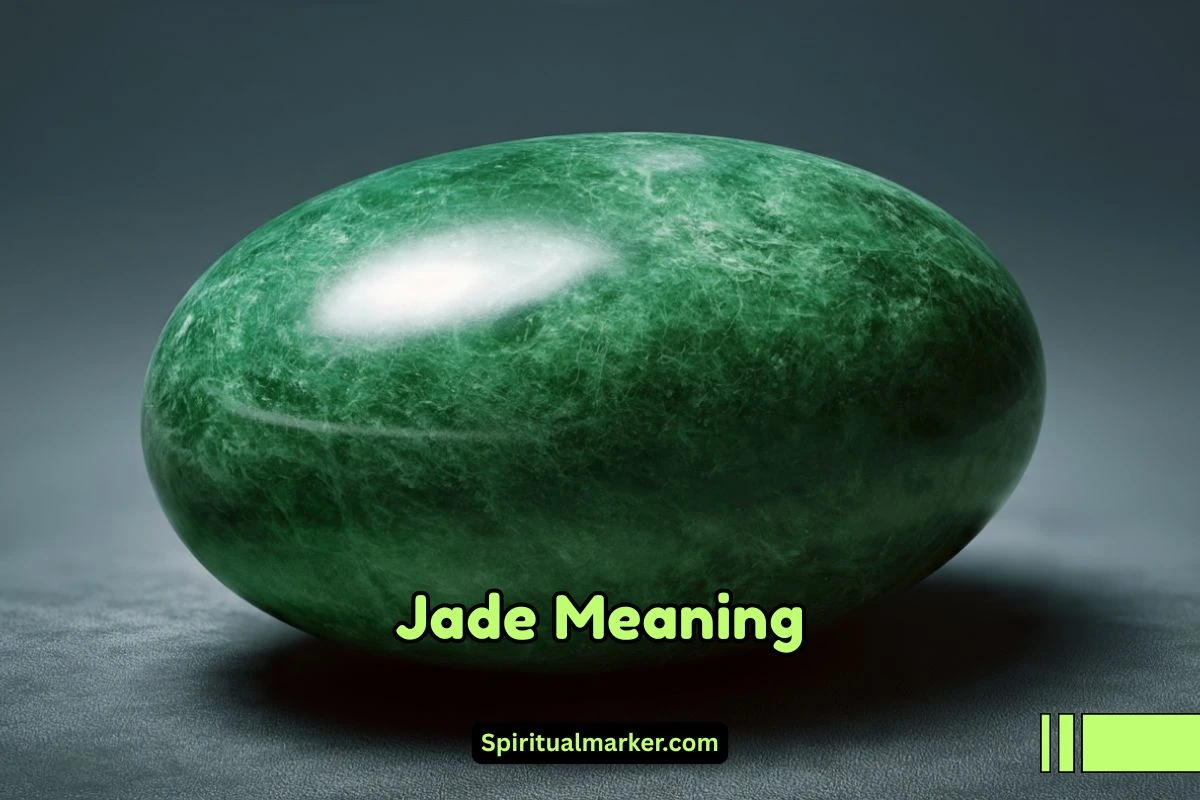
Jade is a stone of harmony and prosperity. Its smooth, green surface feels cool and calming. In spiritual practice, this stone carries protective and nurturing energy.
The jade meaning often involves prosperity, harmony, and emotional healing. It is a stone of the heart chakra, helping to attract love and abundance. A spiritual meaning of green jade shares that jade focus, though green jade carries a more specific energy.
Jade is used in crystal healing to attract luck, soothe emotions, and support physical healing. It can also symbolize wisdom and tranquility. The stone's energy is gentle and steady.
If you feel drawn to jade, it may signal a need for balance. A spiritual meaning of nephrite jade also deals with jade, though nephrite carries a more protective energy.
Key Takeaways
- Jade symbolizes wisdom, harmony, protection, abundance, and emotional strength across multiple ancient cultures.
- Two distinct minerals, nephrite and jadeite, are both called jade but differ in composition, hardness, and color variety.
- Jade connects primarily with the heart chakra and secondarily with the sacral and root chakras.
- Ancient civilizations including Chinese, Mayan, Aztec, and Maori cultures valued jade as sacred above nearly every other material.
- Wearing jade jewelry close to the skin is traditionally believed to strengthen emotional balance, spiritual clarity, and personal protection.
What Is Jade?
Jade is a broad term that actually refers to two distinct minerals. Nephrite and jadeite are both called jade, though they differ in mineral composition, hardness, and the range of colors they naturally display. Most people use the word jade without realizing these are technically separate gemstones with different geological origins.
Nephrite is the more common of the two. It belongs to the amphibole mineral group and typically appears in shades of green, cream, white, gray, and sometimes black. Its texture is famously smooth and dense. Nephrite has a slightly lower hardness than jadeite but compensates with exceptional toughness. It resists fracturing better than most minerals, which is one reason ancient cultures used it to carve tools and weapons.
Jadeite is rarer and generally considered more valuable. It belongs to the pyroxene mineral group and displays a wider color range, including intense greens, lavender, white, red, orange, yellow, and black. The most prized variety is called Imperial Jade, a vivid emerald-green jadeite found almost exclusively in Myanmar. Imperial Jade commands extraordinary prices in gemstone markets because of its rarity, color intensity, and cultural significance.
Both types share the name jade and carry overlapping spiritual symbolism. Throughout this article, jade refers to both varieties unless specifically noted otherwise.
Origins and Formation
Jade forms under specific geological conditions that involve high pressure and relatively low temperatures, which is unusual compared to many gemstones. Nephrite forms through metamorphic processes where existing rock is transformed under pressure and heat over enormous spans of geological time. Jadeite forms in subduction zones where tectonic plates collide and oceanic crust is pushed deep beneath continental plates.
These demanding formation conditions contribute to jade’s spiritual reputation for resilience, patience, and enduring strength. Something about a stone that takes millions of years to form under extreme geological pressure naturally invites comparisons to the slow development of wisdom and inner strength.
Myanmar produces the majority of the world’s jadeite, particularly the prized Imperial Jade variety. China has historically mined nephrite extensively, particularly from the Hetian region of Xinjiang province. Other significant sources include Canada, New Zealand, Guatemala, Russia, South Korea, and the United States.
New Zealand nephrite, called pounamu or greenstone, carries profound spiritual and cultural significance for the Maori people. Guatemalan jadeite was sacred to the Maya civilization. Each producing region carries its own cultural story woven around the stone.
Key Properties
| Property | Details |
|---|---|
| Primary Colors | Shades of green, white, lavender, black, orange, yellow, red |
| Composition | Nephrite (amphibole) or Jadeite (pyroxene) |
| Hardness | Nephrite: 6 to 6.5 Mohs / Jadeite: 6.5 to 7 Mohs |
| Chakra Association | Heart chakra (primary), sacral and root chakras (secondary) |
| Primary Symbolism | Wisdom, harmony, protection, abundance, emotional balance |
| Main Sources | Myanmar, China, Canada, New Zealand, Guatemala, Russia |
| Transparency | Opaque to semi-transparent |
| Energy Style | Grounding, steady, protective, emotionally nurturing |
Historical and Cultural Significance of Jade
Jade’s historical record is extraordinary. Few gemstones appear so consistently across so many unconnected civilizations as a sacred material. Understanding jade’s cultural history adds enormous depth to its spiritual meaning today.
Jade in Ancient China
China’s relationship with jade spans at least 8,000 years. No other culture has developed a connection with a single gemstone as deeply or as philosophically as China did with jade. The Chinese word for jade, “yu,” appears in some of the oldest written Chinese records and carries associations far beyond simple beauty.
Ancient Chinese philosophy linked jade to the five cardinal virtues: benevolence, wisdom, courage, justice, and purity. Confucian scholars compared a noble person’s character directly to jade’s qualities. They noted that jade’s smooth warmth represents benevolence, its translucency represents wisdom, and its strength despite gentleness represents courage.
Chinese emperors wore jade garments, used jade burial suits, and employed jade seals. The legendary Yellow Emperor reportedly conducted rituals using jade instruments. Chinese alchemical traditions believed jade contained concentrated life force and that ingesting jade powder could extend life. Imperial courts kept jade objects as symbols of divine authority and heavenly connection.
The phrase “gold has a price, jade is priceless” entered Chinese culture thousands of years ago and still echoes today. This was not exaggeration. Jade genuinely held more cultural and spiritual value than gold in Chinese civilization.
Jade in Mesoamerican Civilizations
On the other side of the world, Mayan and Aztec civilizations independently developed a near-identical reverence for jade. They placed it above gold in spiritual significance. For both cultures, green represented fertility, water, maize, and divine life force.
The Maya associated jade with Itzamna, their supreme creator deity, and with the maize god who represented life, death, and cyclical renewal. Mayan rulers wore jade masks, jade pectorals, and elaborate jade headdresses. At death, important Maya leaders were buried with jade placed in their mouths to ensure safe passage to the afterlife.
The Maya carved jade into intricate ceremonial objects, deity figures, and calendar markers. Jade workshops served as important centers of religious and economic activity within Maya city-states.
Aztec culture shared similar jade reverence. They called it “chalchihuitl,” which connected symbolically with water and precious things. The Aztec heart sacrifice ritual involved jade placements because jade was believed to feed divine forces.
Jade in Maori Culture
In New Zealand, the Maori people developed a deeply personal and spiritual relationship with pounamu, their name for New Zealand nephrite. This green stone carried meanings of identity, ancestry, spiritual protection, and community bond.
Maori carved pounamu into hei-tiki pendants, tools, weapons, and status ornaments. Hei-tiki figures represented ancestors and protected descendants. A pounamu hei-tiki gained spiritual power over time as it was handed down through generations, absorbing the life force of everyone who wore it.
Maori tradition held that pounamu objects should never be bought or sold. They were to be gifted as expressions of deep respect and affection. This practice continues today among many Maori families who maintain traditional cultural values.
Jade in Other Asian Traditions
Beyond China, jade held significance across Korea, Japan, Southeast Asia, and Central Asia. Korean jade beads called “gogok” appeared in royal burials and ceremonial contexts. Japanese “magatama” comma-shaped jade beads were among the three imperial treasures of ancient Japan. Southeast Asian cultures incorporated jade into temple decorations, royal jewelry, and spiritual amulets.
Each regional tradition developed slightly different symbolism while maintaining overlapping themes of protection, purity, wisdom, and divine connection. This cross-cultural consistency reflects jade’s unusually broad spiritual reputation.
5 Spiritual Meanings of Jade
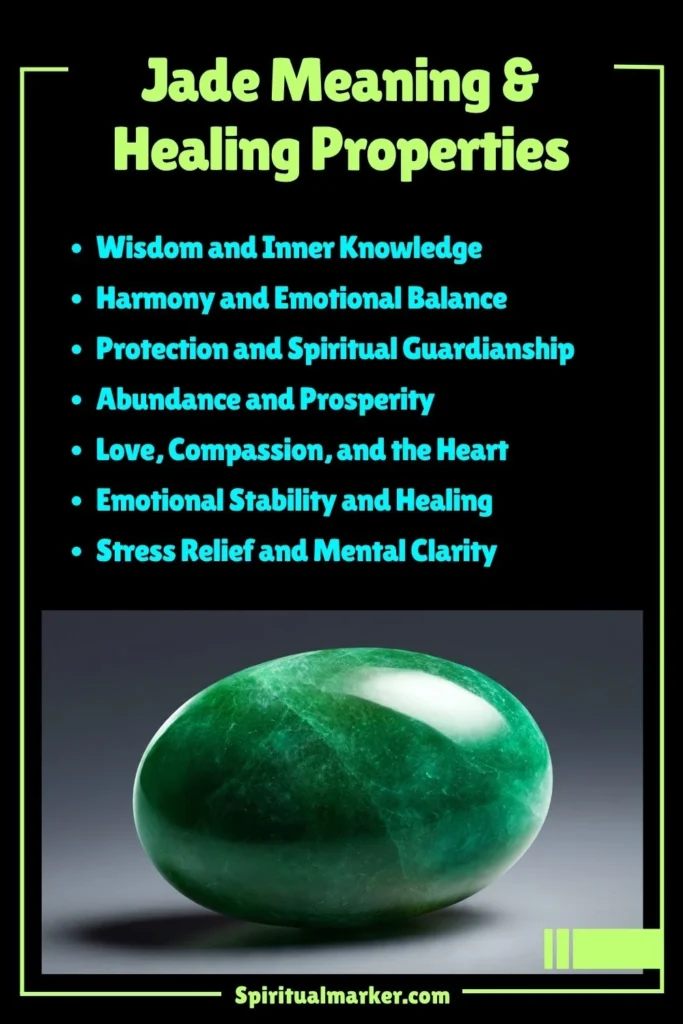
1. Wisdom and Inner Knowledge
Jade is perhaps most deeply associated with wisdom in spiritual traditions across the world. This is not the kind of wisdom measured by academic achievement or professional success. Jade’s symbolism points toward a deeper kind of knowing that comes from emotional maturity, life experience, and spiritual reflection.
Ancient Chinese philosophy made this connection explicit. Confucian scholars specifically compared a person of developed wisdom and moral character to jade. The comparison was detailed and intentional. Just as jade appears smooth and warm rather than cold and sharp, genuine wisdom presents itself gently rather than aggressively. Just as jade reveals more depth when examined closely, true wisdom grows more layered the more carefully you look at it.
This symbolism speaks to something many people recognize intuitively. People who have genuinely developed wisdom rarely advertise it loudly. They listen more than they speak. They respond with patience rather than react with impulse. They hold complex emotional truths without demanding simple explanations. Jade spiritually embodies that same quiet depth.
Many spiritual practitioners use jade during periods of important decision-making. They believe the stone helps slow reactive thinking and encourages more grounded, thoughtful reflection. When you face a difficult choice or a morally complex situation, jade’s symbolism offers a reminder to pause and access deeper inner knowledge rather than acting from surface-level emotion or social pressure.
The stone also represents accumulated wisdom rather than instant insight. Some crystals symbolize sudden spiritual breakthroughs or dramatic energetic shifts. Jade’s energy feels different. It reflects the kind of understanding that grows slowly through experience, honest reflection, and emotional processing over time. Many people find this symbolism especially meaningful because it validates gradual inner development rather than demanding instant transformation.
Jade also connects wisdom with compassionate action. In traditional Chinese thought, wisdom without moral application remains incomplete. A genuinely wise person not only understands deeply but uses that understanding to act with integrity and care for others. Jade spiritually reflects this integrated version of wisdom that connects inner knowing with ethical living.
2. Harmony and Emotional Balance
Harmony represents one of jade’s most consistent spiritual themes across cultures. This symbolism goes beyond simple peace or absence of conflict. Jade’s version of harmony refers to a dynamic balance where different emotional forces, life demands, and personal needs coexist without overwhelming each other.
Modern life rarely creates this kind of balance naturally. Responsibilities compete for your attention. Emotional demands from work, relationships, family, and personal health pull in different directions simultaneously. People frequently find themselves feeling fragmented, emotionally scattered, or exhausted from constantly managing competing pressures. Jade spiritually represents the stabilizing center within that complexity.
Chinese spiritual philosophy expressed this through the concept of “he,” which means harmony or peaceful union. Jade objects were used in rituals designed to maintain harmony between heaven, earth, and humanity. The stone itself was believed to carry a naturally balanced energy that could help stabilize disrupted relationships, emotions, and environments.
On a personal emotional level, jade’s symbolism of harmony connects with emotional self-regulation. People who carry deep emotional wounds often develop patterns of emotional swinging between extremes. They may alternate between numbness and overwhelm, between excessive control and emotional flooding, between withdrawal and desperate connection. Jade’s grounding energy symbolically supports the development of a steadier emotional center.
This also makes jade meaningful in relationship contexts. Healthy relationships require that individuals bring their own emotional balance into connection with others rather than depending on relationships to create balance for them. Jade’s harmonizing symbolism reminds you to cultivate inner equilibrium first. Many practitioners believe working with jade during relationship difficulties helps reduce reactive emotional responses and encourages more balanced communication.
Jade’s harmony symbolism also extends into the balance between giving and receiving. Many people struggle with one or the other. Some give excessively while suppressing their own needs. Others receive poorly, either rejecting support or feeling unworthy of care. Jade symbolizes the balanced middle ground where both giving and receiving flow naturally without guilt, shame, or resentment.
3. Protection and Spiritual Guardianship
Across nearly every culture that valued jade, protection appears as a central spiritual theme. Ancient Chinese rulers wore jade to protect imperial authority. Maori warriors carried pounamu weapons for physical strength and spiritual protection. Mayan leaders used jade placements in burial to protect the soul during its afterlife journey. This near-universal protective symbolism developed independently across completely separate civilizations.
The protective energy associated with jade tends to feel different from what is described about other protective stones. Black tourmaline, for example, is commonly associated with blocking or repelling negative energy. Obsidian often symbolizes cutting through illusion. Jade’s protection feels more like a guardian’s steady presence rather than a shield or weapon. It represents calm, assured security rather than aggressive defensive action.
Many spiritual practitioners today carry or wear jade as a personal talisman, believing it creates an energetic boundary that supports emotional and spiritual resilience. This boundary does not necessarily block all difficulty. Instead, jade’s protective symbolism often means maintaining your grounded center even when challenges arise. Rather than preventing difficulty, it symbolizes the inner stability to move through difficulty without losing yourself.
Jade is also associated with protection during transitions. Life changes create vulnerability. Career shifts, relationship endings, relocation, grief, illness, and periods of identity reconstruction all require navigating emotional and spiritual uncertainty. Jade’s protective symbolism is particularly meaningful during these transitional phases because it represents grounded security during inherently unstable periods.
Historically, jade was placed on newborns, given to travelers, and worn by leaders entering important negotiations or battles. This practical application of jade’s protective meaning reflects how seriously ancient cultures took its guardianship role. They did not relegate it to abstract spiritual theory. They embedded it directly into the most important and vulnerable moments of human life.
For many people today, jade serves a similar practical protective function. Wearing a jade pendant or bracelet creates a daily physical reminder of inner resilience. The stone’s consistent presence becomes associated with groundedness, strength, and spiritual support through consistent use over time.
4. Abundance and Prosperity
Jade and abundance have been connected for thousands of years. This symbolism is especially prominent in Chinese culture, where jade was traditionally exchanged as gifts for important celebrations including marriages, births, business agreements, and New Year festivals. Giving jade meant wishing the recipient genuine prosperity and life blessings.
The jade abundance symbolism extends well beyond material wealth, though that dimension certainly appears. Many ancient traditions connected jade with abundant life force, fertile harvests, healthy children, and the natural abundance of the living world. In Mesoamerica, jade’s green color connected it with maize and rain, the sources of agricultural abundance that entire civilizations depended upon for survival.
In modern crystal traditions, people often work with jade while setting intentions around prosperity, career growth, creative abundance, or the development of life opportunities. This practice reflects the ancient belief that jade’s energy supports the expansion of positive things rather than simply attracting money. Jade symbolizes abundance in its fullest sense, encompassing health, wisdom, loving relationships, creative fulfillment, and material sufficiency.
The abundance symbolism also connects with generosity. Ancient cultures gave jade as gifts rather than hoarding it. The Maori tradition of gifting pounamu rather than selling it reflects a philosophical understanding that genuine abundance flows. Jade reminds you that abundance is not just what you accumulate but what you freely share and circulate.
Many spiritual practitioners also associate jade abundance with patience and consistent effort rather than quick external windfalls. Jade does not typically symbolize sudden dramatic luck. Instead, it connects more closely with the sustained growth that comes from applying wisdom, maintaining balance, working with integrity, and trusting the gradual unfolding of positive outcomes over time.
This distinction makes jade’s abundance symbolism feel deeply practical. It does not promise magical shortcuts. It symbolizes the kind of genuine prosperity that develops through emotionally balanced living, wise decisions, and authentic effort.
5. Love, Compassion, and the Heart
Jade’s connection with love and compassion flows naturally from its heart chakra association and its emotional symbolism across cultures. This is not specifically romantic love, though that dimension certainly exists within jade’s meaning. Its love symbolism feels broader and more foundational. Jade represents heart-centered living, which involves compassion for yourself, genuine care for others, and emotional openness toward life.
In Confucian philosophy, the virtue most closely connected with jade was “ren,” often translated as benevolence or humaneness. Ren is the quality of treating others with genuine care and recognizing the fundamental worth of every human being. Jade spiritually embodies this quality because its energy feels warm, nurturing, and fundamentally oriented toward connection rather than separation.
Many people today carry emotional wounds that have gradually closed their hearts. Repeated disappointment, betrayal, grief, or emotional trauma can create protective walls that feel necessary but eventually limit the capacity for genuine connection. Jade’s love symbolism offers a gentle counterpoint to those defenses. It encourages emotional openness without demanding instant vulnerability before you feel ready.
The stone also symbolizes self-compassion, which many people find more difficult than compassion toward others. People frequently apply emotional standards toward themselves that they would never apply to someone they care about. Internal criticism becomes so habitual that it no longer registers as harsh. Jade spiritually represents the application of genuine kindness and patience toward your own emotional journey, not just toward others.
This compassion symbolism extends into jade’s role in forgiveness practices. Many crystal healers associate jade with the emotional work of releasing resentment, bitterness, or long-held anger. Forgiveness, as represented by jade, does not mean approving of what caused harm. It means releasing emotional heaviness that continues weighing on the person carrying it. Jade’s gentle energy makes this release feel less forced and more organic.
6 Healing Properties of Jade
1. Emotional Stability and Healing
Jade is widely recognized as a deeply stabilizing stone within emotional healing traditions. When emotional experiences have left you feeling fragmented, reactive, or emotionally raw, jade’s grounding energy symbolically supports the rebuilding of inner steadiness.
Many people turn to jade during or after periods of significant emotional disruption. Grief, betrayal, prolonged stress, major life upheaval, or the slow accumulation of emotional strain can leave the emotional body feeling destabilized. Jade does not promise rapid emotional repair. Instead, it symbolizes the patient, steady process of emotional rebuilding that happens one small shift at a time.
Crystal practitioners often describe jade’s emotional healing energy as emotionally warming rather than emotionally stimulating. Some stones are associated with intense emotional catharsis or dramatic energetic shifts. Jade tends to work differently. Its emotional healing symbolism centers on creating safety, stability, and gradual emotional recovery rather than forcing emotional breakthrough before a person feels ready.
This quality makes jade particularly meaningful for people who have become emotionally numb rather than emotionally overwhelmed. Numbness often develops as a protective response to sustained emotional pain. Jade’s gentle, warming energy is believed to slowly create enough emotional safety for feelings to begin surfacing naturally without becoming unmanageable. Many people describe the experience of working with jade during emotional recovery as a gradual return of emotional aliveness rather than a sudden dramatic shift.
2. Stress Relief and Mental Clarity
Jade’s calming energy has earned it a strong reputation as a stress-relieving stone in both ancient and modern traditions. This is partly connected with its physical smoothness. Holding a polished jade stone creates a tactile experience of cool solidity that many people find inherently calming.
Beyond its physical qualities, jade symbolizes mental slowing rather than mental stimulation. Chronic stress creates a state of mental hyperactivity where the mind constantly anticipates problems, rehearses difficult conversations, or replays regretted choices. Jade’s grounding energy is believed to create a counterweight to this mental acceleration.
Ancient Chinese practices specifically used jade in environments designed for calm contemplation. Scholars kept jade objects on their writing desks. Philosophers held jade while engaged in deep thinking. This deliberate integration of jade into reflective practice reflected a sophisticated understanding of the stone’s calming influence.
Many modern practitioners place jade in workspaces, meditation areas, or bedrooms for similar reasons. They believe consistent proximity to jade helps maintain a baseline of mental calmness throughout daily life rather than only using it during acute stress. This preventive approach to stress management with jade reflects the stone’s symbolism of sustained harmony rather than emergency emotional intervention.
3. Physical Healing Traditions
Throughout history, jade has been connected with physical health and bodily strength in various cultural traditions. Ancient Chinese medicine connected jade with kidney health. In Chinese, the characters for kidney and jade are linguistically related, reflecting a believed spiritual and physical connection between the stone and this vital organ system.
Various traditional healing systems also linked jade with immune strength, detoxification, and increased vitality. Jade rollers and gua sha tools carved from jade have been used in Chinese skincare traditions for centuries. These practices believed that rolling jade against the skin reduced inflammation, improved circulation, and brought calming energy into the body.
Modern holistic wellness practitioners continue using jade rollers for facial massage, lymphatic drainage, and skin cooling. While these tools have entered mainstream beauty culture largely disconnected from their spiritual origins, their traditional roots reflect jade’s long history as a stone believed to support physical vitality and tissue health.
It is important to note that jade’s physical healing associations belong to traditional cultural and spiritual contexts. Jade is not a substitute for medical treatment. These historical connections add cultural richness to understanding jade’s symbolism without making medical claims.
4. Strengthening Personal Integrity
Jade and personal integrity have been linked since ancient Confucian philosophy described the stone as a model for ethical human character. The qualities jade physically possesses, its smoothness, warmth, weight, durability, and subtle inner light, were deliberately mapped to moral virtues that Confucian scholars believed should guide human behavior.
This symbolism remains meaningful today because integrity is not simply about following rules. It involves alignment between your inner values and your outward actions. When people repeatedly act in ways that contradict their actual values, whether through social pressure, fear, or habitual patterns of avoidance, a specific kind of internal dissonance develops. That dissonance creates emotional discomfort, chronic low-level shame, and gradually eroding self-respect.
Jade symbolizes realignment between inner truth and outward action. Many practitioners use jade during periods of ethical decision-making, value clarification, or the rebuilding of self-respect after choices they regret. The stone encourages honest inner reflection without harsh self-condemnation, creating space for genuine course correction rather than defensive self-justification.
5. Enhancing Spiritual Connection
Many spiritual traditions across cultures viewed jade as a bridge between ordinary human experience and deeper spiritual reality. Ancient Chinese ritual objects made from jade were used to communicate with heaven and with ancestral spirits. Maya ceremonial jade carvings represented divine forces and served as focal points for sacred rituals. Maori pounamu carried the wairua, or spiritual essence, of ancestors.
In contemporary spiritual practices, jade is often used during meditation, prayer, energy healing, and ritual work because practitioners believe it enhances the quality of spiritual connection. Its calming, grounding energy creates emotional stillness that many people find supportive during introspective spiritual practice.
Jade’s spiritual connection symbolism also involves the idea of sacred trust. In multiple traditions, jade objects were not bought or earned but given as expressions of profound spiritual and relational trust. This gifting tradition reinforces jade’s association with sacred bonds, ancestral connection, and the transmission of spiritual blessings between people who share deep trust.
6. Nurturing Patience and Long-Term Growth
One of jade’s most underappreciated healing properties is its symbolism of patience and sustained long-term growth. In a cultural environment that glorifies rapid results, instant transformation, and visible success, jade offers a countercultural spiritual message. Genuine growth often happens slowly, deeply, and sometimes invisibly for long stretches before external results appear.
Jade’s formation takes millions of years under enormous geological pressure. That geological reality carries profound symbolic weight. The stone literally embodies the idea that the most enduring and valuable things require immense time and sustained pressure to develop. Many people find this symbolism deeply comforting when they feel frustrated by the pace of their own healing, growth, or life development.
Practitioners often recommend jade for people experiencing impatience during healing journeys or feeling discouraged by the slowness of personal change. The stone spiritually reminds you that invisible internal progress is still real progress. Just as jade was forming within the earth long before any human eye could see it, genuine healing and growth may be developing internally long before visible external change appears.
Jade and Chakra Connections
Jade’s primary chakra association is the heart chakra, called “Anahata” in Sanskrit. The heart chakra governs emotional balance, compassion, love, forgiveness, empathy, and the ability to give and receive care. When the heart chakra operates in healthy balance, emotional openness flows naturally alongside appropriate emotional boundaries.
Green jade activates and supports the heart chakra most directly because of its green color resonance with this energy center. Practitioners use jade during heart chakra meditation by placing the stone on the chest, holding it during breathwork, or wearing it as a pendant close to the sternum.
Lavender and white jade varieties carry additional connections with the crown and third eye chakras. These lighter jade types are associated with spiritual insight, intuitive clarity, and the deepening of spiritual awareness beyond the emotional healing themes most associated with green jade.
Black jade connects more strongly with the root chakra, carrying protective and deeply grounding energy. It is often used during grounding practices or when someone feels spiritually unmoored or emotionally disconnected from physical reality.
In healing sessions, practitioners sometimes use multiple jade varieties together to create a more comprehensive energetic experience that addresses emotional balance, spiritual clarity, and physical grounding simultaneously.
How to Wear Jade Jewelry for Spiritual Growth
People wear jade jewelry for spiritual purposes in ways that reflect both personal intention and cultural tradition. Because jade connects most strongly with the heart chakra, pendants and necklaces positioned close to the chest remain among the most traditional and symbolically aligned jewelry forms. Wearing jade at heart level creates direct physical proximity to the energy center it most strongly supports.
Jade bracelets and bangles carry particular significance in Chinese tradition. Chinese women have worn jade bangles for centuries, believing that continuous skin contact with jade gradually benefits the wearer’s health, emotional balance, and life circumstances over time. The tradition holds that a jade bangle that breaks while being worn has absorbed and deflected a harmful force, protecting the wearer from something worse.
Jade rings carry symbolism related to commitment, integrity, and sustained intention. Wearing jade on the hands connects its wisdom and integrity symbolism with the actions your hands take throughout the day. Some practitioners deliberately choose which hand to wear jade on based on the direction of energy flow they wish to support, left hand for receiving energy and right hand for directing energy outward.
Carved jade pendants carry additional layers of meaning based on their imagery. Dragons symbolize strength and good fortune. Buddha figures symbolize peace and spiritual blessings. Pixiu creatures symbolize wealth attraction. Ruyi scepters symbolize fulfilled wishes. Lotus flowers symbolize purity and spiritual awakening. Choosing a carved jade pendant with meaningful imagery adds intention and cultural symbolism to the personal resonance of the stone itself.
Many people also place jade objects in living spaces, offices, or meditation areas rather than wearing them. Small jade carvings, polished stones, or decorative jade objects carry their harmonizing and protective symbolism into the surrounding environment.
Caring for Jade Jewelry
Jade is a relatively durable stone, particularly compared to gemstones like opal or moonstone, but it still requires thoughtful care to maintain its beauty and structural integrity over time.
Clean jade jewelry using lukewarm water, mild soap, and a soft cloth or brush. Rinse thoroughly to remove soap residue, which can dull the surface. Dry gently with a clean soft cloth. Avoid harsh chemical cleaners, ultrasonic cleaning machines, and steam cleaning methods. These can damage jade’s surface and affect treated or dyed stones.
Store jade separately from harder gemstones like diamonds, sapphires, and rubies that could scratch its surface. Soft fabric pouches, padded jewelry boxes, or individual compartments in jewelry storage work well for protecting jade pieces.
Avoid exposing jade to prolonged direct sunlight or extreme temperature changes. While jade tolerates normal daily wear well, severe heat or cold fluctuations can sometimes affect the structure of lower-quality pieces, particularly those that have been treated or dyed.
Remove jade jewelry before activities involving harsh chemicals, including household cleaning, swimming in chlorinated pools, or applying perfume or hairspray directly to the stone.
Many people who value jade spiritually also perform energetic cleansing regularly. Common methods include placing jade in moonlight overnight, burying it briefly in clean earth, using sound vibration from a singing bowl, or placing it near fresh herbs. Intention setting after cleansing is common in many spiritual traditions. The specific cleansing method matters less than the intention and consistency of the practice.
Table: Jade Meaning at a Glance
| Aspect | Details |
|---|---|
| Primary Meaning | Wisdom, harmony, protection, abundance, love |
| Chakra Association | Heart chakra (primary), root and crown (secondary) |
| Main Spiritual Symbolism | Compassion, integrity, balance, spiritual guardianship |
| Common Colors | Green, white, lavender, black, orange, yellow |
| Hardness | Nephrite: 6 to 6.5 Mohs / Jadeite: 6.5 to 7 Mohs |
| Main Sources | Myanmar, China, Canada, New Zealand, Guatemala |
| Emotional Associations | Stability, patience, self-compassion, inner strength |
| Popular Jewelry Types | Bangles, pendants, rings, carved figures |
| Spiritual Uses | Meditation, protection, abundance rituals, heart healing |
| Care Needs | Gentle cleaning, separate storage, avoid harsh chemicals |
A Final Note
Jade carries something rare among gemstones. Its spiritual meaning did not develop in one place and spread outward. It appeared independently across completely unconnected ancient civilizations, each arriving at remarkably similar conclusions about what this stone represents. That convergence speaks to something genuine embedded within jade’s quiet presence.
Wisdom, harmony, protection, compassion, abundance, and emotional resilience appear in jade’s symbolism regardless of which cultural tradition you examine. These themes feel less like invented meanings and more like recognized observations made by different human communities across thousands of years.
Whether you wear jade for its cultural history, its spiritual symbolism, its emotional grounding energy, or simply its enduring natural beauty, the stone offers a presence that feels steady and trustworthy. It does not demand attention or shout its significance. Like genuine wisdom, it reveals more depth the more carefully you pay attention to it.
If jade has drawn your attention recently, that pull may reflect something relevant to your current chapter. Some people carry jade through difficult transitions. Others wear it as a daily reminder of the values they are building their lives around. Many simply appreciate having something ancient, beautiful, and deeply meaningful close to them as they move through an often complicated world.