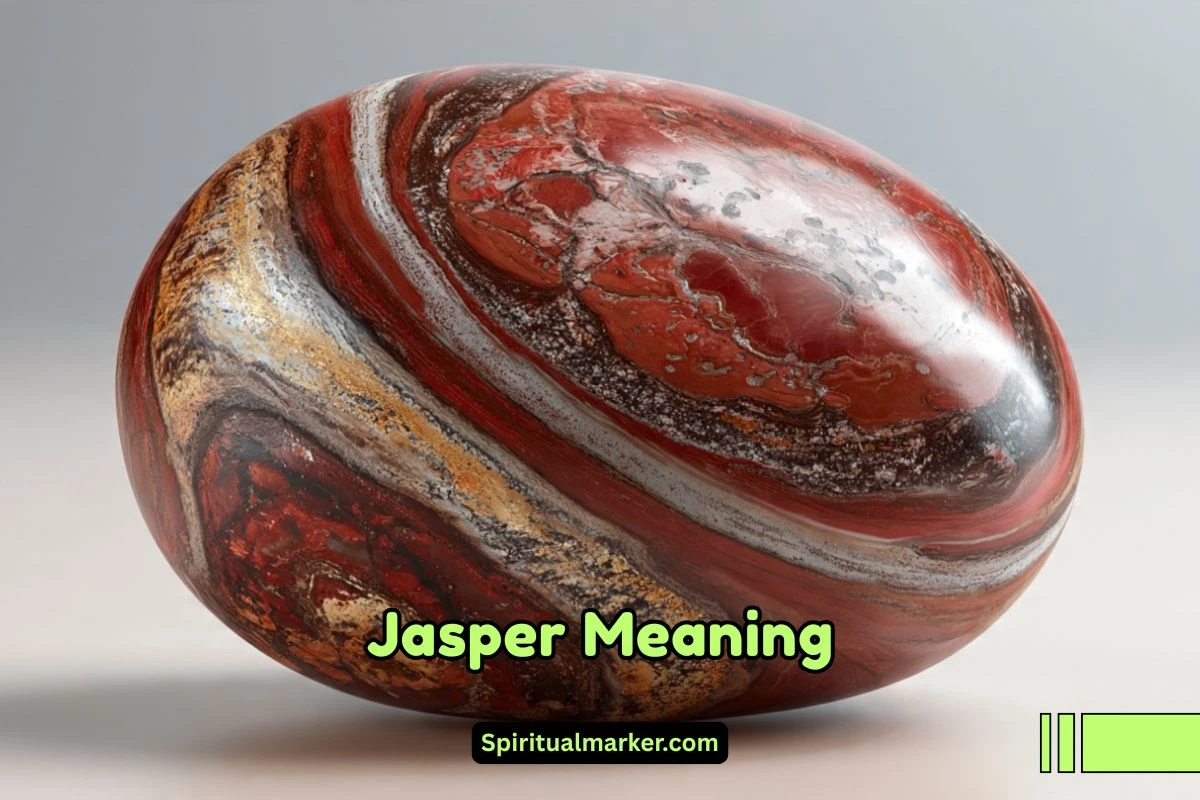
Jasper is a stone of grounding and stability. Its earthy colors and opaque surface feel solid and reliable. In spiritual practice, this stone carries nurturing and protective energy.
The jasper meaning often involves grounding, stability, and emotional healing. It is a stone of the root chakra, helping to dispel fear and build confidence. A spiritual meaning of red jasper shares that earthy-stone focus, though garnet carries a more passionate energy.
Jasper is used in crystal healing to support grounding, boost energy, and provide protection. It can also symbolize resilience and strength. The stone's energy is warm and dependable.
If you feel drawn to jasper, it may signal a need for stability. A spiritual meaning of mahogany obsidian also deals with earthy stones, though obsidian carries a more protective energy.
Key Takeaways
- Jasper is known as the “Supreme Nurturer” and symbolizes strength, grounding, protection, and endurance.
- Different varieties of jasper carry unique meanings, but all share a foundation of stability and emotional support.
- Jasper has strong historical and scriptural significance across ancient Egypt, Rome, Greece, and Indigenous traditions.
- Most jasper varieties connect with the root chakra, promoting physical grounding and emotional security.
- Wearing jasper jewelry or keeping it close during stressful periods may support resilience, courage, and calm clarity.
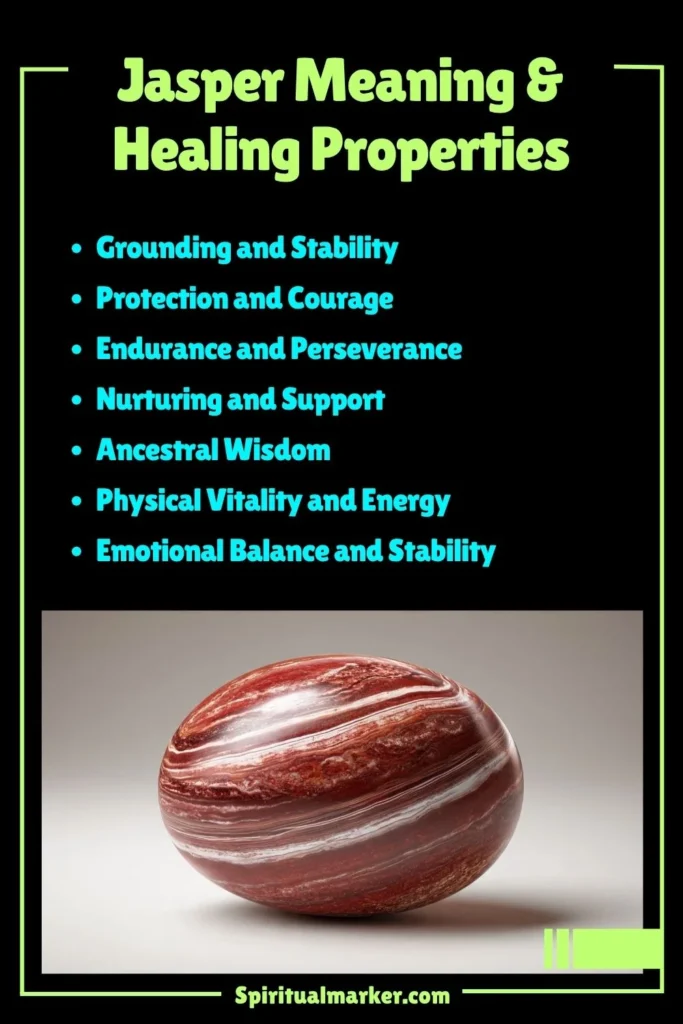
What Is Jasper?
Jasper is an opaque, fine-grained form of chalcedony, which is itself a microcrystalline variety of quartz. It forms when silica-rich sediment or volcanic ash undergoes intense pressure and heat over geological time. Minerals, organic matter, and environmental conditions during formation give jasper its wide range of colors and patterns.
No two pieces of jasper look identical. Some display bold red bands. Others show ochre yellows, forest greens, deep browns, or complex swirling patterns that resemble painted landscapes. This natural variation is one reason jasper has fascinated people throughout human history. Each piece feels like a small, complete world.
Mineralogically, jasper contains at least 20 percent foreign materials embedded during its formation. These impurities, including iron oxides, clay minerals, and organic matter, produce the extraordinary color diversity that distinguishes jasper from purer forms of quartz. Its Mohs hardness of 6.5 to 7 makes it durable enough for carving, polishing, and everyday jewelry wear.
People sometimes confuse jasper with agate, but the two differ in one important way. Agate is translucent, while jasper is opaque. Agate often shows banding you can see light through. Jasper blocks light entirely, giving it a denser, more earthy appearance.
Spiritually, this opacity holds meaning. Jasper does not shimmer or flash. It absorbs rather than reflects. Many practitioners interpret this as a symbol of internal strength over external display.
Origins and Formation
Jasper forms in a variety of geological environments. It appears in sedimentary rock formations, volcanic settings, and metamorphic zones. This wide geological distribution explains why jasper deposits exist on almost every continent.
Major sources include India, Russia, Australia, Brazil, Madagascar, South Africa, Egypt, Indonesia, and the United States. Different regions produce distinct varieties. Oregon in the United States produces the prized picture jasper. Madagascar yields ocean jasper. India produces beautifully patterned leopard skin jasper and red jasper.
The formation process can take millions of years. Silica-rich fluid fills existing cracks or cavities in host rock. Over time, pressure and temperature cause the silica to crystallize into dense, fine-grained quartz. Mineral impurities become permanently embedded, creating jasper’s characteristic colors and markings.
This geological process carries spiritual symbolism. Jasper is forged through pressure and time. Many practitioners connect this formation story with the idea that true strength develops through difficulty rather than ease. Jasper’s origin reinforces its reputation as a stone of endurance and resilience.
Key Properties of Jasper
| Property | Details |
|---|---|
| Composition | Silicon dioxide (SiO2) with mineral impurities |
| Hardness | 6.5 to 7 on the Mohs scale |
| Primary Chakra | Root chakra (also varies by variety) |
| Main Symbolism | Grounding, strength, protection, endurance |
| Common Colors | Red, brown, yellow, green, blue, multicolored |
| Major Sources | India, Brazil, Russia, USA, Madagascar, Australia |
| Transparency | Opaque |
| Energy Style | Steady, protective, stabilizing, nurturing |
| Spiritual Nickname | Supreme Nurturer |
| Popular Uses | Meditation, grounding, protection, emotional support |
Historical Significance of Jasper
Jasper holds one of the longest recorded histories of any gemstone. References to jasper appear in ancient Egyptian texts, Hebrew scripture, Greek writings, Roman records, and Indigenous spiritual traditions across the Americas, Asia, and Africa.
In ancient Egypt, jasper amulets were carved into protective talismans and placed with the deceased to guard them in the afterlife. Red jasper specifically appeared frequently in Egyptian burial practices because of its association with the life force carried in blood. Priests used jasper to honor the goddess Isis, believing it carried her protective energy.
The Book of Exodus in the Hebrew Bible lists jasper among the twelve stones set in the breastplate of Aaron, the high priest. Each stone represented one of the twelve tribes of Israel. Jasper held a position of honor on that sacred garment. In the Book of Revelation, jasper appears as a description of the divine light surrounding the throne of God, suggesting the stone carried associations with divine purity and eternal strength.
Ancient Greeks and Romans used jasper for carved seals and signet rings. They believed jasper strengthened both the physical body and the mind during difficult challenges. Roman soldiers carried red jasper as a talisman for courage in battle.
Indigenous communities across North America, including Cherokee and Apache traditions, valued jasper for its protective and grounding properties. Native American healers used it in ceremony and for calling rain during drought periods. Many cultures associated jasper with the earth itself, treating it as a physical connection to the land’s enduring strength.
This extraordinary historical range reflects how consistently jasper has served as a symbol of protection, strength, and sacred connection across radically different cultures and time periods.
The Many Varieties of Jasper
Jasper exists in dozens of distinct varieties. Each carries its own visual character and specific spiritual associations. Understanding the major varieties helps you choose the type of jasper that best aligns with your intentions.
Red Jasper
Red jasper is one of the most widely recognized and spiritually significant jasper varieties. Its deep brick-red to rust-brown color comes from iron oxide content within the stone. Spiritually, red jasper symbolizes vitality, physical strength, courage, and emotional endurance. Many practitioners connect it directly with the root chakra because of its earthy, stabilizing energy.
Red jasper has been used for centuries as a warrior’s stone, carried by soldiers and leaders who needed courage under pressure. Today, people often turn to red jasper during periods of physical exhaustion, low motivation, or emotional overwhelm. Its energy is frequently described as slow-burning and steady rather than explosive.
Yellow Jasper
Yellow jasper ranges from pale straw yellow to rich golden amber. Its color reflects the warmth of sunlight and connects it spiritually with the solar plexus chakra, which governs personal confidence, willpower, and decision-making. Yellow jasper is often associated with intellectual clarity, self-belief, and protective travel energy.
Ancient travelers carried yellow jasper as a protective companion stone on long journeys. In modern spiritual practice, people use it when facing major decisions, preparing for public speaking, or rebuilding confidence after setbacks.
Green Jasper
Green jasper connects strongly with the heart chakra and carries associations with healing, emotional balance, and compassion. Its color reflects nature’s restorative rhythms. Many healers historically valued green jasper for physical healing practices, particularly those connected with the immune system and overall vitality.
In ancient times, green jasper was considered a rain-bringing stone in certain cultures. Its energy was tied to fertility, abundance, and the life-giving properties of natural ecosystems.
Picture Jasper
Picture jasper displays remarkable natural patterns that resemble desert landscapes, mountain ranges, or abstract paintings. Its appearance alone draws people to it. Spiritually, picture jasper carries strong associations with creative vision, ancient wisdom, and connection to the earth’s memory.
Some practitioners believe picture jasper holds messages from the ancient past encoded within its natural imagery. Others use it during visualization practices and creative work because of its striking visual language.
Ocean Jasper
Ocean jasper comes primarily from Madagascar and displays circular orb patterns in soft greens, whites, pinks, and yellows. Its energy is considered among the most nurturing of all jasper varieties. Spiritually, it connects with themes of joy, emotional acceptance, patience, and service to others.
Ocean jasper’s orb patterns create a uniquely calming visual experience. Many people feel drawn to it during periods of emotional difficulty because it seems to radiate a quiet, steady warmth.
Leopard Skin Jasper
Leopard skin jasper displays spotted patterns in tans, creams, reds, and browns that resemble animal markings. Its spiritual associations include strength, adaptability, and shamanic connection. Some practitioners believe it strengthens the ability to attract positive experiences and align with personal purpose.
Kambaba Jasper
Kambaba jasper stands apart visually with its swirling deep green and black patterns. Also called crocodile jasper, it is technically a fossil stromatolite, one of the oldest known life forms on Earth. Spiritually, it carries associations with ancient wisdom, peace, and deep ancestral connection. Its age and formation story make it especially significant in practices focused on ancestral healing.
5 Spiritual Meanings of Jasper
1. Grounding and Stability
Among all of jasper’s spiritual meanings, grounding stands as the most universal. Nearly every culture and tradition that has worked with jasper has associated it with the earth, with rootedness, and with the kind of stability that allows a person to function clearly even under significant pressure.
Grounding in spiritual terms refers to staying connected to physical reality while engaging with emotional or spiritual experiences. Without grounding, people may feel scattered, anxious, emotionally unmoored, or disconnected from the present moment. Spiritual traditions across many cultures emphasize grounding as a foundation for everything else. You cannot build meaningful spiritual growth on a shaky emotional foundation.
Jasper symbolizes this foundation. Its dense, opaque, earthy appearance reflects the qualities of solid ground beneath your feet. Many practitioners describe jasper’s energy as physically anchoring. Holding it during moments of anxiety or emotional instability often helps people return to a calmer, more centered state. This is not metaphorical vagueness. It reflects the well-documented psychological benefit of tactile grounding techniques during stress responses.
The root chakra governs this grounding energy. When your root chakra feels balanced, you experience a sense of physical safety, emotional security, and mental clarity. Life’s challenges feel manageable rather than overwhelming. Jasper’s deep connection with the root chakra explains why so many people reach for it during periods when their sense of security feels threatened.
Grounding also supports decision-making. When you feel emotionally stable, you think more clearly. Jasper’s symbolism encourages presence over panic and steady action over reactive choices. Many people keep jasper at their work desks or carry it during demanding professional situations for precisely this reason.
2. Protection and Courage
Jasper has carried protective symbolism across cultures for at least four thousand years. Ancient warriors, priests, healers, and travelers all used jasper as a protective companion. This consistency across wildly different cultural contexts suggests something fundamental in how people intuitively respond to this stone’s energy.
Protection in spiritual traditions rarely means physical immunity from harm. More often, it describes a quality of inner strength that helps you navigate difficulty without losing yourself. Jasper’s protective symbolism works at this level. It represents the kind of courage that keeps you functioning during fear, grief, conflict, or uncertainty.
Red jasper specifically carries the strongest protective and courage-based symbolism. Ancient Roman soldiers carried it into battle. Medieval European knights set it into sword hilts. Cherokee warriors used red jasper ceremonially to strengthen resolve before conflict. This shared protective symbolism across unconnected cultures is striking in its consistency.
Courage, in jasper’s spiritual context, is not the absence of fear. It is the ability to act despite fear. Jasper does not promise to eliminate difficulty. Its symbolism focuses instead on building the inner resources needed to face difficulty with steady resolve. Many people carry jasper during medical procedures, job interviews, difficult conversations, or personal challenges for this reason.
Protection also extends to emotional boundaries. Jasper is believed to help people maintain clear emotional limits, preventing others’ emotional chaos from destabilizing their own inner state. For people who absorb others’ emotions easily, jasper’s grounding protective energy may feel especially supportive.
3. Endurance and Perseverance
Jasper forms over millions of years. Nothing about its creation is rushed. This geological patience directly mirrors its most significant spiritual theme: endurance. Jasper symbolizes the capacity to persist through long, demanding challenges without breaking or losing direction.
Many of life’s most meaningful goals require sustained effort over time. Recovering from illness, rebuilding after loss, changing ingrained emotional patterns, or working toward long-term dreams all demand perseverance rather than a single burst of motivation. Jasper’s symbolism directly supports this slower, steadier approach to meaningful change.
In historical contexts, jasper was called the “rain bringer” in some Indigenous traditions because it symbolized persistent effort that eventually produces results. Rain does not fall from a single cloud that passes once. Seasons shift gradually. Jasper holds that same energy of consistent, patient effort yielding eventual transformation.
People working through recovery from addiction, chronic illness, grief, or prolonged emotional difficulty often connect strongly with jasper’s endurance symbolism. It does not promise quick resolution. It offers something more sustainable: the spiritual reminder that persistence itself is powerful.
Endurance in jasper’s meaning also connects with integrity. Staying true to your values, commitments, and purpose over a long period requires consistent inner strength. Jasper symbolizes that quality of moral and emotional steadfastness that allows people to maintain who they are under sustained pressure.
4. Nurturing and Support
Jasper earned its title as the “Supreme Nurturer” because of its long-standing association with emotional support, care, and sustenance during difficult periods. While many healing stones carry nurturing symbolism, jasper’s version of nurturing feels distinctly practical. It supports rather than coddling.
Nurturing in jasper’s spiritual framework means providing the foundational care and stability that allows healing and growth to occur naturally. Think of deep, rich soil. It does not create flowers through dramatic action. It simply provides the consistent nourishment and support that plants need to grow in their own time. Jasper symbolizes that kind of foundational nurturing.
Many practitioners bring jasper into situations where they need to support others: caregiving roles, emotional counseling, difficult family dynamics, or moments when someone close to them is suffering. The stone’s nurturing symbolism supports sustained compassionate presence rather than emotional rescue or quick fixes.
Jasper also nurtures the self. Many spiritual traditions emphasize that self-care is not selfish but foundational. Without consistent self-nurturing, the capacity to support others eventually depletes. Jasper’s energy symbolically encourages people to care for their own emotional and physical well-being as an act of both wisdom and sustainability.
This nurturing symbolism extends to purpose as well. Jasper is often associated with helping people reconnect with their deepest sense of purpose and values, especially during periods of confusion or disconnection. Nurturing purpose means investing in the things that give your life meaning, even when progress feels slow.
5. Connection to the Earth and Ancestral Wisdom
Jasper’s deep earth tones and geological age create a natural bridge to ancestral and earth-based spiritual themes. Many traditions view jasper as a stone that carries the memory of the land itself. This belief appears across Native American, African, Celtic, and Aboriginal Australian spiritual frameworks.
Ancestral connection in spiritual traditions often refers to the idea that wisdom, experience, and strength flow through generations in ways that extend beyond conscious memory. Some people feel drawn to earth-based minerals like jasper because they sense a connection to something older and deeper than their individual life experience.
Picture jasper and Kambaba jasper carry especially strong earth-memory symbolism. Kambaba jasper forms from fossilized cyanobacteria colonies that are over three billion years old, making it one of the most ancient materials humans regularly handle. Working with it carries a kind of temporal humility: the reminder that human experience exists within a vastly larger story.
Connection to the earth also grounds spiritual practice in physical reality. Some spiritual traditions become so focused on transcendence or heightened states that practitioners lose touch with embodied, earthly life. Jasper’s energy symbolically resists this drift. It keeps spiritual practice anchored to the physical world, to the body, to the present moment, and to the natural cycles that govern all living things.
This earth connection carries environmental resonance as well. Many people who work with jasper feel a strengthened sense of responsibility toward the natural world. Holding something formed over millions of years within the earth’s crust creates a different relationship with time and with the planet’s enduring life.
6 Healing Properties of Jasper
1. Physical Vitality and Energy
Jasper, particularly red jasper, has been associated with physical vitality since ancient times. Many crystal practitioners believe jasper supports physical stamina and endurance during periods of illness, recovery, or chronic fatigue. Its connection to the root chakra aligns with themes of physical grounding and bodily strength.
People recovering from extended illness or physical depletion often describe feeling drawn to jasper’s steady, earthy energy. Unlike crystals associated with uplifting or stimulating energy, jasper’s vitality symbolism feels slow and sustained rather than sudden. It supports recovery that builds gradually, like a fire that burns steadily rather than flaring and fading quickly.
Red jasper specifically was used in ancient healing traditions to support blood circulation and stimulate the liver. While modern medicine does not validate these specific claims, the historical consistency of these associations reflects jasper’s long-standing reputation as a physically supportive stone.
Many practitioners place red jasper near the base of the spine or lower abdomen during healing meditations. This placement corresponds with the root chakra’s location and its associations with physical foundation, survival energy, and bodily stability.
Physical vitality also connects with motivation. When physical energy runs low, motivation often follows. Jasper’s symbolism encourages the body to draw on its deeper reserves of endurance, which can feel supportive during extended periods of effort or recovery.
2. Emotional Balance and Stability
Jasper carries powerful associations with emotional stability because its entire energetic character feels steady and grounding. In crystal healing traditions, emotional balance refers to the capacity to experience the full range of emotions without being overwhelmed or destabilized by them.
Many people struggle with emotional reactivity during stressful periods. Small provocations feel enormous. Minor setbacks feel devastating. Difficult emotions feel impossible to manage. Jasper’s healing energy symbolically addresses this pattern by offering a stabilizing influence that slows emotional escalation.
This emotional steadying effect differs from emotional suppression. Jasper does not represent blocking or denying difficult feelings. Its symbolism encourages processing emotions from a more stable emotional foundation. Instead of reacting immediately from a place of heightened emotion, jasper symbolically supports a pause, a breath, and a more grounded response.
Different jasper varieties support different emotional themes. Ocean jasper carries especially gentle emotional energy associated with joy and acceptance. Red jasper supports emotional courage and resilience during fear or anger. Yellow jasper builds confidence during periods of self-doubt. But all varieties share the foundational quality of emotional steadiness that defines jasper’s healing character.
Long-term emotional balance also involves developing healthy emotional habits over time. Jasper’s symbolism aligns with this gradual development. It represents the patient, consistent work of building emotional resilience rather than overnight emotional transformation.
3. Mental Clarity and Focus
Jasper supports mental clarity through its grounding influence on overthinking and mental scatter. Many people experience difficulty concentrating during periods of stress, anxiety, grief, or major life change. The mind fills with noise. Priorities blur. Decision-making feels exhausting.
Jasper’s stabilizing energy symbolically reduces this mental clutter. By anchoring awareness to the present moment and the physical body, it helps quiet the mental noise that interferes with clear, focused thinking. This grounding effect on cognition explains why many people keep jasper on their desks or hold it during planning sessions and complex problem-solving.
Yellow jasper carries the strongest associations with mental clarity among jasper varieties. Its solar plexus chakra connection links it with personal will, intellectual sharpness, and decisive action. People preparing for examinations, important negotiations, or complex analytical work sometimes work with yellow jasper for this reason.
Mental clarity in jasper’s healing framework also involves thinking clearly under pressure. When fear or anxiety narrows thinking into reactive loops, jasper’s steady energy can create enough mental space for broader perspective to return. Ancient soldiers carried jasper not just for courage but for strategic clarity during chaotic situations.
Focus, like endurance, benefits from sustained support over time. Jasper’s healing properties in this area reflect gradual improvement in mental steadiness and attentional quality rather than an immediate dramatic shift in cognitive function.
4. Stress and Anxiety Relief
Jasper consistently appears in discussions of stress relief and anxiety support across crystal healing traditions. Its earthy, stable energy provides a physical and symbolic counterpoint to the heightened nervous energy associated with chronic stress and anxiety.
Stress often disconnects people from the present moment. The mind races forward into feared futures or backward into regretted pasts. The body holds tension in muscles, the chest, and the jaw. Grounding practices that reconnect awareness with the physical body and the present moment have documented psychological benefits for stress management, and jasper’s healing symbolism aligns directly with these principles.
Many practitioners hold jasper during deep breathing exercises because the stone’s physical weight and earthy texture help anchor attention in the body rather than in anxious thought patterns. This tactile grounding effect complements formal relaxation and mindfulness practices.
Ocean jasper carries particularly soothing anxiety-relief symbolism. Its soft colors and gentle orb patterns create a visually calming experience, and its nurturing energy supports the kind of emotional acceptance that reduces anxiety’s grip. People who tend toward perfectionism or constant self-criticism often respond strongly to ocean jasper’s softer healing energy.
Jasper’s stress-relief properties also involve building long-term resilience rather than just managing acute stress episodes. Regular engagement with jasper in meditation or during daily life is believed to strengthen the emotional and psychological foundation that makes stressful events feel more manageable over time.
5. Courage During Transformation
Major life transitions are among the most emotionally demanding experiences a person can face. Career changes, relationship endings, relocation, loss of loved ones, health challenges, and periods of personal reinvention all require sustained courage and emotional flexibility. Jasper’s healing properties make it a frequently used companion during these periods.
The courage jasper symbolizes during transformation is not reckless boldness. It is the quieter kind of courage that keeps you moving forward one step at a time when the path ahead feels uncertain. It is the willingness to remain emotionally present during discomfort instead of retreating into avoidance or denial.
Red jasper in particular carries strong symbolism for initiating necessary action during periods of stagnation or fear. Many people know intellectually that change is needed in their lives but feel paralyzed by fear of the unknown. Red jasper’s energetic character is often associated with breaking that paralysis and taking the first step.
Green jasper and ocean jasper support a different aspect of transformation: the emotional healing required after significant change. When transformation involves loss, grief, or identity disruption, these gentler varieties offer supportive healing energy for the emotional processing that follows upheaval.
Transformation healing also involves releasing old patterns that no longer serve you. Fear-based behaviors, emotional defensiveness, limiting beliefs, and habitual self-criticism often persist long after the circumstances that created them have changed. Jasper’s healing symbolism supports the patient, gradual release of these outdated patterns as new and healthier ways of being take root.
6. Spiritual Grounding During Meditation
Jasper serves as one of the most commonly recommended grounding stones for meditation practice because of its stabilizing, earth-connected energy. Not all meditation experiences feel calm and gentle. Deep meditation sometimes surfaces difficult emotions, unsettling memories, or disorienting experiences. Jasper symbolically anchors practitioners during these moments, keeping the experience steady and manageable.
Many practitioners hold jasper during seated meditation or place it at the base of the spine to reinforce root chakra grounding. This physical placement during practice symbolically strengthens the connection between spiritual reflection and physical embodiment. You can move deeply inward without losing your footing.
Jasper also supports mindfulness practices by encouraging moment-to-moment physical presence. Its weight, texture, and earthy appearance all provide sensory anchors that help keep attention in the present rather than drifting into mental abstraction. For people who struggle with meditation due to racing thoughts or emotional restlessness, jasper’s grounding energy may provide a helpful stabilizing focus.
Different jasper varieties bring different qualities to meditation. Picture jasper is often used during visualization and creative meditation because of its landscape-like patterns. Kambaba jasper supports ancestral or deep time meditationdue to its ancient formation. Ocean jasper encourages heart-opening and emotional acceptance during gentler reflective practices.
Spiritual grounding through jasper also supports the integration of spiritual insights into daily life. Heightened moments of clarity or emotional release during meditation require grounding to become truly useful. Jasper’s earth energy helps ensure that spiritual experiences translate into meaningful, embodied changes rather than remaining abstract impressions.
How to Wear Jasper Jewelry for Spiritual Growth
The way you wear jasper jewelry can reflect and strengthen your specific spiritual intentions. Because different jasper varieties connect with different chakras and themes, placement matters in crystal traditions.
Red jasper pendants or bracelets worn close to the body support the root chakra’s grounding and vitality energy. Many people wear red jasper on the left wrist, which in some traditions is considered the receiving side of the body. This placement is believed to draw the stone’s stabilizing energy inward during the day.
Green jasper necklaces worn near the chest align with the heart chakra, supporting emotional healing and compassion themes. Heart-level placement mirrors the stone’s connection with emotional openness and balanced love energy.
Yellow jasper rings on the dominant hand are sometimes used by people working on confidence and assertive self-expression. Rings allow constant physical contact with the stone during daily tasks and interactions.
Many practitioners wear jasper during specific activities: meditation sessions, difficult work presentations, medical appointments, emotionally demanding conversations, or extended periods of physical effort. Intentional use during meaningful moments often feels more significant than constant everyday wear.
Some people layer jasper with complementary crystals for broader energetic support. Black tourmaline may amplify protection and grounding alongside jasper. Carnelian may strengthen vitality and creative energy when paired with red jasper. Rose quartz combined with green jasper may deepen emotional healing and self-compassion practices.
Wearing jasper consistently over time is believed in crystal traditions to gradually strengthen its influence. Daily contact builds a personal relationship with the stone’s energy, making its stabilizing qualities feel more naturally accessible during challenging moments.
Caring for Jasper Jewelry
Jasper is relatively durable compared to softer gemstones, with a Mohs hardness of 6.5 to 7. This durability makes it suitable for everyday jewelry wear in most settings. However, proper care ensures that both its physical appearance and energetic qualities remain strong over time.
Clean jasper jewelry using lukewarm water and mild, fragrance-free soap. Wipe gently with a soft cloth or brush. Dry thoroughly before storage. Avoid ultrasonic cleaners and steam cleaning machines, as prolonged exposure to vibration or heat may affect the stone’s surface polish.
Store jasper pieces separately from harder gemstones such as sapphire, topaz, or diamonds to prevent scratching. Soft fabric pouches or individual compartments in a padded jewelry box work well. Jasper can be stored with other crystals of similar hardness without concern.
Protect jasper from prolonged chemical exposure. Remove jasper jewelry before swimming in chlorinated pools, using household cleaning products, or applying skincare products and perfumes. While jasper’s hardness protects it from many chemicals, repeated exposure may dull its surface finish over time.
Jasper does not have the water sensitivity of softer stones like opal or selenite, but brief water contact is fine. Extended soaking is unnecessary for cleaning purposes and should be avoided.
For energetic cleansing, many practitioners use methods that honor jasper’s earth connection. Burying jasper briefly in dry soil or placing it on a bed of dried earth or sand resonates with its geological origins. Moonlight exposure overnight is another widely used cleansing method that does not require water or sunlight. Sound cleansing with singing bowls or bells also works effectively for jasper.
Some practitioners set intentions with their jasper stones by holding them during meditation while focusing clearly on what they want to strengthen or heal. Recleansing before setting new intentions helps clear previous energetic impressions.
Table: Jasper Meaning at a Glance
| Aspect | Details |
|---|---|
| Spiritual Nickname | Supreme Nurturer |
| Primary Meaning | Grounding, strength, protection, endurance |
| Main Chakra | Root chakra (varies by variety) |
| Core Symbolism | Stability, courage, nurturing, earth connection |
| Common Varieties | Red, yellow, green, picture, ocean, kambaba |
| Hardness | 6.5 to 7 Mohs |
| Major Sources | India, Brazil, USA, Australia, Madagascar, Russia |
| Emotional Themes | Resilience, calm, courage, stability, endurance |
| Historical Use | Warrior protection, priestly garments, healing |
| Spiritual Uses | Meditation, grounding, protection, ancestral work |
| Care Level | Moderate; avoid harsh chemicals and hard impacts |
| Complementary Crystals | Black tourmaline, rose quartz, carnelian |
A Final Note
Jasper stands in a category of its own among healing crystals. It does not dazzle with brilliance or promise rapid transformation. Its power is quieter and, in many ways, more enduring. It offers steadiness when life feels unsteady, courage when fear threatens to paralyze, and the deep, patient nurturing that genuine healing requires.
Its four-thousand-year presence across human spiritual traditions is not coincidence. People across enormously different cultures independently recognized something essential in jasper’s character. They placed it on sacred garments, carried it into battle, used it in healing ceremonies, and passed it across generations. That kind of consistent, cross-cultural significance speaks to something real in the human experience of this stone.
Whether you are drawn to jasper for its striking visual beauty, its grounding healing energy, or its rich spiritual history, it rewards attention. You might consider keeping a piece of red jasper nearby during a demanding work period, wearing green jasper during an emotional healing season, or holding picture jasper during moments of creative vision and planning.
However you choose to work with jasper, its most consistent message remains the same. You have the strength to endure. You are more grounded than you realize. And the earth beneath you holds you steady even when nothing else seems to.