
The full moon can light up the night and keep you awake. Many people report restlessness, vivid dreams, and a racing mind during this phase.
The spiritual meaning of why you cannot sleep during a full moon often connects to heightened energy, emotional release, and spiritual awakening. The moon’s pull may stir what has been buried. A related sleep issue appears in insomnia or can't sleep at night spiritual meaning.
The full moon is linked to completion, revelation, and intense intuition. Your dreams may be more vivid, and your emotions may feel closer to the surface.
If you also have your period during this time, spiritual meaning of having period on full moon offers a deeper look. Pay attention to your body’s rhythms.
Does Full Moon Affect Your Sleep?
Many people report restless sleep during the full moon. Even people who rarely check lunar calendars often notice a pattern over time.
Research has shown mixed results, yet some studies suggest the body may respond to lunar cycles. For example, people sometimes experience shorter sleep duration and lighter sleep during a full moon.
One reason could be biological rhythm. Humans evolved under natural light conditions for thousands of years. Before electricity existed, the full moon created brighter nights. Because of this brightness, people often stayed awake longer.
However, the explanation may go deeper than light alone.
Spiritual traditions believe the full moon amplifies emotional and mental energy. As a result, thoughts become more active. Old memories may surface. Hidden feelings may seek attention.
The moon also symbolizes cycles. It grows, becomes full, and then fades again. Many spiritual teachers connect this cycle with personal transformation.
Therefore, when the moon reaches its peak brightness, people may experience heightened awareness. The mind becomes alert, reflective, and active.
This heightened mental activity can make sleep harder to reach.
Symbolism of Insomnia During Full Moon
Sleeplessness during a full moon often carries symbolic meaning in spiritual traditions.
The full moon represents illumination. Darkness fades. Hidden things become visible. Spiritually, this suggests that truths within the mind also become clearer.
When sleep disappears, the mind often begins to wander. Thoughts rise from deeper layers of consciousness. People may reflect on relationships, past choices, or future goals.
Although this process may feel uncomfortable, it can also bring clarity.
In spiritual symbolism, insomnia during a full moon may represent inner awakening. The soul may be encouraging reflection. Old emotional patterns may surface for healing.
Furthermore, many believe the full moon magnifies energy. If a person carries unresolved emotions, those feelings may grow stronger under lunar influence.
As a result, the mind stays alert instead of resting.
Some people also experience vivid dreams, strong intuition, or sudden insights during these nights. These experiences often appear when the mind becomes quiet yet deeply aware.
Therefore, sleeplessness during a full moon can sometimes reflect a period of inner transformation.
10 Spiritual Meanings Behind Sleepless Nights During a Full Moon
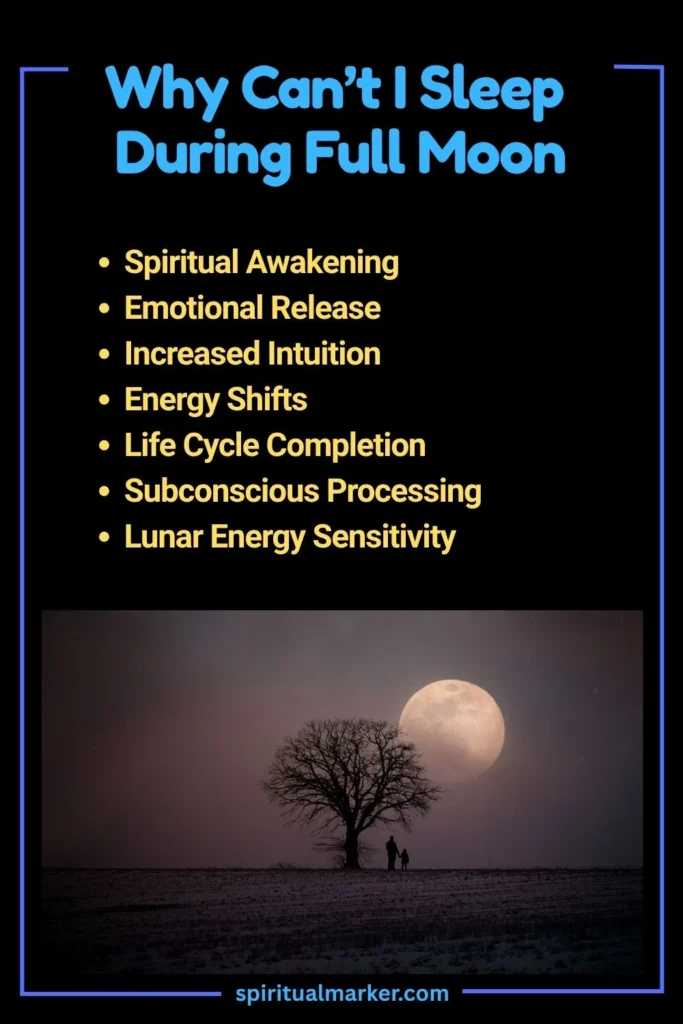
Across many spiritual traditions, the full moon represents illumination, culmination, and heightened energy. Because of that, some people notice unusual restlessness at night. When you cannot sleep during a full moon, spiritual teachers often interpret the experience as an energetic shift rather than a simple sleep issue.
Below are deeper explanations of the spiritual meanings that people commonly associate with insomnia during a full moon.
1) Spiritual Awakening
Many esoteric traditions believe that the full moon amplifies spiritual energy. At this time the moon stands fully illuminated by the sun, which symbolically represents the meeting of the conscious and subconscious mind.
Because of this alignment, people who are moving through a spiritual awakening may find themselves wide awake when the moon reaches its peak.
During awakening, awareness expands. Old belief systems begin to loosen, while new perspectives appear. Naturally, this inner expansion does not always happen quietly. The mind becomes alert. Thoughts move quickly. Insights arrive suddenly.
Therefore sleep becomes difficult.
Spiritual practitioners often describe these nights as moments when the soul becomes more active than the body. Instead of resting, the mind reflects on life purpose, identity, and deeper truths.
In addition, awakening sometimes triggers vivid memories or unusual dreams. Some people even report sensing subtle energies or feeling a strong emotional pull toward meditation and reflection.
Although this experience can feel confusing at first, many traditions say that sleeplessness during a full moon marks a stage of inner evolution. The body may crave rest, yet the spirit pushes toward growth and expanded awareness.
2) Emotional Release
Another widely discussed spiritual meaning behind sleepless nights during a full moon involves emotional cleansing.
The moon has long symbolized emotion. Since the moon influences ocean tides, spiritual thinkers often compare its pull to the movement of human feelings. When the moon reaches its brightest phase, hidden emotions sometimes rise to the surface.
During these nights, suppressed feelings such as sadness, frustration, regret, or longing may appear suddenly. At first this can feel overwhelming. However the purpose often centers on healing.
When emotions remain buried, they continue to influence behavior quietly. Yet when they surface under the energy of the full moon, people finally gain the opportunity to acknowledge them.
Because the mind processes these emotions actively, sleep becomes harder. Thoughts replay old memories. Feelings intensify. Reflection continues late into the night.
Even though insomnia feels uncomfortable, spiritual teachers often see it as an emotional detox process. The soul releases energy that no longer serves personal growth.
After this release happens, people frequently report feeling lighter, calmer, and more emotionally balanced in the following days.
3) Increased Intuition
The full moon has strong connections with intuition and psychic awareness. Many spiritual traditions believe lunar light stimulates the intuitive mind, which allows deeper perception beyond logic.
As a result, people who are naturally sensitive may experience heightened intuition during a full moon night.
This heightened state sometimes interrupts sleep.
Instead of drifting into deep rest, the mind stays alert. Thoughts feel sharper. Dreams become vivid. Symbols appear in unusual ways.
Some individuals experience sudden insights about relationships, life decisions, or unresolved situations. Others feel drawn to meditation, prayer, or quiet reflection.
Spiritual communities often link this phenomenon with the activation of the third eye chakra, the center associated with intuition and inner vision.
When this energy becomes active, awareness expands. You might suddenly sense truths about yourself or others that previously remained hidden.
Because of this heightened mental activity, insomnia during a full moon can occur naturally. The mind stays open to intuitive messages that arrive during the night.
4) Energy Shifts
Another spiritual explanation connects sleepless nights during a full moon with powerful energy changes within the body.
According to many metaphysical teachings, the human body contains subtle energy systems often described as chakras or energetic centers. Each center relates to specific emotional, physical, and spiritual functions.
During the full moon, spiritual practitioners believe these centers receive a surge of cosmic energy.
This surge can create physical sensations such as restlessness, warmth, tingling, or mental alertness. Naturally these sensations make it difficult to relax completely.
Some people describe the experience as a gentle buzzing in the body. Others feel a strong urge to move, stretch, or meditate.
At the same time, the sun and moon stand in opposite positions during a full moon. Symbolically this represents a meeting of opposing forces such as light and shadow, action and reflection, masculine and feminine energy.
Because of this cosmic balance, the body attempts to recalibrate its own inner harmony.
Consequently sleep disturbances during a full moon may appear as the body adjusts to these energetic shifts.
5) Life Cycle Completion
Spiritually speaking, the full moon represents completion.
Just as the moon grows gradually from a small crescent into a bright circle, human experiences also follow cycles of growth and fulfillment.
Therefore sleepless nights during this phase sometimes signal that a chapter of life is reaching its conclusion.
You might begin reflecting on recent achievements, relationships, or personal goals. Questions arise naturally. Have I learned what I needed from this experience? What comes next?
Because the mind reviews these life stages, deep sleep may not arrive easily.
Many spiritual practices encourage people to use the full moon as a moment for reflection and gratitude. The brightness of the moon symbolizes clarity. It illuminates both successes and lessons.
After this period of reflection passes, the moon gradually begins to wane. That waning phase represents release and preparation for the next cycle.
For this reason, insomnia during a full moon can mark a powerful transition point in personal growth.
6) Subconscious Processing
Another explanation centers on the subconscious mind.
The moon traditionally symbolizes the hidden layers of the psyche. Under its bright light, deeper thoughts and fears sometimes emerge into awareness.
When this happens during the full moon, the mind works overtime trying to process these revelations.
People may replay conversations from the past. Old worries resurface. Unanswered questions demand attention.
Instead of quiet rest, the brain becomes a workshop for introspection.
While this might feel exhausting, it can also lead to valuable insight. The subconscious mind holds experiences that daily life often pushes aside.
During a full moon night, these hidden elements rise gently into consciousness. The purpose lies in integration. The mind tries to connect past experiences with present awareness.
Once this mental processing finishes, emotional clarity often follows.
7) Lunar Energy Sensitivity
Not everyone feels the same reaction to lunar cycles. However some individuals appear especially sensitive to lunar energy.
These people often describe feeling the moon’s influence on mood, creativity, and sleep patterns.
For highly sensitive individuals, the full moon produces a strong energetic vibration. The nervous system responds quickly to this shift.
Because of that sensitivity, sleep becomes lighter. The mind notices subtle changes in atmosphere, emotion, and thought patterns.
Spiritual traditions sometimes describe this state as being more connected to natural cosmic rhythms. Just as animals respond to seasonal changes, some humans instinctively react to lunar cycles.
In this context, sleepless nights during a full moon reflect heightened awareness rather than imbalance.
The body simply resonates more strongly with the rhythms of nature.
8) Life Direction Reflection
The bright light of the full moon symbolizes clarity. Because of that symbolism, sleeplessness often encourages deeper reflection about life direction.
When the mind stays awake under the moon’s glow, people frequently begin questioning their path.
Am I moving toward the life I truly want?
Do my daily choices align with my deeper values?
These questions surface naturally during quiet nighttime hours.
Instead of ignoring them, many spiritual practices encourage using this time for journaling, meditation, or calm reflection.
By doing this, insomnia during a full moon transforms into an opportunity for personal guidance.
Some of the most important life realizations appear during these quiet hours. When distractions disappear, inner truth becomes easier to hear.
9) Releasing Old Habits
Another powerful theme connected to the full moon involves release.
Because the lunar cycle will soon begin to shrink after reaching its peak, spiritual traditions see this phase as the perfect moment to let go of outdated patterns.
People may suddenly recognize habits that no longer support growth. This could include unhealthy routines, limiting beliefs, negative thinking, or lingering resentment.
Once this realization appears, the mind begins working to break those patterns.
That inner work can create mental activity that delays sleep. Thoughts cycle through possible changes. Emotional energy moves through the body.
However this process often leads to transformation.
Through sleepless nights during a full moon, individuals may clear mental space for healthier behaviors and new opportunities.
10) Connection With Universal Rhythms
Finally, many spiritual traditions believe that human life moves in harmony with universal rhythms.
The moon influences tides, plant cycles, animal behavior, and agricultural traditions. Because humans also belong to the natural world, some people naturally respond to these cosmic patterns.
When the full moon illuminates the night sky, the environment subtly shifts. Light levels change. Animal activity increases. Atmospheric energy feels different.
Sensitive individuals may subconsciously detect these changes.
As a result, sleep patterns temporarily shift.
Rather than fighting this rhythm, many spiritual teachings encourage gentle acceptance. People may choose quiet activities such as meditation, prayer, or reading until natural sleep returns.
Viewed through this perspective, insomnia during a full moon reflects alignment with the broader rhythms of nature rather than a simple sleep disturbance.
Cultural and Religious Interpretations
Across history, cultures around the world connected the full moon with human behavior and spiritual experiences. These interpretations offer fascinating insights into why sleeplessness may occur.
In ancient Greek traditions, people believed lunar energy affected emotions and mental states. The word “lunatic” even comes from the Latin word for moon. People believed the moon could influence the mind during its brightest phase.
Native American cultures often viewed the full moon as a time of reflection and renewal. Many tribes named each full moon according to seasonal changes. During these nights, people sometimes stayed awake longer to observe nature and reflect on life.
In Hindu traditions, the full moon holds strong spiritual significance. Festivals such as Guru Purnima and Sharad Purnima occur during full moon nights. Devotees often meditate or stay awake for spiritual practices. They believe lunar energy strengthens mental clarity and spiritual awareness.
Buddhist traditions also recognize the spiritual importance of the full moon. Important events in the life of Siddhartha Gautama, the Buddha, are believed to have occurred during full moon days. Monks and followers often engage in meditation and reflection during these nights.
In many East Asian cultures, the full moon symbolizes harmony, family unity, and spiritual balance. Celebrations such as the Mid Autumn Festival encourage people to gather, reflect, and appreciate the beauty of the moon.
Ancient European folklore often described the full moon as a time when hidden forces became active. People believed intuition became stronger, dreams became vivid, and emotions intensified.
Although these traditions differ in detail, they share a common idea. The full moon represents a moment when human awareness becomes stronger.
Because of this heightened awareness, sleep sometimes becomes lighter or delayed.
How to Sleep Better During a Full Moon
Although spiritual interpretations add meaning to sleepless nights, restful sleep remains important for health. Fortunately, several simple practices can help calm the mind during a full moon.
First, reduce exposure to bright light before bedtime. Dim lighting signals the brain that night has arrived. This helps the body release melatonin, the hormone that supports sleep.
Second, create a calming bedtime routine. Reading, gentle stretching, or quiet breathing exercises can relax the nervous system.
Meditation can also help quiet racing thoughts. Even five minutes of slow breathing can calm mental activity.
Some people also find relief through journaling. Writing down thoughts before sleep helps release mental pressure. The mind then feels less need to keep thinking.
Another helpful step involves limiting caffeine or heavy meals during the evening. Both can stimulate the body and disrupt sleep patterns.
Many spiritual practitioners also suggest grounding practices. Walking barefoot on grass, spending time in nature, or practicing gratitude can balance emotional energy.
Finally, avoid stressing about sleeplessness itself. Worry about sleep often makes the problem worse. Instead, treat the night as a quiet period of rest and reflection.
When the mind relaxes, sleep usually follows.
Final Thoughts
Sleepless nights during a full moon may feel frustrating at first. Yet they often carry deeper meaning.
The moon has guided human life for thousands of years. Farmers, sailors, and spiritual seekers all observed its cycles carefully. Because of this long connection, many people still feel its influence today.
Sometimes the full moon simply brightens the night sky. At other times, it also illuminates thoughts, emotions, and inner awareness.
If you struggle to sleep during these nights, consider viewing the experience from another perspective. The mind may be processing emotions, releasing stress, or gaining clarity about life.
Instead of fighting the moment, listen to what the night may be revealing.
With patience and calm routines, sleep will return. Meanwhile, the quiet hours may offer rare opportunities for reflection, insight, and spiritual growth.
You Might Also Like
1) Spiritual Meaning of Blood Moon (Red Moon) and Its Symbolism
2) Spiritual Meaning of Sleeping in the Fetal Position
3) Spiritual Meaning of Hiccups: Superstition and Biblical
4) Spiritual Meaning of Moaning in Sleep or Catathrenia
5) Spiritual Meaning of A Baby Born With A Full Head of Hair
References
- https://girlandhermoon.com/cant-sleep-during-a-full-moon-the-esoteric-spiritual-secrets-behind-lunar-insomnia/
- https://astopia.com/en/blog/cant-sleep-during-a-full-moon-the-esoteric-spiritual-secrets-behind-lunar-insomnia-c-100010
- https://artoflivingretreatcenter.org/blog/ayurveda-and-the-full-moon/
- https://billerbeck.shop/blog/en/moon-phases-sleep/
- https://www.jackiemfernandes.com/blog/2023/4/7/2Understanding%20the%20Spiritual%20Connection%20Between%20Your%20Body%20and%20the%20Moon.
- https://www.rituals.co.th/en/mag-spirituality-full-moon.html
- https://faithfulsage.com/cant-sleep-full-moon-spiritual-meaning/