Hiccups arrive without warning. They interrupt conversations, meals, and quiet moments, and they can be hard to stop.
The spiritual meaning of hiccups blends superstition and biblical ideas. Some people believe hiccups mean someone is thinking about you, while others see them as a release of trapped energy. A related bodily sign appears in spiritual meaning of burping and biblical symbolism.
The Bible does not mention hiccups directly, but it speaks of breath and life. A sudden hiccup may feel like a small spiritual nudge or simply a physical reflex.
If you also yawn often, yawning spiritual meaning and superstition offers a related view. Listen to your body.
Why Do We Experience Hiccups? Metaphysical and Emotional Symbolism
Physically, hiccups happen when the diaphragm contracts suddenly. The vocal cords close quickly, which creates the sound. Doctors explain it clearly.
However, metaphysical thought looks beyond muscles and nerves. It sees the body as a mirror of inner energy. When emotions stay unspoken, the body may react.
Hiccups often appear during laughter, stress, excitement, or nervousness. That pattern matters. Spiritually, hiccups may signal emotional overflow. You may hold back words. You may suppress anger. Or you may carry excitement that needs grounding.
Energy healers sometimes associate hiccups with the throat chakra. This energy center governs communication and truth. When blocked, minor physical signs can surface. A hiccup might represent interrupted expression. It may hint that something needs to be said.
At times, hiccups also symbolize spiritual interruption. You may move too fast in life. The sudden jolt forces you to pause. It acts like a tiny reset button.
Are Hiccups a Spiritual Sign?
Not every hiccup carries meaning. Sometimes your body simply reacts to food or temperature. Yet patterns matter.
If hiccups appear repeatedly during emotional moments, many spiritual traditions view them as signs. They can symbolize attention from the spiritual realm. Some believe someone talks or thinks about you at that moment.
Others see hiccups as energetic sensitivity. You may absorb external emotions. As a result, your body reacts subtly.
Still, context remains important. A single hiccup after soda likely means nothing spiritual. However, repeated hiccups during prayer or meditation may feel different. Your intuition often guides interpretation.
10 Spiritual Meanings of Hiccups
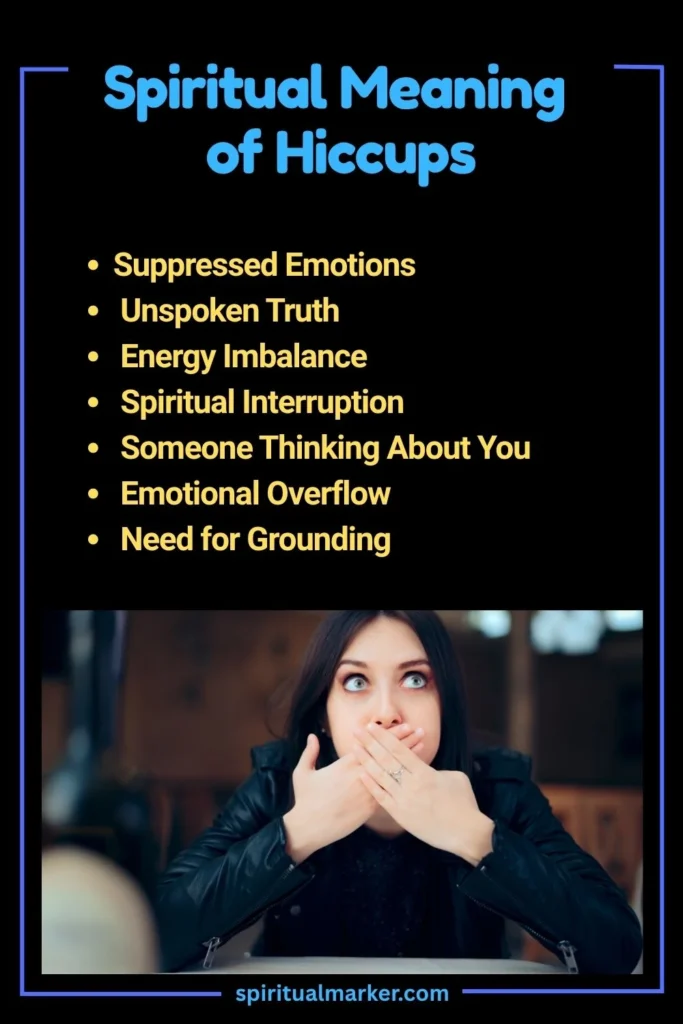
1. Suppressed Emotions
Many spiritual traditions connect hiccups with bottled up feelings. When you hold in anger, grief, or disappointment, your body still feels the weight. Over time, that tension settles deep in the diaphragm, which controls your breath. Then, suddenly, it jerks. You call it a hiccup. Spiritually, it can signal suppressed emotions asking for release.
Breath connects the body and the soul. When emotions stay trapped, breathing becomes shallow. As a result, energy stagnates. The hiccup interrupts that pattern. It forces a sharp inhale. It shakes your rhythm. In that moment, your body demands attention.
For example, think about a time you avoided confrontation. Maybe you stayed quiet during an argument. Later, you felt tight in your chest. Then hiccups started. Many believe this is not random. Instead, it is the body pushing you to feel what you ignored.
You can respond with awareness. First, pause. Then ask yourself what you are holding back. Journaling helps. Deep breathing helps even more. Slowly inhale through the nose. Hold for a few seconds. Release gently. As you let the breath flow, emotions often rise too. When you allow them space, the hiccups often fade.
In this view, hiccups protect you. They stop emotional buildup before it turns into deeper imbalance.
2. Unspoken Truth
Hiccups sometimes appear in tense conversations. You want to speak, yet you hesitate. At that exact moment, your breath jumps. Your voice pauses. A hiccup interrupts. Spiritually, this can symbolize an unspoken truth.
Truth carries energy. When you silence it, pressure builds inside. Your throat tightens. Your solar plexus contracts. Then the diaphragm reacts. The hiccup acts like a tap on the shoulder. It says, speak honestly.
Many spiritual teachers link this to the throat chakra. When blocked, communication suffers. You might fear judgment. You might fear conflict. However, hiding your truth creates inner conflict anyway.
Notice when hiccups arise. Were you about to express something important? Were you holding back a boundary? If yes, consider speaking calmly and clearly. When you do, relief often follows quickly. The breath settles. The body relaxes.
Authenticity aligns you with your deeper self. Therefore, hiccups can serve as reminders to live truthfully rather than silently.
3. Energy Imbalance
Energy systems like chakras describe the body as more than flesh and bone. According to this view, life force flows constantly. When that flow weakens or blocks, physical signs appear. One such sign can be hiccups linked to energy imbalance.
The solar plexus chakra sits near the diaphragm. It governs confidence and personal power. When stressed or overwhelmed, this center may weaken. As a result, the diaphragm spasms.
You might notice hiccups during stressful days. Perhaps you doubt yourself. Perhaps you feel out of control. That emotional strain affects energy flow first. Then the body reacts.
To restore balance, focus on alignment. Meditation works well. Reiki practitioners also believe gentle energy work clears blocks. Even simple grounding exercises can help. Place your hand over your stomach. Breathe deeply. Visualize warm light spreading through your core.
As energy stabilizes, breathing smooths. In this way, hiccups remind you to check your inner balance before problems grow larger.
4. Spiritual Interruption
Life moves fast. Thoughts race. Emotions swirl. Suddenly, hiccups begin. They interrupt everything. Spiritually, some view this as a spiritual interruption.
In certain Native traditions, people believed sudden body shifts carried protective meaning. A hiccup could break negative thought patterns. It could also disrupt unwanted spiritual influences. Instead of continuing mental chaos, the body forces a pause.
This pause matters. It resets your focus. For a few seconds, you cannot speak clearly. You must stop. You must breathe differently.
During that break, reflect. Were you thinking negatively? Were you spiraling into fear? The hiccup may have interrupted that spiral. It can function like a protective shield.
Take advantage of the moment. Close your eyes briefly. Center yourself. Picture a protective light around you. Even small acts of awareness can shift your energy quickly.
Thus, hiccups may act as gentle spiritual safeguards rather than random annoyances.
5. Someone Thinking About You
Across many cultures, people say hiccups mean someone thinking about you. This belief appears in folklore worldwide. It suggests energetic cords connect people across distance.
When someone holds you strongly in mind, their energy may ripple outward. Sensitive individuals might feel it physically. The diaphragm reacts. A hiccup appears.
Some traditions even suggest clues. Gentle hiccups may signal affection. Sharper ones might hint at gossip or tension. While this remains symbolic, the idea highlights human connection.
You can respond playfully or spiritually. Say the name of someone you suspect. Notice how your body reacts. Alternatively, send loving thoughts outward. If energy traveled toward you, you can return it peacefully.
Whether literal or symbolic, this belief reminds you that relationships carry invisible threads. Hiccups become tiny reminders that you exist in others’ minds and hearts.
6. Emotional Overflow
Not all suppressed feelings hide quietly. Some burst forward. Intense joy, grief, or excitement can overwhelm the nervous system. In these moments, hiccups may reflect emotional overflow.
Think about crying hard. Your breath stutters. Your diaphragm jumps. Hiccups follow naturally. Spiritually, this shows the heart chakra expanding beyond its normal rhythm.
Strong emotion moves energy fast. If the body cannot process it smoothly, spasms release excess pressure. Instead of resisting, allow the feeling space.
If you feel overwhelming joy, laugh freely. If you feel grief, let tears fall. Suppression prolongs discomfort. Expression restores balance.
Emotional depth is not weakness. It signals capacity. Therefore, hiccups during powerful moments can confirm how deeply you feel and live.
7. Need for Grounding
Sometimes hiccups appear when your mind floats far from reality. You overthink. You daydream constantly. Or, you feel scattered. In spiritual terms, this suggests a need for grounding.
Grounding connects you to the present and to the earth. Without it, energy rises upward excessively. The diaphragm tightens. Breathing shifts irregularly.
The hiccup then pulls you back into your body. It feels physical and immediate. You cannot ignore it.
To ground yourself, step outside if possible. Walk barefoot on grass or sand. Focus on physical sensations. Notice your feet touching the ground. Slow your breath deliberately.
As you reconnect with the earth, your body stabilizes. Hiccups often fade once you feel anchored again. In this way, they function as small wake up calls to return to balance.
8. Warning to Slow Down
Modern life rewards speed. People rush meals. They rush conversations. They rush goals. Yet the body prefers rhythm. When you move too fast, hiccups may appear as a warning to slow down.
Eating quickly often triggers hiccups physically. Spiritually, the message extends further. Rapid living disrupts mindful breathing. It signals stress.
A hiccup forces you to stop speaking. It forces you to breathe differently. Even if briefly, you pause.
Notice your pace when hiccups strike. Are you exhausted? Are you multitasking heavily? If yes, treat the hiccup as feedback.
Slow your movements. Eat calmly. Speak more gently. Breathe deeply between tasks. Small changes reduce long term burnout. In this sense, hiccups protect your well being before larger health issues arise.
9. Attention from Spirit Guides
Some spiritual paths teach that guides communicate subtly. They rarely shout. Instead, they use signs. For some believers, hiccups represent attention from spirit guides.
This idea suggests guides create mild physical sensations to draw awareness. If hiccups begin during important decisions, pause. Reflect on your thoughts at that exact moment.
Prolonged hiccups may signal stronger guidance. However, the key lies in stillness. When you quiet your mind, intuitive insight surfaces naturally.
Ask inwardly for clarity. Then listen. You may feel a calm answer arise. Or you may sense reassurance.
Whether symbolic or literal, this interpretation encourages mindfulness. It invites you to trust inner wisdom and remain open to subtle guidance.
10. Subtle Awakening Signal
Spiritual growth rarely begins with fireworks. Instead, it often starts with small physical sensations. Some interpret hiccups as a subtle awakening signal.
The diaphragm sits near major energy centers. During spiritual shifts, energy may rise upward. This can create fluttering sensations or irregular breathing patterns.
In yogic traditions, awakening energy often moves gradually. Minor physical changes appear first. Hiccups could symbolize early adjustment to expanded awareness.
If you experience frequent hiccups during meditation or deep reflection, observe calmly. Do not panic. Focus on steady breathing. Gentle yoga and mindful stretching help regulate energy flow.
Growth unfolds step by step. Therefore, even small body signals deserve attention. They may mark the beginning of deeper transformation.
Myths and Superstitions Associated with Hiccups
Superstitions around hiccups appear in many households. You may have heard someone say, “Someone is talking about you.” This belief spreads across Europe and Asia.
Another common myth claims that if you guess the name of the person thinking about you, the hiccups stop. Children often play this guessing game. It turns discomfort into curiosity.
In some traditions, hiccups mean someone misses you deeply. Others claim it signals gossip. Therefore, the meaning shifts between affection and criticism.
Some rural beliefs suggest hiccups predict visitors. If hiccups come suddenly, a guest may arrive soon. Although science does not support this idea, the symbolism stays strong in folklore.
These myths show a pattern. People rarely see hiccups as random. Instead, they assign relational meaning.
Cultural and Religious Significance on Hiccups
Chinese Folk Beliefs
In traditional Chinese belief, hiccups often indicate that someone speaks about you. It can mean praise or complaint. Context decides the tone.
Indian Traditions
In many Indian homes, elders say hiccups mean someone remembers you with strong emotion. The belief appears in daily life rather than formal scripture.
Japanese Superstition
Japanese folklore sometimes links hiccups to counting. Some even say one hundred hiccups bring danger. This belief creates caution around persistent episodes.
Russian Folklore
Russian culture also connects hiccups with gossip. People sometimes recite names aloud to stop them.
African Tribal Interpretations
Certain African spiritual traditions view sudden body reactions as ancestral signals. Hiccups may represent subtle spiritual contact.
Islamic Folk Beliefs
While Islamic scripture does not define hiccups spiritually, cultural folklore in some regions suggests someone speaks your name at that moment.
Western Spiritual Circles
Modern spiritual communities often link hiccups to throat chakra imbalance. Energy practitioners may suggest breathing exercises or affirmation work.
Across cultures, one idea repeats. Hiccups connect to relationships and unseen attention.
Biblical Meaning of Hiccups
The Bible does not directly mention hiccups. However, scripture often connects bodily reactions with spiritual states.
For example, Proverbs 4:23 says, “Above all else, guard your heart, for everything you do flows from it.” This verse suggests inner emotions affect outer life. Physical reactions can reflect spiritual conditions.
In Psalm 39:3, David writes, “My heart grew hot within me. While I meditated, the fire burned.” Emotional intensity produced physical sensation. This pattern supports symbolic interpretation.
Additionally, 1 Corinthians 6:19 reminds believers that the body is a temple of the Holy Spirit. Therefore, some Christians believe physical signs can serve as spiritual reminders.
Although hiccups themselves lack specific biblical reference, believers may interpret them as prompts to pause and pray. A sudden interruption can redirect attention to God.
Spiritual Meaning of Hiccups at Night, in the Morning, and Different Hours
Timing often shapes interpretation.
Hiccups at midnight may symbolize subconscious release. Night hours connect with hidden thoughts. Therefore, a hiccup during sleep transition can reflect inner processing.
Hiccups at 1 AM often relate to spiritual alertness in certain mystical traditions. This hour links with heightened sensitivity.
At 2 AM, some believe hiccups signal emotional unrest. You may carry unresolved feelings.
At 3 AM, often called a spiritual hour in folklore, hiccups may represent spiritual attention or awakening.
Hiccups at 4 AM can symbolize preparation. Dawn approaches. Energy begins shifting.
Morning hiccups between 6 AM and 9 AM may indicate fresh emotional energy. You start the day with intensity or anticipation.
Late morning hiccups sometimes connect to communication stress. You may think about conversations ahead.
In each case, personal intuition matters most.
Spiritual Meaning of 2, 3, and 4 Hiccups
Numbers hold symbolic weight in spirituality.
Two hiccups may represent duality. You may face a decision. It can also reflect relational energy.
Three hiccups often connect with spiritual completeness. Many traditions honor the number three as sacred.
Four hiccups may symbolize stability. The number four relates to foundation, such as four directions or four seasons.
While brief sequences likely have physical causes, symbolism adds another layer of reflection.
Is Hiccup a Good Luck Sign?
In many cultures, yes. People often smile when hiccups start. They associate them with attention, affection, or incoming news.
However, meaning depends on belief. Some see hiccups as warnings to slow down. Others view them as loving signals.
Rather than labeling them strictly good or bad, consider them neutral messengers. Your response shapes the meaning.
Final Thoughts
Hiccups may begin in the diaphragm, yet stories around them reach far deeper. Across cultures and faiths, people connect hiccups with emotion, attention, and spiritual signals.
Science explains the mechanism clearly. Still, symbolism offers reflection. A hiccup can interrupt your sentence. It can also interrupt your routine. In that brief pause, you gain awareness.
Next time hiccups surprise you, pay attention to your thoughts. Notice your emotions. Whether physical or spiritual, the moment invites mindfulness.
Sometimes the smallest body reactions carry the loudest whispers.
You Might Also Like
1) Spiritual Meaning of Smelling Coffee When There is None
2) Central Heterochromia Spiritual Meaning: in Bible, Psych, Folklore
3) Spiritual Meaning of Common Cold or Runny Nose
4) Spiritual Meaning of Choking on Food or Saliva
5) Spiritual Meaning of Constipation and Energetic Causes
References
- https://www.linkedin.com/posts/ammie-gibson-5b2370310_hiccup-spiritual-meaning-decoding-the-universe-activity-7216337232041762818-sVJT
- https://www.richardalois.com/symbolism/hiccup-symbolism
- https://www.whatspiritual.com/spiritual-meanings-of-hiccups/
- https://www.higherperspectives.com/the-spiritual-message-behind-getting-hiccups.html
- https://www.yourtango.com/self/hiccups-spiritual-meaning
- https://www.asknebula.com/meaning/spiritual/hiccups-spiritual-meaning