Lying awake at night can feel lonely and frustrating. The clock ticks, and your mind races. Beyond caffeine or stress, many people sense a spiritual reason for their sleeplessness.
The insomnia spiritual meaning often involves spiritual attack, an overactive mind, or a calling to pay attention. Some traditions view sleeplessness as a time when spirits are near. A spiritual meaning of waking up at 3 AM shares that night-time focus, though waking at 3 AM carries specific symbolism.
Some people experience insomnia during spiritual growth or transition. Others find their sleepless nights are filled with anxiety or unresolved thoughts. The pattern of waking can add detail.
If insomnia persists, it may be a call to examine your inner world. A spiritual meaning of yawning also deals with sleep-related sensations, though yawning relates to energy release.
Why Am I Unable to Sleep at Night?
Your mind may race with thoughts. Alternatively, your body might feel tense without a clear reason. Spiritual interpretations often link this unrest to unresolved emotions. It can also point to inner conflict. Another possibility is a call for self reflection.
Many belief systems see nighttime wakefulness as a special moment. During this time, the boundary between physical and spiritual worlds becomes thin. Because of this, your spirit might be processing something important.
Additionally, some traditions suggest spiritual awakenings start in these quiet hours. Distractions fade then, allowing inner truths to surface.
12 Spiritual Meanings of Insomnia or Can’t Sleep at Night
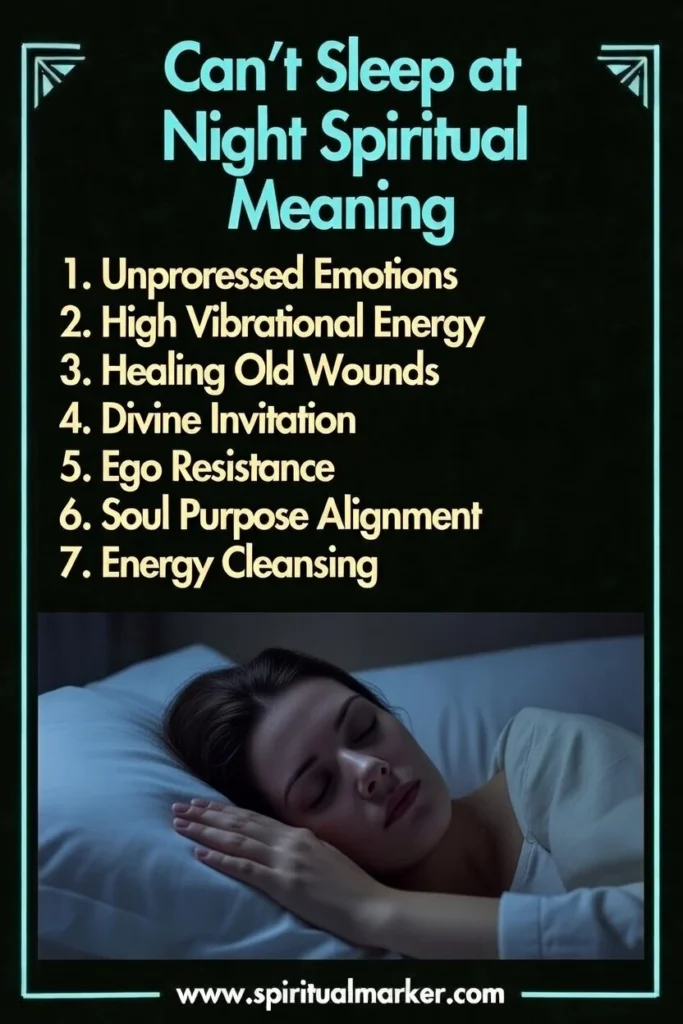
1) Unprocessed Emotions
When you are awake at night, it is often because your mind is trying to process feelings from the day. During daytime hours, you are busy with school, friends, and other activities. These activities distract you from your inner thoughts.
At night, however, your brain finally has quiet time to sort through everything. Feelings you ignored, like stress from a test or sadness from an argument, will rise to the surface. Your mind keeps you awake to make you pay attention to these emotions.
In fact, sleep science shows that the brain’s emotion centers are highly active when sleep is delayed. This process asks you to acknowledge what you feel. Then, it encourages you to let those feelings go so you can find peace.
2) Spiritual Awakening
Sleeplessness can sometimes signal the beginning of a major personal change. This change is not about your body but about how you see yourself and the world. It is as if your consciousness is expanding to understand new spiritual ideas.
During this shift, your everyday mind might struggle to keep up. This adjustment period can make your thoughts very active at night. You may think about deep questions regarding your life’s purpose or the nature of reality.
While it is disruptive, this phase is usually temporary. Many wisdom traditions teach that this uncomfortable time leads to greater self-awareness and inner clarity.
3) High Vibrational Energy
Activities like meditation, prayer, or deep breathing increase your spiritual energy. People often describe this as raising your personal “vibration.” This elevated energy is positive, but it can also be very stimulating for your physical body.
Think of it like drinking a strong cup of tea right before bed. Your body remains in a state of heightened alertness. This state is the opposite of the slow, calm condition needed for sleep.
So, even though your spirit feels energized, your body cannot relax. To find balance, it helps to do grounding activities after spiritual practice. For example, you can walk barefoot on grass or eat a small snack.
4) Healing Old Wounds
Insomnia frequently occurs when you are healing from past emotional pain or trauma. Your mind works to heal these wounds during sleep. However, the process can become overwhelming.
Old, buried memories may surface when you are in bed because you feel safe and there are no distractions. Although it is difficult, this is a normal part of recovery. Your mind is carefully reviewing past hurts so it can finally heal them.
Therapists confirm that improved sleep is often a sign that emotional healing is progressing. Until then, nighttime may feel like a necessary, though tough, therapy session.
5) Divine Invitation
Some beliefs frame wakefulness as a direct call from a divine presence. The idea is that the stillness of night is the best time for communication. This is not always about asking for things.
Instead, it is often an invitation to listen quietly. Stories from various religions feature characters awakened for a purpose. For instance, in the Bible, the young Samuel was woken by a voice he later learned was God.
The quiet hours can provide a unique space for reflection or receiving guidance that is hard to hear during a noisy day.
6) Ego Resistance
Your ego is the part of your identity that prefers everything to stay familiar and safe. Spiritual growth pushes you beyond this comfortable zone. When you start changing, your ego can react with fear.
It may trigger your body’s built-in alarm system, the fight-or-flight response. This system releases stress chemicals like adrenaline and cortisol. These chemicals are designed to keep you alert in case of danger.
Therefore, they make falling asleep very difficult. Your body is literally wired for alertness, not rest, because your ego senses a threat to the familiar “you.” Recognizing this resistance as a normal part of change can help reduce its power.
7) Inner Wisdom Call
Your higher self is a core part of your consciousness. It holds intuitive knowledge beyond everyday thinking. When life becomes too noisy, this inner voice uses quiet nights to be heard. For instance, you might jolt awake with a clear idea or a strong feeling about a decision.
Neuroscience notes that the brain’s default mode network, active during rest, is linked to self-referential thought and intuition. This process is not about fear but about delivering necessary guidance. Therefore, such wakefulness asks for your attention and reflection.
8) Soul Purpose Alignment
Persistent restlessness may point to a life off course. Your soul, in this view, seeks expression through a specific purpose or mission. This feeling often peaks during periods of stagnation or deep change. Consider someone in an unfulfilling job who feels a nagging urge for creative work. That urge can manifest as sleep trouble.
Carl Jung’s concept of individuation describes the lifelong process of becoming one’s true self. Ignoring this call may create psychological friction. Then, sleeplessness becomes a physical symptom of that internal discord.
9) Spiritual Protection
Many beliefs propose that unseen guardians watch over you. These could be ancestors, spirit guides, or protective energies. Their vigilance is thought to increase during sleep, a vulnerable state. Wakefulness might occur if they sense a need to shield you. This could be from negative energies or impending difficulties.
Anthropological studies show belief in protective spirits is common across global cultures. This interpretation frames insomnia not as a problem but as an alert. In fact, it is seen as an active defense mechanism for your well-being.
10) Energy Cleansing
Spiritual growth requires releasing outdated mental and emotional patterns. This release is often called an energy cleanse. As these old patterns dislodge, they cause temporary turbulence in your mind. Your consciousness is too active to settle into sleep.
A comparison can be made to upgrading computer software; the system must run diagnostics and clear old files, which slows other functions. For a time, your mental space is too busy for rest. After this purge, people frequently report deeper sleep and greater peace.
11) Vivid Dream Processing
Your subconscious mind manages profound changes through dreams. During spiritual awakening, the volume of inner material increases dramatically. Dreams become more intense and symbolic as the mind works to integrate new insights. Sometimes, the emotional charge of a dream is so powerful it wakes you.
Sleep science confirms that REM sleep is critical for memory consolidation and emotional processing. Waking between dream cycles is normal, but remembering intense dreams points to high subconscious activity. Recording these dreams can show your personal growth timeline.
12) Need for Grounding
Focusing heavily on spiritual ideas can create an imbalance. You may become unanchored from your physical body and the present moment. Insomnia, in this case, is a direct feedback signal. It reminds you to reconnect with the tangible world.
Practices like walking in nature, physical exercise, or focused breathing can restore balance. These activities stimulate the parasympathetic nervous system, which promotes calm. Essentially, the body demands you return to it. Proper grounding balances high spiritual energy with physical stability for overall health.
Does the Bible Offer Insights on Insomnia?
Yes, the Bible addresses sleeplessness in several ways. It frequently links insomnia to worry, anxiety, or moral struggle. For example, the book of Daniel describes King Nebuchadnezzar losing sleep due to troubling dreams. Similarly, Proverbs notes those on wicked paths “cannot sleep” because their minds plan harm.
In contrast, the Bible also presents sleep as a gift from God. Psalm 127:2 states, “He gives to his beloved sleep.” This suggests peace and rest come from divine trust.
There are also moments when God interrupts sleep for a purpose. A clear instance is when He called the young prophet Samuel at night. Therefore, biblical insomnia can be either a warning or a divine appointment.
Myths and Superstitions Associated with Insomnia
Across cultures, sleeplessness has sparked many myths. Some believe insomnia means a spirit is watching you. Others think a spirit is trying to send a message. One superstition warns that whistling at night invites ghosts, which may keep you awake.
In certain traditions, sleeping with feet toward the door mimics removing the dead. This act is thought to bring bad luck and restless nights. Another common idea claims leaving a hat on a bed invites evil spirits. Sleeping in front of a mirror is also said to have this effect.
These ideas lack scientific proof. However, they show how deeply humans connect sleep to the unseen world.
Cultural and Religious Interpretations
Different cultures use their spiritual frameworks to interpret insomnia.
In Hinduism, sleep is a state of spiritual renewal, not just rest. Insomnia, or Anidra, often signals emotional turmoil. It may also indicate moral conflict or an imbalance between body, mind, and soul. Research suggests a sleepless night might follow grief or ethical dilemmas, reflecting inner chaos.
Buddhism views insomnia as an obstacle to peace. Yet, it can become a doorway to awareness. Practitioners are told not to fight wakefulness but to observe it mindfully. One teaching says waking at night can be “a good time for spiritual awakening.” Meditation helps transform restlessness into clarity.
Islam honors sleep as one of Allah’s signs. The Qur’an describes night as a mercy and sleep as divinely granted rest. However, many Muslims see insomnia as a prayer opportunity, especially during the pre dawn hours called Tahajjud. Some scholars encourage using these moments for devotion.
Traditional Chinese Medicine links insomnia to a disturbed Shen. The Shen is the spirit housed in the heart. Strong emotions like fear can disrupt it, causing sleeplessness. Healing focuses on calming the spirit with herbs, acupuncture, and energy balance.
Native American and other Indigenous traditions hold dreams as sacred. Inability to sleep might mean a spirit guide is communicating. It could also signal that one’s energy is out of harmony with nature. Elders may interpret wakefulness as a call for ceremony or ritual.
Japanese folklore blames sleep paralysis on kanashibari, where a vengeful spirit pins a person down. Similarly, parts of Nigeria tell of a female demon attacking sleepers, causing fear. These stories frame sleep disturbances as spiritual encounters.
Spiritual Ways to Solve the Issue of Insomnia or Trouble Sleeping
Many spiritual traditions offer practices to calm the mind and invite rest. Prayer is a common response across faiths. For instance, Christians may use bedtime prayers or scripture meditation to release anxiety. Muslims might practice dhikr, or remembrance of God, at night.
Meditation also plays a key role. Mindfulness meditation quiets racing thoughts by focusing on breath. Research indicates it can improve sleep quality. In Tibetan Buddhism, Tonglen meditation involves breathing in suffering and exhaling compassion. This practice can ease emotional tension blocking sleep. Similarly, repeating a mantra like “Om” creates rhythmic focus, which soothes the nervous system.
Energy clearing rituals are another approach. Some people perform evening prayers to cleanse their space. Lighting candles, burning sage, or setting intentions can create a sacred rest environment. Studies show gentle yoga before sleep helps prepare the body for stillness.
Also, expressing gratitude is believed to shift energy from fear to peace. One spiritual perspective notes that “anxiety, worry, and fear will flee when you praise and thank God.” This act of surrender replaces mental noise with trust.
Final Thoughts
Insomnia carries layers of meaning beyond tiredness. Historically and spiritually, it is seen as a crossroads. This is a time when the soul speaks louder than the body.
Sleeplessness might be a divine nudge, an emotional alarm, or a spiritual test. It invites deeper attention. Many traditions encourage leaning into the night with reverence instead of resisting it. Darkness has long been a space for revelation and healing.
So when sleep will not come, it may not be a failure. It could be an invitation.
You Might Also Like
1) Spiritual Meaning of Dreaming About the Same Person
2) Biblical and Spiritual Meanings of Miscarriage in A Dream
3) Spiritual Meaning of Dream of Rotten Teeth (Falling Out)
4) Spiritual Meaning of Dreams About End of The World (Apocalypse)
5) Can Not Talk, Scream, or Shout in Dreams Spiritual Meaning
FAQs
1. What is the spiritual meaning of insomnia?
Insomnia carries spiritual meaning related to inner turmoil, spiritual awakening, or messages from the subconscious. When you cannot sleep, your body and mind might be trying to process something important. The quiet of the night creates space for thoughts and feelings that you might avoid during the day. Insomnia can indicate that you are experiencing spiritual growth or transformation. It might also signal that your energy is out of balance. Some spiritual traditions view sleeplessness as a call to spiritual practice or prayer. The specific pattern of your insomnia offers additional clues about the message. Pay attention to your thoughts and feelings during sleepless nights for personal insight.
2. Does the time I wake up at night have spiritual significance?
Yes, the time you wake up at night can carry spiritual significance in many traditions. Waking between 11 PM and 1 AM might relate to unresolved emotions or fear. This time is associated with the root chakra in some practices. Waking between 1 AM and 3 AM often connects with anger, frustration, or spiritual attack. This is sometimes called the witching hour in folklore. Waking between 3 AM and 5 AM might indicate spiritual awakening or divine connection. This time is considered sacred in some traditions, often called the hour of the divine. Waking between 5 AM and 7 AM could relate to practical concerns or daily responsibilities. These interpretations offer guidance for understanding your sleeplessness.
3. Is insomnia a sign of spiritual awakening?
Insomnia can indeed be a sign of spiritual awakening for many people. During spiritual awakening, energy shifts and changes occur in your system. These shifts can disrupt sleep patterns as your body adjusts to higher energy frequencies. You might find yourself waking at specific times or feeling more alert at night. This can be part of the process of opening to higher consciousness. The increased awareness that comes with awakening can also make it harder to quiet the mind. Many spiritual teachers suggest using this wakefulness for meditation or reflection. The insomnia associated with awakening is usually temporary. It often subsides as you adjust to your new energy state.
4. How can I respond spiritually to insomnia?
Responding spiritually to insomnia involves using the wakeful time for inner work rather than fighting it. Instead of lying in frustration, consider getting up and doing something peaceful. This might include meditation, gentle stretching, or journaling about your thoughts. Some people find that prayer or spiritual reading helps calm the mind. Pay attention to what thoughts arise during sleeplessness. These might be important messages for your spiritual growth. You might also try energy balancing practices before bed, such as grounding or chakra meditation. Creating a peaceful bedtime ritual can help signal to your body that it is time for rest. If insomnia persists, consider seeking guidance from a spiritual counselor or health professional.