Moaning in sleep can be unsettling for anyone who hears it. The sounds may be soft or loud, and the sleeper usually has no memory of making them.
The spiritual meaning of moaning in sleep or catathrenia often points to unexpressed emotion, trapped energy, or a spirit trying to communicate. Some people link it to grief or stress that surfaces during rest. A related sleep issue appears in spiritual meaning of sleep talking.
Catathrenia is a real sleep disorder, so medical care matters. Still, the timing and tone of the moaning can carry personal meaning.
If you also choke in sleep, choking in sleep spiritual meaning offers a related perspective. Pay attention to your dreams and emotions.
What Does Moaning in the Sleep Mean?
On a physical level, moaning during sleep often connects to breathing rhythm. A person inhales normally, then releases a long, slow groan while exhaling. It usually happens during deep sleep stages.
Spiritually, moaning can symbolize release. The body may let out what the heart holds in. Stress, grief, hidden fears, or even spiritual tension can surface when the mind rests.
In many belief systems, sleep opens a subtle spiritual channel. Therefore, unusual sleep behaviors can signal inner cleansing, suppressed emotions, or spiritual sensitivity.
Still, meaning depends on context. How do you feel in waking life? Are you stressed? Sick? Spiritually active? These questions matter.
12 Spiritual Meanings of Moaning in Sleep or Catathrenia
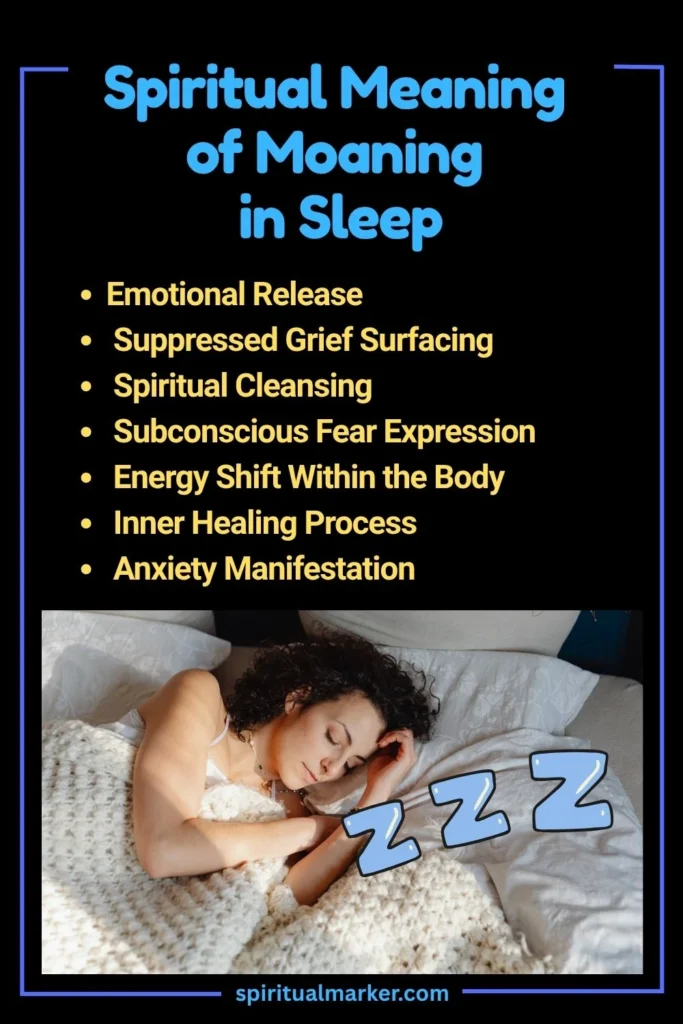
While doctors explain catathrenia as a rare sleep-related breathing pattern, spiritual perspectives focus on what the soul might be expressing when the conscious mind rests. Below, each meaning unfolds with deeper context so you can reflect on your own experiences with moaning in sleep in a thoughtful way.
1) Emotional Release
During the day, you manage responsibilities, conversations, and silent disappointments. You hold back tears in meetings. You swallow frustration in traffic. Over time, these unspoken emotions pile up.
When moaning in sleep occurs, it can function as a pressure valve. The body exhales longer than usual, and that sound carries stored emotion with it. Spiritually, this resembles an energetic sigh. The soul clears space the way a storm clears heavy air before sunrise.
Interestingly, many people who experience moaning in sleep report waking up lighter, even if they cannot remember their dreams. That shift suggests the subconscious processed something important. Instead of bottling emotions, your inner self releases them safely while you rest.
In this sense, moaning in sleep becomes a form of night therapy. No audience. No judgment. Only release.
2) Suppressed Grief Surfacing
Grief does not disappear because you ignore it. It waits quietly. Then, when silence arrives at night, it speaks.
If moaning in sleep happens alongside dreams of past relationships, lost loved ones, or missed opportunities, grief may be resurfacing. The subconscious mind revisits unfinished emotional business. Your body responds with low, aching sounds that mirror sorrow.
Spiritually, this process invites acknowledgment. Grief wants recognition, not resistance. When you allow space for remembrance through journaling, prayer, or reflection during the day, the intensity of moaning in sleep may soften over time.
Rather than signaling weakness, this experience reflects courage. Your soul refuses to bury pain permanently. Instead, it chooses healing through expression.
3) Spiritual Cleansing
Energy builds up throughout the day. Stressful conversations linger. Negative environments leave residue. Even digital overload affects your vibration.
Because of this, moaning in sleep can represent a spiritual detox. Think of it as washing emotional dust off your inner world. Just as the body sweats toxins, the spirit releases stagnant energy through breath and sound.
Certain spiritual traditions believe nighttime offers the strongest cleansing window because the ego rests. Without ego interference, the soul clears itself naturally. That clearing sometimes manifests as audible moaning.
After such nights, people often report vivid dreams or renewed clarity. The release prepares the spirit for growth. Therefore, instead of fearing moaning in sleep, you might view it as spiritual housekeeping.
4) Subconscious Fear Expression
Fear hides well during daylight. You distract yourself with tasks and conversations. However, once you sleep, distraction fades.
When moaning in sleep feels tense or strained, hidden anxieties may be surfacing. The subconscious mind processes fears symbolically through dreams. Meanwhile, the body reacts with vocal tension.
Spiritually, this signals shadow material rising for integration. Shadow work involves acknowledging traits, memories, or fears you avoid. Although the experience might sound unsettling, it prevents emotional stagnation.
If this meaning resonates, try reflecting on recurring stressors in your waking life. Addressing them consciously often reduces nighttime expressions. As awareness grows, moaning in sleep may gradually transform into calmer breathing patterns.
5) Energy Shift Within the Body
Beyond emotions, spiritual traditions discuss energy centers within the body. When life events disrupt balance, these centers shift.
Moaning in sleep sometimes accompanies energetic realignment. During deep rest, subtle adjustments occur in your internal energy field. You may not feel them consciously, yet your breath changes rhythm as alignment happens.
People exploring chakra systems often describe similar sensations during meditation. However, at night, the body performs this recalibration naturally. The sound becomes evidence of movement.
As energy flows more freely, vitality improves. You might wake feeling unexpectedly refreshed. In that way, moaning in sleep marks transition rather than disturbance.
6) Inner Healing Process
Healing rarely looks dramatic. Often, it unfolds quietly in darkness.
When moaning in sleep happens during periods of emotional recovery, it can symbolize deep restoration. The subconscious revisits old wounds. It reframes painful memories. It reorganizes belief systems that once limited you.
While you lie still, your inner world rebuilds itself. The moan becomes a byproduct of that rebuilding. Similar to muscles repairing after exercise, the soul strengthens through integration.
Many people notice increased resilience after such phases. They react differently to triggers. They feel less reactive. That shift suggests healing progressed beneath awareness.
Therefore, rather than labeling moaning in sleep as purely problematic, consider the possibility of growth occurring behind the scenes.
7. Anxiety Manifestation
Stress does not vanish when you close your eyes. It waits. Then it speaks in symbols.
When someone experiences frequent moaning in sleep, especially during restless nights, it often mirrors anxiety that has not found a daytime outlet. The mind may stay silent while awake, but the nervous system keeps score. At night, the body releases what the conscious mind suppressed.
From a spiritual lens, this sound acts as a pressure valve. The etheric body, which many traditions describe as the energy layer surrounding the physical body, holds emotional tension. As anxiety builds, it seeks expression. Moaning becomes a form of somatic prayer, a wordless exhale of burden.
This interpretation invites grounding before bed. Deep breathing, journaling, prayer, or simple stillness can calm the inner waves. When anxiety softens, moaning in sleep often reduces as well.
8. Soul Processing Trauma
Trauma rarely leaves in one dramatic moment. Instead, it loosens its grip slowly, layer by layer.
Some spiritual teachers believe that moaning in sleep signals deep emotional processing. During sleep, especially in dream states, the subconscious revisits memories that feel too heavy to confront during the day. The soul works like a careful gardener, untangling roots that have grown wild.
The sound itself may represent release. Think of it as a quiet labor of healing. Just as physical wounds ache while repairing, emotional wounds can surface through subtle nighttime expressions.
In this view, moaning does not mean weakness. It reflects courage. The higher self guides integration, helping fractured experiences blend back into wholeness. Over time, as healing progresses, the intensity of moaning in sleep may soften.
9. Spiritual Awakening Phase
Growth can feel uncomfortable. Expansion often stretches old beliefs until they break.
During periods of rapid spiritual growth, some people report unusual sleep patterns, vivid dreams, and even moaning in sleep. As awareness expands, the subconscious reorganizes. Old identities dissolve. New understanding forms.
This process can feel like growing pains for the soul. The moan may symbolize adjustment, similar to how muscles ache after exercise. Your inner world is reshaping itself.
Spiritual awakening shifts perception. You may question life purpose, relationships, or faith. At night, these shifts continue in silence. The sound becomes a byproduct of transformation.
Although unsettling, this stage often leads to deeper clarity and stronger connection with the divine. The key lies in patience. Growth stabilizes with time.
10. Prayerful Groaning of the Spirit
In Christian theology, the Apostle Paul writes about “groanings too deep for words” in Epistle to the Romans 8:26. Many believers interpret this as the Spirit praying on behalf of a person when language fails.
Through that lens, moaning in sleep may represent silent intercession. The body rests, yet the spirit communicates. No structured sentences. No formal rituals. Only raw surrender.
Such an experience often occurs during seasons of hardship or confusion. The heart longs for help but cannot form clear requests. The nighttime groan becomes sacred vulnerability.
Instead of fear, this interpretation invites reverence. It encourages trust that divine guidance flows even when consciousness fades.
11. Warning to Slow Down
Modern life praises constant productivity. Yet the soul moves at a slower rhythm.
When burnout creeps in, the body often sends early signals. Tension headaches. Fatigue. Irritability. At times, moaning in sleep joins the list.
Spiritually, this can serve as a warning bell. It suggests that overexertion has drained vital energy. The subconscious protests during rest because it never truly felt restored.
Rather than ignoring the sound, consider it an invitation. Evaluate workload. Set boundaries. Create space for silence. Protect your time fiercely.
When balance returns, sleep tends to grow quieter. The message has been heard.
12. Physical Stress Translating Spiritually
The body and spirit do not function as separate machines. They move together.
Daily strain tightens muscles and shortens breath. Eventually, physical tension crosses into emotional space. As you sleep, that tension may express itself through moaning in sleep, particularly during long exhalations.
In energy based belief systems, stress disrupts alignment. The nighttime sound then acts as a bridge between physical and spiritual release. It reflects the body clearing stored pressure so the spirit can rest freely.
This interpretation reminds us of something simple yet profound. Physical care matters spiritually. Stretching, hydration, exercise, and proper rest protect not only muscles but also inner harmony.
When the body feels supported, the soul rests easier.
Cultural and Religious Significance of Moaning While Sleeping
Across cultures, nighttime sounds often carry symbolic weight. Many societies believe sleep connects humans to the spiritual world.
In parts of African spiritual traditions, moaning during sleep can signal ancestral communication. People may believe that spirits visit through dreams. Therefore, unusual sounds may show interaction with unseen forces.
Certain Indigenous American beliefs treat sleep as a sacred state. Sounds made during dreams sometimes reflect spirit travel or emotional healing journeys.
In Hindu philosophy, sleep links to deeper layers of consciousness. Texts associated with the Mandukya Upanishad describe different states of awareness, including deep sleep as a spiritual condition. Moaning in that state might represent internal karma being processed.
Within Islamic thought, sleep holds spiritual meaning as well. While the Qur’an does not directly discuss catathrenia, it describes sleep as a sign of divine mercy. Some traditional interpretations view restless sleep as emotional unrest needing prayer.
In Buddhist teachings connected to Siddhartha Gautama, suffering expresses itself through the body. Moaning could reflect stored attachment or tension releasing from the subconscious mind.
European folklore sometimes interpreted sleep groaning as spiritual oppression or heavy emotional burden. However, modern views are far less dramatic.
Meanwhile, in contemporary spiritual circles, people often see moaning as energetic release. They connect it to chakra imbalance, especially the throat or heart chakra. The idea suggests that unspoken emotions try to exit the body.
Biblical Meaning of Moaning, Groaning, and Catathrenia
The Bible speaks often about groaning. It connects groaning with pain, longing, and deep spiritual prayer.
In Romans 8:26, the apostle Paul writes that the Spirit helps us in weakness with groanings too deep for words. This verse suggests that not all groaning is negative. Sometimes it reflects spiritual intercession.
Psalm writers also describe groaning. In Psalm 6:6, King David says he is weary with groaning and floods his bed with tears. Here, groaning expresses sorrow and repentance.
Similarly, Exodus 2:24 describes the groaning of the Israelites in bondage. God hears their cries and responds with deliverance. Therefore, groaning can symbolize a cry for freedom.
The Bible often treats groaning as a sign of burden, but also of hope. It shows that pain expressed honestly invites divine attention.
Although Scripture does not mention catathrenia specifically, it recognizes that human bodies express spiritual realities. If someone moans in sleep, it may reflect deep prayer, distress, or inner conflict.
Why Do I Moan in My Sleep When I’m Sick?
Illness stresses the body. Fever alters breathing. Congestion restricts airflow. As a result, sounds may occur during exhalation.
Spiritually speaking, sickness lowers physical defenses. Emotional sensitivity increases. Because of that, suppressed feelings may rise to the surface.
When you are sick, your body focuses on healing. Meanwhile, your nervous system works overtime. That strain can translate into vocal release during sleep.
From a spiritual lens, illness sometimes represents forced rest. The body demands attention. Moaning could signal the body processing discomfort while healing.
Still, medical causes remain the primary explanation during sickness. If moaning appears only when ill, physical reasons likely dominate.
Moaning in Sleep: Good or Bad Spiritual Sign?
This question comes up often.
Moaning is not automatically good or bad. Meaning depends on context and emotional tone.
If moaning feels calm and rhythmic, it may show emotional release. In that case, it could signal healing.
If moaning sounds distressed or fearful, it might reflect anxiety or unresolved trauma. That suggests attention is needed.
Spiritual growth often involves discomfort. During awakening phases, people report vivid dreams, crying, or vocal expressions in sleep. Therefore, moaning can accompany transformation.
At the same time, persistent distress should not be ignored. Balance between spiritual interpretation and medical evaluation is wise.
Should I Be Concerned?
Concern depends on frequency and intensity.
If moaning happens rarely and causes no breathing issues, there is little reason to worry. Many people experience catathrenia without health risks.
However, if it disrupts sleep, causes daytime fatigue, or includes breath holding, consult a doctor. A sleep study can clarify the cause.
Spiritually, pay attention to your waking emotions. Do you feel overwhelmed? Are you suppressing grief? Reflection can help.
Prayer, journaling, or meditation may reduce emotional pressure. If trauma exists, speaking with a counselor brings relief.
In short, listen to both your body and your spirit.
Final Thoughts
Moaning in sleep can feel mysterious. Yet most cases have simple explanations tied to breathing patterns. Catathrenia itself is usually harmless.
At the same time, the body and spirit connect deeply. Nighttime sounds sometimes reflect inner release, grief, prayer, or stress.
Therefore, avoid fear. Instead, observe gently. Notice patterns. Care for your emotional and physical health.
When you combine medical wisdom with spiritual awareness, clarity grows. And often, clarity brings peace.
You Might Also Like
1) Spiritual Meaning of Burping and Biblical Symbolism
2) Spiritual Meaning of Headaches: on Different Sides
3) Spiritual Meaning of Back Pain: Lower, Mid and Upper Back
4) Spiritual Meaning of Sleeping in the Fetal Position
5) Itchy Nose Superstition and Spiritual Meaning Explained
References
- https://whatspiritual.com/spiritual-meanings-of-moaning-in-sleep-catathrenia/
- https://angelynum.com/spiritual-meaning-moaning-sleep/
- https://www.meaningfulspirit.com/spiritual-meanings-of-moaning-in-sleep/
- https://snuggymom.com/why-do-people-moan-in-their-sleep/
- https://www.angelicalbalance.com/spirituality/catathrenia-spiritual-meaning/
- https://spiritualbegin.com/moaning-in-sleep/