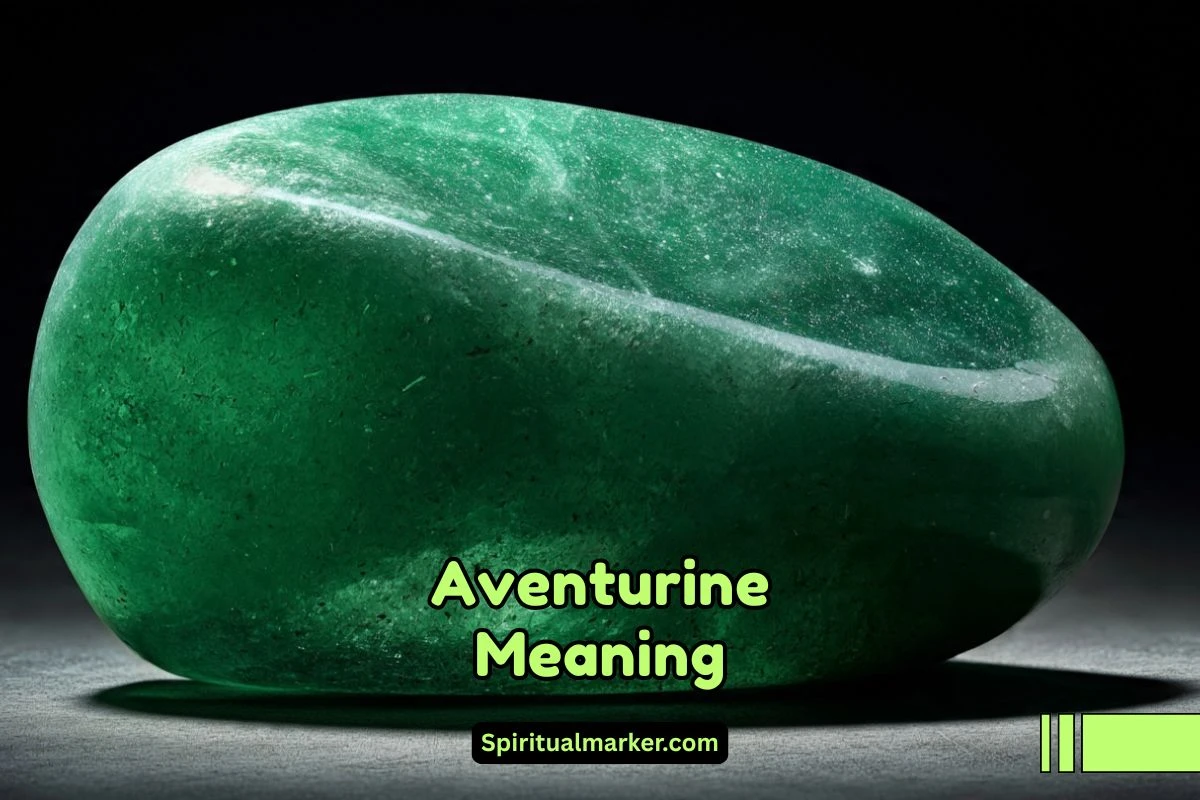
Aventurine is a stone of opportunity and luck. Its sparkling surface and green hue evoke growth and prosperity. In spiritual practice, this stone carries lucky and heart-centered energy.
The aventurine meaning often involves prosperity, luck, and emotional healing. It is a stone of the heart chakra, helping to attract abundance and release fear. A spiritual meaning of green aventurine shares that aventurine focus, though green aventurine carries a more specific energy.
Aventurine is used in crystal healing to attract money, support physical healing, and boost creativity. It can also symbolize opportunity and resilience. The stone's energy is vibrant and uplifting.
If you feel drawn to aventurine, it may signal a need for luck. A spiritual meaning of green jade also deals with green stones, though jade carries a more protective energy.
Key Takeaways
- Aventurine is widely known as the Stone of Opportunity and is strongly associated with luck, abundance, and new beginnings.
- It connects primarily with the heart chakra, supporting emotional healing, compassion, and inner balance.
- Many spiritual traditions use aventurine for manifesting prosperity, releasing emotional blocks, and encouraging personal courage.
- Aventurine belongs to the quartz family and gets its sparkling quality from mineral inclusions called fuchsite, hematite, or goethite.
- Wearing aventurine close to the heart or skin may strengthen feelings of emotional calm, optimism, and spiritual groundedness.
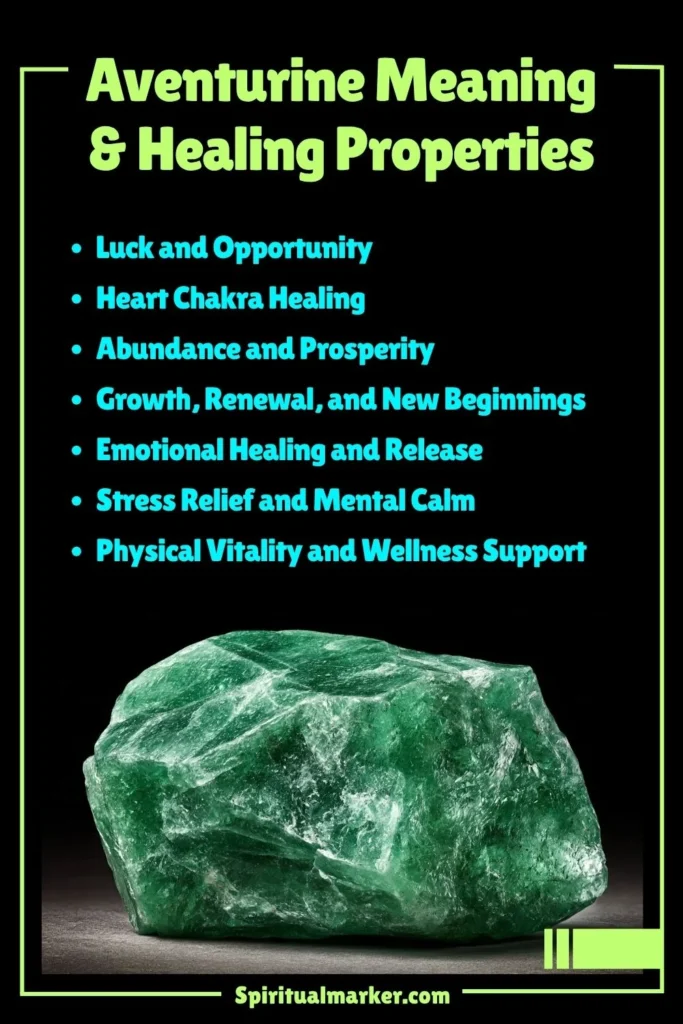
What Is Aventurine?
Aventurine is a variety of quartz known for its distinctive glittering effect called aventurescence. This shimmering quality comes from tiny reflective mineral platelets embedded within the stone. Most commonly, those platelets are fuchsite, a green mica mineral that gives green aventurine its characteristic color and sparkle.
The stone appears in several colors, including blue, red, orange, peach, yellow, and brown. However, green aventurine remains by far the most recognized, the most widely used, and the most spiritually celebrated variety. When most people say “aventurine,” they are referring to the green version.
At first glance, aventurine may look similar to jade or green quartz. But its internal shimmer sets it apart. When light catches the surface of a good piece of aventurine, tiny flecks of sparkle move and shift across the stone. That visual effect creates a sense of depth and aliveness that many collectors and spiritual practitioners find magnetic.
Aventurine rates between 6.5 and 7 on the Mohs hardness scale. This makes it reasonably durable compared to softer gemstones like green opal or malachite. It handles everyday wear relatively well, which explains why it appears frequently in jewelry, meditation tools, tumbled stones, and decorative carvings.
Origins and Formation
Aventurine forms through a geological process involving fine-grained quartz combined with intergrown mineral platelets. The characteristic shimmer develops when those platelets align uniformly enough to reflect light in a synchronized, almost metallic way. That internal alignment is what creates aventurescence.
The stone forms within metamorphic and sedimentary rock formations. Geological pressure and heat transform silica-rich materials over long periods of time, slowly embedding mineral inclusions that create aventurine’s distinctive inner glow.
India has historically been one of the world’s most significant sources of aventurine. The stone is sometimes called Indian jade in trade markets because of how widely it appears across the Indian subcontinent. Other major sources include Brazil, Russia, Tanzania, Nepal, Austria, and Chile. Each geographic source may produce slightly different color intensities, clarity levels, and sparkle qualities.
Brazilian aventurine often appears in deeper, richer greens. Russian deposits have historically yielded aventurine of exceptional quality. Indian material spans a wide range, from pale mint to deep forest green, and has fueled global supply for centuries.
The stone’s formation process carries symbolic resonance. Pressure, time, and internal alignment create something beautiful. Many spiritual practitioners see this geological reality as a metaphor for personal growth. Difficulty, patience, and inner clarity often produce the same result in human experience.
Key Properties
| Property | Details |
|---|---|
| Primary Color | Green (also blue, red, orange, peach) |
| Composition | Silicon dioxide (quartz) with mineral inclusions |
| Hardness | 6.5 to 7 on the Mohs scale |
| Chakra Association | Heart chakra (primarily); also throat and sacral |
| Symbolism | Luck, opportunity, abundance, emotional healing |
| Common Sources | India, Brazil, Russia, Tanzania, Austria |
| Transparency | Opaque to translucent |
| Energy Style | Uplifting, grounding, heart-centered |
| Key Mineral | Fuchsite (green mica) |
| Spiritual Uses | Manifesting, meditation, heart healing, grounding |
Historical Use
Aventurine has a rich history that stretches across multiple ancient civilizations. The ancient Tibetans used aventurine in statues and sacred objects, particularly to represent the eyes. They believed the stone improved vision and perception, both physically and spiritually. Statues adorned with aventurine were thought to carry greater life force and spiritual awareness.
Ancient Chinese culture associated green stones with harmony, prosperity, and good fortune. Aventurine carved into ornamental pieces and amulets appeared frequently in Chinese decorative traditions. The stone’s green color connected it symbolically with growth, vitality, and natural abundance.
In ancient Greece and Rome, green stones were regularly associated with Venus, the goddess of love and beauty. While jade held the most prestigious position, aventurine’s similar appearance gave it comparable symbolic status in certain traditions. Warriors sometimes carried aventurine believing it strengthened courage and decision-making during battle.
South American indigenous traditions also worked with aventurine in healing and ceremonial contexts. Its earthy green color linked it with the natural world, with fertility, and with the life-giving energy of forests and rivers.
During the Italian Renaissance, craftspeople in Venice accidentally created glass with a similar glittering effect. They named it “a ventura,” meaning “by chance” in Italian. The name eventually transferred to the natural stone. This linguistic history reinforces aventurine’s enduring connection with luck and fortunate surprises.
Modern crystal healing traditions have built extensively on these historical foundations. Today, aventurine remains one of the most widely recommended stones for new beginnings, emotional healing, abundance work, and heart chakra practices.
5 Spiritual Meanings of Aventurine
1. Luck and Opportunity
Aventurine’s most recognized spiritual meaning is its connection with luck and opportunity. The title “Stone of Opportunity” is not just a poetic label. It reflects a deeply held belief across multiple healing traditions that aventurine energetically aligns people with favorable circumstances, open doors, and fortunate timing.
This symbolism does not suggest passive waiting for luck to arrive. In most spiritual contexts, aventurine represents the intersection of preparation and opportunity. Many practitioners believe the stone amplifies a person’s natural ability to recognize openings, act with confidence, and move forward without excessive hesitation or fear.
People often carry aventurine during major life decisions. Job interviews, new business ventures, creative launches, relationship beginnings, and important life transitions all appear as common moments when individuals reach for this stone. The belief centers on the idea that aventurine energetically supports favorable outcomes by encouraging both inner readiness and outer awareness.
Luck in spiritual traditions rarely means random fortune. It usually describes a state of alignment between internal energy and external circumstances. A person who feels emotionally stuck, mentally scattered, or spiritually closed may miss opportunities simply because their internal state prevents them from noticing or pursuing openings. Aventurine symbolically addresses this by encouraging emotional openness, mental clarity, and confident forward movement.
Many practitioners also associate aventurine with releasing pessimism and fear-based thinking that blocks recognition of opportunity. Chronic worry and emotional negativity can create a mental filter that causes people to focus on obstacles rather than possibilities. Aventurine spiritually represents the shift from defensive thinking toward open, hopeful awareness.
Its historical connection with chance and fortunate surprises reinforces this symbolism powerfully. The stone literally carries the linguistic memory of unexpected good fortune within its name, a detail that adds cultural and symbolic depth to its reputation.
2. Heart Chakra Healing and Emotional Balance
Aventurine holds a strong and widely recognized connection with the heart chakra. In many spiritual systems, the heart chakra serves as the energetic center of love, compassion, emotional trust, forgiveness, empathy, and relational connection. When this chakra feels balanced and open, emotional life tends to feel richer, more honest, and more deeply connected to others. When it feels closed or blocked, emotional withdrawal, resentment, fear of intimacy, and interpersonal difficulties often increase.
Many spiritual practitioners believe aventurine works with heart chakra energy in a uniquely balanced way. Unlike some heart stones that emphasize vulnerability and emotional openness intensely, aventurine combines heart-centered energy with gentle emotional grounding. It encourages emotional honesty without forcing emotional exposure before a person feels ready.
This balance makes aventurine especially meaningful during emotional recovery. After heartbreak, betrayal, grief, or prolonged emotional stress, the heart chakra often responds by partially closing as a form of self-protection. That protective response makes sense, but over time it can create emotional numbness, social withdrawal, or difficulty forming new meaningful connections.
Aventurine symbolically supports the gradual reopening of emotional pathways. It encourages compassion, emotional trust, and relational warmth without pressuring people to become emotionally vulnerable before they feel safe. Many people describe its energy as emotionally encouraging rather than emotionally demanding.
Forgiveness forms another significant theme within aventurine’s heart chakra symbolism. In spiritual contexts, forgiveness does not primarily mean condoning harmful behavior. It means releasing the internal emotional burden that continued resentment and emotional pain create within the person carrying it. Aventurine is often used during healing work focused on releasing those emotional weights slowly and without self-judgment.
The stone also encourages emotional self-awareness. Many people spend years disconnected from their own emotional needs, feelings, or patterns. Aventurine symbolically supports reconnecting with inner emotional reality in a calm, patient, and non-threatening way.
3. Abundance and Prosperity
Aventurine has carried strong associations with prosperity, material abundance, and financial growth for centuries. Its green color naturally connects it with themes of fertility, growth, and flourishing, and those themes extend from natural cycles into human experience, including financial and material well-being.
In various spiritual traditions, abundance is not viewed as separate from inner state. Many healing philosophies emphasize that external prosperity tends to follow internal alignment. People who feel emotionally blocked, spiritually disconnected, or mentally overwhelmed may unconsciously resist or overlook opportunities for financial growth. Aventurine symbolically works on both levels, clearing internal blocks while amplifying awareness of external possibilities.
Many entrepreneurs, creatives, business owners, and individuals pursuing major career goals have used aventurine as part of their personal practices. They place it on desks, carry it during important meetings, hold it during manifestation meditations, or wear it while pursuing financial or professional goals. The stone symbolically reinforces the mindset of openness, optimism, and forward movement that prosperity often requires.
This symbolism also extends into energetic abundance, meaning richness of experience, creative output, relational depth, and spiritual fulfillment rather than purely financial wealth. Aventurine is associated with a broad sense of abundance that includes emotional richness, creative vitality, and meaningful opportunity.
Some crystal traditions connect aventurine with the energy of spring and new growth. Just as dormant seeds crack open and push toward light without knowing exactly what growth will look like, aventurine represents the energetic willingness to grow toward greater abundance without requiring certainty about the outcome. That willingness forms a core part of its prosperity symbolism.
Historical records suggest ancient cultures carried green stones in coin purses and trading spaces to attract financial favor. Aventurine was specifically included in some of these traditions. This historical practice reflects how deeply its association with material prosperity has been embedded across different civilizations and periods.
4. Personal Courage and Confidence
Aventurine is strongly associated with courage, self-confidence, and decisive action. While its heart chakra connection gives it an emotional, compassionate dimension, aventurine also carries a more dynamic energy related to moving forward boldly and trusting personal decisions.
Many people struggle with self-doubt during important life decisions. Fear of failure, fear of judgment, fear of change, and fear of the unknown can create paralysis that prevents meaningful forward movement. Aventurine spiritually represents the courage to act despite uncertainty. It does not eliminate doubt, but it symbolizes the emotional steadiness required to move forward anyway.
In ancient warrior traditions, green stones like aventurine appeared in protective amulets and battle preparations. Warriors carried them believing the stones strengthened decisiveness and mental clarity under pressure. While modern applications look very different, the underlying theme remains consistent. Aventurine represents the ability to remain emotionally grounded and mentally clear when facing significant challenges or important decisions.
Confidence within aventurine’s symbolism grows from emotional groundedness rather than bravado. Some stones are associated with aggressive confidence or outward dominance. Aventurine represents a quieter inner confidence that feels stable, honest, and authentically personal. This type of confidence does not depend on external validation. It grows from genuine self-awareness and emotional stability.
Many practitioners use aventurine when preparing for situations that require courage. Job interviews, difficult conversations, public speaking, creative risks, and major personal decisions all appear as common contexts where individuals reach for this stone. The belief centers on aventurine reinforcing emotional steadiness and clear-minded confidence when the stakes feel high.
Its symbolism also connects courage with compassionate assertiveness. Speaking honestly, setting healthy emotional boundaries, or expressing authentic needs in relationships requires a specific type of courageous emotional clarity. Aventurine spiritually supports this combination of emotional honesty and personal confidence, making it meaningful in interpersonal contexts as well as individual ones.
5. Growth, Renewal, and New Beginnings
One of aventurine’s deepest spiritual meanings centers on growth, renewal, and fresh starts. Its connection with spring energy, natural flourishing, and forward movement makes it one of the most popular stones during periods of significant life transition and personal reinvention.
New beginnings are often more emotionally complicated than they appear. Moving toward something new also means leaving something familiar behind. Even when the familiar was painful or limiting, the loss can create emotional uncertainty, grief, or hesitation. Aventurine symbolically addresses this emotional complexity by encouraging trust in gradual growth and openness to new possibilities.
Many people carry or wear aventurine during major transitions such as relocation, career change, relationship endings, new relationship beginnings, recovery journeys, or educational milestones. The stone symbolizes emotional readiness for what comes next rather than resistance to necessary change.
Its green color connects it powerfully with spring symbolism. Spring represents the end of dormancy and the beginning of visible, active growth. Seeds that spent months developing beneath the soil begin breaking through the surface and reaching toward light. This natural cycle mirrors the personal experience of emotional healing and spiritual renewal. Growth that happened internally over long, quiet periods eventually becomes visible externally.
Aventurine’s symbolism as a stone of new beginnings also connects deeply with releasing emotional patterns that no longer serve personal growth. Old fears, outdated beliefs, habitual self-doubt, and emotional limitations often create invisible boundaries around what feels possible. Aventurine spiritually represents stepping beyond those invisible boundaries and opening to greater possibilities.
Many spiritual traditions also associate new beginnings with gratitude for what was learned during difficult periods. Growth without reflection tends to repeat old patterns. Aventurine symbolizes new beginnings that carry the wisdom of past experience forward rather than simply escaping from difficulty without learning from it.
6 Healing Properties of Aventurine
1. Emotional Healing and Release
Aventurine is widely used in emotional healing practices because its energy combines heart chakra resonance with gentle, stabilizing groundedness. Many people who carry unresolved emotional pain find aventurine’s energy neither overwhelming nor dismissive. It creates a middle space where emotions can surface, be acknowledged, and gradually release.
Emotional healing rarely follows a neat, linear process. A person may feel genuinely better for several weeks, then suddenly encounter a memory or situation that reopens old emotional pain. This non-linear quality can feel discouraging. Aventurine symbolically normalizes this experience by reflecting nature’s own non-linear growth patterns. Progress is happening even when it feels invisible.
Many crystal practitioners describe aventurine as emotionally encouraging rather than emotionally demanding. It does not force deep emotional confrontation. Instead, it creates a sense of emotional safety that makes honest inner reflection feel less threatening. This gentleness is one reason people often turn to aventurine during grief recovery, trauma healing, and emotionally sensitive life periods.
The stone also carries symbolism related to releasing emotional armor. After painful experiences, many people build protective emotional barriers that eventually become limiting rather than protective. Aventurine symbolically supports the gradual softening of those barriers in a way that feels emotionally safe and paced appropriately to personal readiness.
2. Stress Relief and Mental Calm
Aventurine has earned a consistent reputation as a calming and stress-relieving stone across crystal healing traditions. Its earthy green energy is frequently described as emotionally cooling and mentally quieting, particularly during periods of overwhelming stress, anxiety, or emotional overload.
Chronic stress affects the body, mind, and emotional life in interconnected ways. People under sustained stress often experience difficulty concentrating, emotional irritability, fatigue, and a persistent sense of mental noise that makes rest feel elusive. Aventurine symbolizes emotional steadiness within mental turbulence rather than emotional numbness or avoidance.
Many practitioners place aventurine in spaces where stress accumulates. Work desks, meditation corners, bedrooms, and personal carry items are common placements. The belief centers on the stone’s calming presence influencing emotional atmosphere during demanding daily periods.
Its association with stress relief also reflects the importance of slowing down internally. Some people cannot rest even when physically still because their minds remain aggressively active. Aventurine symbolically encourages a more deliberate emotional pace, making it meaningful for those who struggle with anxiety, overthinking, or mental hyperactivity.
3. Boosting Optimism and Positive Outlook
Aventurine is strongly associated with emotional optimism and positive forward-thinking. Many crystal practitioners believe it helps shift emotional orientation from worry-focused to possibility-focused thinking. This is not toxic positivity or denial of difficulty. It is a more balanced emotional orientation that acknowledges challenges without becoming consumed by them.
Pessimism often develops as a form of emotional self-protection. If expectations remain low, disappointment feels less painful. But sustained pessimism also quietly limits personal potential, reduces motivation, and creates emotional heaviness that affects every area of life. Aventurine spiritually represents an alternative emotional orientation where possibility feels as real and credible as fear.
Many people working through periods of discouragement, failure, or emotional burnout use aventurine to help rebuild emotional optimism gradually. The stone does not promise instant emotional transformation. Instead, it symbolically supports the slow return of hopefulness, enthusiasm, and emotional energy that burnout often depletes.
Its connection with spring energy and natural renewal reinforces this symbolism powerfully. Spring does not arrive through force. It arrives through the gradual accumulation of warmth, light, and natural readiness. Aventurine represents the same natural accumulation of positive emotional energy.
4. Physical Vitality and Wellness Support
Within crystal healing traditions, aventurine is associated with physical vitality, circulation, and overall wellness. Many practitioners connect its heart chakra energy with cardiovascular health symbolism, since the heart chakra in many spiritual systems corresponds both emotionally and physically with the heart and surrounding systems.
Some holistic healers have used aventurine in energetic healing work alongside conventional medical care. They believe its calming, heart-centered energy supports stress reduction that benefits physical health indirectly. Since chronic stress contributes to numerous physical health challenges, any practice that reduces stress may carry physical wellness implications.
Aventurine is sometimes associated with skin health, eye comfort, and muscular relaxation in crystal healing literature. These associations come primarily from traditional and metaphysical sources rather than clinical research. Crystal healing is a complementary spiritual practice, not a medical treatment, and should always be used alongside professional medical advice rather than as a replacement for it.
Many people who use aventurine for physical wellness do so as part of a broader self-care practice that includes mindfulness, movement, healthy nutrition, adequate rest, and professional medical care. Within that broader context, the stone serves as a meaningful symbolic anchor for wellness intentions.
5. Supporting Manifestation Practices
Aventurine is one of the most commonly recommended crystals for manifestation work. Its combination of heart-centered energy, prosperity symbolism, and opportunity-attracting reputation makes it a popular tool for people working with intention setting, vision boards, meditation-based manifestation, and abundance rituals.
Manifestation in spiritual practice generally refers to aligning inner intention, emotional energy, and focused awareness with desired outcomes. Many practitioners believe this alignment makes a person more emotionally open, mentally clear, and perceptively attuned to opportunities that match their intentions. Aventurine symbolically supports all three of these elements.
People often hold aventurine during meditation focused on career goals, financial growth, creative achievements, relationship intentions, or personal development milestones. The stone is believed to amplify the emotional confidence and energetic openness required for effective manifestation practice.
Its reputation as the Stone of Opportunity means many practitioners also carry it during active pursuit of goals rather than only during formal meditation. Having aventurine present during job applications, business meetings, creative presentations, or meaningful conversations serves as a physical reminder of intentional openness to favorable outcomes.
6. Encouraging Creativity and Mental Clarity
Aventurine is associated with creative thinking, mental clarity, and intellectual freshness. Many writers, artists, musicians, entrepreneurs, and creative professionals include it in their workspaces because they believe it supports original thinking, mental flexibility, and decision-making clarity.
Creative blocks often have emotional roots. Fear of judgment, perfectionism, emotional exhaustion, or self-doubt can paralyze creative output even in highly talented people. Aventurine’s combination of confidence-supporting and heart-centered energy addresses this emotional dimension of creative blocks.
Many crystal practitioners also associate aventurine with perspective shifts. When people feel stuck mentally, they often need a change of emotional or perceptual angle rather than simply more effort. Aventurine symbolically represents that reorientation, helping people approach familiar problems from fresh angles.
Its calming energy also supports the mental spaciousness that creativity requires. Overstimulated, stressed, or emotionally chaotic mental states tend to suppress creative flow. Aventurine helps create emotional and mental calm that allows creative ideas to surface more naturally and freely.
How to Wear Aventurine Jewelry for Spiritual Growth
Wearing aventurine jewelry is one of the most popular and accessible ways to maintain energetic connection with the stone throughout the day. Because aventurine connects strongly with the heart chakra, necklaces and pendants worn close to the chest carry particularly meaningful spiritual symbolism. The stone rests near the heart, which aligns with its primary energetic associations.
Aventurine bracelets also remain extremely popular. Wearing aventurine on the wrist keeps it in frequent physical contact with the skin and within your perceptual awareness throughout daily activities. Many people find this placement helpful during stressful workdays, important meetings, or emotionally demanding social situations.
Aventurine rings carry their own symbolic significance. Some practitioners believe wearing aventurine on the hands strengthens conscious intention and energetic awareness during daily interactions and decisions. The dominant hand is often associated with giving and taking action, while the non-dominant hand is associated with receiving and inner experience.
Many people choose to wear aventurine specifically during activities involving personal intention. Meditation, yoga, journaling, creative work, important conversations, and professional pursuits all represent meaningful contexts for wearing the stone. Consistent contact reportedly deepens energetic resonance over time.
Pairing aventurine with complementary stones can enhance specific intentions. Rose quartz amplifies compassionate love energy. Citrine strengthens abundance and optimism themes. Clear quartz may amplify aventurine’s overall energy. Amethyst supports calm introspection and spiritual clarity. These combinations depend entirely on personal intention and individual resonance.
Caring for Aventurine Jewelry
Aventurine is relatively durable compared to many healing stones, but it still benefits from gentle, consistent care to preserve both its physical beauty and its energetic quality over time.
Store aventurine jewelry separately from harder gemstones like diamonds, sapphires, or rubies that could scratch its surface. Soft fabric pouches or padded jewelry compartments protect it from physical damage during storage.
Clean aventurine using lukewarm water, mild soap, and a soft cloth. Rinse thoroughly and dry completely before storage. Avoid ultrasonic cleaners, steam cleaning, harsh chemical cleaners, and abrasive brushes. These can damage the surface finish and potentially weaken the stone’s structural integrity over time.
Avoid prolonged exposure to direct sunlight or intense heat. While aventurine is more heat-resistant than softer stones like opal, sustained intense heat or sudden temperature changes may affect its color and surface quality over time. Remove aventurine jewelry before swimming, intense exercise, household cleaning, or prolonged outdoor sun exposure.
Many people who use aventurine spiritually also include energetic cleansing as part of their care routine. Common methods include placing the stone in moonlight overnight, using sound cleansing with singing bowls or bells, placing it on selenite plates, or holding it under running cool water with clear cleansing intention. Energetic cleansing practices vary widely and depend entirely on personal belief and spiritual tradition.
Aventurine at a Glance
| Aspect | Details |
|---|---|
| Primary Meaning | Luck, opportunity, and abundance |
| Chakra Association | Heart chakra (primarily) |
| Main Spiritual Symbolism | Growth, prosperity, emotional healing, courage |
| Common Colors | Green (also blue, red, orange, peach) |
| Hardness | 6.5 to 7 Mohs |
| Main Sources | India, Brazil, Russia, Tanzania, Austria |
| Emotional Associations | Optimism, calm, compassion, confidence |
| Popular Jewelry Types | Pendants, bracelets, rings |
| Spiritual Uses | Manifestation, heart healing, abundance, grounding |
| Key Mineral | Fuchsite (green mica) |
| Care Needs | Gentle cleaning, protection from scratches and heat |
A Final Note
Aventurine carries a rare combination of energies that few stones match. It is simultaneously grounding and uplifting, emotionally healing and energetically encouraging, heart-centered and courage-building. That balance is precisely why it has maintained such enduring relevance across so many different spiritual traditions and healing practices.
Whether you are drawn to aventurine for its lucky symbolism, its heart chakra healing properties, its beautiful shimmering green appearance, or its association with abundance and personal growth, the connection you feel likely reflects something meaningful within your current life experience.
Some people wear it as daily jewelry and notice gradual shifts in emotional tone and personal confidence. Others use it during intentional meditation or manifestation practices and describe heightened clarity and hopefulness. Many simply keep it nearby as a grounding, beautiful reminder of their personal intentions and values.
If aventurine is calling your attention, trust that pull. You might also consider researching authentic sources for your stone, learning more about heart chakra practices that complement aventurine’s energy, or exploring how this remarkable crystal might integrate into a broader crystal healing collection that resonates with your specific personal goals.