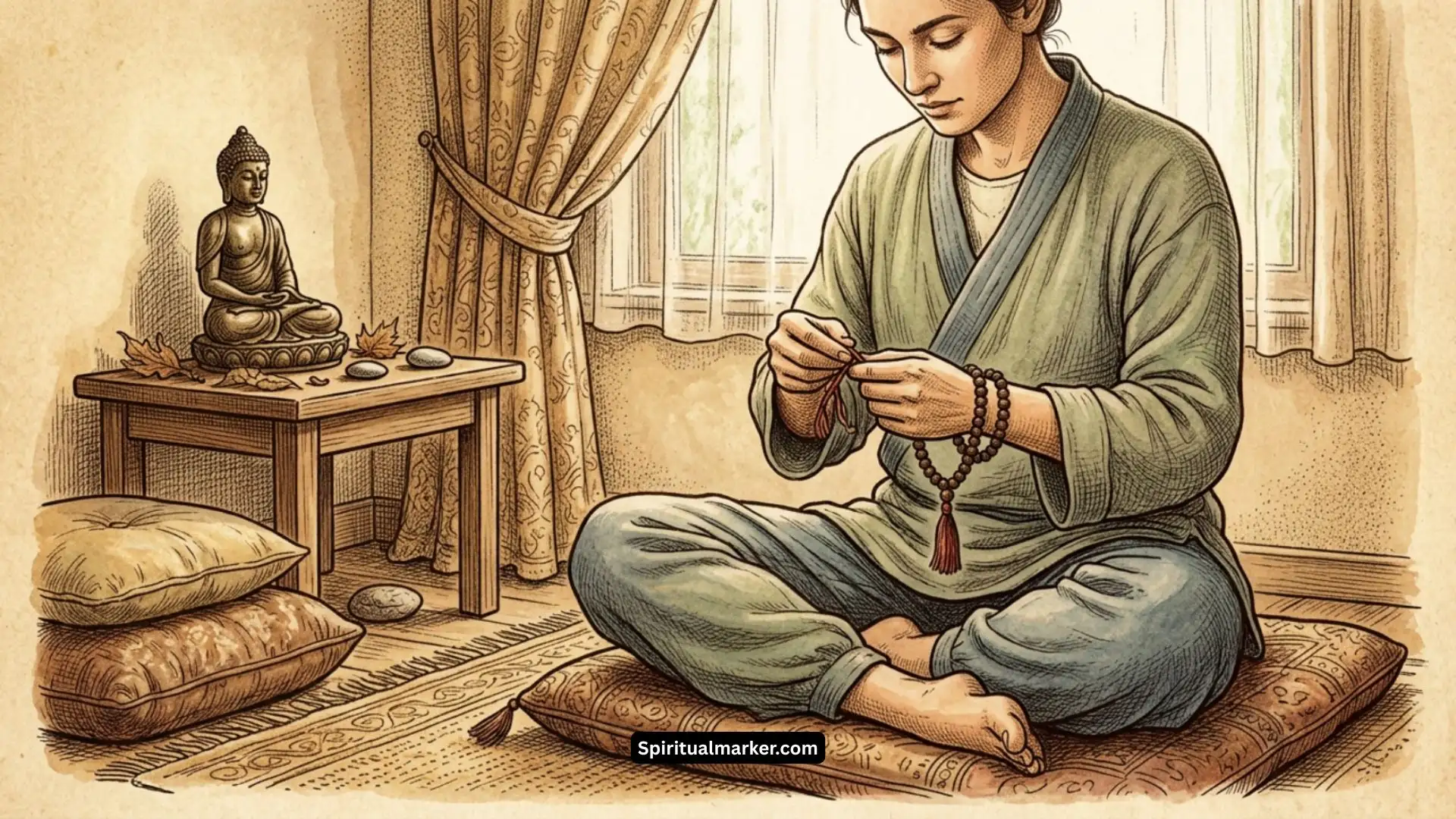
A Buddha bracelet is a beautiful and meaningful accessory. Its beads and Buddha charm evoke peace and mindfulness. Across cultures, this bracelet carries deep spiritual meaning and benefits.
The Buddha bracelet spiritual meaning often involves inner peace, spiritual protection, and mindfulness. Wearing it can serve as a reminder to stay present. A spiritual meaning of an evil eye bracelet breaks shares that bracelet focus, though the evil eye carries a more protective energy.
Some traditions view the Buddha bracelet as a symbol of devotion and compassion. Others see it as a reminder to walk a mindful path. The bracelet's material can add detail.
If you wear a Buddha bracelet, it may bring a sense of calm. A spiritual meaning of a red string evil eye bracelet also deals with spiritual jewelry, though the red string carries a specific protective energy.
Key Takeaways
- Buddha bracelets are sacred tools, not just accessories. Every element of the bracelet, from the beads to the centerpiece, carries intentional spiritual meaning rooted in Buddhist teachings and ancient healing systems.
- The number 108 is deeply sacred in Buddhist and Hindu traditions. Many authentic mala-style Buddha bracelets contain 108 beads, representing the 108 human desires that must be overcome on the path to enlightenment.
- Different materials carry different spiritual energies. Black obsidian offers protection, green jade promotes healing, red string wards off evil, and sandalwood deepens meditation and calm.
- Buddha bracelets offer measurable benefits. Wearing one with genuine intention supports mindfulness, reduces anxiety, strengthens focus during meditation, and fosters a deeper connection to spiritual practice.
- Cultural and religious traditions worldwide honor these bracelets. From Tibetan Buddhism to Thai spiritual practice to Chinese folk religion, Buddha bracelets hold revered places across many spiritual paths, each with its own layer of symbolism.
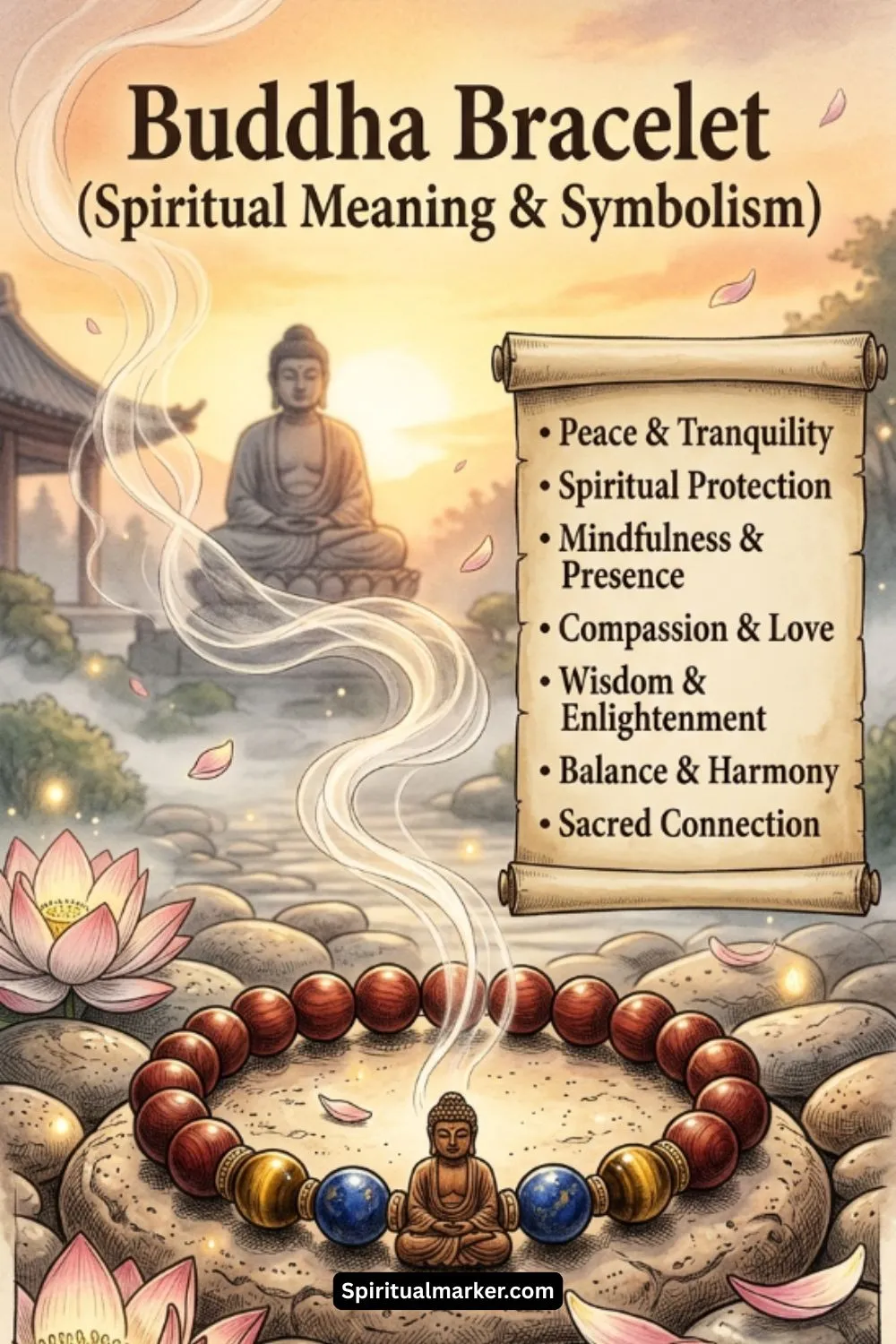
What Is a Buddha Bracelet and Why Does It Hold Spiritual Power?
A Buddha bracelet is a type of wrist accessory rooted in Buddhist religious tradition. At its most basic form, it consists of beads strung together, often with a central charm or figurine depicting the Buddha or a related sacred symbol such as the lotus flower, the Om symbol, or the Dharmachakra (the Wheel of Dharma). These bracelets originated in ancient Nepal and Tibet and spread across Asia as Buddhism itself traveled through China, Japan, Thailand, Sri Lanka, and beyond.
The spiritual power of a Buddha bracelet is not simply assumed. It is built on thousands of years of practice, devotion, and intention. In Buddhist thought, objects gain sacred energy through the sincerity of those who use them. When a bracelet is blessed by a monk or crafted from materials with inherent healing properties, such as crystal, jade, or sandalwood, its spiritual value multiplies. Monks in Thailand and Tibet regularly bless Buddha bracelets during ceremonies, infusing them with protective and healing energy.
Beyond religion, the bracelet serves as a tactile anchor for spiritual awareness. You can touch it during moments of stress or distraction. It reminds you, physically and immediately, of your spiritual commitments and values. Many modern practitioners use Buddha bracelets the same way ancient meditators used mala beads, as a tool to count recitations of mantras and maintain focus during prayer. The bracelet on your wrist is a living, breathing piece of spiritual practice.
What Does a Buddha Bracelet Symbolize?
At the heart of every Buddha bracelet lies rich symbolism. The Buddha figure itself represents awakening, wisdom, and the possibility that any human being can achieve enlightenment. When you wear a bracelet featuring the Buddha’s likeness, you carry a reminder that liberation from suffering is possible. This is the foundational promise of Buddhist teaching, the idea that through right understanding and right action, every person can transcend pain.
The beads on the bracelet typically symbolize the cycle of life, the continuity of spiritual practice, and the interconnection of all things. Round beads represent wholeness and the cyclical nature of existence. Each bead you pass through your fingers during meditation marks one moment of mindful awareness. Strung together, they represent the continuous, unbroken thread of consciousness that runs through all living beings.
The color and material of the bracelet add another dimension of symbolism. Red symbolizes courage and protection. Black obsidian represents the removal of negative energy. Green jade signifies health, prosperity, and harmony. Gold-colored elements point to spiritual wealth and the light of wisdom. White or clear beads, such as crystal quartz, stand for purity, clarity, and divine connection. Each combination creates a unique spiritual statement about the intention of the wearer.
Some bracelets include mantras engraved on charms, most commonly the sacred phrase “Om Mani Padme Hum.” This mantra is one of the most widely recited in all of Buddhism. It translates roughly to “the jewel in the lotus,” a reference to the beauty and purity that grows even from murky spiritual conditions. Wearing this mantra on your wrist is a form of continuous prayer, a silent petition sent into the universe with every movement of your hand.
7 Spiritual Meanings of Buddha Bracelets
1. Protection from Negative Energy
One of the most widely recognized spiritual meanings of a Buddha bracelet is protection. Across Buddhist cultures, sacred bracelets are worn as shields against negative forces, harmful intentions from others, and malevolent spiritual energies. In Thai Buddhism, monks tie sacred Sai Sin thread bracelets around the wrists of devotees during religious ceremonies, transferring blessings and protection directly from the monk’s prayers into the bracelet itself. This practice dates back many centuries and remains deeply active in contemporary Thai spiritual life.
The protective quality of the bracelet operates on multiple levels. Spiritually, it is believed to create an energetic barrier around the wearer. Psychologically, wearing a protective symbol reinforces a mindset of safety and inner strength. Physically, the act of touching the bracelet during stressful moments triggers a calming nervous system response. Black obsidian bracelets, for example, are specifically chosen for their reputedly powerful ability to absorb and deflect negative energy. Obsidian is a volcanic glass that has been used in protective spiritual practices across many world cultures, not just Buddhist ones.
The Buddha himself, in multiple suttas recorded in the Pali Canon, emphasized the power of spiritual refuge. Taking refuge in the Buddha, the Dharma, and the Sangha (the Triple Gem) is a foundational act in Buddhism. A bracelet bearing the Buddha’s image or name becomes a physical representation of this refuge. You carry your spiritual protection on your body, not just in your mind. For many practitioners, this physical reminder is as essential as any meditation session or prayer.
2. Mindfulness and Present-Moment Awareness
The Buddha bracelet is one of the most effective mindfulness tools available, and its power lies in its simplicity. Every time you glance at your wrist or feel the bracelet shift against your skin, it serves as a gentle prompt to return to the present moment. This is not accidental. The entire design of Buddhist practice, from mala beads to prayer flags to temple bells, is built around creating repeated reminders of awareness. Your bracelet operates on exactly this same principle.
In contemporary mindfulness research, this concept is known as an “intentional anchor.” An intentional anchor is a physical object or sensation that the mind learns to associate with a specific mental state. When you repeatedly pair touching your bracelet with the intention to be mindful, your brain builds a neural association between the two. Over time, the simple act of touching the beads becomes enough to trigger a state of heightened awareness and calm. This is backed by behavioral psychology as well as centuries of Buddhist contemplative experience.
Many spiritual teachers recommend setting a specific mindfulness intention when you first put on your Buddha bracelet each morning. Simply holding the bracelet for a few seconds and silently declaring your intention for the day transforms it from a passive ornament into an active spiritual tool. Throughout the day, whenever you notice the bracelet, you are pulled back to that morning intention. The bracelet becomes a thread connecting all your moments of awareness across the entire day.
3. Inner Peace and Emotional Healing
The Buddha’s core teaching centers on the liberation from suffering. Wearing a Buddha bracelet is an outward declaration that you are actively working toward inner peace. The bracelet carries the energy of this commitment. Many practitioners report feeling a measurable shift in their emotional state when they begin wearing a Buddha bracelet consistently. This shift is not merely placebo. It reflects the genuine power of symbolic anchoring and the calming influence of certain materials, particularly those used in traditional Buddhist bracelets.
Sandalwood beads are one of the most spiritually active materials used in Buddha bracelets. In Ayurvedic and Buddhist healing traditions, sandalwood is revered for its deeply calming properties. The scent of sandalwood has been shown in aromatherapy research to lower cortisol levels, reduce anxiety, and promote a sense of spiritual calm. When you wear a sandalwood Buddha bracelet, the gentle natural scent released by the wood throughout the day works quietly to regulate your emotional state. This is healing at a profoundly practical level.
Rose quartz Buddha bracelets are another powerful choice for emotional healing. Rose quartz carries centuries of association with love, self-compassion, and the healing of emotional wounds. Many healers and crystal practitioners recommend rose quartz for those moving through grief, heartbreak, or periods of intense self-criticism. A Buddha bracelet made with rose quartz beads combines the spiritual intention of Buddhist practice with the gentle healing energy of this well-loved stone. Together, they create a powerful tool for emotional restoration.
4. Spiritual Awakening and Enlightenment
The word “Buddha” literally means “the awakened one.” When you wear a Buddha bracelet, you carry this image of awakening on your body. This is not a trivial act. In Buddhist cosmology, the aspiration toward enlightenment, known as Bodhicitta, is considered the highest and most noble intention a human being can hold. A bracelet bearing the Buddha’s image constantly reminds you of this ultimate spiritual possibility. You are not just wearing a symbol. You are wearing an aspiration.
The Bodhi tree, under which the historical Buddha attained enlightenment, is another symbol frequently incorporated into Buddha bracelet designs. Bodhi seed beads, made from the seeds of the sacred fig tree (Ficus religiosa), are among the most spiritually potent materials used in Buddhist mala bracelets. Wearing Bodhi seeds is believed to accelerate spiritual growth and deepen meditation practice. Tibetan Buddhist practitioners in particular prize Bodhi seed malas for their connection to the very moment of the Buddha’s awakening.
Wearing a Buddha bracelet with the genuine intention of spiritual awakening transforms ordinary moments into opportunities for practice. You brush your teeth, and the bracelet reminds you to be present. You drive to work, and the bracelet on your steering-gripping hand calls you back to awareness. You enter a difficult conversation, and a glance at the bracelet grounds you in compassion. This is what living spirituality looks like. It is not confined to the meditation cushion. It flows through every moment of the day.
5. Karma, Merit, and Righteous Action
In Buddhist teaching, karma refers to the law of cause and effect. Every action, thought, and intention creates ripples that return to the actor in kind. A Buddha bracelet carries a constant reminder of this sacred law. When you wear one, you are reminded at every turn to act with kindness, speak with honesty, and think with compassion. This is not moralism for its own sake. It is the deeply practical recognition that your actions shape your reality.
Many devotees wear Buddha bracelets specifically to accumulate merit, known in Pali as “punna.” In Buddhist traditions across Southeast Asia, wearing sacred objects blessed by monks is considered a merit-generating act in itself. The belief holds that the sincere wearing of a blessed bracelet, combined with ethical living, generates positive karmic energy that improves one’s current life and future rebirths. This motivates many practitioners to choose their bracelets carefully and to maintain them with respect.
The bracelet also serves as a check on impulsive negative actions. Many practitioners describe moments when they were about to say something unkind or make a harmful choice, and a glance at their Buddha bracelet stopped them. The bracelet became a physical conscience, a reminder of the values they had committed to embodying. This is one of the most powerful and underappreciated benefits of wearing a sacred object. It brings your highest values into your most ordinary moments.
6. Connection to the Divine and the Spiritual Realm
Across many Buddhist traditions, certain bracelets function as a direct link between the wearer and the divine. In Tibetan Buddhism, Bodhisattvas, enlightened beings who remain in the cycle of rebirth to help others, are venerated as spiritual intercessors. Bracelets bearing their images or mantras, such as a bracelet engraved with the Avalokiteshvara mantra, are believed to connect the wearer directly to the compassion of these divine beings. This connection is not metaphorical. It is experienced as a genuine energetic reality by devoted practitioners.
In Chinese Buddhist and Taoist traditions, the Laughing Buddha (Budai) is a figure of immense spiritual power associated with happiness, abundance, and good fortune. Bracelets featuring Budai are worn to invite these energies into one’s life. While Budai is technically a distinct figure from the historical Gautama Buddha, the two are often merged in popular spirituality. Wearing his image is understood as a form of prayer, an invitation for divine joy to flow into your daily experience.
The act of wearing any sacred Buddhist bracelet is, in essence, a form of continuous devotion. You do not need to be actively praying for the connection to function. The bracelet rests on your wrist, in contact with your pulse point, and is understood to vibrate with the sacred energy invested in it through blessing, intention, and the prayers of those who made it. Some practitioners choose to sleep with their bracelet on, believing that its protective and connective energy continues to work even during sleep and dreams.
7. Compassion and Loving-Kindness Toward All Beings
Compassion, known in Sanskrit as “Karuna,” and loving-kindness, known as “Metta,” are two of the four Brahmaviharas or divine abiding states in Buddhist teaching. The cultivation of these qualities is considered central to spiritual progress. A Buddha bracelet worn with the intention of developing compassion becomes an instrument of radical kindness. Each time you notice it, you are nudged to ask: am I acting from compassion right now? Am I bringing loving-kindness into this moment?
The Metta Sutta, one of the most beloved texts in the entire Pali Canon, instructs practitioners to extend loving-kindness to all beings without exception, including those who are difficult or hostile. This is an extraordinarily demanding spiritual practice. Your Buddha bracelet can serve as a daily companion in this work. When you encounter someone who challenges you, a moment of contact with your bracelet can break the automatic reaction and create space for a compassionate response instead.
Many Buddhist communities practice the Loving-Kindness Meditation, or Metta Bhavana, using mala bracelets to count repetitions of the loving-kindness phrases. The phrases are typically offered first to oneself, then to loved ones, then to neutral parties, and finally to difficult persons and all beings everywhere. A Buddha bracelet worn during and after this practice retains the energy of these intentions. You carry the field of compassion you generated in meditation with you through the rest of your day.
Buddha Bracelet Symbolism Across Cultures and Religions
The spiritual symbolism of Buddha bracelets varies meaningfully across the cultures that have adopted them. In Tibetan Buddhism, these bracelets are deeply integrated into a comprehensive system of ritual, mantra, and protective energy. Tibetan practitioners prize bracelets made from Bodhi seeds, yak bone, turquoise, and coral. Each material corresponds to specific spiritual qualities and elemental forces. A Tibetan Buddhist bracelet is often blessed during elaborate fire ceremonies or by high lamas whose spiritual authority amplifies the bracelet’s power.
In Thai Buddhism, the bracelet tradition is closely tied to the system of Sak Yant (sacred tattoos) and amulets that pervades the country’s spiritual culture. Monks bless bracelets during Wai Phra (paying respect to monks) ceremonies, and devotees often collect numerous blessed objects including bracelets over a lifetime of practice. Thai Buddhist bracelets frequently use materials like red string, silver, and natural gemstones. Red string bracelets blessed by monks are among the most widely worn spiritual accessories in Thailand and neighboring countries.
In Chinese Buddhist and folk traditions, Buddha bracelets often incorporate jade, which holds an especially revered place in Chinese culture. Jade is considered the “Stone of Heaven” in Chinese cosmology and carries associations with virtue, longevity, and divine favor. A jade Buddha bracelet in Chinese spirituality represents both material prosperity and spiritual refinement. The stone is believed to carry the energy of the earth itself and to protect the wearer from illness and misfortune. Many Chinese families pass jade Buddhist objects from generation to generation as sacred heirlooms.
Japanese Buddhist practice incorporates a form of bracelet called the juzu, a wrist-size version of the traditional Buddhist prayer beads. Different Buddhist schools in Japan use different configurations of juzu beads, with specific materials and bead counts designated for each school’s practice. In Sri Lankan Theravada Buddhism, sacred thread bracelets called “pirit nool” are tied at the conclusion of pirit ceremonies, during which monks chant protective suttas for hours at a time. The thread absorbs the energy of the chanting and conveys it to the wearers.
The Sacred Number 108 and Its Significance in Buddha Bracelets
If you own a full mala-style Buddha bracelet, you may have noticed it contains exactly 108 beads. This is not coincidence. The number 108 holds extraordinary spiritual significance across both Buddhism and Hinduism and is considered one of the most sacred numbers in Eastern spiritual traditions. In Buddhism, 108 represents the total number of earthly desires or defilements that human beings must overcome on the path to nirvana. By passing through each of the 108 beads during mantra recitation, the practitioner symbolically addresses and releases each of these binding energies.
The number 108 also appears throughout sacred mathematics and astronomy. Ancient Indian astronomers calculated that the distance from the Earth to the Sun is approximately 108 times the Sun’s diameter. The distance from the Earth to the Moon is approximately 108 times the Moon’s diameter. This cosmic resonance contributes to the sense that 108 is woven into the fabric of existence itself. Wearing a 108-bead bracelet thus connects you not only to Buddhist tradition but to the mathematical harmony of the cosmos.
In practice, many wrist-sized Buddha bracelets contain 27 beads, which is exactly one quarter of 108. Others contain 54 beads, or exactly half. These configurations preserve the sacred numerical relationship while fitting comfortably on the wrist. When using these smaller bracelets for mantra recitation, practitioners cycle through the beads multiple times to complete a full round of 108 recitations. The number’s spiritual power remains intact regardless of whether the bracelet is full-length or wrist-sized.
Types of Buddha Bracelets and Their Spiritual Meanings
Black Obsidian Buddha Bracelets are among the most popular for spiritual protection. Black obsidian is a natural volcanic glass formed when lava cools rapidly. In many spiritual traditions, including Buddhist and shamanic practices, obsidian is prized for its ability to absorb, neutralize, and expel negative energy. These bracelets often feature a carved Pi Xiu (a mythical Chinese protective creature) or Buddha figurine. Wearing one is believed to guard against psychic attack, clear emotional blockages, and protect the wearer’s aura from external negative influences.
Sandalwood Buddha Bracelets are favored by meditators and those seeking calm and spiritual clarity. Sandalwood has been used in Buddhist, Hindu, and Ayurvedic traditions for thousands of years. Its scent is believed to calm the mind, enhance concentration during meditation, and elevate the practitioner’s spiritual vibration. In many monasteries across Asia, sandalwood incense burns continuously. Wearing a sandalwood bracelet brings a fragment of this sacred atmosphere into your everyday life.
Green Jade Buddha Bracelets carry associations with health, harmony, longevity, and prosperity. In Chinese tradition, jade is considered a stone of moral purity and spiritual virtue. Buddhist texts describe the qualities of a bodhisattva as similar to the qualities of jade: hard, brilliant, warm to the touch, and eternally beautiful. A jade Buddha bracelet is often given as a gift at important life milestones, including births, marriages, and graduations, because it is understood to carry blessings for a long and prosperous life.
Red String Buddha Bracelets draw from both Buddhist and Kabbalistic traditions of protective spiritual practice. In Buddhism, red string bracelets blessed by monks serve as direct conduits for the protective power of monastic prayer. The color red in Buddhist iconography represents the energy of life force and vitality. In Chinese culture, red is the color of fortune and celebration. A red string bracelet with a Buddha charm thus combines multiple layers of protective and auspicious symbolism into one simple, powerful accessory.
Crystal Quartz Buddha Bracelets are chosen for their clarity and amplifying energy. Crystal quartz is known across many spiritual traditions as the “master healer” stone. It is believed to amplify the energy of intentions, enhance spiritual receptivity, and clear mental fog. A crystal quartz Buddha bracelet is an excellent choice for anyone who uses their bracelet as an active spiritual tool, because the quartz is believed to amplify the power of mantras, prayers, and intentions directed through the bracelet.
Buddha Bracelet Meaning in Buddhism: Sacred Texts and Teachings
The use of beads in Buddhist practice is documented as far back as the 8th century CE in India, though the tradition is believed to be much older. The Mokugenji Sutra, an early Buddhist text, explicitly describes the Buddha instructing King Virudhaka to string 108 seeds of the Mokugenji tree on a thread and recite the names of the Triple Gem while passing through each bead. This text is one of the earliest scriptural endorsements of what would become the mala bead tradition, and by extension, the Buddha bracelet tradition.
The Prajnaparamita Sutras, a body of Mahayana Buddhist scriptures, contain extensive teachings on the power of sacred objects and ritual. These texts describe how objects invested with sincere devotion and correct intention become vehicles of spiritual transmission. A Buddha bracelet created, blessed, and worn with these principles in mind qualifies as exactly such a vehicle. The bracelet is not worshipped itself. Rather, it serves as a physical medium through which the practitioner’s own Buddha-nature is activated and expressed.
In the Theravada tradition, the teaching of the Five Precepts (Panca Sila) forms the ethical foundation of lay Buddhist practice. Many practitioners wear their Buddha bracelets as a reminder of these precepts: to refrain from taking life, from stealing, from sexual misconduct, from false speech, and from intoxicants. The bracelet becomes a wearable ethical commitment. Each precept is called to mind each time you notice the bracelet, creating a continuous ethical mindfulness that extends through your waking hours.
Spiritual Benefits of Wearing a Buddha Bracelet
The spiritual benefits of wearing a Buddha bracelet are both well-documented in traditional teaching and increasingly supported by contemporary psychological research. The most immediate benefit is a reduction in anxiety and stress. The simple act of touching a smooth bead during a moment of tension activates the parasympathetic nervous system, triggering a relaxation response. This is why so many people instinctively reach for their beads or bracelet in moments of overwhelm. The physical sensation of the beads is grounding and calming on a neurological level.
A second key benefit is enhanced focus during meditation and prayer. Many practitioners find that wearing a Buddha bracelet during meditation creates a stronger sense of sacredness around the practice. The bracelet marks the time and space of meditation as special and distinct from ordinary activity. This boundary is psychologically important. It signals to the brain that something different and meaningful is happening. Over time, the bracelet becomes conditioned to the meditative state, and simply putting it on begins to shift your mental state toward calm, focused awareness.
A third benefit is the cultivation of a consistent spiritual identity. Wearing a Buddha bracelet daily is a form of commitment. It declares, to yourself and to the world, that you are on a spiritual path. This identity commitment has been shown in psychological research to strengthen follow-through on spiritual practice. When people wear external symbols of their commitments, they are more likely to act in alignment with those commitments. Your bracelet is not just a symbol. It is an accountability tool.
A fourth benefit is community and belonging. Across the globe, people who wear Buddha bracelets form an informal community of shared spiritual value. When you notice another person wearing one, there is often an immediate sense of recognition and kinship. This sense of belonging to a wider spiritual community is a genuine psychological and spiritual benefit. Loneliness is one of the most damaging forces in modern life. A visible symbol of shared spiritual commitment helps to bridge that gap, creating connection across cultural and linguistic differences.
How to Wear a Buddha Bracelet Correctly According to Spiritual Tradition
In many Buddhist traditions, there are specific guidelines about which wrist to wear a Buddha bracelet on. The most common teaching holds that the left wrist is the receiving side of the body, the side that absorbs energy from the environment. Wearing a protective bracelet such as black obsidian or red string on the left wrist is therefore recommended for those seeking to block and absorb negative external energy. The left wrist is connected to the heart through the radial artery, and in many traditions, wearing a sacred object near this pulse point is believed to send its energy directly into the heart.
The right wrist is considered the giving or projecting side of the body. Wearing a Buddha bracelet on the right wrist is recommended for those seeking to project positive energy outward, attract abundance, and share blessings with their environment. Some practitioners wear bracelets on both wrists simultaneously, balancing the energies of receiving and giving, protection and projection. There is no single universally correct approach, and different teachers and traditions offer different guidance. The most important factor is always sincere intention.
Traditional teachings also advise against allowing others to try on your Buddha bracelet casually. Because the bracelet absorbs and stores the wearer’s energy, spiritual practitioners believe that allowing another person to wear it can mix energies in undesirable ways. If you gift a bracelet to someone, it is generally recommended to cleanse it first using sunlight, moonlight, or sacred smoke (such as incense or sage) before presenting it. Regular cleansing of your own bracelet is also encouraged, especially if you have been through periods of intense stress or emotional difficulty.
Buddha Bracelet Symbolism in World Mythologies and Spiritual Traditions
The concept of a sacred wrist adornment appears in spiritual traditions far beyond Buddhism, and these parallels reveal a universal human understanding of the wrist as a powerful spiritual location. In ancient India, the tradition of Raksha Bandhan involves tying a sacred thread around the wrist as a symbol of protection and sacred bond. In the Jewish Kabbalah tradition, a red string worn on the left wrist is believed to ward off the Evil Eye. In ancient Egyptian spirituality, wide bracelets bearing sacred images of deities were worn as direct appeals to divine protection.
In Hinduism, the closest parallel to the Buddha bracelet is the rudraksha mala bracelet. Rudraksha seeds are sacred to Shiva and are believed to carry the divine energy of this great god directly to the wearer. The ancient Hindu text Shiva Purana contains detailed descriptions of the spiritual benefits of wearing rudraksha, including protection, healing, and spiritual advancement. The parallel with Buddhist mala bracelets is striking and reflects the shared spiritual soil from which both traditions grew.
In Native American and Indigenous spiritual traditions worldwide, wrist adornments carrying sacred symbols serve similar protective and connective functions. Turquoise, a stone widely used in both Native American and Tibetan Buddhist spiritual practice, appears on bracelets across these entirely separate traditions. This convergence suggests that certain materials and practices resonate with something deep in human spiritual consciousness, transcending the specific cultural context in which they arise. Your Buddha bracelet participates in this vast, ancient human conversation about the sacred.
How to Activate and Set Intentions for Your Buddha Bracelet
Receiving or purchasing a Buddha bracelet is only the beginning. To unlock its full spiritual potential, you need to activate it with clear, sincere intention. The activation process varies across traditions, but most involve a period of cleansing followed by intentional charging. Cleansing removes any residual energies the bracelet may have picked up during its creation and transit. Charging fills it with your personal spiritual intention.
To cleanse your bracelet, you can hold it in sunlight or moonlight for several hours. Full moon energy is particularly prized for its cleansing and charging properties in many spiritual traditions. Alternatively, pass the bracelet through the smoke of incense, particularly sandalwood or frankincense, both of which carry cleansing spiritual properties. Some practitioners bury their bracelets in clean earth overnight to allow the grounding energy of the earth to absorb any lingering negative energy.
To set your intention, hold the bracelet in both hands, close your eyes, and breathe deeply for several moments. When you feel centered and calm, state your intention clearly and with feeling. You might intend for the bracelet to protect you from negativity, to remind you to practice compassion, to deepen your meditation, or to connect you to the Buddha’s wisdom. State the intention three times in your mind or aloud. Then put the bracelet on with gratitude and mindfulness. This entire process takes only a few minutes, but it transforms the bracelet from a passive object into an active spiritual ally.
A Final Note
A Buddha bracelet is one of the most accessible and powerful spiritual tools available to anyone on a path of growth and awakening. Its spiritual meaning runs deep, drawing from thousands of years of Buddhist teaching, cross-cultural wisdom, sacred mathematics, and the lived experience of countless practitioners who have worn these bracelets with devotion and intention. Whether you are drawn to the protective properties of black obsidian, the calming nature of sandalwood, the heart-opening quality of rose quartz, or the sacred connectivity of Bodhi seeds, there is a Buddha bracelet that resonates with your unique spiritual path.
Wearing your bracelet with awareness is what makes all the difference. A bracelet worn without attention is simply jewelry. A bracelet worn with genuine spiritual intention becomes a practice, a community, a compass, and a companion. You carry it with you through the challenges and joys of daily life, and it carries the energy of your highest intentions back to you in moments when you most need the reminder.
If you do not yet wear a Buddha bracelet, consider choosing one that aligns with your specific spiritual needs and intentions right now. If you already wear one, consider deepening your relationship with it. Take a moment each morning to hold it intentionally. Cleanse it regularly. Let it be more than an accessory. Let it be what it was always meant to be: a living thread connecting you to the wisdom, compassion, and peace that the Buddha’s teachings have offered to the world for over 2,500 years.