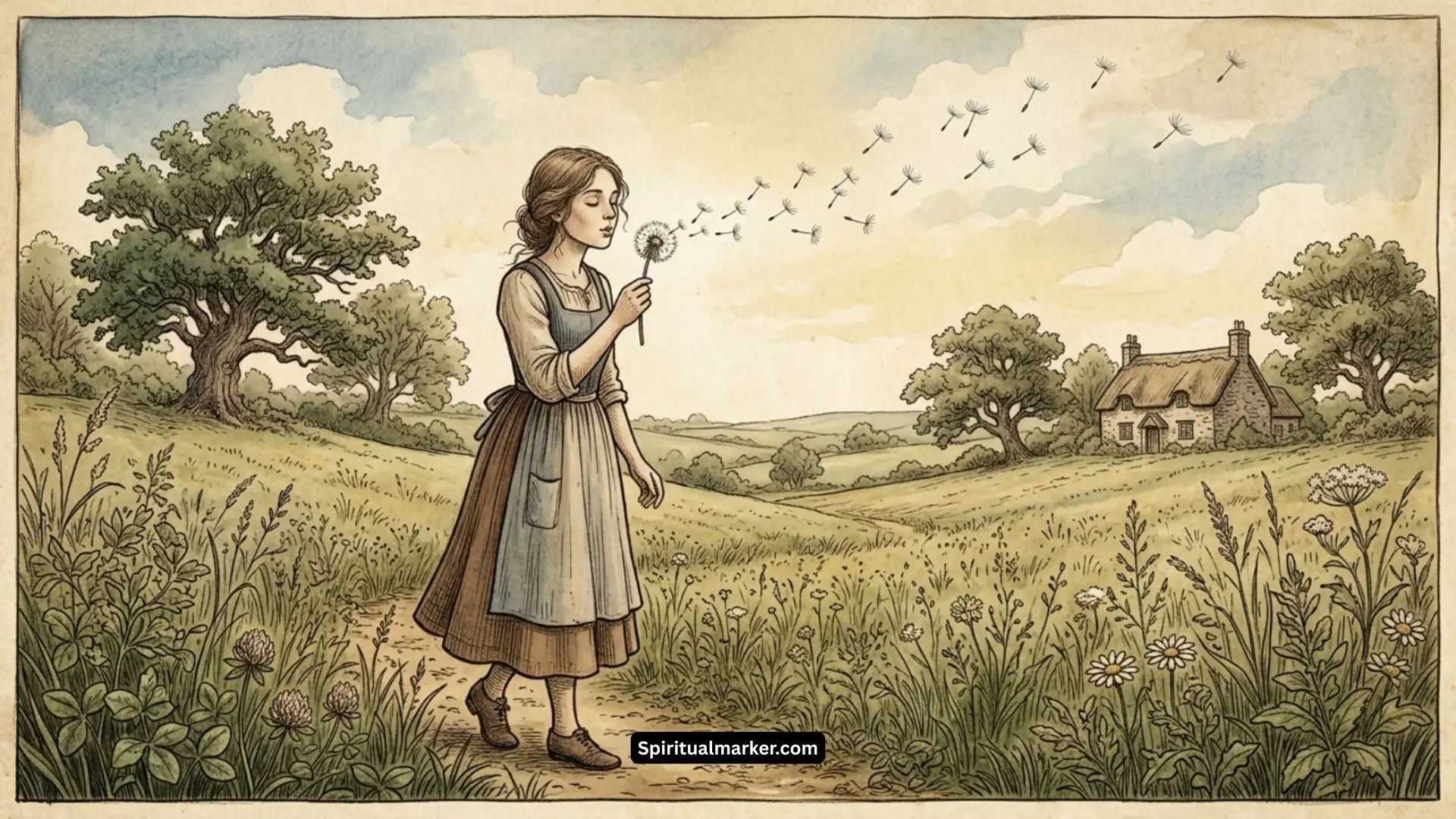
The dandelion is a common weed with a golden heart. Its fluffy seeds scatter in the wind, carrying wishes and hope. Across cultures, this humble flower carries deep spiritual meaning and symbolism.
The dandelion spiritual meaning often involves resilience, wishes, and spiritual growth. Dandelions grow anywhere, so they can signal a need to adapt. A spiritual meaning of lavender shares that plant focus, though lavender carries a more calming energy.
Some traditions view dandelions as symbols of survival and perseverance. Others see them as a reminder to make a wish. The flower's stage can add detail.
If a dandelion appears in your life, it may bring a message of hope. A spiritual meaning of calendula also deals with healing flowers, though calendula carries a more solar energy.
Key Takeaways
Before diving deep, here are five essential points about the spiritual meaning of the dandelion that anchor everything you will read in this post.
- First, the dandelion is a universal symbol of resilience and perseverance. It grows through concrete, survives harsh winters, and returns season after season. Spiritually, it reminds you that your strength is greater than any obstacle placed in your path.
- Second, the dandelion represents transformation and the passage of time. It moves from a bright yellow bloom to a delicate white seed head, mirroring the human journey from vitality to spiritual release and renewal.
- Third, dandelion seeds carry the spiritual energy of wishes, intentions, and prayer. Many traditions around the world use the act of blowing dandelion seeds as a form of releasing desires to the divine.
- Fourth, the dandelion holds deep cross-cultural significance, appearing in Celtic, Native American, Chinese, Japanese, and Christian spiritual traditions, each adding a unique layer of meaning.
- Fifth, seeing a dandelion in a dream often signals spiritual awakening, new beginnings, or a call to release what no longer serves you. The context of the dream shapes its precise message.
What Is the Dandelion and Does It Hold Spiritual Power?
The dandelion, known scientifically as Taraxacum officinale, is a flowering plant found on every continent except Antarctica. Most people recognize it as the yellow-headed plant that pops up in lawns and sidewalk cracks. But this plant has a much longer and more revered history than modern gardening guides suggest. The name “dandelion” comes from the Old French dent de lion, meaning “lion’s tooth,” a reference to the jagged edges of its leaves. Even its name carries a suggestion of strength and boldness.
Herbalists across ancient civilizations, including those in Egypt, Greece, Rome, and China, treated the dandelion as a sacred healing plant. They used its roots, leaves, and flowers for medicinal purposes ranging from liver cleansing to improving eyesight. This medicinal respect naturally extended into the spiritual realm. Plants that healed the body were often believed to heal the soul as well. The dandelion, with its ability to survive nearly anywhere and its generous spread of seeds, came to represent divine abundance and spiritual endurance.
Does the dandelion actually hold spiritual power? From a purely metaphysical standpoint, many spiritual traditions believe that all living things carry an energetic signature. The dandelion’s signature is particularly strong because of its dual nature: it is both sun-like in its yellow bloom and moon-like in its white seed globe. This duality gives it a balanced spiritual energy, bridging the solar and lunar, the earthly and the celestial. Whether you approach this from a religious angle, a spiritual one, or simply through cultural appreciation, the dandelion’s significance is hard to ignore.
What Does Seeing a Dandelion Symbolize or Represent?
Spotting a dandelion in your path, your garden, or even in a painting is rarely a coincidence in spiritual thinking. The dandelion symbolism connected to a chance sighting is rich and layered. A yellow dandelion in full bloom generally signals joy, vitality, and the awakening of new energy in your life. Its bright color reflects the frequency of the sun, associated with clarity, warmth, and optimism. Seeing one when you feel lost or uncertain is often interpreted as a reminder to stay grounded and keep growing.
A white dandelion in seed form holds a different but equally powerful message. Many spiritual traditions interpret the seed globe as a symbol of potential and release. Each seed represents a possibility. The wind carries those seeds to places beyond what the eye can see, symbolizing trust in the divine to carry your intentions where they need to go. When you see a white dandelion, the spiritual invitation is to release control and trust the process unfolding in your life.
A dandelion growing through concrete or in an unlikely place sends an especially pointed spiritual message. It speaks to persistence against impossible odds. Many people encounter dandelions in cracked sidewalks right when they are facing their own seemingly immovable obstacles. That is not mere coincidence in many spiritual frameworks. It is a living reminder that life finds a way, and so will you. The dandelion, in this context, becomes a messenger of hope and unstoppable spiritual force.
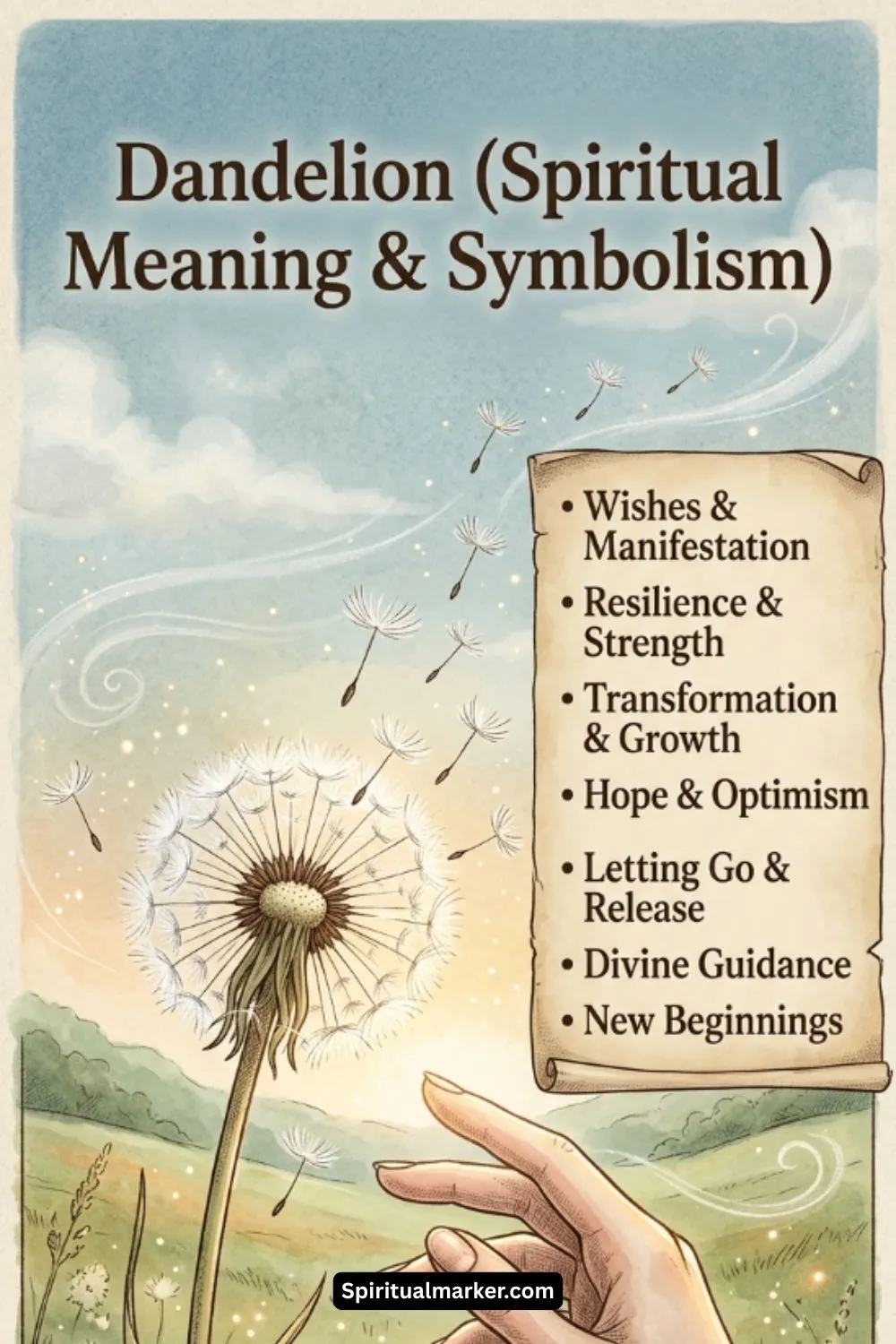
7 Spiritual Meanings of the Dandelion
1. Resilience and Inner Strength
The dandelion is one of nature’s greatest symbols of resilience. It survives mowing, herbicides, and frost. It re-grows after being pulled from the root. It pushes through asphalt and gravel. Spiritually, the dandelion teaches you that true strength does not come from the absence of hardship. It comes from the ability to keep returning, to keep blooming, even after being cut down.
This message is particularly meaningful during seasons of personal crisis. When you feel broken or defeated, the dandelion’s energy reminds you that your spirit has deep roots. Those roots go far beneath the surface of what others can see. No matter how many times life pulls you out of the ground, your spiritual roots remain intact, ready to regenerate. Ancient Celts understood this well. They revered the dandelion as a plant of warriors precisely because of this unbreakable quality.
The resilience the dandelion embodies is not just physical. It is emotional and spiritual. You carry the same capacity the dandelion demonstrates. Your spirit is designed to return. Your light is designed to re-bloom. When life seems its darkest, the dandelion calls you to trust in your own innate power to recover and rise. The universe does not plant resilient things in weak soil. You are exactly where your strength is needed.
2. Transformation and the Cycle of Life
Few plants in nature demonstrate transformation as visibly as the dandelion. It begins as a tight bud, bursts into a vivid yellow flower, and then transitions entirely into a sphere of white, feathery seeds. This three-stage cycle mirrors the spiritual journey of birth, life, and release. Many spiritual teachers use the dandelion as a teaching tool for this exact reason. Every stage is beautiful. Every stage is necessary.
The transition from yellow bloom to white seed head is particularly profound. The dandelion does not resist this change. It does not try to stay yellow forever. It surrenders to transformation completely and, in doing so, multiplies its reach exponentially. Each seed carries the full potential of a new dandelion. Spiritually, this models the act of releasing old versions of yourself so that new, expanded expressions of your soul can take root in new places.
You may be in a season of your own transformation right now. You may feel like the yellow bloom has faded. But the dandelion’s spiritual wisdom says this is not the end. It is the most powerful moment in the cycle. The seed phase is where expansion happens. The release of what was opens the door to what can be. Trust your own transformation the way the dandelion trusts the wind.
3. Wishes, Intentions, and Manifestation
The beloved childhood ritual of blowing a dandelion and making a wish is not just a game. It is an instinctive spiritual practice rooted in ancient tradition. Across many cultures, the act of setting an intention and releasing it to the wind is a form of prayer. The dandelion serves as the perfect vehicle for this because its seeds travel far, wide, and freely. Your wish is not limited by what you can see. It travels beyond your field of vision, just as your intentions travel beyond your immediate reality.
In many folk magic traditions, the dandelion is used as a tool for manifestation rituals. Practitioners hold a seed globe, visualize their desired outcome with full emotional clarity, and then release the seeds with a breath, symbolizing the breath of life given to the intention. The number of seeds that remain after one breath was traditionally read as an omen. Fewer seeds left meant the wish was on its way. More seeds remaining called for deeper faith and patience.
The spiritual principle here is powerful. You cannot manifest something you hold too tightly. The dandelion models the art of releasing what you want so it can grow. Manifestation requires both clarity of desire and the courage to release it. The dandelion sits at exactly that crossroads. It receives the sun, creates something beautiful, and then gives everything away to the wind. That is the essence of spiritual trust.
4. Healing and Wholeness
The dandelion has been used as a healing plant for over two thousand years. Traditional Chinese medicine, Ayurveda, and European herbalism all recognized the dandelion’s ability to support the liver, improve digestion, and detoxify the body. This deep history of physical healing naturally extended into its spiritual symbolism. In many spiritual traditions, a plant that cleanses the body is also believed to cleanse the spirit.
Spiritually, the dandelion represents holistic healing and the restoration of balance. It reminds you that healing is not just a physical process. Emotional wounds, spiritual disconnection, and mental burdens all require the same patient, root-level work the dandelion offers. Just as the dandelion’s roots draw nutrients from deep in the soil, spiritual healing asks you to go deep. It asks you to address what lies beneath the surface, not just what is visible above ground.
Many energy healers and plant spirit practitioners work with dandelion energy specifically during periods of emotional detoxification and spiritual renewal. They believe the dandelion’s spirit helps release stored grief, resentment, and spiritual stagnation. If you are on a healing journey of any kind, the dandelion may be appearing in your life as a gentle but powerful ally. Its message is always the same: you are capable of becoming whole again.
5. Abundance and Generosity
A single dandelion can produce up to fifteen thousand seeds in a single season. That is not just a botanical fact. It is a spiritual statement about the nature of abundance. The dandelion does not hold back. It gives everything it has. It scatters its gifts without knowing where they will land, trusting that many will take root and flourish. This is the energetic frequency of true abundance, not scarcity and hoarding, but generous, faith-filled giving.
Many spiritual traditions connect the dandelion to the law of abundance because of this quality. The plant does not conserve its seeds for the “right” moment. It releases them at full maturity, in full trust, with complete generosity. This models the spiritual teaching that the more freely you give of your gifts, your love, and your energy, the more abundantly those gifts return to you in new forms. The universe mirrors the dandelion’s generosity back to those who give freely.
If you have been feeling a sense of lack or scarcity in your life, the dandelion’s energy offers a powerful energetic correction. It invites you to shift your focus from what you do not have to what you can offer. Abundance is a posture, not a position. The dandelion holds that posture naturally. When you align with the dandelion’s spirit of generous release, you open yourself to receiving abundance from directions you never expected.
6. Spiritual Awakening and Enlightenment
The dandelion’s bright yellow bloom has long been associated with the energy of the sun and the light of spiritual awakening. In many traditions, yellow is the color of the solar plexus chakra, the energy center governing personal power, clarity, and spiritual confidence. A dandelion in full yellow bloom spiritually aligns with the activation of this center. It signals a moment of coming into your own power, of waking up to who you truly are.
In Eastern spiritual traditions, flowers that open fully toward the sun are seen as symbols of enlightenment and the seeking of higher truth. The dandelion does not grow toward shadows. It turns toward the light with complete consistency. Spiritually, this mirrors the soul’s constant orientation toward truth, divine love, and expanding consciousness. The dandelion reminds you that your soul is always turning toward the light, even when your mind or circumstances obscure it.
The transition the dandelion makes from yellow to white is also tied to spiritual illumination. The white seed globe, glowing in sunlight, has been compared in mystical literature to a halo or a crown of light. This imagery connects the dandelion to the idea that spiritual maturity produces a radiance visible to others. Your spiritual awakening does not just transform you. It sends light outward, just as the dandelion sends seeds outward, touching lives you may never directly see.
7. Freedom and Letting Go
Perhaps the most universally recognized spiritual message of the dandelion is the invitation to let go. The moment the dandelion reaches its full seed form, every part of its structure is designed for release. The seeds are feather-light. The stalks are perfectly aligned to catch the breeze. Even the timing of the bloom points toward release. All of this is intentional in the natural world, and spiritually it is deeply symbolic of the freedom that comes through surrender.
Letting go is one of the most challenging spiritual lessons. You hold on to relationships, identities, beliefs, and versions of yourself long past their season of usefulness. The dandelion shows you what happens when you release those things completely. The seeds travel far. They land in places they could never have reached if they had stayed attached to the stem. Freedom arrives the moment you stop gripping what was never meant to be held forever.
Many spiritual counselors and therapists use the imagery of blowing dandelion seeds as a meditative exercise in releasing fear, grief, and attachment. This practice is deeply effective because it engages the body, the breath, and the imagination simultaneously. You physically model the spiritual act of letting go. The dandelion’s teaching here is not passive. It calls you to an active, breath-driven, intentional release. Freedom is not something that happens to you. It is something you choose, one breath at a time.
Dandelion Meaning and Symbolism Across Cultures and Religions
The dandelion’s spiritual symbolism is not confined to one tradition or one corner of the world. This plant appears in the spiritual and cultural records of civilizations separated by oceans and centuries, each finding in the dandelion a reflection of its own deepest values and beliefs.
In Celtic traditions, the dandelion was revered as a plant of the fairy world. The Celts believed that dandelions served as portals between the human realm and the spirit realm. Leaving dandelions undisturbed in a field was considered an act of respect toward spiritual forces. The dandelion’s ability to grow freely and defiantly represented the wild, untamable spirit the Celts deeply admired. Warriors and druids alike saw the dandelion as an emblem of courage and spiritual freedom.
In Native American cultures, particularly among the Cherokee and other woodland nations, the dandelion held deep medicinal and ceremonial significance. Healers used every part of the plant in their work. The dandelion root was tied to the spirit of the Earth Mother, a symbol of deep nourishment and connection to the land. The seeds were sometimes used in ceremonial contexts to carry prayers upward. The dandelion was not seen as a weed. It was seen as a gift of the Great Spirit, provided freely for anyone who needed healing or guidance.
In Chinese culture, the dandelion has been used in traditional medicine for over a thousand years and carries the spiritual quality of qing re jie du, or “clearing heat and resolving toxins.” Beyond the physical, this quality translates spiritually to the dandelion’s power to purify energy and remove spiritual blockages. The dandelion is associated with balance, which is central to Chinese spiritual philosophy. Its ability to shift from one form to another without resistance embodies the Taoist principle of wu wei, or effortless action in harmony with nature.
In Japanese culture, the dandelion, called tanpopo, carries gentle and tender spiritual associations. The dandelion is linked to the sun, cheerfulness, and the love between parent and child. It appears in haiku poetry as a symbol of the fleeting beauty of life and the preciousness of simple things. Japanese spiritual sensibility, deeply shaped by Shinto and Zen Buddhist principles, finds in the dandelion a perfect reflection of mono no aware, the bittersweet awareness of life’s transience. The dandelion blooms brilliantly, transforms quietly, and releases freely.
Dandelion Symbolism in World Mythologies
Mythology gives us some of the most vivid and direct windows into how ancient peoples understood the spiritual world around them. The dandelion, despite being a small and common plant, weaved its way into the mythological imagination of several major civilizations.
In Greek mythology, the dandelion was connected to Hecate, the goddess of magic, the moon, and the crossroads. Hecate was associated with liminal spaces, those in-between places where one world meets another. The dandelion, with its dual nature of sun-colored bloom and moon-colored seed globe, fit perfectly within her domain. Ancient Greeks left dandelions at crossroads as offerings to Hecate, asking for her guidance and protection during transitions. The dandelion thus became a mythological symbol of navigating life’s crossroads with spiritual wisdom.
In Roman mythology, the dandelion was associated with Proserpina, the goddess who moved between the underworld and the earth above, embodying the cycle of seasons. The dandelion’s yearly return from dormancy each spring paralleled Proserpina’s own return from the underworld. Roman poets and mythmakers saw the dandelion as a sign of Proserpina’s blessing, a confirmation that the earth would always renew itself after darkness, and that life was always stronger than death.
In Persian mythology and Sufi poetic tradition, the dandelion held a subtle but meaningful place as a symbol of the soul seeking union with the divine. The seeds carried on the wind were compared to souls released from earthly attachment, drifting toward God on the breath of divine love. This image of the soul-seed being carried toward its divine source resonated deeply with Sufi mystics who saw all of nature as a mirror of divine love and longing.
Dandelion Spiritual Meaning by Color and Stage
The dandelion does not stay the same throughout its life, and each stage of its development carries a distinct spiritual meaning and energetic message. Reading the dandelion’s spiritual language requires paying attention to what stage you are encountering.
The yellow dandelion is in its solar phase. This is the phase of action, vitality, confidence, and creative energy. Seeing or working with a yellow dandelion spiritually connects you to the energy of the sun, the energy of new beginnings, and the energy of your own personal power. The yellow bloom is the dandelion saying: now is your time, rise and shine. Many spiritual practitioners use yellow dandelion flowers in rituals intended to boost confidence, clarity, and personal willpower.
The white dandelion in its seed globe phase is in its lunar, reflective, and releasing phase. This stage connects to the energy of the moon, to intuition, to endings, and to the sacred act of letting go. Spiritually, this stage is associated with prayer, trust, and the surrender of outcomes to the divine. The white dandelion is appropriate for meditations on release, for rituals of closure, and for moments when you need to surrender worry and trust a higher plan.
A dying or withered dandelion carries the spiritual message of completion. Every cycle has an ending. The withered dandelion is not a symbol of failure. It is a symbol of a season fully lived. Spiritually, it invites you to honor what has run its course in your life without clinging to it. Completion is sacred. The dandelion that has released all of its seeds has done everything it was sent to do. That is not a small thing. That is a life fully expressed.
Dandelion Biblical Meaning and Significance
The dandelion does not appear by name in the Bible, but its symbolic and theological resonances run deep through Scripture. Many biblical scholars and Christian spiritual teachers connect the dandelion to several key themes of the faith, including perseverance, humility, divine provision, and the beauty of the overlooked.
The dandelion is widely believed to be among the “bitter herbs” mentioned in Exodus 12:8, instructed for use during the Passover meal. These herbs carried spiritual weight as symbols of the bitterness of slavery and the sweetness of liberation. The dandelion’s slightly bitter taste made it a strong candidate for this category in many Jewish and early Christian interpretive traditions. Consuming it was not just a culinary act. It was an act of spiritual remembrance and gratitude for freedom.
In Matthew 6:28-29, Jesus pointed to the wildflowers of the field as evidence of God’s provision: “Consider the lilies of the field, how they grow; they toil not, neither do they spin, and yet I say to you that even Solomon in all his glory was not arrayed like one of these.” Many theologians extend this teaching to include the humble dandelion. The dandelion, growing freely and beautifully without human cultivation, is a living parable of divine care for all created things. It flourishes not because it earns God’s attention but because it was made by God and sustained by His provision.
The dandelion’s resilience also mirrors the biblical theme of the righteous who endure through hardship. Romans 5:3-4 speaks of suffering producing perseverance, perseverance producing character, and character producing hope. The dandelion demonstrates exactly this progression. It is pressed down but not destroyed. It is cut down but returns. This reflects the heart of Christian hope, the conviction that no force in the world can permanently extinguish what God has planted.
Dandelion Symbolism in Dreams: Spiritual and Psychological Meanings
Dreams about dandelions are more common than you might expect, and they carry significant spiritual and psychological messages. Dream symbolism draws on both personal associations and universal archetypes. The dandelion touches both layers powerfully.
Dreaming of a field full of yellow dandelions is generally a very positive sign. This dream reflects an incoming season of abundance, joy, and personal expansion. Your subconscious and spiritual self are both signaling that a period of growth is approaching. Many dreamers report this vision during times of transition or uncertainty. The field of dandelions in the dream provides the reassurance that beauty and abundance await on the other side of the current challenge.
Dreaming of blowing a dandelion carries the spiritual message of releasing something important. Pay close attention to how you feel in this dream. If blowing the seeds brings you peace or joy, you are spiritually ready to release what has been holding you back. If the dream brings you anxiety, your spirit may be warning you about something you are about to lose without being fully ready. Either way, this dream invites you to examine what you are holding and whether it is time to let it go.
Dreaming of a single dandelion in unexpected soil, such as growing through pavement or in a barren landscape, is a dream of remarkable spiritual encouragement. This is your inner wisdom telling you that your spiritual gifts are growing even in the harshest circumstances. Your soul is resilient. Your purpose is pushing through every barrier. This dream often comes when you are doubting yourself, a direct message from your deeper self that you are stronger than you believe.
From a Jungian psychological perspective, the dandelion in dreams represents the Self, the integrated whole of who you are, rising to the surface. Carl Jung identified the Self as the archetype of wholeness and divine order within the human psyche. The dandelion, cycling through stages of growth, transformation, and release, mirrors the individuation process that Jung described. Dreaming of dandelions can therefore signal that you are in an important phase of psychological and spiritual integration.
Dandelion Tattoo Spiritual Meaning
Dandelion tattoos have become one of the most popular nature-based tattoo choices in the world, and the reasons go well beyond aesthetics. People choose dandelion tattoos specifically for their deep spiritual and personal meaning. A dandelion tattoo is rarely just decorative. It is almost always intentional.
The most common dandelion tattoo design shows the seed globe with seeds breaking free and transforming into birds, butterflies, or simply drifting upward. This design is a profound symbol of freedom, transformation, and the release of past pain or limitation. Many people get this tattoo after overcoming addiction, grief, abuse, or a major life crisis. It marks a spiritual turning point, a moment when they chose to release the past and let their spirit fly.
A dandelion tattoo with the word “wish” or a meaningful date beneath it often commemorates a specific spiritual intention or pivotal prayer. Others choose a full bloom yellow dandelion to represent joy, personal power, and the celebration of life in its fullness. Whatever the specific design, the dandelion tattoo consistently carries themes of resilience, freedom, transformation, and the courage to release what was in order to receive what is coming.
A Final Note
The next time a dandelion catches your eye, pause for a moment. Do not walk past it. Do not reach down to pull it up. Instead, let it speak to you. The dandelion spiritual meaning that has persisted across millennia, across cultures, across mythologies and sacred texts, did not survive by accident. It survived because it is true. This small, radiant plant carries a message that human beings have needed in every age: you are resilient, you are abundant, and you are free.
The dandelion does not ask for perfect conditions. It does not wait for the right season or the right soil. It blooms where it is planted, gives everything it has, and trusts the wind to carry its gifts to their destination. That is a spiritual model worth returning to, especially when life feels uncertain or unkind.
You may consider spending time in meditation with a dandelion in your hand or in your view. You might try the practice of blowing dandelion seeds with a specific intention, a release of grief, a declaration of a dream, or a simple act of trust in the divine. You could also journal about which of the seven spiritual meanings covered in this post resonates most deeply with where you are in life right now. The dandelion is not just a flower. It is a teacher, a healer, a messenger, and a mirror. And it has been growing right outside your door all along.