A red rose is the ultimate symbol of love and passion. Its deep color and velvety petals evoke desire and devotion. Across cultures, red roses carry deep spiritual meaning and reveal powerful truths.
The red rose spiritual meaning often involves love, passion, and sacrifice. Red roses are often given to express romantic love. A spiritual meaning of a white rose shares that rose symbolism, though white roses carry a more pure energy.
Some traditions view red roses as symbols of martyrdom or blood. Others see them as a reminder to love deeply. The rose's condition can add detail.
If a red rose appears in your life, it may bring a message of love. A spiritual meaning of a yellow rose also deals with rose symbolism, though yellow roses carry a more friendly energy.
Key Takeaways
- The red rose spiritual meaning centers on love, courage, and deep emotional truth, not just romance.
- Ancient civilizations including the Greeks, Romans, and Egyptians treated the red rose as sacred.
- In Christianity, the red rose often symbolizes the blood of Christ and sacrificial love.
- Dreaming about red roses can point to passion, healing, or an emotional turning point in your life.
- Red rose symbolism shifts slightly across mythology, yet love and devotion remain the constant thread.
What Is a Red Rose and Does It Hold Spiritual Power?
A red rose belongs to the genus Rosa, yet its meaning has never stayed purely botanical. Humans have assigned it spiritual weight for thousands of years. Ancient Persians grew roses in temple gardens long before Europe adopted the flower as a romantic symbol. Greek mythology tied the rose to Aphrodite, the goddess of love, claiming it sprang from her tears mixed with the blood of Adonis.
Spiritual power, in this context, does not mean magic in a literal sense. It means the rose carries symbolic energy that humans have repeatedly used to mark sacred moments. Weddings, funerals, religious ceremonies, and acts of devotion all lean on the red rose as a visual prayer. Its deep color reflects blood, fire, and the human heart, three things every culture has treated as spiritually significant.
Many spiritual teachers describe the red rose as a bridge between physical desire and higher love. The flower grows from thorny stems, yet produces something soft and fragrant. That contrast alone gives it spiritual depth. Pain and beauty grow from the same root, a lesson many faith traditions repeat in their own language.
What Does Seeing a Red Rose Symbolize or Represent?
Seeing a red rose unexpectedly, whether in a garden, a painting, or a stranger’s hand, often feels like more than coincidence. Spiritually, this moment is read as a nudge toward love, passion, or an emotional truth you have been avoiding. Some believe it signals that love is near, romantic or otherwise. Others view it as a reminder to open your heart after a period of guarding it.
A red rose appearing during grief often represents enduring love that survives loss. Many people report seeing red roses, or smelling them with no flower in sight, shortly after losing someone close. This phenomenon shows up across grief communities worldwide and gets interpreted as a sign of continued connection from beyond. Whether you see this as spiritual or psychological, the comfort it offers remains real.
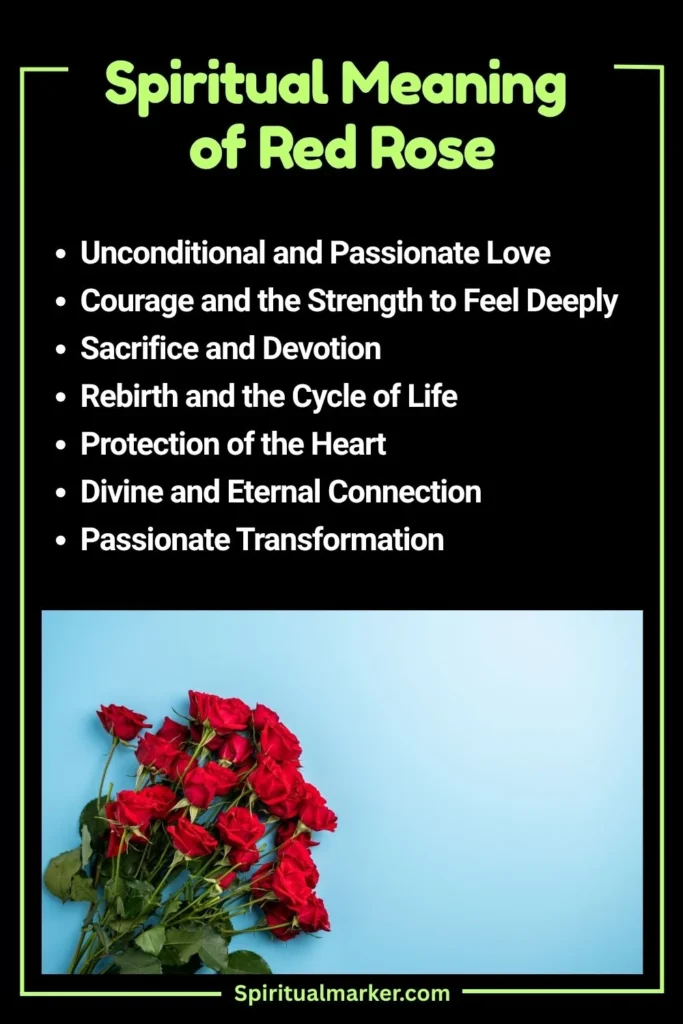
7 Spiritual Meanings of the Red Rose
1. Unconditional and Passionate Love
The red rose has long stood as one of the most powerful spiritual symbols of love. Yet its meaning reaches far beyond romance. Spiritually, it represents a love that remains steady through difficulties, misunderstandings, and change. Unlike fleeting attraction, the red rose points to a deeper emotional commitment rooted in acceptance, loyalty, and genuine care.
Its symbolism comes partly from the contrast between the delicate bloom and the thorn-covered stem. The flower’s beauty reminds us of affection and tenderness, while the thorns reflect the challenges that often accompany meaningful relationships. Together, they suggest that authentic love is not defined by ease but by persistence. Love becomes most meaningful when it continues through moments of uncertainty, sacrifice, and vulnerability.
Many spiritual traditions view unconditional love as one of the highest expressions of the human soul. In this context, the red rose serves as a reminder that true connection requires openness. It asks us to move beyond fear and embrace the courage of loving fully, even when there is no guarantee of how that love will be received. Because of this, the red rose often appears as a symbol of emotional maturity, compassion, and the willingness to give from the heart without constantly seeking something in return.
2. Courage and the Strength to Feel Deeply
At first glance, courage may seem unrelated to a flower. Yet the red rose carries a long history of representing bravery and inner strength. Its vivid color naturally draws attention, making it a symbol of boldness and confidence across many cultures. Spiritually, however, the courage associated with the red rose is often emotional rather than physical.
Many people assume strength means protecting themselves from pain. Spiritual teachings frequently suggest the opposite. Real strength often lies in remaining open despite disappointment, grief, or heartbreak. The red rose reflects this kind of courage. It symbolizes the ability to continue trusting, caring, and feeling deeply after life has presented reasons to withdraw.
Historical associations reinforce this meaning. Ancient societies often linked red flowers with warriors, not only because of their connection to blood and vitality but also because they represented determination and resilience. Spiritually, the red rose reminds us that emotional honesty requires tremendous bravery. It encourages a willingness to face both joy and sorrow rather than avoiding either one. In this sense, the flower becomes a symbol of a fearless heart, one that remains alive and responsive despite life’s challenges.
3. Sacrifice and Devotion
Few symbols capture the relationship between beauty and hardship as effectively as the red rose. Its petals appear soft and inviting, yet thorns surround and protect the blossom. This duality has made the flower a powerful representation of sacrifice and devotion throughout religious and spiritual history.
Many traditions teach that meaningful devotion often requires giving something of oneself. Parents sacrifice for children. Partners sacrifice for each other. Spiritual seekers sacrifice comfort in pursuit of growth and truth. The red rose embodies this principle because its beauty exists alongside visible reminders of struggle.
In Christian symbolism, red roses sometimes represent sacrificial love and compassion. Similar themes appear in other spiritual paths where the flower becomes a metaphor for commitment that survives adversity. The rose suggests that genuine devotion is not measured by words alone but by actions, perseverance, and willingness to endure difficulty for something deeply valued.
This symbolism also highlights an important truth about relationships and spiritual growth. Growth rarely occurs without effort. Love rarely develops without patience. Through its combination of softness and thorns, the red rose reflects the reality that some of life’s most meaningful experiences require both tenderness and endurance.
4. Rebirth and the Cycle of Life
Nature constantly reminds us that life moves in cycles. Seasons change, flowers bloom and fade, and new growth emerges from what once appeared dormant. Because of this natural rhythm, the red rose has become a spiritual symbol of rebirth, renewal, and life’s continuing transformations.
The rose does not bloom forever. Its petals eventually fall, signaling the end of one stage. Yet the plant itself remains alive, preparing for another season of growth. Spiritually, this process mirrors many human experiences. Relationships evolve, careers shift, dreams change, and personal identities transform over time. While these endings can feel permanent in the moment, the red rose reminds us that renewal often follows loss.
Many cultures associate flowering plants with resurrection and spiritual awakening. The red rose, in particular, combines themes of life, passion, and regeneration. Its annual return serves as a reminder that periods of darkness or stagnation rarely last forever. New opportunities, insights, and emotional healing often emerge when conditions are ready.
As a spiritual symbol, the red rose encourages faith in life’s natural cycles. It suggests that endings are not always failures. Instead, they may represent necessary transitions that create space for something new to develop.
5. Protection of the Heart
One of the most overlooked aspects of rose symbolism is the presence of its thorns. While people often focus on the flower’s beauty, spiritual traditions frequently emphasize the protective role of the stem’s sharp defenses. This gives the red rose a powerful meaning connected to emotional boundaries and self-respect.
The rose offers its beauty freely, yet it also protects itself. Spiritually, this balance carries an important lesson. An open heart does not require complete vulnerability in every situation. Healthy love includes wisdom, discernment, and appropriate boundaries. The red rose demonstrates that tenderness and protection can exist together.
Many people struggle with the idea of boundaries because they fear appearing distant or unkind. However, spiritual teachings often present boundaries as acts of self-care rather than selfishness. The thorns symbolize the ability to protect emotional well-being while remaining loving and compassionate.
This meaning becomes particularly significant during periods of healing. The red rose reminds us that guarding our hearts does not mean closing them permanently. Instead, it involves honoring our worth, recognizing our limits, and allowing relationships to develop in healthy and balanced ways. Through this symbolism, the rose teaches that self-respect strengthens love rather than weakening it.
6. Divine and Eternal Connection
Throughout history, mystics, poets, and spiritual teachers have used the red rose as a symbol of divine connection. Its beauty, fragrance, and symmetry inspired many to see it as a reflection of sacred perfection. As a result, the flower became associated with spiritual longing, eternal love, and the soul’s relationship with the divine.
In Sufi poetry, the rose frequently appears as a representation of divine love. The flower symbolizes the beauty of the spiritual realm, while the seeker’s longing mirrors the attraction between the soul and its Creator. Similar symbolism appears in various mystical traditions where the rose becomes a bridge between earthly experience and higher spiritual realities.
The red color adds another layer of meaning. It represents life force, vitality, and the intensity of profound connection. Spiritually, this suggests a bond that extends beyond physical existence. Many people view the red rose as a symbol that love does not end with separation, distance, or even death. Instead, certain connections continue on a deeper spiritual level.
Because of these associations, the red rose often appears in ceremonies, sacred artwork, and spiritual literature. It serves as a reminder that some aspects of love and connection transcend ordinary human experience and touch something timeless.
7. Passionate Transformation
Among its many spiritual meanings, the red rose also represents transformation fueled by passion. Growth rarely occurs without intensity. Whether the change involves personal development, spiritual awakening, or emotional healing, transformation often requires a powerful inner drive. The red rose embodies this dynamic energy.
Alchemical traditions in medieval Europe frequently used roses as symbols of spiritual refinement. Practitioners viewed transformation as a process in which difficulties, challenges, and trials purified the soul. The red rose became associated with the final stages of this journey, representing wisdom gained through experience and perseverance.
The flower’s deep red color reinforces this symbolism. Red is linked to vitality, desire, creativity, and life force. Spiritually, it reflects the energy that pushes individuals beyond limitations and encourages growth. The rose suggests that transformation is rarely passive. It requires engagement, commitment, and a willingness to move through discomfort.
This meaning also highlights the relationship between struggle and beauty. Just as the rose develops gradually before reaching full bloom, personal growth often unfolds through stages. Challenges shape character, setbacks create resilience, and periods of uncertainty frequently precede profound breakthroughs. The red rose stands as a reminder that transformation can be both demanding and deeply rewarding, producing wisdom and strength that were previously hidden beneath the surface.
Red Rose Meaning and Symbolism Across Cultures and Religions
In ancient Egypt, roses were placed in tombs to honor the dead and ease their journey into the afterlife. Archaeologists found rose wreaths in tombs dating back over 2,000 years, showing how early this flower took on sacred meaning. Egyptians believed the red rose carried the soul’s vitality into the next world.
Hindu tradition links the red rose to the goddess Lakshmi, associating the flower with abundance, devotion, and divine feminine energy. In several Hindu rituals, red roses appear as offerings meant to invite prosperity and protect the home. Buddhist symbolism, by contrast, treats the rose more gently, tying it to compassion and the impermanence of beauty.
Islamic poetry, particularly within Sufi mysticism, treats the red rose as a metaphor for the beloved, often God himself. The thirteenth-century poet Rumi referenced roses repeatedly to describe a love that burns away the ego. Christianity, meanwhile, ties the red rose strongly to the Virgin Mary and the suffering of Christ, a connection explored further below.
Red Rose Symbolism in World Mythology
Greek mythology offers one of the most famous origin stories for the red rose. According to legend, Aphrodite ran to her dying lover Adonis and pricked her foot on a white rose’s thorn. Her blood stained the petals red, creating the first red rose. This myth permanently linked the flower to love mixed with grief and loss.
Roman mythology absorbed this story and expanded it, associating the red rose with Venus and using it to decorate temples, banquets, and even battlefields. Soldiers returning victorious were sometimes showered with rose petals as a symbol of honor mixed with romantic celebration awaiting them at home.
Norse mythology, less commonly discussed, connects red flowers broadly to Freyja, the goddess of love and fertility. While roses specifically were rarer in Norse climates, later European folklore folded the red rose into Freyja’s symbolism once the flower spread northward through trade routes.
Red Rose Color Symbolism Compared to Other Rose Colors
Color changes everything in rose symbolism. White roses lean toward purity, new beginnings, and remembrance, often appearing at weddings and funerals alike. Pink roses suggest gratitude and gentle admiration, a softer cousin to red’s intensity. Yellow roses historically represented friendship, though Victorian language of flowers once linked yellow to jealousy.
Red stands apart because it speaks to the body and the soul at once. Its pigment comes from anthocyanins, the same compound family responsible for deep wine and blood tones in nature. Spiritually, this gives red roses an intensity that softer colors simply cannot replicate. When someone chooses red specifically, the message is rarely casual.
Red Rose Biblical Meaning and Significance
Scripture does not mention the rose by its modern botanical name nearly as often as people assume, yet rose symbolism still threads through biblical interpretation. The Song of Solomon 2:1 reads, “I am the rose of Sharon, and the lily of the valleys,” a line scholars connect to beauty, devotion, and divine love between God and his people.
Christian tradition later adopted the red rose as a symbol of Christ’s blood and sacrificial love on the cross. The five petals of a wild rose were often linked to the five wounds of Christ in medieval iconography. Catholic art frequently surrounds the Virgin Mary with red roses, reinforcing the flower’s tie to suffering joined with grace.
Martyrs in early Christian history were sometimes depicted with red roses, marking their blood sacrifice for faith. This biblical layer adds weight to the red rose spiritual meaning, turning it from a symbol of romance into a symbol of love proven through sacrifice.
Dreaming About Red Roses: Spiritual and Psychological Meanings
Dream interpreters across traditions generally agree that red roses in dreams point to passion entering your waking life. This could mean romantic love, a creative breakthrough, or a renewed sense of purpose. Carl Jung’s school of psychology would frame the rose as an archetype of the self, blooming when a person integrates a previously hidden emotional truth.
A wilting red rose in a dream often signals fading passion or a relationship needing attention. Receiving red roses from someone unknown can suggest unexpressed feelings, either yours or someone else’s, moving toward the surface. Cutting or holding thorns alongside the bloom may point to love that currently feels painful or complicated.
Psychologically, dreaming of red roses frequently correlates with periods of heightened emotion, whether joy, grief, or longing. Sleep researchers note that emotionally charged imagery tends to surface during REM cycles when the brain processes unresolved feelings. Spiritually and psychologically, both lenses agree on one point: a red rose dream asks you to pay attention to your heart.
A Final Note
The red rose has carried meaning across temples, battlefields, scripture, and dreams for thousands of years. Its message stays remarkably consistent: love worth having usually asks something of you in return, whether courage, sacrifice, or simple attention. If a red rose has crossed your path recently, take it as an invitation to look honestly at where your heart stands.
Consider keeping a journal of moments when red roses appear in your life, whether in dreams, gifts, or chance encounters. Pay attention to the emotions surfacing around those moments rather than dismissing them as coincidence. You might also explore growing a red rose bush at home as a daily, living reminder of the love and courage this flower represents.