Herbs have been used for protection for centuries. Their scents, tastes, and energies create barriers against negativity. Across cultures, certain herbs are prized for their protective power.
The 20 herbs for protection cover a wide range. Sage, rosemary, and garlic are among the most popular. A spiritual meaning of burning sage shares that cleansing-herb focus, though sage carries a specific ceremonial energy.
Some traditions view protective herbs as tools for cleansing and warding. Others see them as a reminder to set boundaries. The herb's form and use can add detail.
If you feel drawn to protective herbs, it may signal a need for security. A spiritual meaning of black pepper also deals with protective spices, though pepper carries a more aggressive energy.
Key Takeaways
- Protective herbs work on multiple levels. Many herbs for protection operate spiritually, energetically, and physically at once. They cleanse negative energy while also supporting the nervous system and immune function.
- Intent amplifies herbal power. In most spiritual traditions, the way you use a protective herb matters as much as the herb itself. Setting a clear intention before burning, carrying, or placing an herb dramatically increases its protective effect.
- Protection and purification go hand in hand. Most herbs for spiritual protection also carry strong purifying energy. Before a space or person can be protected, it must first be cleared of existing negativity.
- Every culture has its own protective plant traditions. From African to Asian, Indigenous to European, nearly every spiritual tradition on earth uses specific herbs to ward off evil, negative entities, and harmful energy.
- You can use protective herbs in everyday life. You do not need a formal ritual to benefit from protective herbs. Hanging them above doors, adding them to baths, burning them as incense, or keeping them in sachets are all practical, powerful methods.
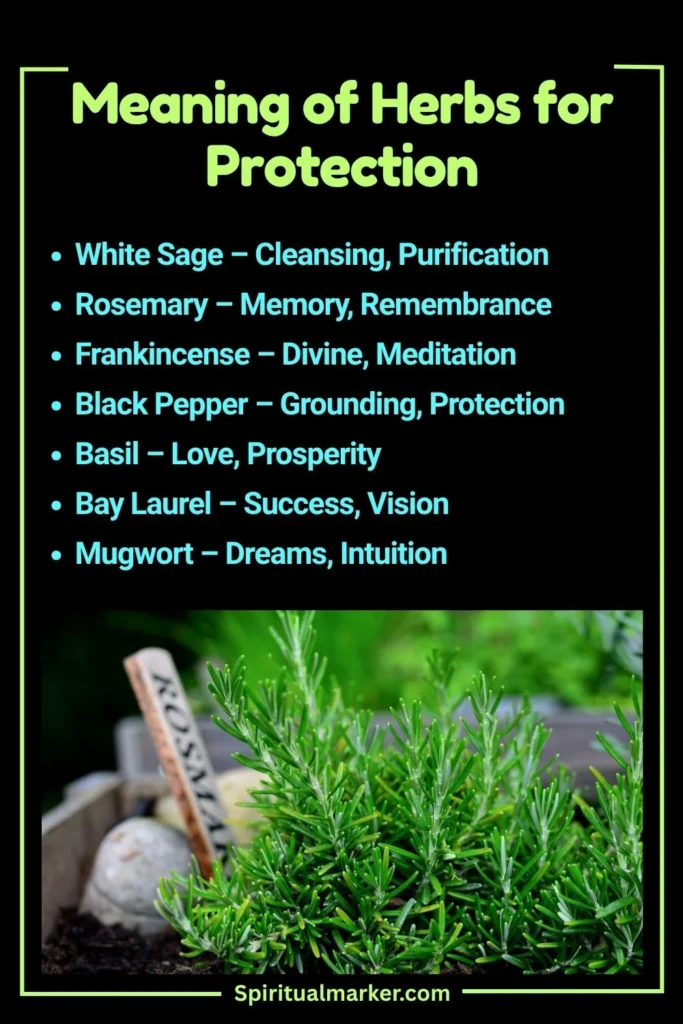
What Are Protective Herbs and Do They Hold Spiritual Power?
Protective herbs are plants with a long documented history of use in spiritual, magical, and religious traditions for the purpose of warding off evil, negative energy, psychic attack, and harmful influences. These are not just plants that smell pleasant. They carry what many spiritual practitioners call a high vibrational frequency, a natural energetic quality that disrupts and repels lower, harmful energies.
Science confirms that many of these herbs contain powerful antimicrobial compounds, volatile oils, and bioactive substances. Research published in the Journal of Ethnopharmacology has documented the antimicrobial properties of herbs like sage, rosemary, and thyme. Spiritually speaking, practitioners believe these same properties operate on an energetic level. The plant that kills bacteria in the physical world also neutralizes negative spiritual energy in the unseen world.
Many of these herbs appear in ancient texts. The Bible references hyssop in Psalm 51:7 as a plant used for cleansing and purification. Ancient Ayurvedic texts describe tulsi (holy basil) as a sacred protector of the home and family. The Ebers Papyrus, an ancient Egyptian medical document dating to around 1550 BCE, records the use of herbs like garlic to protect against illness and evil forces. These herbs hold spiritual power because generations of believers, priests, and healers have poured their faith, intention, and ritual energy into working with them.
20 Herbs for Protection and Their Spiritual Meaning
1. White Sage (Salvia apiana)
White sage is perhaps the most widely recognized herb for spiritual protection in modern Western practice. Native American tribes, particularly those of the Southwest such as the Chumash and Cahuilla, have used white sage in smudging ceremonies for centuries. Burning white sage produces thick, aromatic smoke that is believed to purify a space of all negative and stagnant energy. The smoke acts as a spiritual broom, sweeping out harmful influences and inviting in clarity and peace.
Spiritually, white sage carries solar energy. It is associated with wisdom, longevity, and divine protection. Many practitioners smudge their homes, bodies, and sacred objects with white sage before rituals to create a clean, protected energetic environment. The scent itself is believed to raise the vibrational frequency of a space, making it inhospitable to lower energies and negative entities.
2. Rosemary (Salvia rosmarinus)
Rosemary has been a cornerstone of European protective magic for millennia. Ancient Greeks placed rosemary on graves to protect the spirits of the dead. Medieval Europeans hung it above doorways to prevent witches and evil spirits from entering. In the 16th century, rosemary was burned in sick rooms not just for its antimicrobial properties but to ward off negative spiritual energy associated with illness.
The spiritual meaning of rosemary centers on memory, loyalty, and fierce protection. It belongs to the solar masculine energy. Rosemary purifies, strengthens, and creates an invisible shield around the person or space it protects. Many practitioners keep a bundle of dried rosemary at their front door or add it to protective sachets and baths. Its association with the sea and the goddess Aphrodite also connects it to divine feminine protection and love.
3. Frankincense (Boswellia sacra)
Frankincense resin has been used in sacred rituals since at least 3000 BCE. Ancient Egyptians burned it in temples and used it in burial rites. In Christianity, frankincense was one of the three gifts brought to the infant Jesus, representing his divinity. It appears in the Book of Exodus as a component of the sacred incense burned before God in the Tabernacle. Its spiritual protection is considered among the most powerful of all aromatic resins.
Frankincense is associated with the sun, divine light, and the sacred masculine. Its smoke is believed to raise spiritual vibration, elevate consciousness, and create a direct channel to the divine. When burned, it is said to clear heavy negative energy, dispel evil spirits, and create a sanctified space. Many spiritual traditions consider frankincense essential for any serious protection ritual or prayer work.
4. Black Tourmaline (with Black Pepper – Piper nigrum)
Black pepper is one of the oldest and most universally used protective spices in the world. Ancient Romans used black pepper in offerings and currency. In African diaspora traditions including Hoodoo and Santeria, black pepper is a cornerstone of protection magic. It is used to create barriers, break hexes, and send unwanted energies back to their source. Pepper is hot, sharp, and aggressive. It fights back.
Spiritually, black pepper carries Mars energy. It is associated with courage, confrontation, and fierce protection. Practitioners sprinkle black pepper across doorways and windowsills to prevent negative people and energies from entering. It is added to protective floor washes, banishing sachets, and spiritual baths designed to remove crossed conditions and psychic attack. Black pepper does not simply neutralize negativity. It actively repels and reverses it.
5. Basil (Ocimum basilicum)
Basil holds an extraordinary place in protective herb traditions across multiple cultures. In ancient Greece, basil was considered a sacred plant of kings. In Hindu tradition, tulsi or holy basil is one of the most revered plants, believed to embody the goddess Lakshmi and bring divine protection to the home. Italian and Mediterranean folk magic uses basil to protect the household from evil eyes, jealousy, and ill fortune.
The spiritual meaning of basil combines protection with abundance and love. It creates a dual shield: one that blocks negative energy while simultaneously attracting positive blessings. Many spiritual traditions place a pot of living basil near the front door to protect the home and attract prosperity. Basil is also used in spiritual baths to cleanse the aura and strengthen the personal energy field against psychic intrusion. Its sweet, warm scent signals safety and divine blessing.
6. Bay Laurel (Laurus nobilis)
Bay laurel carries one of the most ancient spiritual legacies of any protective herb. In ancient Greece, bay laurel was sacred to Apollo, the god of light, prophecy, and truth. Victorious warriors, poets, and emperors wore laurel crowns as symbols of divine favor and protection. Oracles at Delphi chewed bay leaves and burned them to receive prophetic visions and divine guidance. Bay is a plant of triumph, divine connection, and spiritual authority.
Spiritually, bay laurel creates a strong field of protection rooted in solar, masculine, and prophetic energy. Practitioners write wishes and intentions on bay leaves and burn them to manifest protection and clarity. Hanging bay leaves above doors or placing them in corners of the home guards against negative spirits and misfortune. Bay is also used in dream work. Placing a bay leaf under your pillow is believed to protect the dreaming mind and invite prophetic dreams.
7. Mugwort (Artemisia vulgaris)
Mugwort is one of the most spiritually potent herbs for protection, particularly in the realm of psychic defense and dream protection. Named after the goddess Artemis, mugwort has been used across European, Asian, and Indigenous traditions to protect travelers, ward off evil spirits, and safeguard the sleeping mind. Anglo-Saxon herbalists listed mugwort as the first of nine sacred herbs with the power to combat evil and disease.
Mugwort carries lunar, feminine energy. Its protective qualities are especially strong in the realms of psychic work, astral travel, and dreaming. Practitioners use it to protect against negative entities during meditation and sleep. It is burned as incense, drunk as tea (in small amounts with caution during pregnancy), or placed in dream pillows to shield the psychic body while it travels in unseen realms. Mugwort stands guard at the threshold between the waking and the dreaming world.
8. Hyssop (Hyssopus officinalis)
Hyssop is perhaps the most biblically significant protective and purifying herb. Psalm 51:7 says: “Purge me with hyssop, and I shall be clean; wash me, and I shall be whiter than snow.” In the Book of Exodus, God commanded Moses to use hyssop to apply the blood of the Passover lamb to doorposts, marking the homes of the Israelites for divine protection. Hyssop was central to Jewish purification ceremonies and was used by early Christians in the blessing of holy water.
Spiritually, hyssop carries the energy of deep spiritual cleansing, forgiveness, and divine protection. It is used in spiritual baths to remove sin, guilt, negative attachments, and spiritual contamination. Practitioners wash their floors with hyssop tea to cleanse a home of negative history and invite in divine blessing. Its protective power operates by restoring spiritual purity. When the spirit is clean, negativity finds no place to attach.
9. Cedar (Cedrus spp.)
Cedar is one of the oldest sacred trees used for spiritual protection on earth. Native American traditions, particularly among Plains tribes, burn cedar in purification and protection ceremonies. The ancient Sumerians considered cedar sacred to their gods. King Solomon built the Temple of Jerusalem from Lebanese cedar, understanding cedar as a wood favored by the divine. Cedar is a tree of strength, longevity, and enduring protection.
Spiritually, cedar carries earth energy combined with solar power. It is grounding and elevating at the same time. Cedar smoke cleanses spaces and people of negative energy while also inviting in ancestral wisdom and divine protection. Cedar chips and shavings are placed in sachets, closets, and corners of rooms to continuously emit protective energy. Many Native American healers use cedar alongside sage in healing and protection ceremonies, considering the two herbs complementary allies of purification.
10. Lavender (Lavandula angustifolia)
Lavender is widely known for relaxation, but its spiritual protective properties run deep. Ancient Romans added lavender to their bath water for purification. Medieval Europeans stuffed pillows with lavender to protect against nightmares and evil spirits during sleep. In folk magic traditions, lavender is used to protect against the evil eye, curses, and negative intentions directed toward the home or family.
Lavender’s protective spiritual energy operates through calm and clarity. It works by raising the emotional and spiritual vibration of a person or space to a frequency where lower energies cannot easily attach. Practitioners place lavender sachets under pillows, in cars, and at workspaces to maintain a peaceful, protected energy field. Lavender water sprayed around the home cleanses and shields simultaneously. Its soft, sweet energy does not fight negativity directly. Instead, it creates a high-vibration field that negativity cannot penetrate.
11. Garlic (Allium sativum)
Garlic is one of the most universally recognized herbs for protection across cultures and continents. Ancient Egyptians placed garlic in the tombs of pharaohs to protect them in the afterlife. Greek soldiers ate garlic before battle to gain strength and courage. Romanian, Slavic, and Greek folk traditions hung garlic in homes to ward off evil spirits, vampires, and the evil eye. The Ebers Papyrus records garlic as protection against both illness and supernatural harm.
The spiritual meaning of garlic is fierce, aggressive protection. It does not politely redirect negative energy. It repels it forcefully. Garlic braids hung near windows and doors are a form of protective charm found in nearly every Mediterranean and Eastern European culture. In Hoodoo tradition, garlic is used in uncrossing spells and enemy-repelling work. Its pungent, penetrating scent is believed to be intolerable to evil spirits and harmful entities, making garlic a no-nonsense guardian plant.
12. Rue (Ruta graveolens)
Rue is one of the oldest and most potent herbs for protection in Mediterranean and Latin American spiritual traditions. Ancient Romans called it the herb of grace. It was used to protect against the evil eye, witchcraft, and poison. Italian and Spanish folk magic traditions rely heavily on rue. The cimaruta, a silver rue charm worn in Italy, has been used for centuries as an amulet of protection against negative forces and the malocchio (evil eye).
In Latin American traditions including Curanderismo and Santeria, rue is considered one of the most powerful protective plants available. Spiritual healers use rue in limpias (cleansing rituals) to sweep negative energy off the body. Rue bundles are passed over a person from head to toe to remove spiritual contamination and psychic attack. Spiritually, rue carries a sharp, cutting energy that severs negative attachments and breaks curses with precision and power.
13. St. John’s Wort (Hypericum perforatum)
St. John’s Wort earned its name from its traditional harvest on the Feast of St. John the Baptist (June 24th), the height of summer and the longest day of the year. This timing is no coincidence. The plant is deeply associated with solar light and the power of the sun to dispel darkness. European folk traditions across Germany, France, Ireland, and the UK used St. John’s Wort to protect against demons, witches, and evil spirits at Midsummer.
Spiritually, St. John’s Wort is a plant of light piercing darkness. It carries the spiritual frequency of courage, solar power, and divine protection. Hanging it above doors and windows at Midsummer was believed to protect the home for the entire year. Wearing it as an amulet protected the individual from psychic attack and negative magic. Modern practitioners burn it as incense, carry it in sachets, or use the oil for anointing themselves and their homes as a shield of solar light.
14. Angelica (Angelica archangelica)
Angelica carries one of the most powerful spiritual reputations of any herb. Its very name reveals its nature. Legend holds that the Archangel Michael revealed the plant to a monk as a cure for the plague and a protection against evil. In Northern European traditions, angelica was planted around homes and churches as a living spiritual shield. Lapland shamans used it in protective magic. Medieval Europeans wore the root as an amulet against witchcraft and malefic magic.
The spiritual meaning of angelica is angelic protection and divine intercession. It creates a connection between the practitioner and the angelic realm, calling forth divine guardians. Angelica root is used in protective sachets, floor washes, and incense blends designed to create an impenetrable spiritual shield. Many practitioners believe that carrying angelica root invites the presence of guardian angels and divine protectors who actively watch over and defend the person or space.
15. Yarrow (Achillea millefolium)
Yarrow is named after the Greek hero Achilles, who according to legend used it to stanch the wounds of his soldiers in the Trojan War. This association with warriors and battle gives yarrow a strong spiritual identity as a plant of courage, psychic protection, and energetic boundary-setting. Yarrow has been used in Chinese divination with the I Ching, in Native American healing ceremonies, and in European folk magic for personal protection and strengthening the aura.
Spiritually, yarrow works by strengthening and sealing the auric field. It creates strong personal boundaries. Many sensitive and empathic people who easily absorb the energy of others find yarrow to be an essential ally. Carrying yarrow or using yarrow-infused oil helps maintain a clear, strong personal energy boundary. Yarrow is also used in divination rituals and dream work. Its protective spiritual energy ensures that the practitioner can see clearly and move freely without interference from negative forces.
16. Wormwood (Artemisia absinthium)
Wormwood, a close relative of mugwort, has been used in protective and banishing magic for thousands of years. Ancient Greeks burned it as an offering to Artemis. Medieval Europeans used it to repel evil spirits, demons, and harmful magic. It appears in 17th-century grimoires as an essential ingredient in protective incense and banishing rituals. Wormwood has a fierce, bitter energy that actively expels negativity rather than simply blocking it.
Spiritually, wormwood carries strong Mars energy combined with lunar psychic awareness. It is used to break curses, remove hexes, and clear spaces of malevolent spiritual presences. Burning wormwood as incense during protection rituals is believed to banish spirits and negative entities with great force. Because of its potency, many practitioners use it cautiously and with clear intention. Wormwood is not a gentle ally. It is a fierce warrior plant that confronts and expels darkness.
17. Cloves (Syzygium aromaticum)
Cloves have been prized in spiritual and protective traditions across Asia, Africa, and Europe. In ancient China, cloves were used in purification ceremonies and as offerings to deities. In African and Caribbean spiritual traditions including Hoodoo and Obeah, cloves are used in protection magic, enemy work, and spiritual sealing. A common protective charm involves studding an orange with cloves to create a pomander, an ancient protective amulet hung in homes to ward off illness and evil.
The spiritual meaning of cloves centers on banishment, sealing, and active protection. Cloves are used to “nail down” a protection spell, to seal an intention firmly in place. Burning clove incense clears negative energy from a space with focused, sharp precision. Cloves are also burned to stop gossip, silence enemies, and create silence and peace in a troubled home. Their hot, penetrating energy cuts through stagnant or malicious energy and leaves a space spiritually clear and sealed.
18. Palo Santo (Bursera graveolens)
Palo Santo, which means “holy wood” in Spanish, has been used by Amazonian shamans and Andean spiritual practitioners for centuries. Indigenous peoples of Ecuador, Peru, and Colombia burn palo santo to cleanse spaces, attract good spirits, and ward off negative energies. Unlike white sage, which aggressively purges all energy, palo santo works more selectively. It clears negativity while actively inviting in positive, loving, and protective spiritual forces.
The spiritual meaning of palo santo combines cleansing with attraction. It does not just remove the bad. It fills the space with sacred, protective light. Shamans use it before healing ceremonies to prepare a sacred space and protect both healer and patient from spiritual interference. Its sweet, warm, woody scent raises spiritual vibration quickly and powerfully. Many modern practitioners use palo santo as a gentler alternative to sage for regular home cleansing and daily spiritual protection rituals.
19. Nettle (Urtica dioica)
Nettle is not a gentle herb. Its stinging qualities make it a natural symbol of fierce, active protection. European folk magic traditions used nettle extensively for protection against curses, hexes, and evil spirits. In Scottish and Irish traditions, nettles were thrown onto fires during protection rituals to send the fire of protection to guard against enemies. Dried nettle was placed in sachets and hung above doors to block harmful energies and people from entering the home.
Spiritually, nettle carries Mars energy at its most raw and confrontational. It is used in banishing work, protection spells, and rituals designed to deflect curses back to their sender. Nettle tea is sometimes drunk before facing a difficult or dangerous situation to build inner strength and spiritual toughness. Practitioners who need hard boundaries and aggressive spiritual defense work with nettle as their primary protective plant ally. Nettle does not hide. It stings anything that comes too close uninvited.
20. Dragon’s Blood (Dracaena draco)
Dragon’s blood resin is harvested from the Dracaena tree and has been used in spiritual protection for over 2,000 years. Ancient Romans, Arabs, and Chinese healers all used it medicinally and spiritually. In medieval Europe, dragon’s blood was a key ingredient in protective magic, used to seal and amplify the power of any protection spell, amulet, or ritual. Its deep red color, reminiscent of blood, associates it with vitality, power, and fierce defense.
Spiritually, dragon’s blood holds a special role as an amplifier and sealer of protective energy. Burning it as incense during a protection ritual dramatically boosts the power of the work. Anointing candles with dragon’s blood oil creates powerful ritual tools for protection magic. Many practitioners consider it essential for any serious spiritual protection work. Dragon’s blood does not simply protect passively. It infuses protection work with raw, primal power, creating an impenetrable spiritual fortress around the person, home, or object it guards.
How Protective Herbs Work Energetically
Many people wonder how a plant can protect against spiritual threats. The answer lies in vibrational frequency. Every living thing vibrates at a specific energetic frequency. Healthy, living plants vibrate at some of the highest frequencies measurable in nature. Research by Dr. Bruce Tainio in the 1990s measured the bioelectrical frequencies of various plants and found that many aromatic herbs vibrate between 52 and 320 MHz. Human bodies vibrate at a lower range. Negative emotions, illness, and spiritual attack lower that vibration further.
When you introduce high-vibration protective herbs into your environment through burning, bathing, carrying, or growing them, you raise the vibrational frequency of your space and body. Low-vibration energies, negative entities, harmful intentions, and psychic attacks cannot sustain themselves in a high-frequency environment. The herbs do not fight negativity. They render the environment inhospitable to it. This is why so many traditions across so many cultures independently arrived at the same conclusion: burn the herbs, carry the herbs, plant the herbs, and the evil cannot stay.
Protective Herbs Across Cultures and Spiritual Traditions
The use of herbs for spiritual protection is not unique to any single culture. It is a universal human practice. In West African Yoruba tradition, obi (kola nut), efun (white chalk), and various forest herbs are used in protective rituals and offerings to the orishas. In Chinese Taoist practice, mugwort and calamus are hung above doors on the Dragon Boat Festival to ward off evil spirits and disease. In Japanese Shinto tradition, sacred branches of sakaki are used to purify shrines and protect sacred spaces.
Ayurvedic tradition in India centers tulsi (holy basil) as the supreme protective plant of the home. Every traditional Hindu household maintains a tulsi plant in the courtyard, considered a living embodiment of the goddess Lakshmi. In South American curanderismo, ruda (rue) and sauco (elderflower) are essential tools for limpias and spiritual protection. Indigenous North American traditions use cedar, sage, sweetgrass, and tobacco in the four-herb bundle used in sacred protection ceremonies. Every culture, on every continent, has found its protective plants. The plants answered the call.
Biblical and Sacred Text References to Protective Herbs
The Bible references protective and purifying herbs more than most people realize. Hyssop appears in both the Old and New Testaments as an instrument of spiritual cleansing and divine protection. In Numbers 19:18, hyssop is used to sprinkle purification water over those who had become ritually unclean. In John 19:29, a branch of hyssop carries the sponge of vinegar to Jesus at the crucifixion, a final act of purification and anointing at the moment of ultimate sacrifice.
Frankincense and myrrh, both protective resins, are referenced extensively in the Hebrew Bible. They formed the basis of the sacred incense burned in the Tabernacle and later the Temple in Jerusalem, as commanded by God in Exodus 30:34-38. The burning of these sacred herbs was considered a direct act of divine protection and communion. In Revelation 8:3-4, an angel offers incense with the prayers of the saints before the altar of God, suggesting that sacred smoke continues to carry protective and intercessory power even in heavenly realms.
How to Use Herbs for Protection in Daily Life
You do not need to be a trained herbalist or spiritual practitioner to benefit from protective herbs. Simple, consistent use is far more powerful than elaborate rituals performed rarely. The most accessible method is burning protective herbs as incense or smudge. Light a bundle of white sage, palo santo, or frankincense resin and walk through your home, paying particular attention to corners, doorways, and windows where energy tends to stagnate.
Protective herb sachets are another powerful and simple method. Fill a small cloth bag with a combination of herbs like rosemary, bay laurel, cloves, and angelica root. Place these sachets above doors, in car glove compartments, under mattresses, or in desk drawers to create continuous protective energy in those spaces. Many practitioners make fresh sachets at each new moon to maintain strong, active protection throughout the month.
Herbal baths offer some of the most direct spiritual protection available. Boiling hyssop, rue, rosemary, and basil together and adding the strained liquid to your bathwater creates a powerful cleansing and protective experience for the physical and auric body. Recite a prayer or state your intention as you pour the herb water over your body. Stand in the water for at least seven minutes. Allow your body to air dry rather than using a towel, to keep the protective herbal energy on your skin as long as possible.
Protective Herb Gardens: Creating a Living Shield
One of the most powerful and sustainable ways to work with herbs for protection is to grow them around your home. A living protective herb garden creates a continuous, active field of protective energy 24 hours a day. Plant rosemary on both sides of your front door or gate. This creates a protective archway that energetically screens all who enter. Plant basil in pots near windows and doors to protect against negative energy entering your home.
Grow lavender along pathways to ensure that anyone approaching your home passes through its calming, protective field before reaching your door. Plant rue in a corner of your garden, as it has been used as a living protective boundary marker for centuries. Many herbalists and spiritual practitioners design their entire garden as a sacred protective mandala, with each section devoted to herbs that protect different aspects of life: the home, the family, relationships, finances, and spiritual practice.
A Final Note
These 20 herbs for protection represent thousands of years of human wisdom, spiritual experience, and deep relationship with the natural world. Each herb carries its own unique spiritual meaning, energetic signature, and protective power. You do not need all twenty to begin your protective herbal practice. Start with one or two that resonate most with you. Notice how they feel. Pay attention to shifts in the energy of your home or your own sense of safety and peace.
Protection is not about fear. It is about sovereignty. It is about claiming your right to a clear, safe, peaceful energetic environment. The plants in this list have been helping human beings do exactly that for millennia. Trust the ancient wisdom of the earth. Let these sacred plants stand guard. You might consider beginning a protective herb journal, recording your experiences with each plant as you work with it. Over time, you will build a living body of personal knowledge about which herbs feel most aligned with your energy and your needs. The plant kingdom is generous. It has been waiting for you to ask.