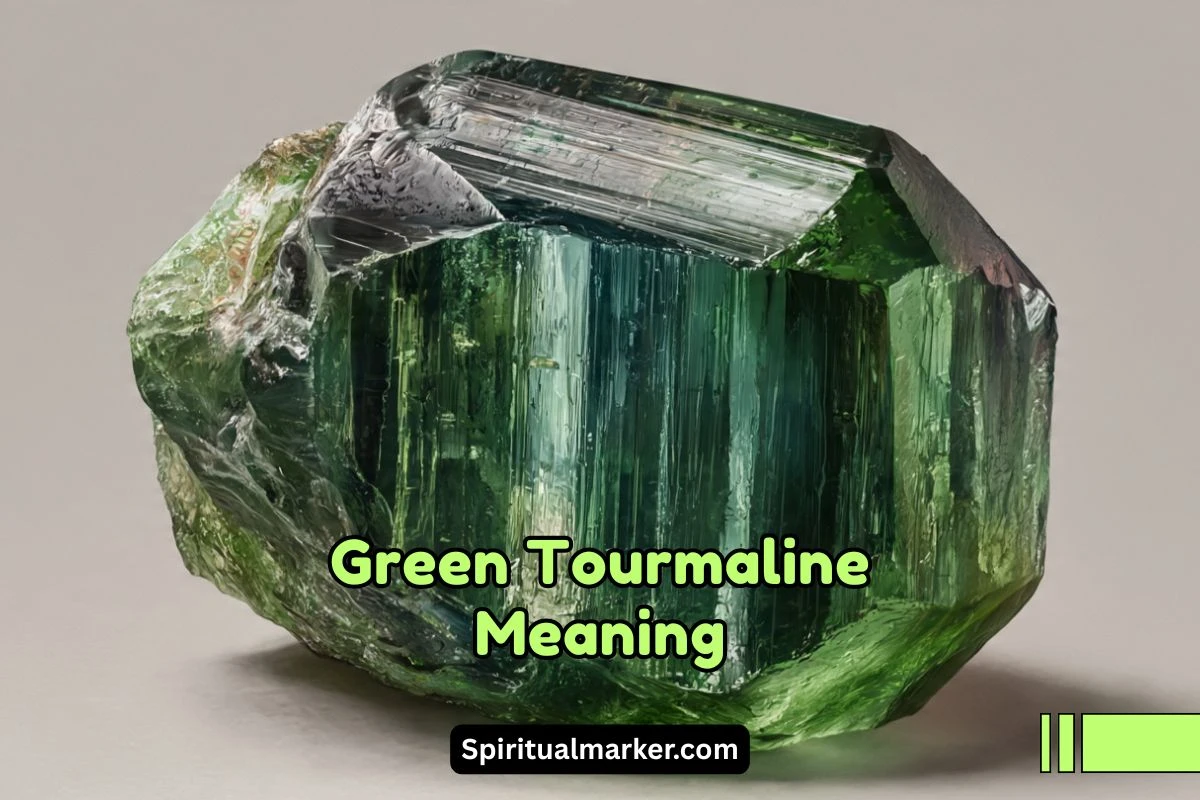
Green tourmaline is a stone of vitality and growth. Its rich green color evokes nature, abundance, and renewal. In spiritual practice, this stone carries healing and grounding energy.
The green tourmaline meaning often involves prosperity, emotional healing, and connection to the heart. It is a stone of the heart chakra, helping to attract abundance and release fear. A spiritual meaning of green jade shares that green-stone focus, though jade carries a more protective energy.
Green tourmaline is used in crystal healing to boost energy, support physical healing, and attract success. It can also symbolize growth and resilience. The stone's energy is vibrant and steady.
If you feel drawn to green tourmaline, it may signal a need for vitality. A spiritual meaning of green garnet also deals with green stones, though garnet carries a more grounding energy.
5 Key Takeaways
- Green tourmaline symbolizes vitality, emotional courage, heart healing, and personal growth.
- It strongly connects with the heart chakra and is believed to strengthen compassion, empathy, and emotional resilience.
- Ancient cultures across Africa, South America, and Asia prized tourmaline for its unique electrical properties and sacred symbolism.
- Green tourmaline ranks 7 to 7.5 on the Mohs hardness scale, making it durable enough for everyday jewelry wear.
- Wearing or meditating with green tourmaline may support emotional healing, spiritual grounding, and a deeper connection to the natural world.
What Is Green Tourmaline?
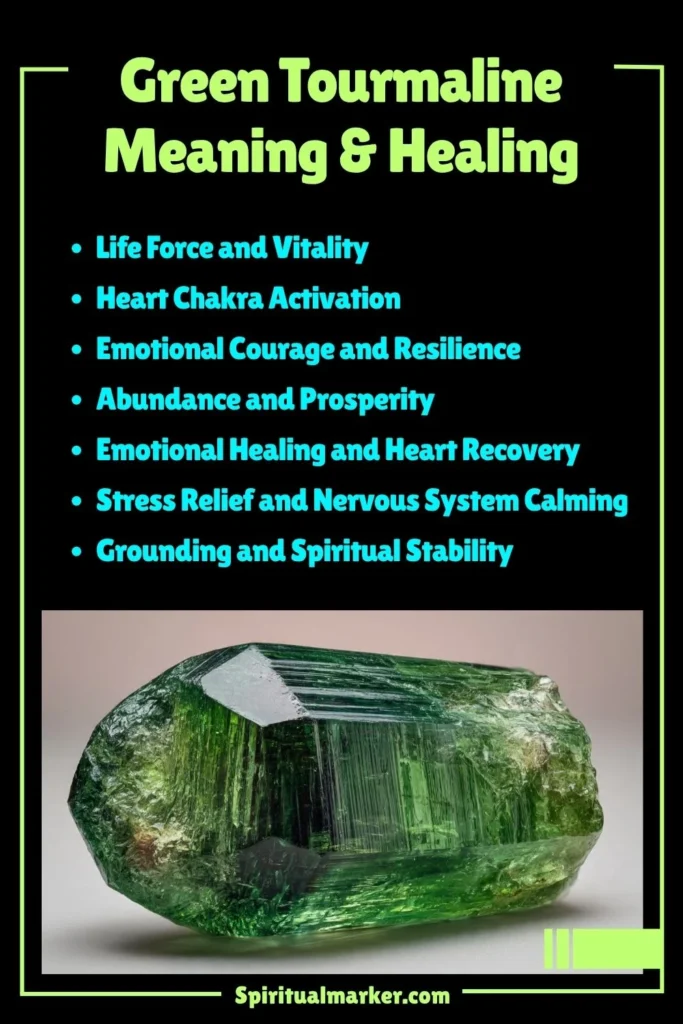
Green tourmaline, also known in the gem trade as verdelite, belongs to the complex tourmaline mineral group. Tourmaline is one of the most chemically diverse gemstone families on Earth. No two specimens are chemically identical, which is part of what makes each stone uniquely expressive.
Green tourmaline gets its color from iron and chromium traces within its crystal structure. The iron content typically produces cooler, more bluish-green tones. Chromium creates the vivid, warm greens that closely resemble fine emerald. Stones rich in chromium are especially rare and highly valued in both gem markets and spiritual communities.
Its color range is impressively wide. Shades include pale mint, medium forest green, deep olive, rich emerald green, and bright lime. Some specimens display multiple colors within a single stone, transitioning from green into pink, yellow, or blue. These multi-colored varieties carry their own layered spiritual symbolism.
One of tourmaline’s most fascinating physical characteristics is its pyroelectric and piezoelectric nature. When heated or subjected to pressure, tourmaline generates an electrical charge. Ancient cultures noticed this property long before science explained it. They believed tourmaline stones were alive with spiritual electricity, which deepened their sacred significance across many traditions.
Origins and Formation
Green tourmaline forms deep within the Earth’s crust through intense geological processes involving heat, pressure, and mineral-rich fluids. It typically grows in pegmatite formations, which are coarse-grained igneous rocks that allow large, well-developed crystals to form over millions of years. It also appears in metamorphic rocks and alluvial deposits.
Several countries produce significant quantities of high-quality green tourmaline. Brazil leads global production by a wide margin, particularly from the states of Minas Gerais and Paraíba. Nigeria, Mozambique, Tanzania, Afghanistan, Pakistan, Madagascar, and the United States (Maine and California) also contribute notable deposits to the global market.
Each origin tends to carry slightly different color characteristics. Brazilian stones often display rich forest greens. African deposits frequently produce stones with strong saturation and slightly different trace mineral compositions. This geographic diversity reflects the stone’s planetary symbolism of abundance, variety, and natural richness.
Key Properties at a Glance
| Property | Details |
|---|---|
| Primary Meaning | Vitality, heart healing, emotional courage, growth |
| Chakra Association | Heart chakra (Anahata) |
| Main Spiritual Symbolism | Life force, compassion, emotional strength, nature connection |
| Common Colors | Mint, forest green, olive, emerald, lime |
| Hardness | 7 to 7.5 Mohs |
| Main Sources | Brazil, Nigeria, Mozambique, Tanzania, Afghanistan |
| Emotional Associations | Courage, empathy, resilience, self-worth |
| Popular Jewelry Types | Rings, pendants, earrings, bracelets |
| Spiritual Uses | Meditation, heart chakra work, emotional healing, grounding |
| Care Needs | Mild soap, soft cloth, avoid sudden temperature changes |
Historical Use of Green Tourmaline Across Cultures
Tourmaline has captivated human civilizations for thousands of years. Ancient Egyptian legend held that tourmaline traveled from the Earth’s core up through a rainbow, gathering every color along the way. That poetic origin story explains the stone’s unusual color diversity and reinforces its long-standing connection with life, transformation, and divine energy.
In ancient India, tourmaline appeared in sacred ceremonies and was believed to awaken higher consciousness. Indian gem traditions referenced the stone as a tool for spiritual illumination and truth-seeking. Ayurvedic texts associated certain green stones with the heart and circulatory systems, aligning with modern crystal healing traditions around green tourmaline’s heart-centered energy.
Indigenous communities across Africa and South America used tourmaline stones as protective amulets. The stone’s electrical properties, visible when rubbed or heated, reinforced the belief that tourmaline held living spiritual energy. Shamanic traditions in certain regions used tourmaline during healing rituals to direct energy and strengthen the life force within the body.
In medieval Europe, green gemstones broadly symbolized hope, fertility, spring, and divine favor. The Catholic Church used green stones extensively in ecclesiastical jewelry and reliquaries. While specific records distinguishing tourmaline from other green stones remain sparse, green gems carried consistent sacred symbolism across European religious traditions during this period.
Modern metaphysical traditions refined green tourmaline’s meaning further. By the 20th century, crystal healers had firmly established its association with the heart chakra, vitality, emotional healing, and the regenerative power of nature. That tradition continues to grow today as interest in crystal healing expands worldwide.
5 Spiritual Meanings of Green Tourmaline
1. Life Force and Vitality
One of the most fundamental green tourmaline meanings centers on life force energy. Many spiritual traditions across Asia, Africa, and the Americas recognized a universal living energy that flows through all natural things. In Hindu tradition, this force is called prana. In Chinese philosophy, it is called qi. In many indigenous traditions, it is simply the breath of the living world. Green tourmaline is widely believed to carry a concentrated expression of this force.
This symbolism connects directly to the stone’s vivid green color. Green is the dominant color of the living world. Forests, meadows, rivers edged with vegetation, and thriving ecosystems all express themselves in green. Green tourmaline spiritually mirrors that same energy. Its color does not suggest dormancy or stillness. It suggests active, growing, surging life.
People drawn to green tourmaline during periods of physical or emotional exhaustion often describe feeling energetically reinvigorated. This is not an accidental association. The stone’s symbolism actively reflects renewal, regeneration, and the return of strength after depletion. Athletes, caregivers, and people recovering from illness frequently find themselves drawn to it for this reason.
Its vitality symbolism extends into the emotional realm as well. Emotional fatigue is just as real as physical tiredness. When prolonged grief, stress, or burnout drains a person’s emotional reserves, the inner sense of aliveness begins to fade. Green tourmaline spiritually represents the reconnection with that inner life force. It reminds people that their capacity for joy, passion, and engagement is not lost. It is waiting to be re-energized.
2. Heart Chakra Activation
Green tourmaline holds one of the strongest connections to the heart chakra among all green gemstones. In Sanskrit, the heart chakra is called Anahata, which translates to “unstruck” or “unbeaten.” This name points to a dimension of the heart that remains pure and untouched beneath layers of emotional wounding. Green tourmaline is believed to help people access that deeper, undamaged heart space.
The heart chakra sits at the center of the chakra system, bridging the lower physical chakras with the higher spiritual ones. When it functions freely, people experience genuine compassion, empathy, forgiveness, and emotional openness. When it becomes blocked through grief, betrayal, rejection, or prolonged emotional pain, people may feel emotionally disconnected, guarded, or unable to give and receive love freely.
What sets green tourmaline apart from softer heart stones is the active quality of its heart energy. Rose quartz soothes. Green aventurine gently encourages. Green tourmaline activates. Its heart chakra connection carries strength alongside softness. It does not simply comfort emotional pain. It strengthens a person’s capacity to move through it with courage and emotional resilience.
Many crystal practitioners use green tourmaline during heart chakra meditation by placing the stone directly on the chest. They believe the stone encourages blocked emotional energy to circulate more freely. This circulation process can feel uncomfortable initially, because repressed emotions may rise to the surface. Over time, however, the process leads to greater emotional clarity, depth, and openness.
3. Emotional Courage and Resilience
Courage is not the absence of fear. It is the willingness to move forward despite it. Green tourmaline carries a strong spiritual association with emotional courage, the kind that allows people to remain emotionally present during painful experiences rather than shutting down or retreating into numbness.
Many people misunderstand emotional courage as a personality trait. It is not something you either have or lack permanently. It is a capacity that fluctuates based on energy, emotional safety, and inner resources. When those resources deplete, emotional courage shrinks. Green tourmaline spiritually symbolizes the restoration of those inner resources, which then allows courage to return naturally.
This symbolism appears especially relevant during relationship difficulties, grief, creative vulnerability, and personal reinvention. All of these experiences require a person to remain open while simultaneously feeling exposed or uncertain. That emotional balancing act demands real inner strength. Green tourmaline represents that strength without hardness. It reflects the warrior’s heart that can be both powerful and tender.
Resilience is closely related. Emotional resilience refers to the ability to recover from difficulty without losing one’s fundamental sense of self. Research in positive psychology, including work by Dr. Martin Seligman at the University of Pennsylvania, has consistently linked resilience with emotional connection, a sense of purpose, and the ability to find meaning in difficulty. Green tourmaline spiritually embodies all three of these resilience-supporting qualities.
4. Connection With Nature and the Earth
Green tourmaline’s deep color roots it firmly in the symbolism of the natural world. Many spiritual practitioners describe it as a stone that bridges human consciousness with Earth’s living energy. Its formation deep within the planet, combined with its vivid green expression of life, makes it a natural symbol of ecological connection and grounded awareness.
This connection becomes particularly meaningful in modern life. Research from the University of Exeter found that people who spent at least two hours per week in natural environments reported significantly better health and psychological well-being compared to those who did not. The human need for connection with nature runs deep. Green tourmaline spiritually represents that connection for people who cannot always access the natural world directly.
Its symbolism reflects the cycles and intelligence of the natural world. Nature does not rush healing. Seasons change gradually. Growth happens layer by layer. Ecosystems regenerate through patient, complex processes that unfold across seasons and years. Green tourmaline mirrors that natural intelligence. It symbolizes healing that honors natural timing rather than forcing artificial speed.
For people engaged in environmental spirituality, earth-based religions, or shamanic practices, green tourmaline holds particular significance. It is often used in rituals and practices that honor the Earth, work with plant spirits, or seek alignment with seasonal cycles. Its geological origins as a product of the Earth’s own creative processes give it authenticity within these traditions that no synthetic stone can replicate.
5. Abundance and Prosperity
Across many cultural traditions, green has carried strong associations with abundance, fertility, and material prosperity. Green plants produce food. Green landscapes indicate fertile, life-sustaining land. Green in nature has historically signaled richness and provision. Green tourmaline inherits this symbolism while expanding it beyond the purely material realm.
In crystal healing traditions, green tourmaline is sometimes used with intentions related to financial growth, creative abundance, and professional expansion. However, its abundance symbolism differs from stones like citrine or pyrite, which focus primarily on material wealth. Green tourmaline emphasizes abundance that grows from genuine vitality, emotional health, and alignment with one’s authentic life purpose.
This perspective aligns with a broader spiritual principle found in multiple traditions: that outer abundance tends to follow inner richness. When a person feels genuinely alive, emotionally grounded, and connected to their purpose, opportunities and resources naturally tend to align more easily. Green tourmaline symbolizes that inner richness as the foundation from which true prosperity grows.
Its abundance symbolism also extends into relationships and creative life. Emotional generosity, creative flow, and the ability to give freely from a full heart are all forms of abundance that green tourmaline represents. For people who feel emotionally depleted or creatively blocked, the stone symbolizes restoration of that inner generative capacity.
6 Healing Properties of Green Tourmaline
1. Emotional Healing and Heart Recovery
Green tourmaline is deeply associated with emotional healing, particularly healing related to the heart. Heartbreak, grief, betrayal, abandonment, and chronic emotional stress all leave residue in the emotional body that can linger for years if not properly processed. Many people carry these emotional weights beneath their daily functioning, unaware of how significantly they shape emotional responses, relationship patterns, and inner vitality.
Within crystal healing traditions, green tourmaline is believed to help release emotional residue that accumulates from painful experiences. Unlike some healing stones that simply soothe surface emotions, green tourmaline is said to work at a deeper level. It encourages the kind of emotional processing that involves genuinely feeling old pain, recognizing its source, and gradually releasing the energetic charge it carries.
This process is rarely comfortable at first. When suppressed emotions begin surfacing, people may temporarily feel more emotionally sensitive or aware of feelings they had previously numbed. Experienced crystal practitioners view this as a healthy sign rather than a problem. It indicates that emotional material is moving rather than remaining frozen in place.
Over time, consistent emotional healing work supported by green tourmaline is believed to result in greater emotional spaciousness. People often report feeling less reactive, less emotionally guarded, and more able to engage with life and relationships from a place of genuine openness rather than defensive protection.
2. Physical Vitality and Energy Support
Green tourmaline holds a longstanding reputation as a physically invigorating stone. In metaphysical traditions, it is associated with supporting the physical heart, the immune system, and the body’s overall regenerative capacity. While these claims fall outside conventional medical understanding, many people who work with the stone report increased physical energy and a greater sense of bodily aliveness.
The stone’s piezoelectric and pyroelectric properties fascinate both scientists and spiritual practitioners. When pressure or heat is applied, tourmaline generates a measurable electrical charge. Some energy healers believe this electrical quality contributes to the stone’s ability to stimulate physical energy systems in ways that other stones cannot. This remains an area of metaphysical belief rather than established science.
People recovering from illness, managing chronic fatigue, or rebuilding physical strength after long periods of depletion frequently turn to green tourmaline. Its symbolism of regeneration, life force restoration, and vitality makes it intuitively appealing during physical recovery phases. Whether its effects operate through belief, energy, or simply the psychological comfort of a meaningful object, many users report tangible shifts in physical energy awareness.
In holistic health traditions, green tourmaline is also associated with the nervous system. Its calming yet energizing effect is described as tonifying rather than stimulating or sedating. Like an adaptogenic herb in botanical medicine, it is believed to support the body’s own regulatory capacity rather than forcing a specific direction.
3. Stress Relief and Nervous System Calming
Modern life generates chronic stress at levels that were largely unknown in previous centuries. The American Psychological Association consistently reports that significant percentages of adults experience stress levels they consider unhealthy. This chronic stress erodes physical health, emotional stability, relationship quality, and mental clarity over time.
Green tourmaline carries a healing reputation connected with stress relief and nervous system regulation. Its earthy green color resonates with natural environments that research consistently links to reduced cortisol levels and improved psychological well-being. Holding or wearing the stone creates a sensory anchor that many people find helpful during stressful periods.
Its stress-relieving symbolism differs slightly from purely sedating stones like amethyst or blue lace agate. Green tourmaline does not simply calm. It brings a grounded, energized calm that helps people remain functional and clear-headed during pressure. Many people describe it as promoting focused steadiness rather than drowsiness or withdrawal.
People in high-demand careers, caregiving roles, or emotionally intensive life situations frequently report valuing green tourmaline for this quality. It symbolizes the ability to remain rooted and clear during storms rather than being swept away by emotional or circumstantial turbulence.
4. Strengthening Compassion and Empathy
Compassion and empathy are central to green tourmaline’s healing identity. These qualities live in the heart, and because green tourmaline works so directly with heart energy, its influence on these qualities feels natural and organic. The stone is not simply associated with soft sentimentality. Its version of compassion carries real emotional power.
Empathy is the ability to genuinely sense another person’s emotional experience. Research in neuroscience has identified specific brain structures, including mirror neurons, that support empathic response. Empathy can be cultivated and deepened through intentional practice. Green tourmaline is sometimes used as a focal point for empathy-building practices in spiritual and therapeutic contexts.
Its compassion symbolism extends to self-compassion as well. Many people extend empathy readily to others while remaining harshly self-critical. Dr. Kristin Neff’s research at the University of Texas demonstrated that self-compassion predicts greater emotional resilience, mental health, and life satisfaction than self-esteem alone. Green tourmaline spiritually encourages this inward direction of compassionate awareness.
In relationships, green tourmaline symbolizes the willingness to truly see another person with openness rather than defensiveness. It represents the emotional courage to remain curious about another’s experience rather than retreating into reactive self-protection. These qualities form the foundation of healthy, emotionally intelligent relationships.
5. Supporting Personal Transformation
Green tourmaline is strongly associated with personal transformation, particularly the kind that emerges from emotional growth rather than external circumstance. Many people seek change at the surface level, adjusting behaviors, environments, or relationships without addressing the deeper emotional patterns that created those conditions. Green tourmaline symbolizes transformation that begins internally.
Its connection to the heart chakra makes this symbolism coherent. Real transformation in any area of life almost always involves an emotional shift first. A person may change careers, but the meaningful transformation is the shift in how they relate to their own sense of worth and purpose. A relationship may change, but the deeper transformation is in how a person understands love, vulnerability, and connection.
Green tourmaline is especially associated with transformation during major life transitions. Career changes, relationship endings, grief recovery, spiritual awakenings, and long-term healing journeys all qualify as transformational periods where the stone’s symbolism feels especially relevant. During these transitions, its vitality energy helps sustain people through the disorienting in-between phase when the old has ended but the new has not yet fully emerged.
Its nature-based symbolism reinforces this meaning. In forests, transformation happens constantly beneath the visible surface. Root systems expand in darkness. Seeds germinate without light. Healing proceeds through invisible biological processes long before results appear above ground. Green tourmaline reflects this same quality of transformation that honors invisible process rather than demanding immediate visible results.
6. Grounding and Spiritual Stability
While green tourmaline strongly connects with the heart chakra, it also carries notable grounding energy. This dual quality distinguishes it from purely ethereal or upper-chakra stones. Green tourmaline keeps a person spiritually engaged while simultaneously anchoring them in physical reality and emotional groundedness.
Spiritual growth without grounding can lead to what many traditions describe as spiritual bypassing: using spiritual practices or concepts to avoid difficult emotional realities rather than genuinely transforming them. Psychologist John Welwood, who coined the term, described it as using spiritual ideas as a defense against emotional work. Green tourmaline’s grounding quality makes this avoidance less likely by keeping emotional awareness connected to the body and present-moment experience.
Many practitioners value green tourmaline precisely because it bridges the physical and spiritual without privileging one over the other. It encourages spiritual awareness that stays rooted in the lived, embodied human experience. This makes it particularly useful for people navigating demanding real-world lives while also seeking deeper spiritual understanding.
Its grounding quality also makes it helpful during periods of spiritual transition or confusion. When spiritual beliefs are shifting, when old frameworks no longer feel adequate, or when new understanding has not yet crystallized into clarity, green tourmaline spiritually represents the stable ground beneath the changing landscape. It symbolizes rootedness that does not depend on certainty.
How to Wear Green Tourmaline Jewelry for Spiritual Benefits
The way you wear green tourmaline matters in crystal healing traditions. Because the stone so strongly connects with the heart chakra, pendants and necklaces worn near the chest carry particular spiritual significance. A green tourmaline pendant resting against the sternum is believed to create a continuous energetic relationship between the stone and the heart center throughout the day.
Rings bring green tourmaline into constant contact with the hands, which many traditions associate with giving, receiving, and creative expression. Some practitioners believe wearing green tourmaline on the left hand (the receiving hand in many traditions) supports emotional receptivity and openness to healing. Wearing it on the right hand may symbolize intentional emotional expression and giving.
Bracelets allow the stone to remain in physical contact with the pulse point at the wrist. This proximity to the circulatory system feels symbolically meaningful given green tourmaline’s association with the physical heart and life force energy. Many people find that keeping the stone against skin rather than over clothing strengthens their felt sense of connection with it.
During meditation, many practitioners hold green tourmaline in both hands or place it on the heart center. Intention matters greatly in crystal practice. Before working with the stone, setting a clear intention for emotional healing, grounding, compassion, or vitality may deepen the sense of connection and focus during practice.
Some people combine green tourmaline with complementary stones. Rose quartz may amplify the softer, nurturing dimensions of heart healing. Black tourmaline from the same mineral family adds strong grounding energy. Malachite deepens the connection to transformation and emotional release. Rhodonite reinforces the themes of forgiveness and compassionate self-awareness.
Caring for Your Green Tourmaline
Green tourmaline is a durable gemstone with a Mohs hardness of 7 to 7.5. This places it firmly in the range suitable for everyday jewelry wear, including rings and bracelets that experience regular physical contact. However, like all gemstones, it benefits from proper care to maintain both its physical appearance and its energetic quality.
Clean green tourmaline with lukewarm water, mild soap, and a soft cloth or brush. Gentle scrubbing around the setting removes everyday buildup without risking surface damage. Rinse thoroughly after cleaning to ensure no soap residue remains in crevices around the stone.
Avoid ultrasonic cleaners if the stone contains inclusions, fractures, or has been clarity-enhanced. Ultrasonic vibration can worsen existing fractures or dislodge stones from their settings. Steam cleaning is generally safe for untreated green tourmaline but should be avoided for treated or included specimens.
Store green tourmaline jewelry separately from harder gemstones such as diamonds, sapphires, or rubies. These harder stones can scratch tourmaline’s surface during storage. Individual fabric pouches or compartmentalized jewelry boxes work well for long-term storage.
From a spiritual care perspective, many practitioners periodically cleanse green tourmaline energetically. Common methods include placing it under the light of a full moon overnight, briefly smudging it with sage or palo santo smoke, burying it briefly in dry soil, or rinsing it in clean running water while visualizing the stone returning to a clear energetic state. These practices align with the stone’s connection to natural elements and cyclical renewal.
Green Tourmaline vs. Other Green Healing Stones
People often compare green tourmaline to other green healing stones. Understanding how it differs helps you choose the stone that best matches your current emotional and spiritual needs.
Green tourmaline vs. emerald: Both stones share similar green tones and heart chakra associations. Emerald carries strong symbolism around unconditional love and divine wisdom. Green tourmaline feels more physically vitalizing and grounded, while emerald resonates more with elevated spiritual love and devotion.
Green tourmaline vs. green aventurine: Green aventurine is often called the stone of opportunity and carries a lighter, more optimistic energy. Green tourmaline brings deeper emotional work and stronger vitality energy. Aventurine feels encouraging. Green tourmaline feels strengthening.
Green tourmaline vs. malachite: Malachite is associated with deep emotional transformation and the surfacing of buried patterns. Its energy feels intense and sometimes challenging. Green tourmaline is more balanced, supporting transformation while maintaining emotional grounding and steady energy flow.
Green tourmaline vs. green opal: Green opal carries a softer, more emotionally passive energy focused on gentle healing and soothing. Green tourmaline is more actively vitalizing and heart-strengthening. Green opal comforts. Green tourmaline empowers.
A Final Note
Green tourmaline carries a spiritual identity that feels genuinely alive. Its meaning does not center on passive comfort or quiet reassurance alone. It reflects active vitality, emotional courage, heart-centered strength, and deep connection with the natural world’s regenerative intelligence.
Whether you approach green tourmaline through a metaphysical lens, a historical curiosity, or simply an appreciation for beautiful natural gemstones, its symbolism offers something valuable. It reminds people that healing is not weakness. Growth is not always visible. Courage lives in the heart long before it appears in action.
If green tourmaline draws you, that attraction may reflect something real in your current inner landscape. You might consider wearing a green tourmaline pendant near your heart during emotionally demanding periods. You might keep a tumbled specimen on your desk or meditation space as a visual anchor for vitality and grounded awareness. You might pair it with rose quartz or black tourmaline to create a balanced set of healing intentions.
Whatever path you take with this remarkable stone, its green tourmaline meaning remains consistent: life wants to move through you. Healing wants to happen. The heart, beneath all its protective layers, remains unbeaten.