
A twitching left eye can feel like a tiny pulse you cannot control. It may come and go, often when you least expect it. Many cultures have long treated it as an omen.
The left eye twitching superstition often depends on gender and context. For some, it signals bad luck or a warning. For others, it points to good news or a visit. A right eye twitching superstition shares that framework, though the right side carries different omens.
Some traditions view left eye twitching as a sign of hidden gossip or upcoming sorrow. Others see it as a message about money or travel. The frequency and duration can add detail.
If the twitch feels persistent, it may be tied to stress. A spiritual meaning of tears from right and left eye also deals with eye sensations, though tears relate more to emotional release.
What Does It Mean When Your Left Eye Twitches?
Medically, left eye twitching occurs when tiny muscles around your eyelid contract involuntarily. Doctors call this condition ocular myokymia. Common triggers include stress, fatigue, too much caffeine, or eye strain.
However, long before modern medicine explained these spasms, ancient societies created spiritual interpretations. People believed their twitching eyes delivered messages from the universe.
Furthermore, they connected these physical sensations to fortune, relationships, or future events. Thus, a simple muscle spasm transformed into a meaningful omen across countless civilizations. These interpretations persist strongly in many communities today.
11 Spiritual Meanings of Left Eye Twitching
1. Intuitive Awakening
Have you ever had a gut feeling so strong it felt like a physical sensation? A left eye twitch is often viewed in that same light. Many traditions see this subtle movement as a signal from your own subconscious mind.
It is a nudge to pay closer attention to your instincts, especially when you are facing a decision or feel uncertain about a path. Think of it as your inner voice trying to get through the noise of daily life, asking you to trust what you feel deep down.
This phenomenon connects to the idea of inner sight, or a heightened sense of knowing without logical explanation. Your spiritual guides or intuition might be attempting to communicate, highlighting information you have sensed but perhaps ignored.
Therefore, when your left eye flutters, consider it a reminder to pause and listen to that quiet, internal guidance system. It encourages you to acknowledge the wisdom you already possess.
2. Emotional Release
Sometimes a twitch is more than a message. It can be a release valve. This interpretation suggests your body is physically expressing pent up emotions that need your attention.
Unexpressed sadness, unresolved frustration, or even unacknowledged joy can manifest as these small, involuntary tremors. The left side is frequently associated with the heart and feminine, receptive energy, further tying this signal to your emotional world.
View this occurrence as a gentle invitation to check in with yourself. Ask what feelings you might be storing away or what past situation still lingers beneath the surface. The twitching can act as a prompt for emotional housecleaning, urging you to process and let go.
This process paves the way for genuine inner healing and a clearer emotional state, allowing you to move forward with a lighter heart.
3. A Warning Sign
Not all interpretations are about inner growth. Sometimes, a twitching left eye serves as a cosmic caution light. Across various cultures, it is seen as a signal from the universe to stay alert.
This could mean you should reconsider a choice, watch your words in a sensitive situation, or prepare mentally for a potential challenge ahead. It is less about fear and more about encouraging prudent awareness.
For instance, in some African traditions, this specific twitch indicates that someone is speaking ill of you behind your back. While you should not become paranoid, it might advise you to be mindful of your social circles and protect your energy.
The key takeaway is vigilance. This sign prompts you to look both ways before proceeding, ensuring you are not walking blindly into difficulty.
4. Good Fortune and Opportunity
Here is a brighter perspective many people enjoy. In Chinese culture and several Indian beliefs, a twitching left eye often heralds positive news.
It can signal incoming prosperity, a welcome visitor, or success in a recent endeavor. The timing sometimes adds detail. For example, a morning twitch might promise a good day, while an afternoon one could predict a financial gain.
Specifically for women in Indian culture, this is frequently a very auspicious sign. It predicts joyful events, good news, or the favorable beginning of a new venture.
So if your left eye dances, it might be worthwhile to welcome the day with optimism. Stay open to new connections and opportunities, as fortune could be knocking on your door very soon.
5. Spiritual Alignment
This meaning delves into your connection with the broader universe. A left eye twitch can indicate that your personal energy is syncing up with larger cosmic currents. Think of it as your spirit tuning into a particular frequency.
This alignment often coincides with heightened psychic sensitivity or a deeper awareness of the unseen layers of life. You might find your dreams become more vivid or your hunches become remarkably accurate.
This phase represents a personal awakening and transformation. The receptive, yin energy linked to the left side supports a deeper connection to your emotions and intuitive faculties.
Therefore, the twitch mirrors this internal shift. It is a physical echo of your spirit expanding and attuning itself to more subtle realms of understanding and existence.
6. Incoming Change
Life is a series of chapters, and a twitching left eye might signal the start of a new one. This interpretation views the sensation as a foreshadowing of shifts on your horizon. These changes are not necessarily good or bad, but they are meaningful.
You could encounter new opportunities, a change in relationships, or a realignment of your personal goals and energy. The context of your daily life can offer clues. A twitch in the morning might point to positive beginnings, while one in the evening could encourage reflection on the emotional currents of the day.
Essentially, your body is sensing the ripples of change before your conscious mind catches up. It prompts you to become more adaptable and mindful as you navigate the turning pages of your life story.
7. Protection or Challenge
The meaning of a left eye twitch can shift dramatically depending on cultural lenses, particularly regarding gender. For men, in traditions like those found in India and the West Indies, this sign often carries a cautious tone.
It can serve as a warning of incoming obstacles, a potential financial loss, or even a hint of danger to loved ones. It is less about guaranteed misfortune and more about a heads up to fortify your position, check your security, and safeguard your resources.
Conversely, in many feminine spiritual contexts, the same twitch conveys a message of reassurance. It is seen as a sign of protection or incoming blessings, a signal that guardian energies are actively present.
This stark contrast highlights how the same physical symptom is filtered through different belief systems. Ultimately, it asks you to consider your own intuitive feeling alongside these traditions. Does the twitch bring you a sense of foreboding or one of comfort? Your personal reaction is a valuable part of the interpretation.
8. Energy Shift
At its core, a twitch is a movement of energy. This explanation gets very literal about that idea. A fluttering left eyelid can point to a direct shift in your intuitive or receptive energies.
It might signify the awakening of a suppressed feminine aspect within you, regardless of your gender, calling for more introspection and feeling. For some, it could even be tied to the body’s own rhythms, like hormonal cycles influencing neurological sensitivity.
This perspective encourages practical action alongside reflection. Spiritual practices like meditation or mindful breathing can help you interpret and balance this internal energy shift.
By turning your attention inward, you can discern whether this movement feels chaotic or like a gentle reordering. The goal is to find equilibrium, allowing any new or heightened sensitivity to integrate smoothly into your daily awareness.
9. A Visitor’s Sign
One of the most charming and specific interpretations crosses several cultures. In places like Hawaii, or in certain African and Chinese beliefs, a twitch in the upper left eyelid is a straightforward omen.
It predicts the arrival of visitors or news from family. This is not a vague hint of social interaction but a specific sign that someone is coming or that word from afar is on its way.
The Chinese tradition sometimes adds the detail of timing, suggesting that a twitch in the early hours of the day makes this prediction especially strong. It turns a minor bodily quirk into a moment of pleasant anticipation.
Will an old friend drop by? Will you receive a long awaited letter? This meaning connects your personal experience directly to your community, reminding you that you are part of a web of relationships that physically and energetically reaches out to touch you.
10. Metaphysical Insight
Many traditions link the left side of the body with the moon, dreams, and the subconscious. A twitch here, therefore, is sometimes seen as a direct line to these deeper realms.
It can signal a boost in spiritual insight, as if a curtain is being pulled back just slightly. You might find yourself understanding complex situations with sudden clarity or receiving meaningful messages through dreams and symbols in your waking life.
This phenomenon often occurs during personal growth phases, when you are more open to guidance from higher powers or your own higher self. In Yoruba belief, for instance, this sensation is called “eye crying,” which can signify that gossip is circulating about you, but also that an emotional catharsis is needed or coming.
The twitch acts as a physical prompt, urging you to look beyond the surface of events and seek the deeper truth or lesson hidden within them.
11. Manifestation Aid
This interpretation views the twitch as a powerful indicator of your own creative energy at work. It suggests your thoughts and vibrations are actively shaping your reality, and the flutter is a feedback signal.
When linked to positive fortune, it encourages you to double down on positive affirmations and clear intentions, aligning your mental state with the good things that seem to be on their way.
Conversely, if the twitch feels tied to worry or a warning, it serves as a reminder to examine and consciously shift your focus. What are you dwelling on? The idea here is that your personal vibrations need harmony to manifest the best outcomes.
The twitch becomes a call to tune your inner world, to resolve anxieties, and to concentrate your mental energy on what you truly desire to call into your life, thereby using the moment as a catalyst for conscious creation.
Left Eye Twitching Spiritual Meanings in Different Cultures or Countries
Chinese culture holds one of the most famous left eye twitching beliefs. The saying “左眼跳财” (zuǒ yǎn tiào cái) means left eye twitching brings wealth. Therefore, Chinese people often smile when their left eyelid flutters unexpectedly. They anticipate financial gain or good fortune arriving soon.
Similarly, Cambodian tradition teaches that left eye twitching signals luck approaching your life. This positive interpretation encourages optimism during the brief spasm.
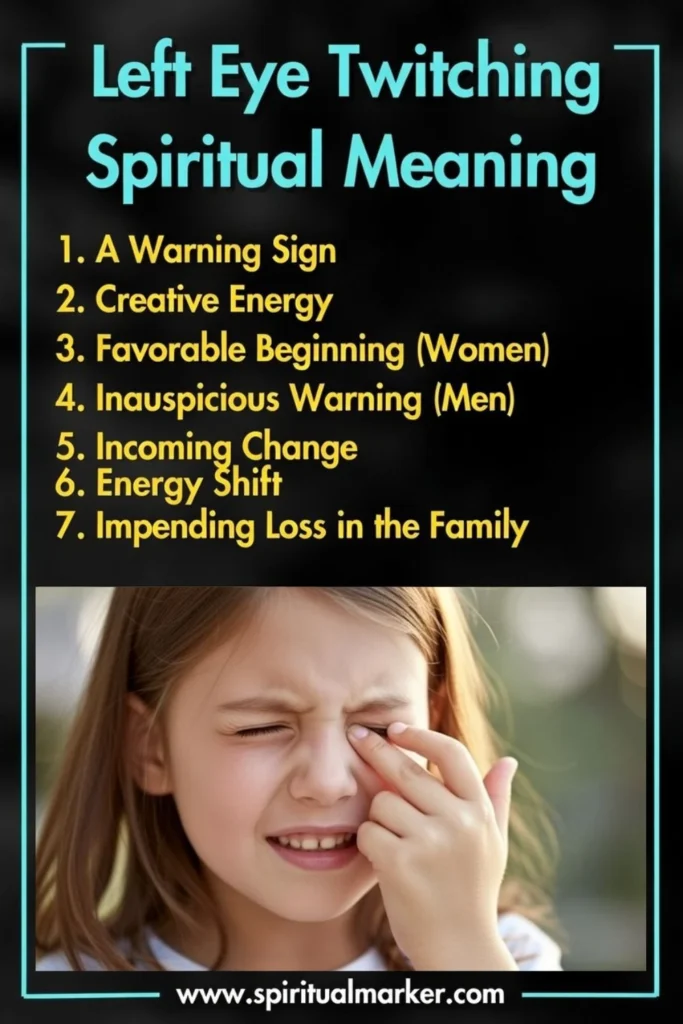
Nepalese and Hindu traditions present a more complex view. Left eye twitching carries opposite meanings depending on your gender. For women, a twitching left eye signifies upcoming happiness and success. Conversely, men experience the same twitch as an inauspicious warning. This gender distinction remains deeply embedded in Indian astrology practices today.
Thai culture shares China’s optimistic perspective. Their saying “เขม่นตา ซ้ายดี” translates to left eye twitching means good luck. Thais believe the left eye signals positive events while the right eye warns of trouble.
African interpretations vary significantly by region. Nigerian superstition specifically labels left eye twitching as a sign of bad luck. This negative association creates anxiety for many Nigerians experiencing the sensation.
Hawaiian tradition offers yet another perspective. A twitching left eye might predict an unexpected visitor arriving soon. Alternatively, it could signal impending loss within your family.
Japanese culture adds nuance by connecting left eye twitching in women to positive gossip. They believe someone speaks kindly about you when your left eye flutters.
Left Eye Twitching Superstition and Myths in Different Religions
Hinduism incorporates eye twitching into its astrological framework. Vedic texts reference eye movements as omens affecting daily decisions. Sita in the Ramayana noted left eye twitching as a foreboding sign before significant events. Therefore, many Hindus pause to consider timing when their left eye twitches unexpectedly.
Buddhist communities in Thailand and Sri Lanka maintain similar folk beliefs. However, core Buddhist teachings focus on mindfulness rather than omens. The twitching itself becomes a reminder to observe bodily sensations without attachment.
Islam explicitly rejects eye twitching superstitions. Islamic scholars state clearly that no connection exists between eye twitching and bad luck. They classify these beliefs as harmful superstitions contradicting proper faith in Allah. Muslims receive instruction to avoid such interpretations entirely.
Christianity similarly lacks biblical foundation for eye twitching omens. Careful examination of scripture from Genesis to Revelation reveals no connection between muscle spasms and divine messages. Some modern Christian writers suggest left eye twitching might symbolize caution against deceit. Yet this remains personal interpretation rather than established doctrine.
Jewish mystical traditions approach physical sensations differently. Kabbalah encourages introspection when unusual bodily events occur. Therefore, eye twitching might inspire self examination within an ethical or spiritual context. However, mainstream Judaism does not promote specific omens tied to eye movements.
Meanings of Left Eye Twitching in Females
Left eye twitching carries predominantly positive meanings for women across multiple cultures. Hindu astrology declares it highly auspicious for females. Women anticipating this sensation often expect happiness, emotional contentment, or professional success.
Indian tradition specifically calls left eye twitching “Baayi Aankh Ka Fadakna” as a positive sign for women. This favorable interpretation creates comfort during the brief spasm.
Japanese culture connects female left eye twitching to social approval. Women believe someone speaks positively about them when their left eyelid flutters. This interpretation transforms a random muscle spasm into evidence of good reputation.
Caribbean folklore sometimes links women’s left eye twitching to upcoming joyful events or financial improvement. These positive associations help women view the sensation optimistically rather than fearfully.
Meanings of Left Eye Twitching in Males
Male interpretations often contrast sharply with female meanings. Hindu tradition considers left eye twitching inauspicious for men. Therefore, Indian men might feel concern when experiencing this sensation. They associate it with potential obstacles or negative developments ahead.
Chinese culture maintains its positive wealth association regardless of gender. However, some regional Chinese variations add time-based conditions. For instance, left eye twitching at night might mean someone thinks about you specifically. This neutral interpretation avoids strong positive or negative labeling.
Western societies generally lack strong gender specific superstitions about eye twitching. Men in these cultures typically receive the same interpretations as women.
Nevertheless, traditional communities worldwide maintain distinct male centered meanings. These interpretations often reflect historical gender roles where men faced different social pressures than women.
Meanings of Different Areas of the Left Eye Twitching
The specific location of your eye twitch changes its interpreted meaning significantly. Upper eyelid twitching often signals incoming news or messages. Many cultures believe upper lid spasms connect to communication from distant people.
Lower eyelid twitching carries stronger emotional associations. Some traditions link lower lid movement to tears or emotional releases soon arriving. Therefore, people might prepare emotionally when their lower lid flutters unexpectedly.
Left eyebrow twitching receives separate interpretations entirely. Some cultures believe eyebrow spasms warn about social situations requiring attention. Others connect left eyebrow movement to new births within the family for women.
Corner twitching near the eye’s outer edge sometimes indicates travel opportunities approaching. Inner corner spasms might relate to family matters specifically.
When both eyes twitch simultaneously, interpretations become more intense. Single eye twitching delivers personal messages while dual twitching suggests broader life changes affecting multiple areas.
Upper versus lower distinctions matter greatly in Vedic astrology. Upper lid movements often connect to mental or intellectual developments. Lower lid spasms typically relate to emotional or physical experiences.
Is It Good Luck or Bad Luck for Men and Women?
The luck question depends entirely on your cultural background and gender. Chinese, Thai, and Cambodian traditions consistently label left eye twitching as good luck for everyone. These societies celebrate the sensation as a positive omen regardless of who experiences it.
Indian culture creates a gender split where women receive good luck while men face potential misfortune. This division makes the same twitch simultaneously lucky and unlucky within one household.
African interpretations lean negative particularly in Nigeria where left eye twitching means bad luck. Hawaiian views balance both possibilities depending on family circumstances.
Japanese culture offers neutral positive interpretations focused on social approval rather than pure luck.
Final Thoughts
Left eye twitching superstitions reveal humanity’s enduring desire to find meaning in ordinary sensations. These beliefs span continents, centuries, and religious traditions. They demonstrate how communities transform simple muscle spasms into complex spiritual messages.
Gender, location, and timing all reshape the interpreted meaning dramatically. Medical science explains the physical cause clearly through myokymia and common triggers. Yet cultural interpretations continue thriving alongside scientific understanding.
These superstitions persist because they offer comfort, warning, or anticipation during uncertain times. People seek patterns in random events to feel more in control of their futures. Left eye twitching provides a momentary pause for reflection across diverse societies.
Whether viewed as wealth arriving, gossip circulating, or obstacles approaching, the twitch becomes a tiny bridge between body and belief.
Knowing these varied interpretations enriches our appreciation for cultural diversity. It reminds us that identical physical experiences carry infinitely different meanings depending on where and who you are.
You Might Also Like
1) Right Eye Twitching Superstitions and Spiritual Meanings
2) Eye Itching Superstition and Spiritual Meaning (Left & Right)
3) List of Spiritual Smells and Their Meanings: Sweet & Bad
4) Spiritual Meaning of Craving Cheese, Peanut Butter & Dairy
5) Spiritual Meaning of Nail Biting: Symbolism & Personality Traits
FAQs
1. What is the spiritual meaning of left eye twitching?
Left eye twitching carries spiritual meaning related to intuition, messages, and upcoming changes. The left side is associated with feminine energy and receiving energy in spiritual traditions. Twitching in the left eye might indicate that you are receiving intuitive guidance. It could signal that a spiritual message is coming your way. Some traditions view left eye twitching as a sign of upcoming good fortune. Others interpret it as a warning to pay attention to your choices. The twitching might be asking you to trust your intuition about a situation. It could also indicate that you are being guided toward making a particular decision. Understanding the context helps you interpret the message.
2. What superstitions are associated with left eye twitching?
Various superstitions about left eye twitching exist across different cultures. In many European traditions, left eye twitching is considered a positive sign. It might indicate that you will receive good news or see someone you love. In some Asian traditions, left eye twitching might indicate that something good is about to happen. However, other cultures view it as a sign of bad luck or upcoming trouble. Some African traditions interpret left eye twitching as a sign that someone is thinking about you. Native American traditions sometimes view it as a call to pay attention to your dreams and visions. American folklore often connects left eye twitching with upcoming emotional experiences. These superstitions reflect cultural beliefs about signs and omens.
3. Is left eye twitching a sign of good luck or bad luck?
Whether left eye twitching is considered good luck or bad luck depends on the cultural tradition and context. In many spiritual traditions, left eye twitching is seen as a positive sign of intuitive guidance. It might indicate that you are receiving important messages from your higher self or spirit guides. However, some superstitions view it as a warning or sign of upcoming trouble. The interpretation often depends on the specific culture and other accompanying signs. Some people choose to view any eye twitching as a reminder to pay attention to their intuition. The intensity and duration of the twitching might also influence the interpretation. Ultimately, your personal beliefs shape whether you see it as good luck or bad luck.
4. How should I respond to left eye twitching spiritually?
Responding to left eye twitching from a spiritual perspective involves awareness and intention. When your left eye twitches, take a moment to pause and reflect. Consider what is happening in your life and what you were thinking about. Pay attention to your intuition and inner guidance in the following hours or days. Some people use the twitching as a prompt for prayer or meditation. You might ask for clarity about the message or guidance. Trust your instincts about any decisions or situations you are facing. Keep a journal of when the twitching occurs and what happens afterward. This helps you identify patterns and messages. Responding with openness and awareness helps you receive any potential guidance.