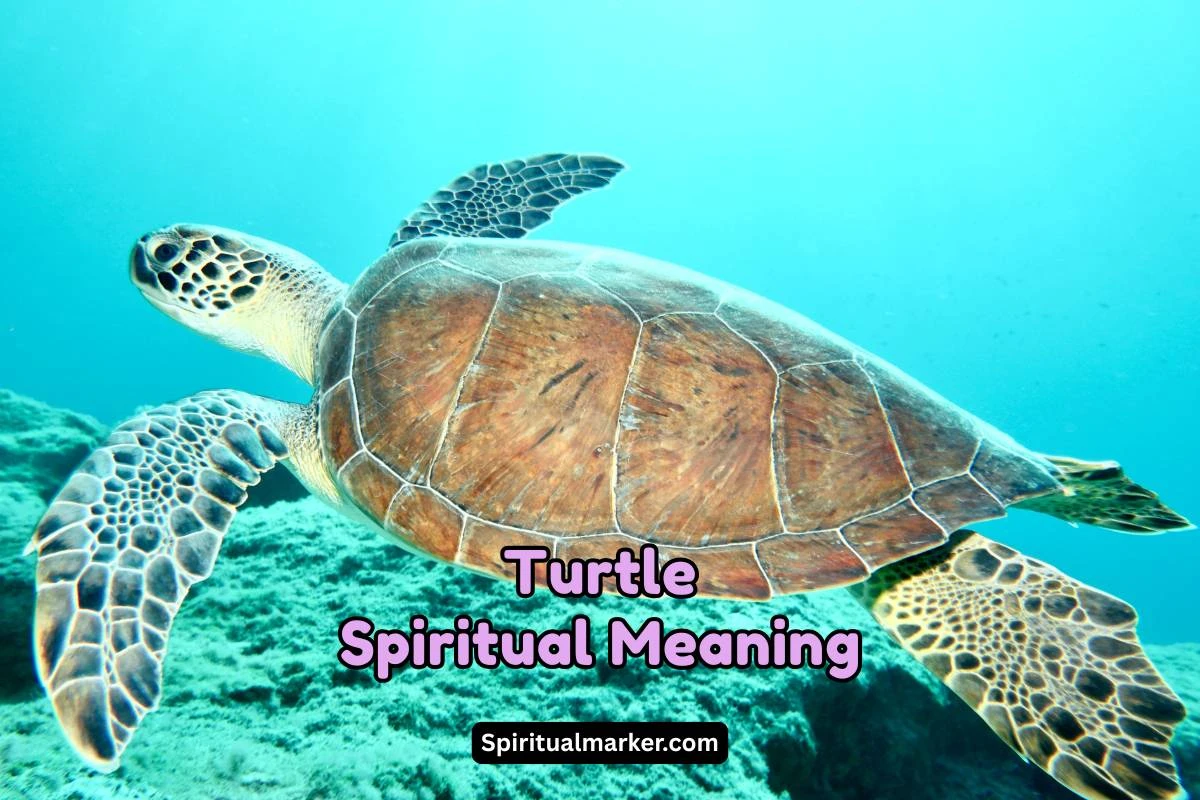
The turtle is a symbol of patience and longevity. Its slow pace and protective shell make it a creature of wisdom. Across cultures, turtles carry deep spiritual meaning and sacred wisdom.
The turtle spiritual meaning often involves grounding, protection, and ancient knowledge. Turtles carry their homes on their backs, so they can signal a need for stability. A spiritual meaning of a whale shares that ancient-creature focus, though whales carry a more emotional energy.
Some traditions view turtles as symbols of the earth or guides for long journeys. Others see them as a reminder to slow down. The turtle's behavior can add detail.
If a turtle appears in your life, it may be a call to be patient. A spiritual meaning of a rabbit crossing your path also deals with animal signs, though rabbits carry a faster energy.
Key Takeaways
- The turtle represents patience, longevity, protection, and spiritual wisdom in virtually every major world culture.
- In Native American tradition, the turtle is sacred as the foundation of creation itself, giving rise to the term “Turtle Island” for North America.
- Seeing a turtle in waking life or in a dream is often interpreted as a spiritual message to slow down, trust your path, and protect your emotional boundaries.
- The turtle’s shell carries deep symbolic weight, representing the home you carry within yourself and the divine armor of the soul.
- Across Hinduism, Buddhism, Chinese philosophy, and African traditions, the turtle serves as a cosmic symbol connecting heaven, earth, and the underworld.
What Is the Turtle and Why Does It Hold Such Deep Spiritual Significance?
The turtle is one of the most ancient reptiles alive today. Scientists estimate that turtles have existed for over 220 million years, predating even dinosaurs. This extraordinary longevity alone gives the turtle a natural aura of timelessness and sacred endurance. In spiritual terms, any creature that outlives empires carries ancestral wisdom.
There are over 360 species of turtles living in oceans, rivers, lakes, and on land. Their anatomy is deeply symbolic. The shell is a living part of their skeleton, not a mere external covering. It grows with them, protects their organs, and travels everywhere they go. Spiritually, this represents the idea that your protection comes from within. You are not dependent on external walls or defenses. You carry your sanctuary with you.
The turtle is also an amphibious creature, equally comfortable on land and in water. In spiritual symbolism, land often represents the physical world and water represents the emotional or spiritual realm. The turtle’s ability to navigate both speaks to a dual consciousness, a being that bridges the practical and the mystical without conflict.
Turtles also move slowly and deliberately. In a culture obsessed with speed and productivity, this slowness is profoundly countercultural and spiritually instructive. The turtle does not apologize for its pace. It simply moves, breathes, and endures. Ancient peoples recognized this and turned it into a teaching: wisdom does not rush.
What Does Seeing a Turtle Symbolize or Represent?
When a turtle crosses your path, spiritually aware traditions across the world treat it as a meaningful encounter, not a coincidence. The message depends on context, but certain universal themes always emerge.
Seeing a turtle in nature is widely interpreted as a call to patience. If you have been forcing outcomes, rushing decisions, or feeling anxious about your progress, the turtle’s appearance is a gentle spiritual nudge. Slow down. Trust the process. Your destination is secure.
A turtle moving toward water is often read as a sign to trust your emotional instincts. Water symbolizes emotion, intuition, and the subconscious mind. The turtle walking toward it suggests you are being guided to listen to your inner voice more deeply.
Finding a turtle that appears injured or in danger can carry a different message. Many spiritual traditions interpret this as a reminder to protect what is sacred in your life. Your values, your relationships, your inner peace, these all need active protection. The turtle is showing you what you might be neglecting.
Seeing a turtle unexpectedly in an urban environment or an unusual place is often considered a powerful spiritual omen. It may signal that something ancient and wise is trying to reach your awareness. Pay close attention to what you were thinking or feeling in that exact moment. The turtle’s timing is rarely accidental.
Repeated sightings of turtles, whether in real life or in images, dreams, and media, can suggest that the turtle is your spirit animal or totem. This carries a deeper invitation to study what the turtle represents and apply its wisdom to your current life circumstances.
9 Spiritual Meanings of the Turtle
1. Patience and the Sacred Art of Slowing Down
The most universally recognized turtle spiritual meaning is patience. In the famous Aesop fable of the tortoise and the hare, the slow animal wins the race through steady, unwavering effort. This story has survived for centuries because it reflects a spiritual truth that resonates across time and culture.
Patience in the spiritual context is not passive waiting. It is active trust. The turtle does not stop moving. It simply moves at the right speed for its nature. When the turtle appears as a spiritual symbol, it invites you to reconnect with your own natural rhythm. You may have been pushing yourself to match someone else’s pace, someone else’s timeline.
Many wisdom traditions teach that divine timing operates differently than human urgency. The turtle embodies this teaching completely. In Taoist philosophy, the concept of wu wei (non-forcing action) is directly expressed in the turtle’s movement. You act, but you do not force. You move forward, but you do not rush.
Practicing the spiritual lesson of patience the turtle teaches can transform anxiety into groundedness. When you feel desperate for results, the turtle reminds you that slow growth is still growth. Seeds do not rush. Rivers do not force their way through stone overnight. Neither must you.
2. Protection and the Wisdom of Boundaries
The turtle’s shell is one of the most recognizable and spiritually loaded images in the natural world. In spiritual symbolism, the shell represents the sacred boundary between your inner world and the chaos of the outer world. The turtle can retreat into its shell completely. This is not cowardice. It is divine discernment.
In many Native American traditions, the turtle’s shell was used in ceremonial rattles and healing rituals. The shell was considered a vessel of spiritual power, something that held sacred energy and protected the person carrying it. Wearing turtle shell jewelry or keeping turtle imagery at home was believed to attract protective energies.
On a psychological and spiritual level, the turtle teaches you the art of healthy boundaries. You have the right to withdraw. You have the right to protect your energy. You have the right to carry your home within yourself without external validation. The turtle does not apologize for retreating, and neither should you.
The protective symbolism of the turtle also extends to family and community. Many cultures see the turtle as a guardian of children and of the home. If you feel called to protect someone you love, or if you feel your home needs spiritual protection, the turtle’s energy is an appropriate and powerful ally to invoke.
3. Longevity, Endurance, and Ancient Wisdom
Turtles are among the longest-living creatures on Earth. The Aldabra giant tortoise has been recorded living well over 150 years. Jonathan, a Seychelles giant tortoise, is believed to be over 190 years old. In spiritual terms, this extraordinary lifespan makes the turtle a living symbol of eternity and accumulated wisdom.
In Chinese culture, longevity is one of the most celebrated spiritual virtues. The turtle (gui) is one of the four sacred creatures in Chinese cosmology, alongside the dragon, the phoenix, and the tiger. Turtle imagery is found on ancient Chinese oracle bones dating back over 3,000 years, used in divination rituals because the turtle was believed to hold the secrets of time.
The connection between the turtle and ancestral wisdom is also significant. When you work with turtle energy spiritually, you are tapping into something older than recorded history. You are connecting to the accumulated knowledge of every generation that came before you. This is a humbling and empowering spiritual experience.
From a personal spiritual perspective, longevity symbolism asks you to take the long view. Not everything worth having arrives quickly. Your spiritual development, your character, your deepest relationships, all of these are built over years and decades. The turtle honors what is built slowly and endures.
4. Grounding and Connection to the Earth
The turtle is intimately connected to the element of Earth. It moves across it slowly, deliberately, and completely in contact with the ground. In many shamanic and indigenous traditions, the turtle represents the Earth itself, the foundation upon which all life exists.
In Native American cosmology, the world was literally created on the back of a great turtle. The continent of North America is called “Turtle Island” by many First Nations peoples. This is not merely a poetic metaphor. It reflects a worldview in which the turtle is the sacred ground of existence, the foundation of the physical world.
Grounding, in spiritual practice, means connecting your energy to the Earth and releasing what does not serve you. Turtles are natural grounding symbols. Their low, ground-hugging movement keeps them physically close to the Earth at all times. Meditating with turtle imagery or holding a turtle totem during grounding practices can deepen the effectiveness of your work.
When you feel unmoored, anxious, or scattered, turtle energy calls you back to the body. It reminds you that you are a physical being on a physical Earth, and that stability is available to you at any moment. All you have to do is press your feet into the ground, breathe, and remember the turtle’s steady march.
5. Feminine Energy, Fertility, and Creation
In many ancient traditions, the turtle is strongly associated with feminine spiritual energy. The turtle’s rounded, nurturing shell resembles the pregnant belly. Its ability to carry eggs and bring life forward through patient incubation connects it to fertility, creation, and the divine feminine.
In Hindu mythology, the cosmic turtle Kurma supports the entire universe on its back during the churning of the cosmic ocean. This image of the turtle as the supporting, sustaining mother of existence is one of the most powerful in all of world religion. The turtle does not conquer or dominate. It sustains and provides a stable foundation.
Water turtles, in particular, are connected to lunar cycles in several indigenous traditions. The moon governs fertility, tides, and the rhythms of life. The turtle’s dual life in water and on land mirrors the moon’s influence across both the emotional and physical dimensions of existence. Many indigenous women’s traditions incorporated turtle symbolism into menstrual ceremonies and rites of passage.
The 13 sections on the back of many turtle shells are considered symbolic of the 13 lunar months in a year by several Native American peoples. This direct connection between the turtle’s body and the sacred feminine calendar of the moon makes the turtle one of the most profound symbols of feminine spiritual power in the natural world.
6. The Soul’s Journey and Spiritual Perseverance
The turtle’s life is, quite literally, a long journey. Sea turtles travel thousands of miles across open ocean, returning to the exact beach where they were born to lay their eggs. This astonishing navigational ability has made the turtle a symbol of the soul’s journey across many lifetimes and vast spiritual distances.
In Buddhist traditions, the turtle symbolizes a being that has progressed through many cycles of existence. The image of the “precious human rebirth” in Tibetan Buddhism uses a blind sea turtle surfacing through a golden ring floating on a vast ocean to illustrate how rare and precious spiritual opportunity is. The turtle, patient and enduring, eventually finds its way through.
Your own spiritual journey may feel long, winding, and sometimes impossible to navigate. The turtle’s spiritual message here is one of radical perseverance. You do not need to see the entire path. You need only to keep moving, keep trusting your inner compass, and trust that you will arrive where you are meant to be.
The persistence of the sea turtle returning to its birth beach after decades at sea is one of nature’s most moving spiritual metaphors. It says: no matter how far you have traveled, no matter how long you have been away, the soul always knows the way home.
7. Wisdom, Intuition, and Inner Knowing
Ancient cultures around the world used turtle shells for divination. In China, oracle bones made from turtle plastrons were inscribed with questions and heated until they cracked. The pattern of cracks was then interpreted as answers from the divine. This practice, called plastromancy, was used by Chinese royalty for centuries.
This historical practice reflects a spiritual belief that the turtle held a direct connection to divine knowledge. Its shell was not just physical protection. It was a map of the cosmos, a surface upon which the universe wrote its answers.
In Celtic and Native American traditions, the turtle is also considered an emblem of the ancient feminine wisdom that lives within the earth. Turtles carry this wisdom naturally. They do not acquire it through effort or study. They simply are wise, in the way that old forests are wise, or deep rivers are wise. It comes from age and endurance.
For you personally, turtle symbolism around intuition is an invitation to trust what you already know. You may doubt your inner knowing. You may dismiss your instincts as irrational. The turtle says otherwise. Your inner wisdom is ancient. It has been with you longer than your current fears. Trust it.
8. Peace, Stillness, and the Meditative Mind
Watch a turtle move, and you will notice something immediately. It is completely present. There is no rushing, no distraction, no frantic energy. The turtle moves with total stillness of mind even while in motion. This quality of meditative presence is one of its most spiritually significant attributes.
In Buddhist and Hindu traditions, the turtle is associated with the spiritual practice of withdrawal of the senses, what the Bhagavad Gita calls pratyahara. Chapter 2, verse 58 of the Bhagavad Gita states: “One who is able to withdraw the senses from sense objects, as the tortoise draws its limbs within the shell, is firmly fixed in perfect intelligence.” This is one of the clearest scriptural connections between turtle behavior and meditative wisdom in any religious text.
The turtle’s stillness also connects to the spiritual virtue of inner peace. External chaos does not shake the turtle. It retreats, rests, and re-emerges when the time is right. This models a form of spiritual resilience that is deeply needed in the modern world. You do not have to engage with every storm. You are allowed to go inward.
Meditating with the visual image of a turtle resting calmly in still water can be a powerful practice for those seeking mental peace. The turtle’s natural stillness and its slow, deliberate breathing pattern can serve as a visual anchor for your own meditation and breath practice.
9. Good Luck, Abundance, and Positive Omens
In many cultures, the turtle is considered one of the most auspicious symbols of good fortune that exists. This belief is particularly strong in East Asian traditions, where the turtle is one of the four divine creatures in Chinese cosmology and a constant presence in Feng Shui practice.
In Feng Shui, placing a turtle figurine or image in the North sector of your home or office is believed to attract career success, stability, and protective energies. The Black Tortoise of the North is one of the four celestial guardians in Chinese cosmology. It governs support, backing, and the security of your position in life.
Japanese culture also holds the turtle in high regard as a symbol of good luck and longevity. The phrase “tsuru wa sennen, kame wa mannen” translates to “the crane lives a thousand years, the turtle lives ten thousand years.” Turtle imagery is common in wedding gifts, New Year decorations, and longevity celebrations in Japan.
In Hawaiian tradition, the sea turtle, or honu, is a deeply sacred symbol of good luck, guidance, and the spirit of the sea. The honu is believed to be a guardian spirit (aumakua) that protects families across generations. Seeing a sea turtle while swimming in Hawaii is traditionally considered one of the most auspicious spiritual encounters a person can have.
Turtle Meaning and Symbolism Across Cultures and Religions
Native American Traditions
The turtle holds one of the most sacred positions in Native American spiritual worldviews. Across many different tribes and nations, the turtle is the foundation of the world itself. The Haudenosaunee (Iroquois) creation story tells of Sky Woman falling from the heavens into a primordial ocean. Animals dove to the bottom of the water to bring up soil. A great turtle rose to the surface and offered its back as ground for Sky Woman to land on. The soil grew into the continent. North America is Turtle Island.
This creation story is not unique to one tribe. Variations of it exist among the Lenape, Ojibwe, Anishinaabe, and many other First Nations peoples. The turtle, in these traditions, is not just a symbolic animal. It is a literal ancestor of the land, a divine being whose sacrifice and support made human life possible.
The 13 plates on the turtle’s back also align with the 13 moons of the lunar calendar in several Native American traditions. The 28 smaller plates around the edge correspond to the 28 days of the lunar month. This makes the turtle a living calendar, a physical embodiment of sacred time and feminine cosmic rhythm.
Hindu Tradition
In Hindu cosmology, the turtle plays a central and cosmic role. Kurma, the second avatar of the god Vishnu, took the form of a great cosmic turtle during the Samudra Manthan, the churning of the cosmic ocean. The gods and demons used Mount Mandara as a churning rod and the great serpent Vasuki as a rope. Kurma dove to the bottom of the ocean and supported Mount Mandara on his back, preventing the universe from collapsing.
This story is one of the most famous in Hindu scripture. It appears in the Bhagavata Purana, the Mahabharata, and the Vishnu Purana. The turtle avatar represents the divine capacity to bear the weight of creation without breaking. It is the sustaining, supporting divine force that keeps cosmic order intact.
The Bhagavad Gita’s famous comparison of a spiritually disciplined person to a turtle withdrawing its limbs has already been referenced above. This text cements the turtle as a symbol of yogic mastery and meditative intelligence in Hindu philosophy.
Chinese and East Asian Traditions
In ancient China, the turtle was one of the four divine creatures (Si Ling), alongside the dragon, phoenix, and tiger. The Black Tortoise of the North (Xuan Wu) was a celestial guardian associated with winter, water, and the protective power of the cosmos. It was depicted as a turtle entwined with a serpent, representing the union of heaven and earth, masculine and feminine, chaos and order.
Chinese oracle bone divination using turtle shells is among the earliest known forms of writing in East Asian civilization, dating back to the Shang dynasty (1600-1046 BCE). The turtle was seen as a vessel of divine communication, a living bridge between the ancestors and the living.
In Japanese tradition, the turtle (kame) is a symbol of good luck, longevity, and steadiness. In Korean culture, the turtle is also associated with longevity and is a common motif in royal court art and architecture. Across East Asia, the turtle’s spiritual status as a divine animal of endurance and cosmic importance has remained remarkably consistent for millennia.
African Traditions
In several West African traditions, particularly in Yoruba cosmology, the turtle is associated with wisdom, cunning, and survival. The turtle’s ability to navigate both land and water gave it a reputation as a being of dual intelligence, one that understands multiple worlds and can navigate between them.
In various Central and Southern African traditions, the turtle appears in folk stories as a trickster figure, using patience and intelligence rather than brute force to overcome challenges. This reinforces the spiritual lesson that wisdom and strategy outlast aggression. The turtle consistently wins through thinking, patience, and adaptability.
Turtle Symbolism in World Mythologies
The turtle’s role in world mythology is both vast and remarkably consistent. Across cultures that had no contact with each other, the turtle emerged as a cosmic architect, a foundation of creation, and a vessel of divine wisdom.
In Mesopotamian cosmology, the earth was believed to rest on the back of a giant turtle floating in the primordial waters. This image, strikingly similar to the Hindu Kurma story and the Native American creation narrative, suggests a kind of universal spiritual intuition about the turtle as the ground of existence.
Ancient Greek mythology associated the turtle with Hermes, the messenger of the gods. According to myth, Hermes found a tortoise and, using its shell, invented the first lyre. This divine instrument was later given to Apollo. The turtle’s shell became the vessel of divine music and cosmic harmony, a connection between the material world and the realm of the gods through sound.
In Mayan cosmology, the turtle constellation (which overlaps with Orion’s Belt) was associated with the rebirth of the maize god and the renewal of life. The turtle shell in the night sky represented the Earth’s surface from which the maize god was reborn after death, connecting the turtle to resurrection, renewal, and the cycle of life and death.
Aboriginal Australian traditions also feature the turtle prominently in Dreamtime stories, the sacred narratives that explain the origin of the world and the spiritual laws governing life. In these stories, the turtle often serves as a navigator and guardian, helping souls find their way through the spiritual landscape.
Types of Turtles and Their Spiritual Meanings
Sea Turtle
The sea turtle is a symbol of navigation, emotional wisdom, and the soul’s long journey. It travels vast distances across open ocean and always returns to its birthplace. Spiritually, the sea turtle represents the ability to navigate deep emotional waters and find your way home through intuition alone.
In Hawaiian spiritual tradition, the sea turtle (honu) is one of the most sacred creatures. It is an aumakua, a deified ancestral spirit that takes animal form to guide and protect living family members. Seeing a sea turtle in Hawaii is considered a direct blessing from your ancestors.
Snapping Turtle
The snapping turtle carries a more fierce and protective energy. Its willingness to defend itself aggressively when threatened makes it a symbol of fierce boundaries and the power to say no. Spiritually, the snapping turtle may appear when you need to assert yourself more strongly or when a boundary has been violated.
Its presence may also signal that something in your life needs a sharp, decisive cut or ending. The snapping turtle does not negotiate. It acts with clarity and force when necessary. This is a spiritual teaching about the power of decisive action and self-protection.
Box Turtle
The box turtle has a hinged shell that allows it to close completely, creating a perfect seal. Spiritually, this makes it one of the most powerful symbols of self-sufficiency, inner security, and complete personal protection. The box turtle needs nothing from the outside world to feel safe. Everything it requires is within.
For people struggling with codependency, anxiety, or a sense of being unprotected, the box turtle’s symbolism offers a powerful spiritual medicine. You are complete. You are protected from within. The box turtle says: you already have everything you need.
Painted Turtle
The painted turtle, with its bright red and yellow markings, is associated with creativity, vitality, and the joyful expression of your true self. Its colorful appearance in otherwise muted natural environments makes it a symbol of standing out with courage and beauty.
Spiritually, the painted turtle may appear when you have been dimming your light or hiding your gifts. Its vibrancy is a reminder to let your authentic colors show without apology or hesitation.
Turtle Biblical Meaning and Significance
The turtle in the Bible appears most notably in the Song of Solomon (Song of Songs) 2:12, which states: “The flowers appear on the earth; the time of singing has come, and the voice of the turtle dove is heard in our land.” While this reference is to the turtle dove rather than the turtle reptile, it is worth noting because the Hebrew word tor (turtle dove) carries associations with gentleness, peace, and the arrival of God’s favor.
However, the turtle as a reptile does carry indirect biblical significance through the symbolism of its traits. The qualities most associated with the turtle, patience, endurance, protection, and wisdom, are all deeply valued in biblical teaching. James 1:4 encourages believers to let patience “have its perfect work,” echoing the turtle’s spiritual lesson precisely. Romans 5:3-4 speaks of tribulation producing patience, which produces character, which produces hope. The turtle’s entire life story illustrates this exact progression.
The turtle’s shell as a metaphor for divine armor also resonates with Ephesians 6:11, which speaks of putting on the “full armor of God.” The turtle is born with its armor. It does not acquire it. This mirrors the Christian teaching that God’s protection is inherent and complete, available to those who abide in faith.
The longevity of the turtle echoes Psalm 90:2, which speaks of God existing “from everlasting to everlasting.” The turtle’s extraordinary lifespan points toward the eternal nature of the divine, making it a meaningful symbol in Christian contemplative traditions even if not explicitly named in scripture.
Turtle as a Spirit Animal and Totem
If the turtle is your spirit animal, you possess a rare and powerful set of spiritual gifts. People with the turtle spirit animal are naturally patient, deeply wise, and extraordinarily resilient. You do not buckle under pressure. You retreat when necessary and re-emerge stronger. You carry your sense of home and safety within yourself, rather than seeking it externally.
The turtle totem often appears in the lives of people who are healers, teachers, or guardians. It resonates strongly with individuals who carry old souls, those who feel they have lived many lifetimes and carry wisdom that exceeds their current age or experience.
If the turtle calls to you as a totem, you are also likely someone who values deep connection over surface relationships. The turtle moves slowly and deliberately in all things, including emotional bonds. You do not give your trust quickly, but once given, it runs deep and endures.
The shadow side of the turtle spirit animal is worth examining too. The turtle’s natural tendency to withdraw can become isolation if not balanced. Its patience can become avoidance. Its protective instincts can become emotional walls that keep love out as well as harm. The spiritual work of the turtle person involves knowing when to open the shell and when to close it.
Dreaming About Turtles: Spiritual and Psychological Meanings
Dreams about turtles are among the most meaningful and spiritually rich of all animal dreams. The turtle in a dream is rarely accidental. It arrives with a message.
Dreaming of a Turtle Moving Slowly
Seeing a turtle walking slowly in your dream is a direct message about your current pace of life. It may be affirming that your slow, steady approach is correct and will lead to success. Alternatively, it may be a gentle nudge that you are being too cautious or hesitant. Look at what the turtle is moving toward. The direction matters as much as the speed.
Dreaming of a Turtle in Water
A turtle swimming freely in clear water is one of the most positive dream symbols you can receive. It represents emotional freedom, spiritual clarity, and alignment with your intuitive self. You are flowing in the right direction. Your emotional life is healthy and your spiritual journey is progressing well.
Turbulent or murky water changes the meaning. A turtle struggling in rough water may signal emotional turbulence or spiritual confusion in your waking life. The turtle is still swimming, still enduring, but the journey is harder right now. This is a call for patience and self-compassion, not a sign of failure.
Dreaming of a Turtle Withdrawing Into Its Shell
This dream image speaks directly to your emotional and energetic boundaries. You may be feeling overwhelmed, overexposed, or depleted in waking life. Your psyche is signaling that it is time to retreat, restore, and protect your inner world. This is not a dream about fear. It is a dream about the sacred necessity of rest and self-protection.
Dreaming of a Baby Turtle
A baby turtle in a dream often symbolizes a new beginning, a fresh start, or a new spiritual project that is still fragile and needs careful tending. Baby turtles are extraordinarily vulnerable when they first hatch and make their way to the sea. This dream image asks you to treat something new in your life with great care and protective attention.
Dreaming of a Dead Turtle
While unsettling, a dead turtle in a dream is not necessarily a negative omen. It often represents the end of a phase, a situation where the old protective structure or the old way of being slow and patient is no longer serving you. Something has completed its cycle. A transformation is underway. The turtle’s death in the dream may be clearing the way for a more dynamic and engaged version of yourself to emerge.
Dreaming of Being a Turtle
If you dream that you are a turtle, this is a deeply powerful spiritual dream. You are embodying the turtle’s qualities directly. Your psyche is integrating patience, protection, and wisdom at a profound level. This dream often arrives during periods of significant spiritual transformation, when the soul is learning to carry itself with greater dignity and self-sufficiency.
Turtle Symbolism in Art, Literature, and Popular Culture
The turtle’s spiritual symbolism has flowed naturally into human creative expression across centuries and continents.
In literature, Terry Pratchett’s Discworld series imagines a universe literally carried through space on the back of a giant turtle, a direct echo of ancient creation mythology. The turtle as cosmic foundation becomes the premise of an entire philosophical universe. Pratchett knew exactly what he was doing by choosing this image.
In Hindu and Buddhist art, the cosmic turtle appears repeatedly as a support structure for the universe, depicted in ancient temple carvings, manuscript illustrations, and sacred paintings across South and Southeast Asia. These images have been reproduced for thousands of years, testifying to the turtle’s enduring sacred status.
Contemporary spiritual culture has embraced the turtle enthusiastically. Turtle imagery appears in jewelry, home decor, meditation tools, and spiritual tattoo art around the world. People instinctively gravitate toward the turtle when they need a symbol of resilience, patience, or grounding. This is not a trend. It is a continuation of a spiritual relationship between humans and turtles that stretches back tens of thousands of years.
A Final Note
The turtle spiritual meaning is as vast as the ocean the sea turtle crosses and as old as the Earth it carries on its back. Whether you encounter the turtle in a dream, on a forest path, in ancient scripture, or in a moment of quiet meditation, its message remains beautifully consistent: slow down, protect what matters, carry your home within you, and trust the long journey of your soul.
You do not need to rush your spiritual growth. You do not need to force outcomes or measure yourself against anyone else’s timeline. The turtle has been walking its path for 220 million years, and it has never once apologized for its pace. Neither should you.
If you feel drawn to the turtle as a spiritual symbol, consider working with its energy consciously. Keep a small turtle figurine in your home or workspace as a grounding and protective talisman. Meditate on the image of a turtle swimming peacefully through clear water when you need emotional calm. Reflect on the turtle’s lesson when you feel impatient or anxious about your progress.
The turtle does not ask you to be perfect. It asks you to be present, patient, and protected. It asks you to trust that the wisdom you carry within you is ancient and reliable. It asks you to remember that slow, deliberate, and enduring is one of the most powerful ways a soul can move through this world.