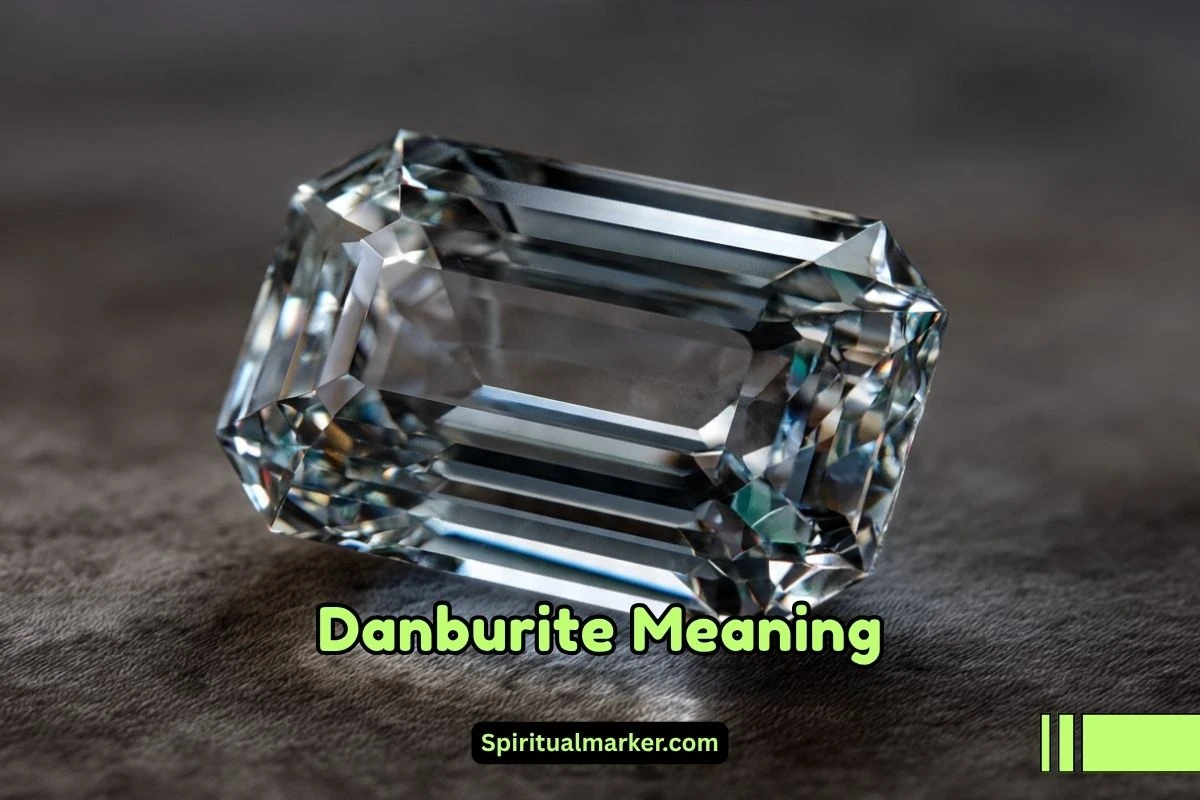
Have you ever held a crystal that felt different from everything else in your collection? Many people describe their first encounter with Danburite exactly that way. Something about it feels unusually still, unusually clear, unusually high.
That experience is not a coincidence. Danburite carries one of the highest recognized vibrational frequencies in the crystal world. Healers, spiritual practitioners, and gemstone enthusiasts across different traditions consistently describe its energy as deeply pure, calm, and almost otherworldly. People often feel immediately drawn to it during periods of spiritual searching, emotional grief, or personal transition.
For centuries, various traditions have linked Danburite with divine light, angelic communication, emotional purification, and spiritual awakening. It does not carry the dramatic intensity of some high-energy stones. Instead, its presence feels more like quiet radiance. Soft. Luminous. Deeply peaceful.
Unlike gemstones prized primarily for visual spectacle, Danburite works on subtler levels. It resonates with the heart and crown chakras simultaneously, which is rare. That dual resonance gives it a reputation for bridging emotional healing and spiritual clarity in ways that most crystals cannot.
This article covers the full meaning of Danburite, its spiritual symbolism, healing properties, historical background, and practical ways to work with it. You will also find guidance on wearing Danburite jewelry and caring for it properly so its beauty and energy remain intact over time.
5 Key Takeaways
- Danburite symbolizes divine light, emotional purification, spiritual ascension, and angelic connection.
- It resonates strongly with both the heart chakra and the crown chakra, making it rare among healing crystals.
- People use Danburite during deep meditation, grief recovery, spiritual development, and emotional healing work.
- Danburite rates between 7 and 7.5 on the Mohs hardness scale, making it more durable than many popular crystals.
- Wearing or holding Danburite regularly is believed to heighten spiritual awareness, promote inner peace, and support profound emotional release.
What Is Danburite?
Danburite is a naturally occurring silicate mineral prized for its exceptional clarity and high vibrational energy. It typically appears colorless, pale white, or pale pink, though yellow and light golden varieties also exist. Its transparency gives it a luminous, almost glassy appearance that many people find immediately calming.
Mineralogically, Danburite belongs to the orthorhombic crystal system. It forms as elongated prismatic crystals with characteristic chisel-shaped terminations. The stone’s chemical composition is calcium boron silicate. This composition gives Danburite a distinctive internal structure that crystal healers often associate with clarity, truth, and energetic transparency.
Many people initially confuse Danburite with clear quartz or topaz because of similar visual qualities. However, Danburite carries a noticeably different energetic signature. Where clear quartz amplifies existing energy, Danburite is believed to purify and elevate it. Where topaz stimulates mental sharpness, Danburite is more strongly associated with emotional gentleness and spiritual openness.
The stone holds a quiet visual beauty that feels almost unassuming. Yet its reputation among serious crystal practitioners is extraordinary. Many regard it as one of the most spiritually significant healing crystals available today.
Origins and Formation of Danburite
Danburite was first identified in Danbury, Connecticut, in 1839, which explains its name. The original Danbury deposits are now exhausted, but significant sources have since been found in several countries.
Mexico produces some of the finest and most abundant Danburite specimens worldwide. The Mexican deposits near Charcas in San Luis Potosi are particularly celebrated for large, high-clarity crystals. Other important sources include Japan, Russia, Madagascar, Burma (Myanmar), Bolivia, and Switzerland.
The stone forms through hydrothermal processes in metamorphic and contact metasomatic environments. Silica-rich fluids carrying calcium and boron compounds move through rock fissures under heat and pressure. Over geological timescales, these minerals crystallize into Danburite’s characteristic elongated prismatic form.
Spiritually, this formation process holds symbolic meaning. Danburite literally emerges from extreme pressure, intense heat, and slow transformation over immense periods. That geological story mirrors its spiritual reputation as a stone that helps people navigate personal pressure, emotional intensity, and long-term transformation with grace and clarity.
Key Properties of Danburite
| Property | Details |
|---|---|
| Color | Colorless, pale white, pale pink, pale yellow |
| Composition | Calcium boron silicate |
| Hardness | 7 to 7.5 Mohs scale |
| Chakra Association | Heart chakra and crown chakra |
| Symbolism | Divine light, spiritual purity, angelic energy, emotional healing |
| Common Sources | Mexico, Japan, Russia, Madagascar, Burma, Bolivia |
| Transparency | Transparent to translucent |
| Energy Style | High-vibration, purifying, deeply calming |
Historical Use of Danburite
Danburite’s formal scientific identification dates to the 19th century, but its healing use in metaphysical traditions developed rapidly from that point forward. Because it was not known in ancient civilizations the way quartz, lapis lazuli, or jade were, Danburite’s spiritual legacy is primarily modern. However, its influence within contemporary crystal healing communities has grown remarkably deep.
Throughout the 20th century, prominent crystal healers and metaphysical researchers began documenting Danburite’s unique energetic qualities. Authors like Naisha Ahsian and Robert Simmons, whose work features heavily in the comprehensive Book of Stones, describe Danburite as one of the premier high-vibration crystals available for spiritual work. They associate it specifically with angelic realms, sincere divine connection, and karmic healing.
In Japanese spiritual traditions, Danburite from domestic deposits has been particularly revered. The stone’s clarity and purity align naturally with Japanese aesthetic and spiritual values centered on simplicity, transparency, and quiet refinement.
Modern energy healing practitioners consistently rank Danburite among the most powerful stones for deep emotional release and spiritual ascension work. Its reputation has grown steadily because practitioners across different traditions report similar experiences with the stone, regardless of cultural background.
5 Spiritual Meanings of Danburite
1. Divine Light and Angelic Connection
Danburite holds perhaps the strongest reputation for angelic energy of any crystal in the healing tradition. Its exceptional clarity is not merely visual. Many practitioners believe it reflects a deeper spiritual transparency that resonates with higher dimensional frequencies, specifically those associated with angelic beings, spirit guides, and divine intelligence.
This symbolism is taken seriously across multiple spiritual frameworks. In The Book of Stones, Simmons and Ahsian describe Danburite as a crystal that “carries a high, sweet energy that stimulates the heart and links it to the crown chakra.” That combination is deeply significant. Most crystals work primarily within a single chakra. Danburite’s simultaneous resonance with both heart energy and crown energy creates a rare spiritual bridge between emotional love and divine awareness.
People drawn toward angelic communication, light work, or spiritual channeling frequently include Danburite in their practices. The stone does not force contact with higher realms. Instead, it symbolizes raising personal frequency so that spiritual connection becomes more natural and accessible. Its energy feels gentle enough to avoid overwhelming sensitive individuals while remaining powerful enough to facilitate genuinely elevated spiritual experiences.
The stone’s symbolism of divine light extends beyond religious frameworks. Even people without strong religious beliefs often describe feeling unusually peaceful, clear, and spiritually aware during extended contact with Danburite. That consistent experience across diverse personal backgrounds adds credibility to its reputation as a stone of spiritual luminosity.
Many crystal healers also associate Danburite with prayer and contemplative silence. The stone symbolizes the quality of spiritual attention required for deep prayer: focused, still, humble, and open. Whether you believe in angels literally or prefer to interpret them symbolically as aspects of higher consciousness, Danburite’s symbolism centers on opening channels between the human and the divine.
2. Emotional Purification
One of the most powerful and consistent themes in Danburite’s spiritual meaning is emotional purification. This concept goes beyond simple emotional healing. Purification implies a deeper clearing process. It refers to releasing emotional residue that has accumulated quietly over years, sometimes decades, often without full conscious awareness.
People carry emotional weight from old wounds, past relationships, childhood experiences, unspoken grief, and unresolved conflict. That emotional accumulation rarely disappears on its own. Without intentional healing work, these layers can harden into emotional numbness, chronic anxiety, relationship patterns that repeat painfully, or a vague but persistent sense of heaviness.
Danburite’s symbolism addresses this specifically. Crystal practitioners frequently describe the stone as emotionally clarifying in the way that deep, clean water clarifies a murky vessel. It does not force emotional confrontation. Instead, it creates an energetic environment where buried emotions can rise naturally, be acknowledged honestly, and release without causing emotional overwhelm.
This purification process often feels quiet rather than dramatic. People working with Danburite during meditation sometimes report unexpected emotional releases, including tears without obvious cause, feelings of relief, or sudden emotional clarity about long-standing personal situations. These experiences are consistently described as gentle rather than destabilizing.
Spiritual literature on Danburite also connects emotional purification with karmic clearing. Some traditions believe that unresolved emotional patterns can carry across multiple life experiences or deeply established personal cycles. Danburite is believed to help illuminate these patterns with enough spiritual light that they can finally be seen, acknowledged, and released. The stone symbolizes the courage required for that level of emotional honesty.
3. Spiritual Awakening and Ascension
Danburite carries strong symbolism connected with spiritual awakening and what many traditions call ascension, the gradual elevation of personal consciousness toward greater awareness, compassion, and spiritual clarity.
This meaning makes Danburite particularly significant in contemporary spirituality, where many people actively seek tools that support their ongoing inner development. Unlike stones associated with protection or grounding, Danburite symbolizes upward movement. Its energy points toward spiritual expansion rather than containment.
Spiritual awakening rarely arrives as a single dramatic event. More often, it develops through accumulated experiences of inner clarity, emotional release, perspective shifts, and growing spiritual sensitivity. Danburite symbolizes this gradual process beautifully. Its pale, luminous appearance reflects light from within rather than from the surface, which mirrors the internal nature of genuine spiritual development.
Many practitioners place Danburite at the crown of the head during meditation because they believe its energy activates and expands crown chakra awareness. The crown chakra governs higher consciousness, spiritual connection, and awareness beyond personal ego. Regular crown chakra activation through meditation, reflection, and intentional spiritual practice is widely considered foundational to deeper awakening.
Danburite also symbolizes the dissolution of spiritual separation. Many spiritual traditions teach that suffering often stems from the felt experience of being separated from something greater, from love, from meaning, from belonging, or from divine connection. Danburite’s symbolism directly addresses that sense of separation. People often describe working with the stone as a feeling of coming home spiritually, a quiet but unmistakable sense that the gap between personal self and larger spiritual reality has become smaller.
4. Inner Peace and Serenity
Among all the spiritual meanings associated with Danburite, inner peace remains the most consistently reported by people across different backgrounds and belief systems. Whether someone approaches the stone from a deeply religious framework, a secular wellness perspective, or a metaphysical healing tradition, the experience of peace in Danburite’s presence appears with remarkable regularity.
This peace is not superficial. People do not simply describe feeling temporarily relaxed. They more often describe experiencing a deep stillness that feels qualitatively different from ordinary calm. That distinction matters because most people encounter plenty of temporary relief through rest, entertainment, or distraction. What Danburite symbolizes is something deeper: peace that does not depend on external circumstances being perfect.
That quality of peace is spiritually significant because the world rarely becomes perfectly peaceful on its own. Life continues presenting challenges, losses, uncertainties, and emotional demands regardless of personal circumstances. The question most spiritual traditions address is how a person can maintain inner stability and emotional equilibrium even within that ongoing complexity.
Danburite symbolizes the possibility of that kind of peace. Many practitioners describe the stone as helping them feel emotionally settled rather than constantly reactive. Difficult situations still arise, but Danburite symbolically supports the internal groundedness required to face them without being destabilized.
This symbolism also connects with forgiveness. Chronic inner conflict frequently stems from unresolved resentment, self-blame, or grief. Forgiveness does not erase painful experiences. It releases the emotional grip that those experiences maintain over present well-being. Danburite’s symbolism of serene peace is closely tied to this release, not through forced positivity, but through genuine emotional completion.
5. Heart-Centered Love and Compassion
Danburite’s connection with the heart chakra gives it a powerful spiritual identity centered on love and compassion. Unlike stones associated with romantic passion or physical attraction, Danburite’s heart symbolism operates at a higher and more universal level. It resonates with what many spiritual traditions describe as unconditional love, the kind that extends beyond personal relationships into a broader orientation of care toward all living beings.
This quality makes Danburite spiritually significant in a world where love is frequently conditional, transactional, or heavily mixed with fear, expectation, and emotional need. The stone symbolizes a form of love that does not depend on being loved in return. Many practitioners describe this as spiritual love rather than merely human love, a quality that requires significant inner development to cultivate genuinely.
People working through experiences of betrayal, abandonment, or deep heartbreak often find particular resonance with Danburite’s heart symbolism. The stone does not symbolize pretending pain does not exist. Instead, it represents loving beyond the pain, finding the capacity to remain emotionally open even after experiencing genuine hurt. That is an emotionally demanding spiritual posture, and Danburite symbolically supports the inner strength required to maintain it.
Its symbolism of compassion extends naturally into self-compassion. Many people apply love freely to others while remaining harsh and critical toward themselves. Danburite’s energy is often described as softening that internal harshness. It encourages people to apply the same warmth, patience, and understanding to themselves that they naturally offer those they care about deeply.
6 Healing Properties of Danburite
1. Emotional Release and Deep Healing
Danburite holds a strong reputation for facilitating deep emotional release. This property sits at the core of why so many crystal practitioners recommend it specifically during grief, trauma recovery, and long-term emotional healing work. The stone is not simply soothing. Its healing function operates at a level that reaches emotional material most people keep buried beneath everyday functioning.
Emotional suppression is extremely common in modern life. Cultural expectations, professional demands, family responsibilities, and personal fear all create pressure to keep difficult emotions contained. Over time, that containment often creates internal pressure that quietly erodes emotional health, physical energy, and mental clarity.
Danburite symbolically creates safe emotional space where suppressed material can surface without causing crisis. Practitioners who use it regularly during meditation report that it seems to gradually soften emotional defenses. Rather than forcing open emotional wounds abruptly, it creates a slow, gentle loosening that allows release to happen at a manageable pace.
This healing property is particularly valuable for people who identify themselves as emotionally guarded. Many deeply caring people become guarded after experiencing emotional pain. The guarding protects them from further hurt, but it also isolates them from intimacy, connection, and their own authentic emotional life. Danburite’s healing reputation centers partly on restoring access to that authentic inner life without recreating the vulnerability that originally caused damage.
2. Stress and Anxiety Relief
Many people who work regularly with Danburite report meaningful reductions in anxiety and chronic stress. This healing property connects directly with the stone’s high vibrational energy and its strong association with peace and serenity.
Anxiety typically involves the mind becoming caught in circular worry patterns. Thoughts replay potential problems, unfavorable outcomes, or past regrets repeatedly without resolution. This mental cycling creates and sustains emotional tension that frequently manifests in physical symptoms as well, including disrupted sleep, muscle tightness, fatigue, digestive disturbance, and difficulty concentrating.
Danburite’s symbolism of mental clarity and emotional stillness directly addresses this pattern. Many practitioners describe the stone as helping to interrupt anxious thought cycles by creating a felt sense of present-moment peace. That interruption does not solve the external circumstances creating stress. It does, however, restore the emotional groundedness required to address those circumstances more effectively.
Research in the fields of mindfulness and contemplative neuroscience consistently demonstrates that states of calm awareness improve decision-making, reduce emotional reactivity, and strengthen resilience under pressure. Whether or not you attribute these benefits to Danburite’s energetic properties specifically, regular meditation with the stone may support those same qualities simply by creating consistent quiet, focused reflection time.
The stone is often placed in sleep spaces, meditation rooms, and work environments by people who feel its calming presence reduces background emotional noise. Many report sleeping more deeply and waking more rested after keeping Danburite nearby.
3. Support During Grief
Danburite has earned a particular reputation as a grief stone. Crystal practitioners frequently recommend it to people navigating the loss of loved ones, the end of important relationships, major life transitions, and other forms of profound personal loss.
Grief is one of the most emotionally demanding human experiences. It does not follow a predictable linear process. Many people experience waves of grief that arrive unexpectedly, even long after loss occurs. Others find grief settling into a quiet chronic sadness that gradually dulls their engagement with life. Some feel guilt, anger, disorientation, or profound loneliness alongside the more expected feelings of sadness and missing.
Danburite symbolically addresses grief without minimizing it. The stone does not represent pretending loss does not matter or forcing premature emotional recovery. Its healing symbolism centers on accompanying someone through grief rather than rushing them out of it. Many practitioners describe Danburite as carrying a quality of loving witness, an energetic presence that acknowledges pain honestly while holding it within a context of larger peace and continuity.
Some spiritual traditions also connect Danburite with communication across spiritual boundaries, specifically the sense of maintaining loving connection with those who have passed. Whether interpreted literally or as a psychologically meaningful framework for processing loss, this symbolism offers comfort to many grieving individuals.
4. Heightened Intuition and Spiritual Clarity
Danburite’s strong connection with the crown chakra supports its healing reputation for heightening intuition and improving spiritual clarity. Many practitioners report that working consistently with Danburite sharpens their ability to receive inner guidance, recognize synchronicities, and maintain mental clarity during confusing or transitional life periods.
Intuition is not mystical nonsense. Psychological research consistently shows that the human brain processes vast amounts of information below conscious awareness. Intuitive knowing often represents the surfacing of this deeper processing into conscious recognition. Most people experience intuition as a sudden knowing, a gut feeling, or a quiet inner voice that seems to cut through confusion when rational analysis has stalled.
Danburite symbolically supports the quietness required for intuition to function clearly. When mental noise is high, intuitive signals become difficult to discern. The stone’s deeply calming energy creates the interior stillness where intuition can operate more reliably. Many meditation practitioners report that extended work with Danburite produces states of unusual mental clarity and perceptual sharpness.
This healing property makes Danburite particularly valuable during major decision-making periods. Life choices involving careers, relationships, locations, or personal values rarely benefit from purely analytical approaches. Emotional clarity and intuitive alignment matter enormously. Danburite symbolically supports accessing that clarity from a centered, peaceful place rather than from anxiety or confusion.
5. Physical Relaxation and Sleep Support
While Danburite is primarily recognized for its emotional and spiritual healing properties, many practitioners also report associated physical benefits that appear connected with its deep calming effect on the nervous system.
Chronic stress and emotional tension create physiological consequences. The human stress response triggers hormonal cascades that affect sleep quality, digestion, cardiovascular function, immune resilience, and muscular tension. When emotional stress remains unresolved over extended periods, physical symptoms often follow or worsen. Emotional healing and physical recovery are therefore closely linked processes.
Many people who regularly meditate with Danburite or keep it near their sleep space report improvements in sleep quality. Some describe falling asleep more easily. Others notice fewer intrusive thoughts during the hours before sleep. Several report experiencing unusually vivid or emotionally significant dreams during periods of active work with the stone.
Medical research consistently demonstrates the health benefits of improved sleep quality. According to the National Sleep Foundation, insufficient sleep negatively affects mood, cognitive function, immune response, and long-term physical health outcomes. Practices and tools that genuinely support improved sleep therefore carry indirect health significance even when they operate through psychological rather than purely physiological mechanisms.
The muscular relaxation many people experience during Danburite meditation similarly reflects the stone’s capacity to calm the nervous system through focused, peaceful reflection time. Deep breathing, present-moment awareness, and emotional release all contribute to physical relaxation regardless of the specific tool used to facilitate them.
6. Support for Personal Transformation
Danburite consistently appears in crystal healing traditions as a stone for personal transformation, specifically the kind that involves outgrowing outdated versions of oneself rather than simply making surface-level changes.
Personal transformation is often romanticized in popular culture as a dramatic, sudden event. In reality, genuine inner transformation is usually gradual, demanding, and frequently uncomfortable. It involves recognizing unhelpful beliefs, releasing emotional patterns that no longer serve you, and developing new ways of relating to yourself and others. That process requires significant emotional courage and sustained inner honesty.
Danburite symbolizes the spiritual support required for that process. It does not make transformation easy or pain-free. Instead, it represents the clarity and peace that can accompany transformation when it is approached with intention and emotional openness rather than resistance or denial.
Many people working through significant personal growth, whether recovering from addiction, healing from trauma, rebuilding identity after major loss, or transitioning through major life stages, describe Danburite as a companion stone during those passages. Its energy feels stabilizing during periods of significant inner change. The stone symbolizes remaining connected to deeper spiritual purpose while the surface details of life reorganize themselves.
How to Wear Danburite Jewelry for Spiritual Growth
Wearing Danburite jewelry is one of the most accessible and consistent ways to maintain contact with the stone’s energy throughout daily life. Because Danburite resonates with both the heart and crown chakras, jewelry placement carries meaningful symbolism.
Danburite pendants worn near the chest align the stone with the heart chakra’s emotional themes. Many practitioners wear Danburite pendants during emotionally significant days, important conversations, meditation, grief work, or spiritual development sessions. The sustained contact is believed to support emotional openness and spiritual awareness throughout the experience.
Danburite earrings position the stone near the crown and upper energy field. Some practitioners prefer this placement specifically when their focus is on spiritual clarity, intuition development, or crown chakra activation during meditation.
Danburite bracelets allow regular physical contact with the stone during routine activities. Many people find that touching the stone briefly during moments of stress, anxiety, or emotional difficulty creates a grounding reminder to return to the present moment with greater calm.
Some crystal practitioners combine Danburite with complementary stones to create synergistic energetic blends. Rose quartz amplifies compassionate love energy. Amethyst deepens spiritual intuition and crown chakra work. Selenite strengthens the connection with higher spiritual frequencies and energetic purification. Moldavite, though intense, combines with Danburite to create powerful acceleration in spiritual transformation for those called to more demanding inner work.
Personal resonance matters most. Some people feel immediate and powerful connection with Danburite. Others experience its influence as subtle and gradual. Both experiences are equally valid.
Caring for Danburite
Danburite rates between 7 and 7.5 on the Mohs hardness scale, which makes it more durable than many commonly used healing crystals. However, it still requires thoughtful care to maintain both its beauty and structural integrity over time.
Store Danburite jewelry and specimens separately from harder gemstones and abrasive materials to prevent surface scratching. Soft fabric pouches and padded jewelry storage work well.
Clean Danburite gently using lukewarm water and mild soap applied with a soft cloth. Rinse thoroughly and dry completely before storage. Avoid ultrasonic cleaners, steam cleaning, harsh chemical solutions, and abrasive cleaning materials. These methods risk surface damage and may affect the stone’s internal clarity over time.
Remove Danburite jewelry before intense physical exercise, swimming, or working with strong household chemicals. The stone handles ordinary daily wear well, but unnecessary exposure to impact, sudden temperature shifts, or harsh substances shortens its lifespan unnecessarily.
Energetic cleansing practices for Danburite vary widely across traditions. Many practitioners favor moonlight cleansing, leaving the stone in clear moonlight overnight, particularly during a full moon. Others use sound cleansing with singing bowls or tuning forks. Some prefer placing Danburite near selenite or clear quartz, which many traditions consider self-cleansing and energetically purifying for nearby stones.
Some practitioners avoid water cleansing of crystals entirely for spiritual reasons, preferring purely energetic methods. Personal belief and tradition should guide your approach to energetic maintenance.
Table: Danburite Meaning at a Glance
| Aspect | Details |
|---|---|
| Primary Meaning | Divine light, spiritual purification, angelic energy |
| Chakra Association | Heart chakra and crown chakra |
| Main Spiritual Symbolism | Inner peace, emotional release, spiritual awakening |
| Common Colors | Colorless, pale white, pale pink, pale yellow |
| Hardness | 7 to 7.5 Mohs |
| Main Sources | Mexico, Japan, Russia, Madagascar, Burma, Bolivia |
| Emotional Associations | Peace, clarity, compassion, grief support, serenity |
| Popular Jewelry Types | Pendants, earrings, bracelets, rings |
| Spiritual Uses | Meditation, grief work, intuition development, angelic connection |
| Care Needs | Gentle cleaning, separate storage, avoid harsh chemicals |
A Final Note
Danburite is one of those rare crystals that feels genuinely significant the moment you encounter it. Its quiet luminosity, exceptional energetic clarity, and consistent resonance across different spiritual traditions give it a depth that few stones match.
Its meaning centers on divine light, emotional purification, inner peace, spiritual awakening, and unconditional love. Whether you approach it as a high-vibration healing tool, a meditation companion, a grief support stone, or simply a beautiful crystal that brings you calm, Danburite tends to deliver something meaningful.
If you feel called toward Danburite, you might try meditating with it placed over your heart or held gently in your hands during quiet reflection. Some people keep it on a nightstand to support restful sleep and spiritual dreaming. Others wear it daily as a reminder of their ongoing commitment to inner growth and emotional honesty.
Whatever draws you to this luminous crystal, the experience of spending time with it is quietly worth it.