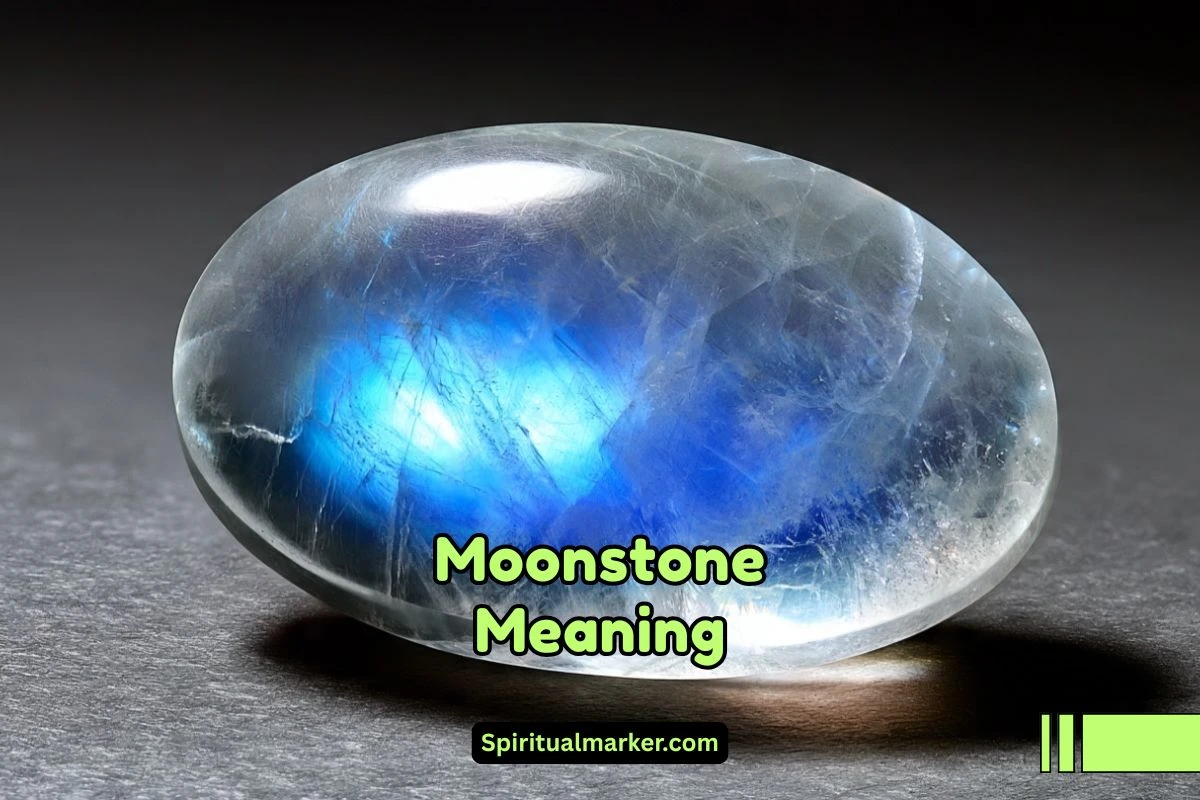
Moonstone is a stone of intuition and feminine energy. Its pearly, iridescent surface glows with soft light. In spiritual practice, this stone carries nurturing and psychic energy.
The moonstone meaning often involves intuition, new beginnings, and emotional healing. It is a stone of the crown and sacral chakras, helping to enhance psychic ability and nurture creativity. A spiritual meaning of black moonstone shares that moonstone focus, though black moonstone carries a more protective energy.
Moonstone is used in crystal healing to calm anxiety, enhance intuition, and support spiritual growth. It can also symbolize protection and feminine power. The stone's energy is gentle and nurturing.
If you feel drawn to moonstone, it may signal a need for intuition. A spiritual meaning of opalite also deals with iridescent stones, though opalite carries a more hopeful energy.
Key Takeaways
- Moonstone is strongly associated with intuition, emotional balance, feminine energy, and inner cycles.
- It connects primarily with the third eye chakra and crown chakra, though it also supports heart-centered awareness.
- People across many cultures have used moonstone for spiritual protection, emotional healing, and cycle awarenessfor thousands of years.
- Moonstone displays a unique optical effect called adularescence, which gives it a floating inner glow.
- Wearing moonstone jewelry or using it during meditation may strengthen emotional clarity, intuitive sensitivity, and spiritual grounding.
What is Moonstone?
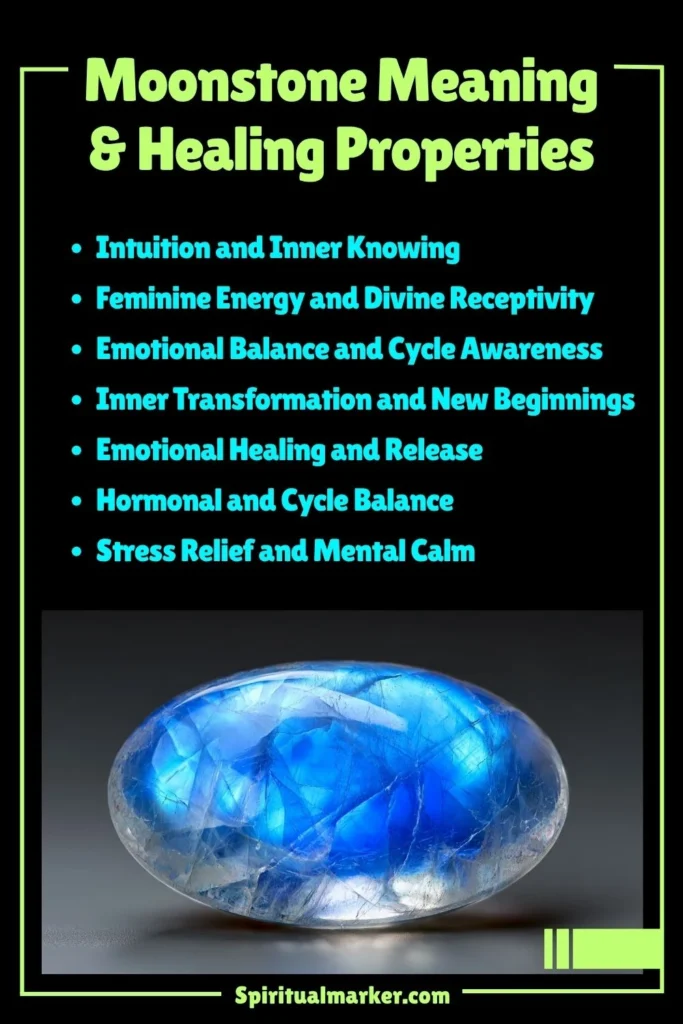
Moonstone is a feldspar mineral belonging to the orthoclase and albite feldspar group. Its most recognizable quality is its optical phenomenon called adularescence. This effect creates a soft, billowing light that appears to move beneath the stone’s surface. The glow shifts as you tilt the stone, producing a luminous quality that resembles moonlight floating on water.
This visual effect happens because moonstone contains alternating layers of two different feldspar minerals. When light enters the stone, it scatters between those layers and creates that characteristic floating glow. The thinner those internal layers are, the more vivid and blue the adularescence appears. Thicker layers produce a whiter or more diffuse glow.
Moonstone comes in several varieties. White moonstone is the most widely recognized. Rainbow moonstone displays a blue or multicolored flash. Peach moonstone carries warmer, softer tones. Gray moonstone tends to look more grounded and earthy. Each variety shares the fundamental qualities of moonstone while carrying slightly different visual characters and symbolic associations.
Many people confuse moonstone with white labradorite or selenite. Moonstone, however, carries its own distinct glow. It feels softer than labradorite’s metallic flash and more translucent than selenite’s opaque surface. Spiritually, moonstone also carries a more emotionally fluid and intuitively oriented symbolism than either of those stones.
Origins and Formation
Moonstone forms within igneous rocks, particularly pegmatites, which are coarse-grained rock formations that develop during the final stages of magma cooling. As the rock cools extremely slowly, different mineral layers develop and interlock. This layered internal structure is what creates the adularescence effect that defines moonstone’s appearance.
Major moonstone deposits exist in Sri Lanka, which has historically produced the finest quality stones with a strong blue adularescent glow. Other significant sources include India, Madagascar, Brazil, Australia, Myanmar, and the United States. Indian moonstone often shows a warmer, more peach-toned glow. Sri Lankan moonstone tends to display a cleaner, more translucent body color with a vivid blue flash.
The name moonstone comes directly from its visual resemblance to the moon. Ancient observers noticed that the stone’s glow seemed to wax and wane as it was turned, mimicking the lunar cycle. That observation connected moonstone with lunar energy, feminine cycles, tides, rhythms, and the ebb and flow of emotional experience.
Its geological formation involves patience, pressure, and time. That process carries symbolic meaning on its own. Moonstone does not rush into existence. It develops gradually through deeply internal geological activity, which aligns closely with its spiritual associations around introspection, emotional depth, and inner transformation.
Key Properties
| Property | Details |
|---|---|
| Color | White, cream, peach, gray, rainbow |
| Composition | Potassium aluminum silicate feldspar |
| Hardness | 6 to 6.5 on the Mohs scale |
| Chakra Association | Third Eye, Crown, Heart |
| Symbolism | Intuition, feminine energy, emotional balance, inner cycles |
| Common Sources | Sri Lanka, India, Madagascar, Brazil, Myanmar |
| Transparency | Translucent to semi-transparent |
| Optical Effect | Adularescence (floating inner glow) |
| Energy Style | Receptive, calming, intuitively amplifying |
Historical Use
Moonstone’s spiritual significance stretches back thousands of years. In ancient Rome, people believed the stone was formed from frozen moonlight. Roman jewelers used it in ornamental pieces, and Roman mythology associated it with lunar deities such as Diana and Luna, goddesses of the moon who governed feminine cycles, nature, and emotional wisdom.
In ancient India, moonstone held sacred status. Sanskrit texts referred to it as chandrakanta, meaning “beloved by the moon.” Hindu tradition considered it a highly auspicious stone. Merchants displayed moonstone on yellow cloth in their shops because yellow was considered a sacred color that amplified the stone’s divine qualities. Some ancient Indian texts described moonstone as a gift from the moon god Chandra, who was associated with mind, emotions, and spiritual devotion.
During the Art Nouveau period in Europe, from roughly the 1890s through the early 1910s, moonstone experienced a surge in popularity. Prominent jewelers like René Lalique incorporated moonstone into elaborate jewelry designs that celebrated natural beauty and feminine energy. This movement recognized moonstone’s mysterious visual quality as perfectly aligned with Art Nouveau’s themes of nature, sensuality, and flowing organic forms.
Across ancient Arabic, Greek, and Asian traditions, moonstone was often associated with protection for travelers, particularly those traveling at night or over water. Sailors sometimes carried moonstone as a protective talisman. Its lunar association made it a symbol of navigation by moonlight and safe passage through emotional or physical storms.
In crystal healing traditions that developed more formally throughout the 20th century, moonstone became one of the foundational stones for working with feminine energy, intuition, emotional cycles, and spiritual sensitivity. Modern practitioners have built on centuries of symbolic tradition while adding their own frameworks for healing and energy work.
5 Spiritual Meanings of Moonstone
1. Intuition and Inner Knowing
Moonstone is perhaps most powerfully connected with intuition. Across nearly every culture that has engaged with this stone, intuitive awareness appears as a central theme. People have long associated the moon with hidden knowledge, inner sight, and the kind of wisdom that lives beneath the surface of rational thought. Moonstone carries that same symbolism into personal spiritual experience.
Intuition operates differently than logic. Logic builds answers from observable facts and structured reasoning. Intuition draws on accumulated emotional experience, pattern recognition, and a quieter form of inner awareness that many people struggle to access consciously. Moonstone spiritually represents the opening of that quieter channel. Many practitioners believe it strengthens the ability to trust inner signals that often get dismissed or overridden by analytical thinking.
This meaning becomes especially significant in today’s overstimulated world. People receive enormous volumes of information, opinions, and external pressure every day. That constant noise can gradually disconnect people from their own inner compass. Emotional instincts get buried beneath mental clutter. Moonstone symbolizes a return to that quieter, more personally authentic form of awareness.
For many individuals, working with moonstone involves a process of learning to listen internally again. A person might notice they feel drawn toward or away from specific decisions, relationships, or environments without being able to fully explain why. That unexplainable awareness often reflects genuine intuitive intelligence. Moonstone spiritually supports the process of recognizing and trusting those signals rather than dismissing them.
Its connection with lunar cycles strengthens this symbolism further. The moon does not illuminate everything at once. It reveals information gradually, moving through phases of light and shadow. Moonstone carries that same principle into intuitive awareness. Inner knowing often develops slowly, revealing clarity in stages rather than all at once.
2. Feminine Energy and Divine Receptivity
Feminine energy in spiritual traditions does not refer exclusively to gender. It describes a quality of consciousness that is receptive, nurturing, intuitive, fluid, and emotionally attuned. All people carry both masculine and feminine energy regardless of gender identity. Spiritual traditions across cultures often emphasize the importance of balancing those energies for wholeness and emotional health.
Moonstone has been associated with feminine energy for millennia. Its connection to the moon, which governs tides, emotional cycles, and rhythmic change, makes it a natural symbol of receptive awareness. The moon does not generate its own light. It reflects light from another source with quiet, steady presence. Many spiritual traditions use this observation to describe receptive consciousness, an ability to receive, reflect, and channel rather than force or control.
This meaning carries deep relevance for emotional healing. Many people suppress receptive qualities such as vulnerability, emotional sensitivity, and intuitive feeling because those qualities can feel unsafe or are culturally undervalued. Moonstone symbolizes the healing of that suppression. It represents the spiritual permission to feel deeply, receive openly, and engage with emotional experience without shame or judgment.
Feminine energy in moonstone’s symbolism also connects with nurturing and compassion. Ancient goddess traditions across Hindu, Roman, Greek, Egyptian, and Celtic cultures associated lunar energy with protective maternal consciousness. The moon watched over the darkness, governed the rhythms of life, and guided those who felt lost. Moonstone spiritually carries those same protective and nurturing qualities into personal energy work.
For people recovering from emotional experiences that required constant guarding, performance, or emotional suppression, moonstone often represents the gradual return of emotional openness. Its symbolism does not demand vulnerability immediately. Instead, it reflects a slow, safe, natural reopening, like flowers that bloom only when conditions feel right.
3. Emotional Balance and Cycle Awareness
One of moonstone’s most consistent spiritual meanings involves emotional balance. Emotions naturally rise and fall. Like tides pulled by the moon, emotional experience moves through cycles of intensity and calm, connection and withdrawal, clarity and confusion. Moonstone spiritually mirrors those natural rhythms rather than resisting them.
Many people experience emotional discomfort because they expect their emotional state to remain stable. When emotions shift dramatically or unpredictably, people sometimes interpret that movement as weakness, failure, or instability. Moonstone symbolizes a different understanding. Its spiritual meaning acknowledges that emotional change is natural, healthy, and part of a larger cycle that deserves respect rather than suppression.
This meaning connects directly with cycle awareness. Women often work with moonstone during menstrual cycles because of its deep symbolic connection with lunar rhythms and hormonal emotional shifts. Ancient healers and priestesses used moonstone to honor rather than fight natural biological cycles. Accepting those rhythms rather than resisting them can reduce emotional suffering significantly.
But cycle awareness extends beyond biological cycles. Life itself moves through seasons of growth, rest, transformation, and renewal. People experience cycles of emotional expansion and emotional withdrawal, social energy and solitude, creative momentum and quiet regeneration. Moonstone symbolically supports awareness of where you are within your own personal cycles at any given moment.
Emotional balance, in moonstone’s symbolism, does not mean emotional flatness. It means maintaining a deeper steadiness beneath the natural movement of emotional experience. The ocean’s surface changes with weather, but deeper waters remain calmer. Moonstone represents that deeper emotional stability that holds steady even when surface emotions feel stormy.
4. Inner Transformation and New Beginnings
Moonstone is widely known as a stone of new beginnings. This symbolism connects directly with the lunar cycle itself. The moon moves through a complete cycle from dark to full and back again approximately every twenty-nine and a half days. Each new moon represents a reset point, a moment of fresh potential and renewed intention.
Moonstone carries this symbolism into personal transformation. When people face significant life transitions such as ending relationships, changing careers, moving locations, grieving losses, or recovering from difficult periods, moonstone represents the spiritual support of beginning again. Its energy acknowledges that endings and beginnings are part of the same cycle rather than separate events.
Inner transformation often feels uncertain. People moving through significant personal change frequently experience fear, disorientation, self-doubt, or grief about what they are leaving behind. Moonstone spiritually reflects the courage required to move through uncertainty while trusting that something meaningful waits on the other side of transformation.
Its connection with new beginnings also carries the symbolism of releasing old patterns. Before genuine newness can develop, outdated emotional habits, limiting beliefs, and worn-out attachments often need to be examined and released. Moonstone symbolizes that release with gentleness rather than force. Its energy encourages gradual letting go rather than sudden dramatic dismantling.
Many spiritual practitioners use moonstone during new moon ceremonies, intention-setting rituals, journaling practices, and meditation focused on personal renewal. Its lunar symbolism makes it particularly meaningful during these practices. The new moon and moonstone together create a powerful symbolic alignment around planting new intentions and trusting their slow, natural development.
5. Spiritual Protection During Emotional Vulnerability
Ancient traditions across multiple cultures used moonstone as a protective talisman, particularly during nighttime travel and emotionally vulnerable periods. Roman and Arabic travelers carried moonstone believing it offered lunar protection during dangerous journeys. That protective symbolism has carried forward into modern spiritual practice.
Emotional vulnerability creates a form of energetic openness. When people are grieving, healing from trauma, moving through significant transitions, or deepening spiritual practices, they may feel more emotionally exposed than usual. That openness is not weakness. It reflects an engaged, actively healing consciousness. However, that sensitive state can also leave people feeling more easily destabilized by external emotional pressures or draining environments.
Moonstone spiritually represents gentle protective awareness during those vulnerable states. Many practitioners believe it creates a kind of energetic softening around emotional wounds, allowing healing to occur without constant disruption. Its calming energy is often described as a protective buffer that encourages emotional recovery without interference.
This protective symbolism also connects with emotional boundaries. Healthy emotional boundaries are not walls. They are flexible, self-aware limits that allow genuine connection while protecting emotional well-being. Moonstone’s symbolism reflects that kind of fluid but grounded protection. It does not create emotional rigidity. Instead, it represents the emotional intelligence to recognize what nourishes versus what depletes.
For those engaged in deep spiritual or meditative practices, moonstone is also associated with protection from becoming too ungrounded or emotionally scattered. Its earthy mineral composition provides grounding beneath its luminous symbolism. That balance between light and grounding is central to moonstone’s protective spiritual identity.
6 Healing Properties of Moonstone
1. Emotional Healing and Release
Moonstone’s primary healing association is deeply emotional. People working through grief, heartbreak, anxiety, emotional trauma, or prolonged stress frequently find themselves drawn to it. Its soft energy does not accelerate emotional healing artificially. Instead, it symbolically creates a more supportive emotional environment where difficult feelings can surface and move without becoming overwhelming.
Many people carry emotional pain for years without fully processing it. Grief gets suppressed in favor of functioning. Anger goes unacknowledged because it feels dangerous. Sadness gets minimized because vulnerability feels unsafe. Over time, that suppressed emotional material contributes to emotional exhaustion, numbness, or chronic tension. Moonstone spiritually represents the gentle reopening of those emotionally closed places.
Crystal healers often describe moonstone as emotionally “fluid.” Where other stones might symbolize emotional strength, stability, or transformation through friction, moonstone reflects emotional healing through flow. It encourages emotional material to move rather than stagnate. Many practitioners compare this to the way water gently loosens and carries away what has settled into the ground over time.
This healing approach is especially meaningful for people who struggle with emotional expression. Some individuals have spent years learning to suppress emotional responses because emotional expression felt dangerous or unwelcome. Moonstone symbolizes the gradual return of emotional safety. It represents an internal environment where feelings can exist without judgment or forced suppression.
Its healing energy also supports self-compassion during emotional processing. Healing emotional wounds often brings up guilt, shame, or self-judgment alongside the original pain. Moonstone’s gentle symbolism encourages emotional honesty without emotional self-condemnation. The healing it represents feels kind rather than harsh.
2. Strengthening Intuitive Sensitivity
Moonstone is consistently used in spiritual practices focused on developing intuitive awareness. Many crystal practitioners place it near the third eye during meditation, carry it during decision-making periods, or sleep with it nearby to encourage more vivid and emotionally significant dreams.
Intuitive sensitivity is not a fixed trait. It is a skill that can be developed through practice, attention, and creating the internal space needed for quieter signals to be noticed. Modern life tends to suppress that sensitivity through overstimulation, constant distraction, and emphasis on rational decision-making above all else. Moonstone symbolically supports the recultivation of that internal listening skill.
Many people working to strengthen intuition describe a gradual process of learning to distinguish between genuine intuitive awareness and anxiety, wishful thinking, or fear-based projection. Moonstone’s symbolism encourages that discernment. Its calming energy reduces emotional noise, which creates better internal conditions for authentic intuitive awareness to surface more clearly.
Dream work is one area where moonstone’s intuition-strengthening properties are frequently discussed. Many practitioners believe sleeping with moonstone nearby produces more emotionally rich, symbolically meaningful dreams that carry intuitive messages. Dream awareness is one of the oldest intuitive tools across nearly every spiritual tradition. Moonstone’s lunar associations make it a natural companion for that kind of nocturnal inner work.
Practitioners also use moonstone during journaling, oracle card reading, divination, and reflective prayer because they believe it heightens receptive awareness during those practices. The stone’s quiet energy helps shift attention inward, which is exactly the state needed for genuine intuitive engagement.
3. Hormonal and Cycle Balance
Moonstone has a long-established association with hormonal balance and menstrual cycle awareness in both traditional healing systems and modern crystal practices. Ancient healers in many cultures believed moonstone resonated with the lunar cycle that governs tidal rhythms, growth patterns, and feminine biological cycles.
Some practitioners and naturopathic traditions suggest moonstone may support hormonal equilibrium by encouraging deeper body awareness and emotional acceptance of natural biological rhythms. Research on crystal healing remains limited within conventional science, but the symbolic and anecdotal evidence connecting moonstone with cycle awareness is rich and consistent across many cultural traditions.
Emotional volatility often increases during hormonal fluctuations. Moonstone’s calming energy symbolically supports a more stable emotional relationship with those naturally occurring shifts. Rather than fighting or resenting biological cycles, moonstone represents emotional cooperation with natural rhythms, which many practitioners believe reduces emotional suffering around cyclical change.
Women in many traditional healing communities wore moonstone jewelry during menstruation, pregnancy, or significant hormonal transitions because of this symbolic connection. The stone was considered a companion for navigating the emotional intensity of those biological experiences rather than a remedy attempting to eliminate them.
This healing association also extends metaphorically to personal life cycles. Whether the cycle involves creative projects, seasonal emotional shifts, or recurring life patterns, moonstone symbolically supports greater awareness and acceptance of cyclic experience rather than resistance to it.
4. Stress Relief and Mental Calm
Moonstone’s calming energy makes it a popular choice for stress relief within crystal healing traditions. Its soft luminescence and gentle energetic character feel cooling and soothing to many people. Holding moonstone during anxious moments or keeping it in emotionally charged environments is a common practice among those who work with crystal energy.
Stress creates mental and emotional overload. Racing thoughts, emotional tension, physical tightness, and difficulty focusing are common experiences during high-stress periods. Moonstone spiritually represents a slower, calmer mental pace. Its energy is consistently described as receptive and quieting rather than energizing or stimulating.
Unlike crystals associated with high energy, motivation, or intense transformation, moonstone’s healing energy focuses on creating internal stillness. That quality makes it particularly valuable during periods of emotional overwhelm or mental exhaustion. It does not push. It settles.
Many practitioners keep moonstone in bedrooms, meditation spaces, and workspaces because of its calming influence. Its presence serves as a visual and energetic reminder to slow down, breathe, and return to inner awareness. Moonstone represents emotional grounding through stillness rather than through forceful energetic intervention.
Its calming properties also relate to sleep quality. Many people experience difficulty sleeping during stressful periods because mental activity remains high even when the body needs rest. Moonstone’s symbolism supports emotional quieting before sleep. Practitioners often place it near the bed or under pillows during periods of sleep disruption caused by emotional stress or anxiety.
5. Supporting Creative and Spiritual Vision
Moonstone carries consistent associations with creative inspiration and heightened spiritual vision. Its connection with the third eye chakra, intuitive awareness, and dream consciousness naturally extends into creative and visionary experiences. Artists, writers, musicians, and spiritual seekers have long been drawn to moonstone for these qualities.
Creative blocks often develop when rational analytical thinking dominates the internal creative process. The analytical mind evaluates, judges, and edits constantly. Genuine creative inspiration requires a more receptive, less judgmental state of consciousness. Moonstone spiritually symbolizes the shift into that more receptive creative space where new ideas can emerge without immediate critical interference.
Many creative practitioners use moonstone during brainstorming sessions, artistic visualization practices, and creative meditation because they believe it lowers internal resistance to new ideas. The stone represents mental fluidity. Rather than rigidly following existing patterns, its symbolism encourages openness to unexpected connections and creative possibilities.
Spiritual vision operates similarly. Deep spiritual insight rarely arrives through forceful mental effort. It tends to emerge during states of receptive stillness, prayer, meditation, or dream consciousness. Moonstone’s symbolism aligns naturally with those states. Many practitioners believe it heightens spiritual receptivity, allowing deeper spiritual awareness to surface more easily.
Its lunar symbolism also connects with prophetic and visionary traditions across many cultures. Ancient seers, oracles, and spiritual leaders worked under the moon’s influence. Moonstone carries that ancestral association with visionary consciousness into modern spiritual practice.
6. Strengthening Empathy and Emotional Connection
Moonstone is frequently associated with empathy, emotional attunement, and deeper personal connection. Its heart-adjacent energy and emotionally fluid symbolism make it a natural companion for relationship healing, compassionate communication, and emotionally vulnerable conversations.
Empathy is the ability to genuinely feel into another person’s emotional experience rather than simply observing it from a distance. True empathy requires emotional openness, which many people gradually close off after painful experiences. Heartbreak, betrayal, criticism, or emotional rejection can slowly harden emotional receptivity as a form of self-protection. Moonstone spiritually represents the gentle reopening of those protective emotional barriers.
In relationship contexts, moonstone’s symbolism supports calmer, more emotionally present communication. When people feel emotionally open rather than emotionally guarded, conversations become more honest, more nuanced, and more emotionally connected. Practitioners sometimes use moonstone during couples’ meditation, family healing rituals, or individual reflection focused on specific relationships.
Its empathy-strengthening symbolism also applies inward. Self-empathy is the ability to treat your own emotional experience with the same compassion you would offer someone you love. Many people find this genuinely difficult. They offer empathy readily to others while treating themselves harshly for the same kinds of emotional struggles.
Moonstone spiritually reflects the importance of extending compassionate awareness toward yourself before that compassion can flow outward with genuine fullness. Its gentle, nurturing energy supports the development of self-awareness and self-compassion simultaneously, which creates stronger emotional foundations for empathy in relationships.
Moonstone and the Chakras
Moonstone works most powerfully with three chakras: the third eye chakra, the crown chakra, and secondarily with the heart chakra.
The third eye chakra, located at the center of the forehead, governs intuition, spiritual insight, inner vision, and the ability to perceive beyond surface appearances. Moonstone’s strong connection with intuitive awareness makes it a natural ally for this energy center. Practitioners often place moonstone at the third eye during meditation to strengthen receptive inner awareness and encourage clearer intuitive experiences.
The crown chakra, located at the top of the head, connects personal consciousness with broader spiritual awareness. It governs spiritual connection, higher understanding, and transcendent experience. Moonstone’s lunar symbolism, with its associations with divine feminine energy and cosmic cycles, aligns naturally with crown chakra work. Many practitioners use it during meditation focused on spiritual expansion, prayer, and deepening connection with spiritual awareness.
The heart chakra also responds to moonstone’s energy, particularly in practices focused on emotional healing, compassion, and relationship work. While moonstone’s primary chakra associations lean toward upper chakras, its emotional healing properties bring it into meaningful contact with heart-centered energy. This creates a unique quality where moonstone bridges emotional and spiritual awareness simultaneously, connecting feeling with perception in a way few other stones replicate.
How to Wear Moonstone Jewelry for Spiritual Growth
People wear moonstone jewelry with different intentions depending on their personal spiritual goals. Pendants and necklaces remain among the most popular choices because wearing moonstone near the throat and chest places it energetically near the heart and throat chakras. This positioning is believed to support emotional honesty, compassionate communication, and emotional openness.
Moonstone rings carry particular symbolism in many traditions. Wearing moonstone on the receiving hand, traditionally the non-dominant hand, is believed to draw its energy inward, supporting introspection, intuitive awareness, and emotional receptivity. Wearing it on the dominant hand is associated with directing that energy outward into actions, communication, and creative expression.
Bracelets and bangles allow consistent physical contact with moonstone throughout the day. Many people find that touching the stone during stressful moments creates a physical reminder to slow down, breathe, and return to inner awareness. This tactile connection becomes its own form of mindfulness practice over time.
Some practitioners combine moonstone with complementary stones to create layered energetic intentions. Labradoriteamplifies intuitive sensitivity and spiritual perception. Rose quartz deepens compassionate emotional energy. Amethystsupports calm spiritual awareness and meditative clarity. Selenite enhances spiritual connection and mental purification.
Many people wear moonstone specifically during new and full moon phases because of its deep lunar symbolism. Others wear it consistently as a daily reminder of emotional balance, intuitive awareness, and spiritual presence.
Caring for Moonstone Jewelry
Moonstone requires careful handling because of its relatively moderate hardness rating of 6 to 6.5 on the Mohs scale. It is not as fragile as softer stones, but it can scratch, chip, or crack if treated carelessly.
Store moonstone separately from harder gemstones such as diamonds, sapphires, or rubies, which can scratch its surface. Soft fabric pouches or padded jewelry boxes protect moonstone effectively during storage. Avoid leaving it loose among other jewelry pieces.
Clean moonstone gently using lukewarm water, a small amount of mild soap, and a soft cloth or very soft brush. Avoid ultrasonic cleaners, steam cleaning equipment, harsh chemical jewelry cleaners, or abrasive cloths. Those methods may damage moonstone’s surface or internal structure.
Avoid prolonged exposure to extreme heat, direct sunlight, or sudden temperature changes. These conditions can affect moonstone’s appearance and structural stability over time. Remove moonstone jewelry before intense exercise, swimming, or household cleaning with chemical products.
Many practitioners who work with moonstone spiritually also choose to cleanse it energetically on a regular basis. Common methods include placing it under moonlight during the full moon, resting it among dry herbs such as sage or lavender, using sound cleansing with singing bowls or bells, or holding it under cool running water briefly. Spiritual cleansing practices vary widely based on personal belief systems and traditions.
Setting intentions with moonstone is a common practice for those using it spiritually. Holding the stone quietly, focusing on a specific intention related to emotional healing, intuitive growth, or spiritual awareness, and breathing deliberately can create a personal ritual that strengthens your sense of connection with the stone’s meaning.
Moonstone Meaning at a Glance
| Aspect | Details |
|---|---|
| Primary Meaning | Intuition, emotional balance, and inner transformation |
| Chakra Association | Third Eye, Crown, Heart |
| Main Spiritual Symbolism | Feminine energy, cycles, new beginnings, protection |
| Common Colors | White, peach, gray, rainbow |
| Hardness | 6 to 6.5 Mohs |
| Main Sources | Sri Lanka, India, Madagascar, Brazil, Myanmar |
| Emotional Associations | Empathy, calm, receptivity, intuitive clarity |
| Popular Jewelry Types | Pendants, rings, bracelets, earrings |
| Spiritual Uses | Meditation, dream work, cycle awareness, intuition |
| Care Needs | Gentle cleaning, protection from heat and impact |
A Final Note
Moonstone holds a rare quality among gemstones. Its beauty does not demand attention loudly. It invites you to look more closely, to slow down, and to notice the light moving quietly beneath the surface. That same invitation extends into its spiritual meaning.
People who feel drawn to moonstone are often in a season of deep internal change, whether they recognize it consciously or not. They may be processing emotional experiences that have not yet fully resolved. They may be learning to trust their inner knowing again after periods of self-doubt. They may simply be seeking a form of quiet, grounding beauty that reflects something meaningful about where they are right now.
Its meaning centers on intuition, emotional balance, feminine energy, and the wisdom of natural cycles. Whether you connect with moonstone through spiritual practice, personal symbolism, or simple appreciation for its luminous appearance, its presence tends to feel like a calm and knowing companion.
If moonstone has caught your attention, trust that pull. Pay attention to what emotional themes or personal intentions keep surfacing around the same time. Sometimes the most meaningful next step is simply slowing down enough to notice what is already quietly shifting within you.
You might try keeping moonstone during your next new moon intention practice, wearing it during emotionally demanding periods, or simply placing it somewhere visible as a reminder to return to inner stillness when life feels overwhelming.