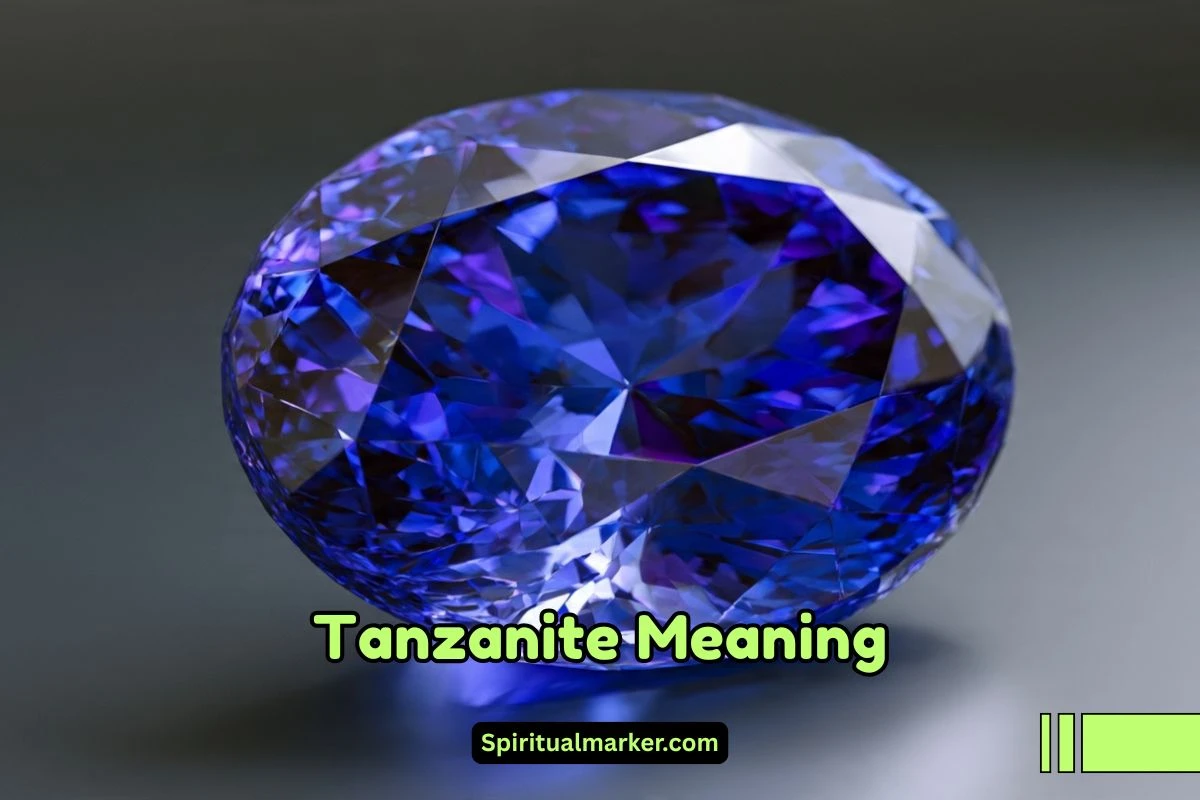
Tanzanite is a rare and striking stone. Its blue-violet color evokes mystery and spiritual depth. In spiritual practice, this stone carries transformative and intuitive energy.
The tanzanite meaning often involves spiritual growth, intuition, and emotional healing. It is a stone of the third eye and crown chakras, helping to enhance psychic ability and deepen meditation. A spiritual meaning of sapphire shares that blue-stone focus, though sapphire carries a more regal energy.
Tanzanite is used in crystal healing to boost intuition, support emotional healing, and enhance spiritual connection. It can also symbolize transformation and renewal. The stone's energy is powerful and uplifting.
If you feel drawn to tanzanite, it may signal a need for spiritual growth. A spiritual meaning of alexandrite also deals with rare stones, though alexandrite carries a more transformative energy.
Key Takeaways
- Tanzanite symbolizes transformation, higher consciousness, intuition, and spiritual awakening.
- The stone connects primarily with the third eye chakra and crown chakra, supporting inner vision and divine connection.
- Tanzanite’s blue-violet color carries dual energy. Blue represents calm communication, and violet represents spiritual depth.
- People use tanzanite during meditation, spiritual transitions, grief work, and personal reinvention.
- Tanzanite rates 6 to 7 on the Mohs scale and requires careful handling due to its sensitivity to impact and pressure.
What is Tanzanite?
Tanzanite is a rare blue-violet variety of the mineral zoisite. Gemologists classify it under the scientific name calcium aluminum silicate. What sets tanzanite apart visually is a property called pleochroism, meaning it shows different colors depending on the angle and lighting. In natural daylight, tanzanite appears a vivid blue. Under incandescent light, it shifts toward a deep violet or burgundy. In some angles, flashes of red and purple emerge unexpectedly.
This color-shifting quality is not cosmetic. Many spiritual traditions interpret it as symbolic. A stone that changes its appearance depending on perspective seems to mirror the human journey toward greater self-awareness and expanded consciousness. You see one truth, then you shift slightly, and a deeper truth appears.
Tanzanite was officially introduced to the Western world in 1967 when a Maasai tribesman named Ali Juuyawatu reportedly came across brilliant blue crystals near the Merelani Hills in Tanzania. Tiffany and Company recognized its commercial potential immediately. They named the stone “tanzanite” after its country of origin and began marketing it globally. Within years, it became one of the most coveted gemstones on the planet.
Despite its relatively recent introduction to mainstream markets, the stone existed in Maasai culture long before that moment. The Maasai gifted blue stones to newborn children and their mothers as symbols of life, blessings, and protection. Blue held deep spiritual significance in their culture as a color connected with divinity and the sky above.
Origins and Formation
Tanzanite forms under highly specific geological conditions. It requires a unique combination of vanadium, heat, and tectonic activity that has occurred in only one small region on Earth, the Merelani Hills near Arusha, Tanzania. Geologists estimate those conditions existed approximately 585 million years ago, making each tanzanite specimen an ancient geological wonder.
The stone begins as zoisite. When exposed to extreme heat and specific mineral conditions, including trace amounts of vanadium, the mineral transforms into the vivid blue-violet stone people recognize today. Most rough tanzanite mined today is actually brownish or burgundy in its natural state. Heat treatment at around 600 degrees Celsius converts that brownish zoisite into the rich blue-violet color prized by gemstone collectors worldwide.
Because tanzanite forms in such a geologically unique environment, experts estimate that current deposits will be fully mined out within the next 20 to 30 years. That finite supply continues to increase both its monetary and spiritual value in crystal communities. Many practitioners believe that the stone carries within it the energy of extraordinary geological rarity, which reflects its spiritual symbolism of uniqueness, individuality, and transformation under pressure.
Key Properties
| Property | Details |
|---|---|
| Color | Blue, violet-blue, purple-blue, indigo |
| Mineral Family | Zoisite (calcium aluminum silicate) |
| Hardness | 6 to 7 on the Mohs scale |
| Chakra Association | Third eye, crown, throat |
| Primary Symbolism | Transformation, intuition, spiritual elevation |
| Country of Origin | Tanzania (Merelani Hills only) |
| Transparency | Transparent to translucent |
| Special Optical Property | Pleochroism (color shifts with angle and light) |
Historical and Cultural Significance
The Maasai people of East Africa hold the oldest cultural relationship with tanzanite. Long before gemologists named it or marketers priced it, the Maasai considered blue stones sacred objects connected with the sky and with spiritual protection. When a child was born, blue stones were presented to the mother as offerings of blessing, health, and divine favor. The ritual reflected a deep belief that blue carried protective and life-giving spiritual power.
Within some Maasai traditions, tanzanite-colored stones were also associated with transition rituals. Ceremonies marking major life passages often included blue objects as symbolic anchors between the physical world and spiritual dimensions. The color blue, in that cultural context, represented elevation, connection with higher forces, and divine presence.
When Tiffany and Company launched tanzanite commercially in the late 1960s, they positioned it as a stone of luxury and rarity. However, the spiritual community recognized something beyond its visual elegance. Metaphysical practitioners began working with tanzanite during the 1980s and 1990s as interest in crystal healing expanded globally. Writers like Katrina Raphaell, who helped shape modern crystal healing philosophy, noted tanzanite’s exceptional connection with upper chakra energy and psychic development.
Today, tanzanite appears in both high-end jewelry collections and spiritual healing practices worldwide. Its dual identity as a gemstone of extraordinary beauty and profound spiritual significance makes it uniquely appealing across very different communities.
5 Spiritual Meanings of Tanzanite
1. Spiritual Transformation
Transformation stands as the most recognized spiritual meaning connected to tanzanite. This meaning goes far beyond surface-level change. People drawn to tanzanite during particular periods of life often describe a pull that feels almost instinctive, a sense that the stone found them rather than the other way around.
Tanzanite tends to appear in a person’s life during threshold moments. A career dissolves unexpectedly. A long-term relationship ends. A deeply held belief system begins to crack open. A health crisis forces an internal reckoning. These moments feel destabilizing on the surface. Beneath them, however, enormous spiritual growth often waits.
The stone’s geological history supports this symbolism powerfully. Tanzanite forms only when ordinary zoisite endures extreme heat and tectonic pressure. Without those intense geological forces, the vivid blue-violet color never emerges. The stone literally transforms under pressure into something more beautiful and more valuable than what it was before. Many spiritual practitioners see that physical process as a direct metaphor for human transformation through difficulty.
This meaning also reflects the stone’s color. Blue-violet sits at the highest frequency end of the visible spectrum. In many spiritual traditions, higher-frequency colors correspond with elevated states of awareness, refined perception, and spiritual maturity. Tanzanite does not carry the earthy comfort of grounding stones. It carries the expansive energy of going higher.
People working through major personal reinvention often keep tanzanite close during that period. It is not meant to make transformation painless. It symbolizes trusting the process of becoming something deeper and more authentic than before.
2. Psychic Awakening and Intuition
Tanzanite carries a strong and widely recognized connection with psychic sensitivity and intuitive development. Because of its powerful alignment with the third eye chakra, many crystal healers associate it with the expansion of inner vision, heightened perception, and access to deeper layers of knowing.
The third eye chakra sits at the center of the forehead, between the physical eyes. In many spiritual traditions, it represents the ability to see beyond the obvious. It governs insight, discernment, pattern recognition, clairvoyance, and the kind of deep understanding that bypasses purely logical thinking. When this chakra feels open and balanced, people often describe greater clarity, stronger gut instincts, and an ability to sense the truth of situations more accurately.
Tanzanite’s violet-blue energy resonates with this chakra in a way that many practitioners describe as almost immediate. During meditation, some people report feeling a gentle warmth or pressure at the center of their forehead when holding tanzanite. Others describe a quieting of mental chatter that allows intuitive insights to surface more clearly.
This does not mean tanzanite grants supernatural ability. In spiritual terms, it means the stone’s energy encourages a deeper internal listening. You already possess intuitive capacity. What tanzanite symbolizes is the courage and clarity to trust that inner voice rather than dismissing it.
For people who have spent years relying entirely on logic, external opinions, or social approval to make decisions, tanzanite can represent a significant shift. Its spiritual meaning around intuition encourages trusting your own perception as a valid and valuable form of knowing.
3. Elevated Consciousness and Higher Wisdom
Higher consciousness is one of the most frequently cited themes in tanzanite’s spiritual profile. This particular meaning speaks to the stone’s alignment with the crown chakra, which sits at the top of the head and represents the connection between individual human awareness and universal or divine intelligence.
Many spiritual traditions teach that human consciousness exists on a spectrum. At one end sits fear-based, reactive, ego-driven thinking. At the other end sits expansive, compassionate, truth-seeking awareness. Most people move between those states depending on circumstances. Spiritual growth, in many traditions, involves gradually shifting toward the more expanded end of that spectrum.
Tanzanite symbolizes that upward movement. Its deep violet hue corresponds with wisdom, spiritual maturity, and the refinement of consciousness over time. The stone is not about escaping ordinary life. It is about seeing ordinary life with greater depth, patience, and spiritual perspective.
Many practitioners use tanzanite during prayer, meditation, or contemplative study because they believe it helps the mind quiet its habitual patterns long enough to access deeper awareness. When mental noise softens, even briefly, people sometimes perceive clarity they could not access before.
This symbolism also connects with the integration of knowledge and wisdom. Knowledge involves gathering information. Wisdom involves understanding what that information truly means and how to live in alignment with that understanding. Tanzanite represents the second, deeper form of intelligence. It points toward the kind of awareness that comes through experience, reflection, and spiritual refinement rather than accumulation alone.
4. Emotional Healing Through Clarity
While tanzanite is primarily associated with upper chakra energy, it also carries significant symbolism around emotional healing through clarity rather than emotional suppression. This distinction matters considerably in crystal healing traditions.
Some gemstones support emotional healing by soothing and softening painful feelings. Tanzanite works differently. It brings emotional clarity to situations that previously felt confusing, overwhelming, or emotionally tangled. Rather than numbing difficult emotions, tanzanite is believed to help people see their emotional experiences from a higher vantage point.
When you are standing directly inside an emotional storm, everything feels chaotic. When you can briefly rise above it, even mentally or spiritually, patterns become visible. You can see why certain emotional reactions keep repeating. You can recognize connections between past wounds and present triggers. This elevated emotional perspective is what tanzanite symbolizes.
Many people describe this quality as particularly valuable during grief, trauma recovery, or relationship patterns that feel impossible to break. Tanzanite does not promise to remove the pain. It symbolizes the development of enough inner clarity to begin understanding the pain more honestly.
This clarity-based emotional healing also connects with tanzanite’s throat chakra influence. The throat chakra governs authentic expression. When emotional clarity develops internally, the ability to express those feelings honestly tends to improve as well. Tanzanite represents the full arc from inner understanding to outer truth-telling, which forms a complete emotional healing cycle.
5. Spiritual Protection During Transition
Across multiple spiritual traditions, tanzanite has been associated with protective energy during periods of spiritual or personal transition. The Maasai used blue stones in rituals marking life passages. Modern crystal practitioners continue working with tanzanite’s protective symbolism, particularly during periods of significant change.
Transition periods carry unique spiritual vulnerability. When old structures dissolve and new ones have not yet formed, people often feel emotionally exposed, spiritually uncertain, and internally unsteady. This in-between space, sometimes called a liminal period, requires both courage and spiritual support.
Tanzanite symbolizes a protective spiritual presence during those in-between phases. Many practitioners describe it as helping maintain energetic boundaries when personal identity or spiritual understanding is shifting. It does not block change. It supports the person moving through change with greater awareness and spiritual stability.
This protective symbolism also extends inward. Tanzanite is believed to help shield against self-doubt, spiritual confusion, and emotional overwhelm that often accompany deep personal transformation. It represents clarity in the midst of uncertainty. When everything external feels unstable, tanzanite symbolizes the anchor of inner knowing that remains steady beneath all the movement.
6 Healing Properties of Tanzanite
1. Supporting Deep Meditation
Tanzanite has a strong and well-documented reputation within crystal communities for deepening meditative states. Its alignment with the third eye and crown chakras makes it particularly valuable for practitioners who meditate regularly or who are working to develop a more consistent contemplative practice.
During meditation, the mind’s habitual tendency is to wander. Thoughts pull attention toward the future or drag it backward into the past. Mental quietness requires both practice and sometimes supportive conditions. Many people find that holding tanzanite or placing it on the forehead during meditation creates a noticeable shift in mental depth.
Some practitioners describe this as a softening of mental boundaries, where ordinary analytical thinking relaxes long enough to allow deeper intuitive awareness to surface. Others describe it as a simple but powerful sense of mental stillness that feels easier to reach with tanzanite nearby.
Crystal traditions suggest that tanzanite helps bridge the gap between ordinary waking consciousness and the quieter inner space that meditative practice aims to reach. For beginners, this may mean reaching meditative calm more consistently. For experienced meditators, it may mean accessing deeper layers of inner awareness than usual.
Meditation with tanzanite does not require elaborate ritual. Holding the stone quietly, sitting with it placed near the meditation space, or simply gazing at its color before beginning practice all represent common approaches that many practitioners find valuable.
2. Enhancing Intuitive Clarity
Intuitive clarity represents one of tanzanite’s most recognized healing gifts. Many people carry strong intuitive capacity without fully trusting it. Social conditioning, academic training, and repeated messages about rational thinking can slowly erode confidence in inner knowing. Over time, people learn to override their gut perceptions with logical explanations, even when those instincts were accurate.
Tanzanite’s healing symbolism around intuition is not about developing something you lack. It is about removing the interference that prevents you from trusting what you already sense. The stone’s energy is associated with quieting the mental noise that drowns intuitive signals.
Practitioners working through important decisions, creative projects, or spiritual questions often keep tanzanite close as a way of staying connected to inner perception alongside outer information. They are not abandoning rational thinking. They are adding intuitive intelligence back into the decision-making process.
Many energy healers also use tanzanite when working with clients on issues related to self-trust, spiritual confusion, or the disconnection between thinking and feeling. The stone symbolizes the reunification of those faculties, which creates a more complete and grounded form of wisdom.
3. Calming Anxiety and Mental Overwhelm
Despite its connection with elevated spiritual energy, tanzanite also carries calming and mentally clarifying properties that many people find deeply comforting during periods of anxiety or mental overload.
Anxiety frequently involves a racing quality of thought where the mind generates worst-case scenarios, catastrophic predictions, or repetitive worry loops. This mental pattern consumes enormous emotional energy and creates a persistent feeling of being unable to rest even during physically quiet moments.
Tanzanite’s calming properties are not the same as sedative stones like lepidolite or blue lace agate. Its calming effect works through clarity rather than sedation. When a situation becomes clearer, the anxiety it generates often loses some of its intensity. Tanzanite symbolically helps lift the mental fog that makes ordinary challenges feel impossibly large.
Many practitioners describe it as helping the mind prioritize more clearly during overwhelming periods. Rather than collapsing under the weight of too many concerns simultaneously, people sometimes find that tanzanite supports a calmer, more ordered quality of thinking where priorities become more obvious.
This calming quality also reflects the stone’s blue frequency. Blue wavelengths have been studied for their psychologically calming effects. Research published in journals studying color psychology consistently finds that blue environments reduce measurable stress responses in human subjects. Tanzanite carries that blue energy in a concentrated and tactile form.
4. Stimulating Creative Expression
Creative expression may not be the first healing property associated with tanzanite, but many artists, writers, musicians, and creative practitioners describe a notable connection between the stone and creative flow states.
Creative blocks often stem from self-judgment, fear of imperfection, or the inability to trust original ideas enough to develop them fully. These creative barriers live primarily in the analytical mind, which tends to evaluate, compare, and criticize ideas before they have room to breathe.
Tanzanite’s stimulation of third eye energy can help the creative mind access more original, less filtered perception. When inner vision opens more freely, ideas tend to arrive with less mental interference. The result is not always dramatic creative output, but often a quieter, more sustained creative presence that practitioners describe as creative confidence without overthinking.
Many creative professionals also associate tanzanite with synesthetic awareness, the ability to perceive connections between ideas, colors, sounds, and concepts that seem unrelated at first. This form of creative cross-referencing often produces the most original and surprising work. Tanzanite’s pleochroic quality, showing different colors from different angles, beautifully mirrors this multi-perspective creative vision.
For creative practitioners working through periods of stagnation, tanzanite represents the opening of inner channels that logical pressure has temporarily closed. It symbolizes creative renewal through expanded perception.
5. Supporting Grief and Spiritual Loss
Grief is among the most spiritually significant human experiences. The loss of a person, a relationship, a version of oneself, or even a deeply held belief system can create profound spiritual disorientation. Many people describe grief as not merely emotional pain but as a shattering of the internal world that previously made sense.
Tanzanite’s healing connection with grief is significant because the stone addresses both the emotional and spiritual dimensions of loss. Its heart chakra resonance helps with emotional pain. Its third eye and crown chakra energy helps address the spiritual questioning that major losses frequently trigger.
Spiritually, grief often involves asking the most fundamental human questions. Why did this happen? What is the meaning of this loss? Where do I go from here? These questions cannot be answered logically. They require a different kind of engagement, a willingness to sit with uncertainty while remaining spiritually open. Tanzanite symbolizes that willingness.
Many practitioners describe the stone as helping maintain a connection with spiritual perspective during grief, which does not eliminate the pain but provides a larger context within which the pain becomes survivable. Some bereaved individuals describe feeling a sense of spiritual companionship when working with tanzanite. A sense that they are not navigating loss entirely alone.
Grief rituals incorporating tanzanite might include holding the stone during prayer or meditation, placing it on an altar created to honor what was lost, or wearing it during the most emotionally difficult periods of the grief journey.
6. Activating Authentic Self-Expression
Tanzanite’s influence on the throat chakra gives it a healing role in authentic self-expression that many practitioners overlook in favor of its more famous third eye and crown associations. The throat chakra governs communication, truth-telling, creative voice, and the ability to express inner reality outwardly with honesty and confidence.
Many people live with a significant gap between what they truly feel and think internally and what they express in their relationships, work, and daily communication. That gap often develops through years of social conditioning, fear of judgment, emotional suppression, or past experiences where honest expression led to rejection or conflict.
Tanzanite’s healing property here involves bridging the space between inner knowing and outward expression. When the third eye develops clearer inner vision and the throat chakra opens more freely, the communication that follows tends to feel more authentic, more precise, and more genuinely connected with the speaker’s actual truth.
This healing property matters practically. Relationships built on authentic expression tend to feel more fulfilling and more emotionally safe. Work that expresses genuine creative or intellectual vision tends to carry more impact. Life decisions made through honest self-expression tend to feel more aligned and purposeful.
People working on developing their voice, whether creatively, professionally, or interpersonally, sometimes find tanzanite supportive of that process. Its energy symbolizes the courage to let your true inner world become visible to others.
How to Wear Tanzanite Jewelry for Spiritual Growth
Wearing tanzanite with intentional awareness can deepen its spiritual influence during daily life. Because tanzanite works primarily with upper chakra energy, certain forms of jewelry create particularly meaningful connections.
Tanzanite pendants worn near the throat honor the stone’s communication and self-expression symbolism. They sit naturally near the throat chakra and move rhythmically with breathing, which many practitioners find creates a subtle ongoing energetic reminder of authentic expression throughout the day.
Tanzanite earrings place the stone near the temples and the energy field surrounding the head. Many practitioners associate earrings with mental clarity, intuitive awareness, and the refinement of perception. For people working on psychic development, intuition, or meditative practice, earrings may carry particularly meaningful symbolism.
Tanzanite rings are powerful for those working through periods of transformation or personal reinvention. The hands represent action, creation, and the physical expression of will. Wearing tanzanite on the hands symbolizes bringing elevated awareness into everything you actively create or choose.
Some practitioners combine tanzanite with complementary gemstones to create layered energetic effects. Lapis lazuli deepens spiritual wisdom and royal-blue intuitive energy. Amethyst amplifies violet frequency and supports clear spiritual perception. Moonstone introduces intuitive softness and emotional receptivity alongside tanzanite’s sharper clarity.
Wearing tanzanite during meditation, spiritual study, creative work, emotionally significant conversations, or major decision-making moments may strengthen its symbolic influence through intentional contact at meaningful times.
Caring for Tanzanite Jewelry
Tanzanite requires more careful handling than many popular gemstones. Its hardness of 6 to 7 on the Mohs scale means it resists everyday surface scratches reasonably well. However, tanzanite has a property called perfect cleavage in one direction, which makes it sensitive to sharp impacts, hard blows, or sudden pressure from specific angles. A single hard knock in the wrong direction can cause the stone to fracture.
Store tanzanite jewelry separately from harder gemstones like diamonds, sapphires, and rubies. A soft fabric pouch or a padded individual jewelry compartment provides excellent protection. Never place tanzanite loose inside a bag or drawer with other jewelry.
Clean tanzanite carefully using lukewarm water, a very mild soap, and a soft cloth or brush with gentle bristles. Avoid ultrasonic cleaning machines entirely, as vibrations can cause internal fractures. Steam cleaning is equally harmful and should be avoided. Harsh chemical cleaners, bleach-based products, and alcohol solutions can damage both the stone’s surface and any accompanying metal settings.
Remove tanzanite jewelry before swimming, exercising, gardening, cleaning, or any activity involving physical impact or chemical exposure. Chlorine and salt water can damage the stone’s surface over time.
Extreme temperature changes pose a genuine risk to tanzanite. Moving suddenly from a very hot environment to a cold one, or vice versa, can create internal stress fractures. Store the stone at stable room temperature and avoid leaving it in hot cars or direct harsh sunlight for extended periods.
For those who cleanse tanzanite energetically, moonlight exposure remains one of the safest methods because it avoids heat and moisture. Sound cleansing using singing bowls or tuning forks at gentle volumes represents another safe option. Visualization and breath cleansing, where you hold the stone and consciously intend to clear stagnant energy, works without any physical risk to the stone at all.
Tanzanite at a Glance
| Aspect | Details |
|---|---|
| Primary Meaning | Transformation and spiritual awakening |
| Chakra Associations | Third eye, crown, throat |
| Main Spiritual Symbolism | Higher consciousness, intuition, psychic clarity |
| Color Range | Blue, violet-blue, purple-blue, indigo |
| Mohs Hardness | 6 to 7 |
| Country of Origin | Tanzania only (Merelani Hills) |
| Emotional Associations | Clarity, truth, courage, elevated awareness |
| Popular Jewelry Types | Pendants, earrings, rings |
| Spiritual Uses | Meditation, transformation work, grief support, intuitive development |
| Care Needs | Gentle cleaning, protection from impact and extreme temperature |
A Final Reflection
Tanzanite is not a stone you simply wear and forget about. People who feel drawn to it often describe a relationship with it, a sense that the stone asks something of them in return. Greater honesty. More courageous self-expression. A willingness to grow beyond what feels comfortable.
Its extraordinary rarity reflects its spiritual character. Not every person is called to tanzanite. But those who are often find that the stone appears in their lives at precisely the moment when deep inner change is already beginning. The stone does not create the transformation. It illuminates the path already forming beneath the surface.
Whether you are navigating a major life transition, developing your intuitive gifts, working through spiritual questions that resist simple answers, or seeking a deeper quality of inner clarity, tanzanite carries symbolism that speaks to all of these needs simultaneously.
If tanzanite has caught your attention, that connection is worth honoring. You might wear it during meditation, place it on a desk during creative work, or simply keep it nearby during periods when you need clarity more than comfort. Trust what draws you toward it. The stone has carried the energy of transformation for hundreds of millions of years. It knows how to hold space for yours.