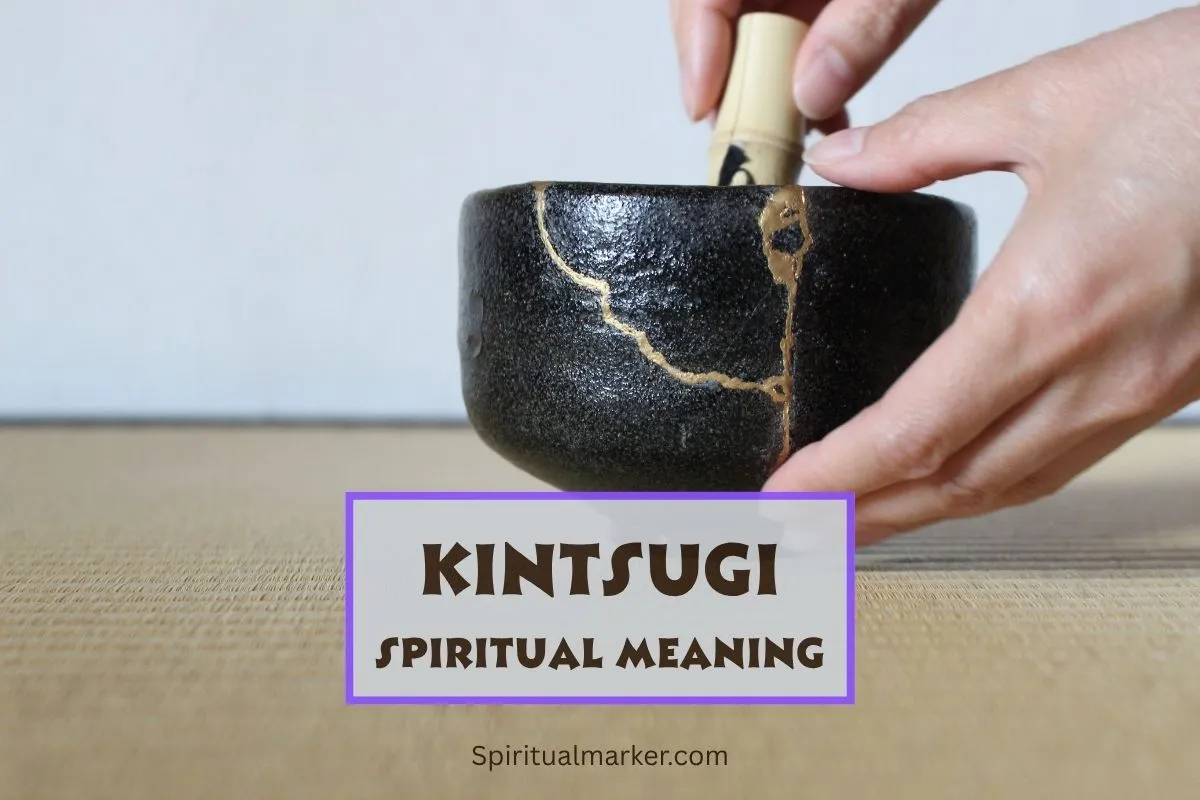
Kintsugi turns broken pottery into art. Instead of hiding cracks, it fills them with gold. That simple practice carries a deep message about damage, repair, and beauty.
The spiritual meanings of kintsugi often focus on resilience, acceptance, and transformation. The broken pieces are not discarded; they become part of a stronger whole. A spiritual meaning of breaking glass accidentally touches a similar theme, though glass breaks often feel more sudden and jarring.
Kintsugi also speaks to imperfection. It asks you to honor your scars instead of hiding them. In a world that prizes flawless surfaces, this philosophy offers a radical kind of healing.
Some people apply kintsugi to emotional wounds or relationships. A spiritual meaning of jewelry breaking also deals with damaged precious items, though jewelry carries personal history and attachment.
What is Kintsugi? Where Did It Come From?
Kintsugi (金継ぎ), literally meaning “golden joinery,” is a traditional Japanese technique that repairs broken pottery using lacquer mixed with powdered gold, silver, or platinum. The goal isn’t to disguise the damage but to highlight it — transforming the once-broken piece into a radiant work of art.
The story of Kintsugi traces back to the 15th century. According to legend, a Japanese shogun sent his favorite tea bowl to China for repairs. When it returned, it was held together with unsightly metal staples. Disappointed but unwilling to part with his cherished bowl, Japanese craftsmen sought a more aesthetically pleasing method. The result was Kintsugi — a repair process that honored the history of the object rather than hiding it.
Over time, Kintsugi became more than a physical restoration technique. It evolved into a philosophy — one that values imperfection, persistence, and transformation. In a world obsessed with perfection, Kintsugi whispers an alternative truth: that beauty can exist — even because of brokenness.
What Does Kintsugi Symbolize?
At its heart, Kintsugi symbolizes resilience, acceptance, and the beauty of imperfection. Every repaired crack represents a moment of healing, every golden vein a testimony of survival. Rather than treating damage as something shameful, Kintsugi honors it as part of an object’s story — a visible mark of endurance.
Spiritually, Kintsugi teaches us that we too can become whole again, not by erasing our wounds but by embracing them. Each scar — emotional or physical — becomes part of who we are, shaping our depth, empathy, and strength. It’s a philosophy that echoes through Japanese culture and resonates deeply across the world, particularly in times of personal struggle or transformation.
Kintsugi also reflects the Buddhist concept of wabi-sabi — the acceptance of transience and imperfection. Life, like pottery, is fragile. But even when it breaks, its pieces can be rejoined with care, turning imperfection into art and pain into purpose.
10 Spiritual Meanings of Kintsugi
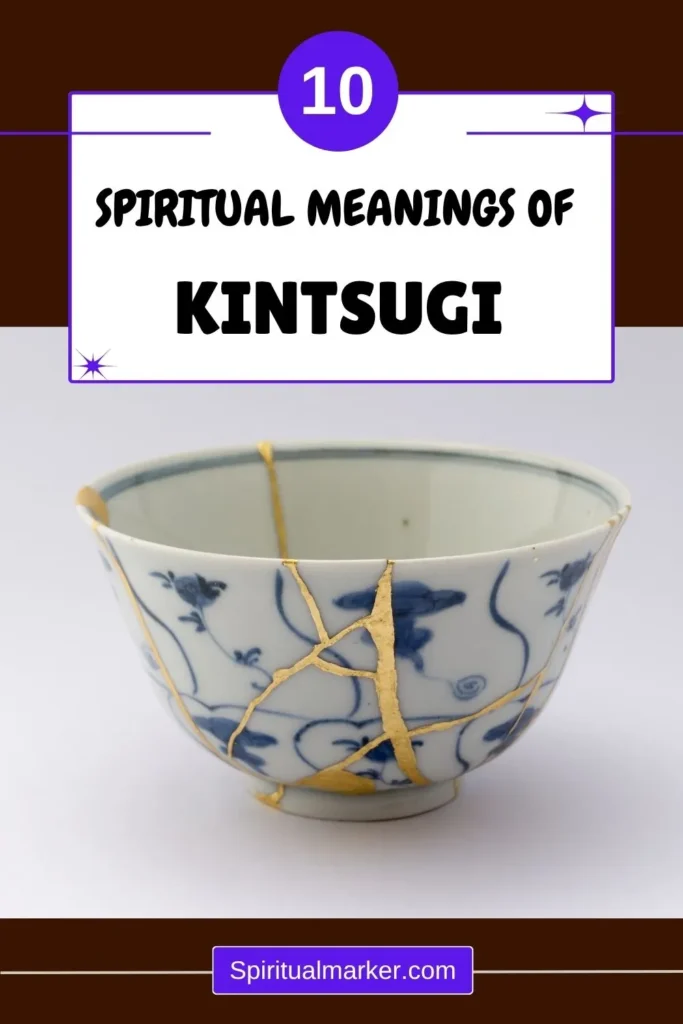
Below are ten key spiritual meanings often associated with Kintsugi — each offering timeless wisdom for the soul.
1. Embracing Imperfection and Finding Strength
Kintsugi isn’t just about mending pottery — it’s about rewriting the story of imperfection. The very cracks that once marked fragility become the most celebrated parts of the object. This transformation from broken to beautiful represents one of life’s most powerful truths: our flaws do not diminish us; they define our depth.
Spiritually, embracing imperfection is a path to self-acceptance. We spend much of our lives trying to fix, hide, or perfect ourselves — our looks, our emotions, our past. But Kintsugi invites us to do the opposite. Instead of erasing our scars, it asks us to highlight them — to see our pain as proof that we’ve endured and evolved.
The golden lines in Kintsugi symbolize inner strength, the ability to rise again after being shattered. Just like a repaired bowl becomes stronger at its seams, we too become more resilient in the places we’ve healed. Each crack tells a story of survival, courage, and rebirth.
In psychological and spiritual terms, this mirrors the process of emotional integration. Healing isn’t about returning to how things were; it’s about creating something new, something wiser and more radiant from what remains. Kintsugi’s message is simple yet profound: wholeness includes brokenness.
When we learn to see beauty in imperfection, we begin to see ourselves — and others — with compassion. The practice of Kintsugi becomes a metaphor for emotional alchemy: turning the raw metal of pain into the gold of wisdom. [1]
2. No Mind (Mushin) and Acceptance of Change
Kintsugi is deeply rooted in the Zen concept of mushin (無心), which translates to “no mind” — a state of flow, presence, and acceptance. It doesn’t mean emptiness in a negative sense, but rather a clear, calm awareness free from attachment and resistance.
In mushin, one allows things to unfold naturally, without clinging to what was or fearing what will be. This is precisely what Kintsugi represents. When a bowl breaks, there’s no attempt to restore it to its original, “perfect” form. Instead, the break is accepted as part of its journey — and the repair becomes a continuation of that story.
Spiritually, mushin teaches us to accept life’s inevitable changes. Everything — relationships, emotions, bodies, even identities — evolves and transforms. Resisting that change only brings suffering. Kintsugi, in its quiet grace, shows that change can bring unexpected beauty if we meet it with openness.
The golden seams become a visual meditation on impermanence. They remind us that loss, while painful, is a natural part of the cycle of existence. Just as seasons shift and rivers reshape their banks, our lives too are meant to change.
In this philosophy, there’s a serenity that comes from letting go — from trusting that every crack and repair is part of the design. Through Kintsugi, we learn not to mourn what’s lost, but to celebrate what’s transformed. [2]
3. Transformation Through Healing
The process of Kintsugi beautifully mirrors the human journey of transformation through healing. When something breaks — whether it’s a piece of pottery or the human heart — the act of repair doesn’t erase the damage; it redefines it. What was once fractured becomes a masterpiece of resilience.
In spiritual symbolism, this is akin to redemption. Just as gold fills the cracks of the bowl, grace fills the wounds of the soul. In many faiths, including Christianity, brokenness is not the end but the beginning of renewal. Through forgiveness, compassion, and faith, our pain becomes the soil where growth takes root.
Kintsugi shows that healing is a creative act — one that requires patience, humility, and love. The craftsman doesn’t rush; each piece is cleaned, realigned, and bonded carefully before being dusted with gold. In the same way, emotional healing unfolds slowly. It’s a sacred process that transforms pain into purpose, and despair into depth.
This symbolism reminds us that transformation is born from tenderness. The things that once broke us may one day become the most luminous parts of who we are. Like a bowl reborn through Kintsugi, we carry our history — not as shame, but as beauty reborn through grace.
When we view our scars as sacred, healing becomes an act of art — one that honors where we’ve been and what we’ve become. [3]
4. Beauty in Flaws and Life’s Marks
Kintsugi is deeply intertwined with the Japanese aesthetic of wabi-sabi — the appreciation of imperfection, impermanence, and the natural aging of things. Instead of chasing symmetry or flawlessness, wabi-sabi finds elegance in simplicity, cracks, and weathered textures.
A chipped bowl, a faded painting, or a wrinkled hand — these are not signs of decay but of a life fully lived. Every mark carries a story. In that sense, Kintsugi becomes a meditation on time itself. The golden repairs highlight the passage of years, the inevitability of change, and the beauty that emerges from endurance.
Spiritually, this challenges modern notions of perfection. We are constantly told to hide what’s “wrong” with us — the emotional scars, the mistakes, the wrinkles, the vulnerabilities. But wabi-sabi and Kintsugi remind us that these so-called imperfections are what make us real.
The bowl repaired with gold is not beautiful because it’s flawless; it’s beautiful because it’s honest.
There’s a quiet dignity in that kind of authenticity — a reminder that aging, breaking, and healing are all natural parts of existence. Life leaves marks on us all, but those marks are proof that we’ve experienced, endured, and evolved.
In embracing the philosophy of Kintsugi, we begin to see that beauty is not in perfection but in truth — in the lines that tell our stories, the cracks that reveal our courage, and the golden seams that symbolize our strength to begin again. [4]
5. Emotional Resilience and Personal Growth
At its core, Kintsugi is an art of resilience. It’s the visual embodiment of how pain, when acknowledged and mended with care, can become a source of power. The repaired pottery doesn’t pretend the break never happened; it declares it — proudly, beautifully, in gold.
This is what emotional resilience looks like in human form. We all experience moments that fracture us — heartbreak, grief, rejection, failure. But what defines us isn’t the breaking; it’s the rebuilding. Like a craftsman reassembling shattered porcelain, we learn to piece ourselves together with patience and love.
Kintsugi teaches that healing isn’t a return to what once was; it’s an evolution into something stronger. The golden seams are metaphors for growth — every healed wound a streak of wisdom, every scar a reminder of endurance.
Spiritually, this message resonates deeply in a world where emotional pain is often hidden or stigmatized. Kintsugi encourages us to honor our emotional history. Each struggle adds texture and meaning to our lives, shaping our character and empathy.
When we approach our healing like Kintsugi — carefully, intentionally, and lovingly — we learn to view our suffering not as something to suppress but as a teacher. Our scars remind us of what we’ve survived, and that survival becomes a source of gratitude.
The philosophy of Kintsugi, then, is a call to transform adversity into art — to turn pain into gold, and growth into beauty. It’s about seeing yourself as whole, not in spite of what you’ve been through, but because of it. [5]
6. Duality of Catastrophe and Healing
Kintsugi is born from contradiction — it embodies both destruction and restoration. The moment of breaking and the act of repair coexist within the same story, revealing a profound spiritual truth: healing and catastrophe are not opposites, but partners in transformation.
When a bowl shatters, it’s no longer what it once was. The break represents loss, chaos, and change — the sudden end of what was whole. But when the artisan begins the repair, that same destruction becomes the foundation for creation. Gold fills the cracks, and something new emerges — not a replacement of the old, but a continuation of its life.
Spiritually, this reflects the human journey through pain and recovery. In moments of crisis, it can feel as if everything has been destroyed — identity, trust, purpose. Yet, it’s often through those moments that deeper strength and awareness are born. The breaking reveals our hidden depths, while healing uncovers our capacity for renewal.
Kintsugi teaches us that both sorrow and joy are sacred threads woven into the same tapestry. Without the breaking, there would be no golden repair; without pain, there would be no growth. This duality mirrors the cycles of nature — death and rebirth, night and dawn, endings and beginnings.
So, when life breaks us open, Kintsugi whispers that we’re not ruined — we’re being reshaped. The gold that fills our emotional cracks is the wisdom, empathy, and clarity that emerge only after the storm. The same event that once felt like catastrophe can later become the source of our most profound healing. [6]
7. Practice of Self-Love and Forgiveness
At its heart, Kintsugi is a quiet act of compassion — not just for the object being repaired, but for oneself. Every stroke of gold is an act of acknowledgment and forgiveness, saying: You are still worthy. You still belong.
Spiritually, Kintsugi mirrors the process of self-love. It reminds us that the parts we often try to hide — our past mistakes, insecurities, and emotional wounds — are precisely where love and growth can take root. Just as a craftsman doesn’t discard broken pottery, we too can choose not to discard parts of ourselves.
Forgiveness, both for ourselves and others, is one of the most powerful forms of healing. It doesn’t erase what happened; it reframes it. The cracks remain, but they are no longer symbols of shame — they become evidence of endurance and transformation.
In this way, Kintsugi encourages a shift from judgment to acceptance. The act of mending with gold represents self-love in motion — a deliberate decision to honor your scars instead of hiding them.
It’s also a reminder that forgiveness is not weakness. It’s a strength that liberates us from the weight of resentment. By forgiving ourselves for being imperfect, we make space for growth, peace, and renewal.
Ultimately, Kintsugi teaches that the most beautiful parts of us may be the ones that have been broken and lovingly restored. When we learn to hold our flaws with tenderness instead of criticism, we begin to live more fully — whole, golden, and real. [7]
8. Finding Beauty in Brokenness
The philosophy behind Kintsugi offers a radical kind of hope — that even in brokenness, beauty can still exist. In fact, it often emerges because of it.
When pottery is repaired with gold, the cracks don’t vanish. They shimmer. What was once considered damage becomes the focal point of beauty. Spiritually, this is a reflection of our own lives. The very moments that break us open — loss, grief, heartbreak — are the ones that allow light to enter.
Finding beauty in brokenness is not about denying pain. It’s about acknowledging that pain can coexist with grace. It’s about understanding that our vulnerabilities make us human, and humanity itself is inherently beautiful.
This concept resonates across spiritual traditions. In Christian thought, brokenness is often where divine love meets the human heart. In Buddhism, suffering (dukkha) is seen as the root of awakening. Across beliefs, there’s a shared understanding that beauty and brokenness are inseparable — two sides of the same sacred truth.
Kintsugi turns this philosophy into a visual metaphor. Every glimmering crack tells a story — of failure turned into wisdom, grief turned into compassion, loss turned into appreciation. It teaches that what once hurt us doesn’t have to define us negatively; it can define us artistically.
There’s an undeniable comfort in knowing that something — or someone — can be both broken and beautiful at the same time. Kintsugi gives that truth a form we can see and hold. [8]
9. Turning Adversity into Resilience
Resilience is one of the deepest spiritual lessons we can draw from Kintsugi. The pottery that’s been shattered and mended doesn’t simply “return” to its original form — it becomes something greater. The gold-filled seams represent the power to turn adversity into wisdom, vulnerability into strength, and pain into purpose.
In life, adversity is inevitable. No one escapes challenges — whether it’s illness, loss, or heartbreak. What matters most is how we respond. Kintsugi reminds us that resilience isn’t about avoiding cracks; it’s about learning to repair them with grace.
The golden veins become a metaphor for our inner evolution. They mark the places where we’ve been broken but refused to stay broken. In that sense, each scar becomes a badge of strength — a physical proof of our capacity to heal and continue.
Spiritually, this aligns with the concept of post-traumatic growth — the idea that struggle can lead to deeper insight, greater compassion, and renewed purpose. Kintsugi captures that perfectly. It shows that adversity, while painful, can lead to transformation if met with courage and care.
Just as the craftsman must patiently piece each fragment together, we too must learn to rebuild our lives with patience. The repair process takes time — but that time is sacred. It’s in the waiting, the rebuilding, the quiet mending that resilience is born.
So when life breaks you apart, Kintsugi teaches you to pick up your pieces — not in shame, but in reverence. You’re not returning to who you were before. You’re becoming something far more luminous. [9]
10. Mindful Art Therapy and Growth
The practice of Kintsugi is not only a metaphor for healing but also a mindful art form that promotes emotional and spiritual growth. The process itself — slow, deliberate, and meditative — becomes a kind of art therapy, teaching patience, mindfulness, and presence.
Each stage of the repair — cleaning the fragments, aligning the pieces, applying the lacquer, dusting it with gold — mirrors the stages of healing. It’s impossible to rush. The craftsman must breathe, focus, and surrender to the rhythm of creation. This mindful process cultivates awareness — of one’s emotions, of impermanence, of the quiet beauty in simplicity.
Spiritually, Kintsugi as art therapy invites us to engage with our own healing in a similar way. When we approach our pain with patience and creativity, we begin to rebuild not only what was broken but also our relationship with ourselves.
In modern psychology, Kintsugi-inspired art therapy is used to help people process trauma, grief, and change. By physically repairing something broken, participants externalize their healing — they see their growth reflected in the restored object. The golden seams become tangible affirmations: I am whole again.
This process embodies mindfulness in motion — the awareness of the present moment without judgment. It reminds us that healing doesn’t come from fixing what’s wrong, but from accepting what is and choosing to work with it lovingly.
Through this mindful art, Kintsugi becomes a spiritual practice — one that connects creativity with compassion, and art with inner peace. The repaired pottery is not just an object of beauty; it’s a symbol of awakening — proof that broken things can shine again, and that growth is always possible when approached with care. [10]
Kintsugi Philosophy and Meaning in Life
1. Healing Through Acceptance
Kintsugi begins with acknowledgment — recognizing that something is broken. In the same way, personal healing starts when we face our pain instead of avoiding it. The act of mending pottery mirrors the process of emotional repair. It’s slow, delicate, and requires patience.
Spiritually, this teaches us to accept our scars — not as signs of weakness but as proof of survival. Acceptance doesn’t mean resignation; it means seeing our story clearly and holding it with compassion. Just as Kintsugi uses gold to illuminate the cracks, we can use forgiveness, kindness, and awareness to mend our emotional wounds.
2. Transformation After Adversity
When a bowl breaks, it loses its original form. Yet through Kintsugi, it returns renewed — transformed by the very process of repair. The gold that fills its cracks doesn’t hide the damage; it transcends it.
This mirrors our own journey through suffering. Adversity changes us. It challenges our sense of identity, shatters our illusions, and forces growth. But once we begin to heal, we realize we’ve become something different — stronger, more compassionate, more grounded.
Kintsugi’s transformation is both physical and spiritual. It reminds us that every breakdown carries the potential for breakthrough.
3. Embracing Imperfection as Beauty
We live in a world that glorifies perfection — flawless skin, seamless success, curated happiness. Kintsugi quietly rebels against that ideal. It says, “Your flaws are not flaws — they are your design.”
Spiritually, embracing imperfection is an act of liberation. It allows us to step out of constant comparison and into authenticity. The cracks in pottery — and in our hearts — are what make us unique. When we stop trying to be perfect, we begin to truly live.
Wabi-sabi, the aesthetic philosophy behind Kintsugi, teaches that beauty is transient and incomplete. The chipped edges, the faded glaze — these are not defects, but reminders of time, experience, and existence itself.
4. Reclaiming Self-Worth After Brokenness
There are moments when life shatters us — loss, failure, heartbreak. In those times, it’s easy to feel unworthy or “less than.” Kintsugi challenges that narrative. It tells us that even when we’re broken, we’re not disposable.
The golden seams become symbols of restored self-worth. Each repaired line declares: I am still valuable.
In fact, the repaired bowl is often more valuable than before it broke — both materially and symbolically.
In our own lives, self-worth doesn’t come from perfection; it comes from how we rise after being broken. Every scar can become a testament to our strength and humanity.
5. The Power of Vulnerability
Kintsugi doesn’t hide its cracks. They’re displayed openly, gleaming with gold. That vulnerability — that willingness to be seen in our brokenness — is powerful.
Spiritually, vulnerability connects us to others and to ourselves. It’s what allows empathy and love to flow. When we hide our pain, we isolate ourselves; when we show it, we create space for understanding and connection.
The art of Kintsugi teaches that vulnerability isn’t weakness — it’s a courageous act of truth.
6. The Art of Resilience
Every piece of Kintsugi pottery tells a story of resilience. It was broken — and yet, it exists again. The process of repair transforms fragility into strength.
Resilience isn’t about avoiding pain; it’s about rising again, no matter how many times we fall. Spiritually, Kintsugi reflects the cycle of life — breaking, mending, breaking again, and mending once more.
The gold seams symbolize the wisdom gained through hardship. They remind us that even when we feel shattered, our essence remains intact — waiting to be rejoined with patience and care.
7. Renewal and Rebirth
When a broken object is mended through Kintsugi, it is reborn. The process mirrors nature itself — the way forests regrow after fire, or how new life emerges after loss.
Spiritually, Kintsugi aligns with the idea of rebirth. Every ending carries the seed of a beginning. When something in our life falls apart — a relationship, a dream, or a phase — it’s not the end. It’s a transition.
The golden repairs in Kintsugi are like veins of light running through darkness, guiding us toward renewal. Through pain, something new is always being created.
8. Gratitude for One’s Journey
A repaired bowl carries its history within it. Each crack holds a memory, each golden line a lesson. Similarly, our lives are mosaics of experiences — joy, pain, triumph, and loss.
Kintsugi teaches us to honor the entire journey, not just the polished moments. Gratitude for what’s been broken allows us to appreciate what’s been rebuilt.
Instead of wishing away the past, we can learn to see it as part of our sacred path — the very thing that shaped who we are today.
9. Harmony Between Damage and Beauty
In Kintsugi, damage doesn’t ruin beauty; it becomes part of it. The repaired pottery is both fragile and strong, imperfect and whole — a balance of opposites that coexist in harmony.
Spiritually, this harmony reminds us that light and shadow, joy and sorrow, are not separate forces but intertwined. True beauty exists not in perfection but in balance — the union of what was broken with what is restored.
It’s a lesson in duality: we can be hurt and healing at the same time, lost and found, broken and beautiful.
10. Connection to the Divine Cycle of Creation and Restoration
Kintsugi reflects a deeper spiritual truth — that creation and destruction are not opposites but partners in the same dance. Everything in life follows this rhythm: growth, decay, renewal.
When something breaks, the divine act of repair becomes a form of creation. In that sense, Kintsugi mirrors our own spiritual evolution — the process of being shaped by experience, refined by pain, and illuminated by grace.
Each golden seam becomes a sacred symbol of divine presence — the unseen hand that helps us piece ourselves together when we cannot do it alone.
Cultural and Religious Significance
Kintsugi’s philosophy resonates far beyond art and aesthetics. It touches spiritual and cultural traditions across the world.
In Zen Buddhism, Kintsugi reflects mushin — the acceptance of change and impermanence. It embodies wabi-sabi, the beauty found in imperfection and the transient nature of life. These ideas encourage mindfulness, humility, and peace with what is.
In Shinto beliefs, which view objects as carrying spiritual essence (kami), repairing pottery becomes an act of respect — a way to honor the spirit of the object. The repair process acknowledges that even inanimate things have life and deserve care.
Globally, many find echoes of Kintsugi in other spiritual paths. In Christianity, for instance, the idea that brokenness leads to renewal — “beauty for ashes” — carries a similar resonance. In Hindu and Buddhist thought, cycles of destruction and rebirth parallel the continuous repair and transformation of Kintsugi art.
Across these traditions, one truth stands out: brokenness is not the end — it’s a doorway to deeper understanding.
Final Thoughts
Kintsugi is more than an art form — it’s a gentle teacher. It reminds us that perfection isn’t the goal; authenticity is. The cracks in our lives, once healed with love and awareness, become golden seams that tell our story.
Every scar carries wisdom. Every fracture reveals where light can enter. When we embrace what’s broken within us — our mistakes, losses, and lessons — we begin to see ourselves as whole again, not despite our wounds, but because of them.
You Might Also Like
1) Spiritual Meaning of Losing Purse, Wallet or Handbag
2) Spiritual Meaning of Breaking Glass Accidentally
3) Color Black Spiritual Meaning, Symbolism & Psychology
4) Six-Pointed Star Spiritual Meaning and Symbolism
5) Spiritual Meaning of Cotton Buds, Balls or Wools
References
- https://millenniumgalleryjp.com/blogs/journal/the-art-of-resilience-kintsugis-meaning-and-philosophy
- https://traditionalkyoto.com/culture/kintsugi/
- https://derekjwheeler.wordpress.com/2023/09/28/kintsugi-and-jesus-redemption-through-brokenness/
- https://en.wikipedia.org/wiki/Kintsugi
- https://arteologic.com/en/meaning-of-kintsugi/
- https://www.academia.edu/27193068/The_geo_cultural_conditions_of_kintsugi
- https://www.spiritualityhealth.com/blogs/the-present-moment/2018/08/26/kintsugi-the-art-of-appreciating-our-brokenness
- https://www.vaneetha.com/journal/kintsugi-beauty-in-the-broken
- https://connect.mayoclinic.org/blog/living-with-mild-cognitive-impairment-mci/newsfeed-post/the-japanese-art-form-of-kintsugi-embracing-the-imperfections-of-life/
- https://kintsugi-spirit.com/kintsugi-faq/
FAQs
What is the spiritual meaning of kintsugi?
Spiritually, kintsugi represents the beauty of healing and embracing imperfection. It teaches us that our brokenness doesn't make us worthless. Instead, our scars can become sources of strength and beauty. Kintsugi reminds us that healing is a sacred process. When we repair ourselves with gold, we become more valuable than before. This philosophy encourages us to accept and celebrate our complete selves.
What does kintsugi symbolize about healing?
Kintsugi symbolizes that healing is a beautiful and valuable process. Just as pottery becomes more beautiful with gold-filled cracks, we become wiser and stronger through healing. The process shows us that there is no shame in being broken. Instead, our healing journey is sacred and meaningful. Kintsugi reminds us that we can emerge from struggles with greater wisdom and beauty. Our healed scars tell the story of our resilience.
What are the key life lessons from kintsugi?
Kintsugi teaches us several important life lessons about imperfection and healing. First, it shows us that brokenness is not the end of our story. Second, it reminds us that healing takes time and patience. Third, it teaches us that our scars make us unique and valuable. Fourth, kintsugi encourages us to embrace our complete selves, flaws and all. Finally, it shows us that we can find beauty in our struggles and growth.
How can I apply kintsugi's philosophy to my life?
Apply kintsugi's philosophy by embracing your imperfections and past struggles. Recognize that your wounds have shaped you into who you are today. Practice self-acceptance and compassion for all parts of yourself. When you experience difficulties, trust that healing will come. Consider how your struggles have made you stronger and more beautiful. Remember that your brokenness can become your greatest gift and source of wisdom.