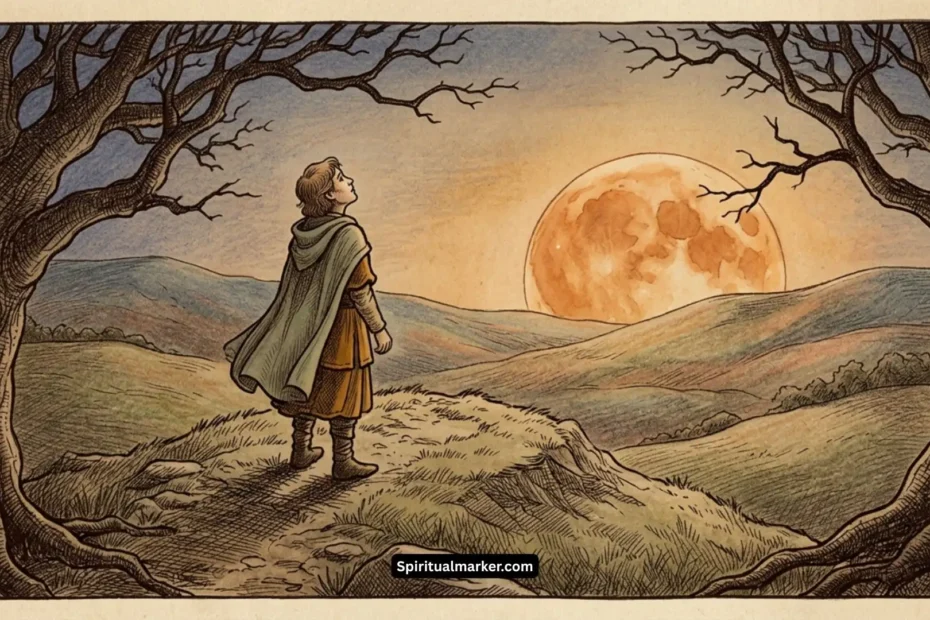
You step outside one evening and freeze. The moon hangs low, glowing in a deep shade of orange. It looks nothing like the pale white disc you are used to seeing. Your first thought is wonder. Your second thought is curiosity. What does this rare sight actually mean?
The orange moon spiritual meaning reaches far beyond simple atmospheric science. Across centuries, cultures have linked this fiery lunar glow to ancient lunar traditions, emotional shifts, and major turning points in life. An orange moon often appears during harvest season, eclipses, or hazy skies, and spiritual seekers believe its color is never random.
This article walks you through everything connected to the orange moon, from its symbolic weight in mythology to its message inside your dreams. You will also learn how different faiths interpret this glowing orb and what it might be signaling about your own spiritual path. Whether you saw this moon last night or you are simply drawn to lunar symbolism, you are about to gain a clearer picture of what it represents.
Key Takeaways
- The orange moon symbolizes transformation, passion, and the closing of one life chapter before another begins.
- Ancient cultures linked this lunar color to harvest cycles, fertility, and gratitude for abundance.
- Spiritually, an orange moon often signals a call to trust your intuition and embrace emotional honesty.
- In dreams, this moon frequently represents creativity, sensuality, or an unresolved emotional tension.
- Many traditions view the orange glow as a reminder to stay grounded while pursuing deep personal change.
What Is an Orange Moon and Why Does It Glow This Color?
An orange moon appears when sunlight passes through more of Earth’s atmosphere before reaching the lunar surface. This happens most often when the moon sits low on the horizon. Particles, dust, and pollution scatter shorter blue wavelengths of light, allowing longer orange and red wavelengths to dominate what you see. Scientific sources confirm this effect is similar to why sunsets glow warm and golden.
Wildfires, dust storms, and humidity can intensify this effect dramatically. A harvest moon in autumn often takes on this fiery hue because of seasonal haze and its low position in the sky. Yet spiritually minded observers rarely stop at the science. They ask a deeper question. Why does this particular color stir such strong emotional reactions?
Color has always carried symbolic weight in human consciousness. Orange sits between red and yellow on the spectrum, blending the fire of passion with the warmth of optimism. According to color psychology research, orange is associated with enthusiasm, courage, and emotional release. When this color appears on something as ancient and revered as the moon, it naturally takes on spiritual significance.
Spiritual practitioners often describe the orange moon as a bridge between logic and emotion. It pulls your attention upward while grounding your feelings in something tangible. This duality is part of why so many people report a strong personal reaction the moment they witness it.
What Does Seeing an Orange Moon Symbolize?
Seeing an orange moon often symbolizes a shift happening within you, even if you cannot name it yet. Many spiritual teachers describe this sighting as a nudge from the universe to pay closer attention to your emotional state. You may notice this moon during a season of change, a difficult decision, or a moment of quiet reflection.
This lunar event frequently represents fertility and abundance, especially when tied to harvest traditions. Farmers historically relied on the bright orange harvest moon to extend their working hours into the evening. Spiritually, this translates into a symbol of reward after sustained effort. If you have been working hard toward a goal, this sighting may suggest your patience is about to pay off.
Others interpret the orange glow as a sign of passion reawakening. Relationships, creative projects, or long buried desires sometimes resurface around the time this moon appears. The color orange has long been tied to vitality and creative fire in cultural symbolism, reinforcing this connection.
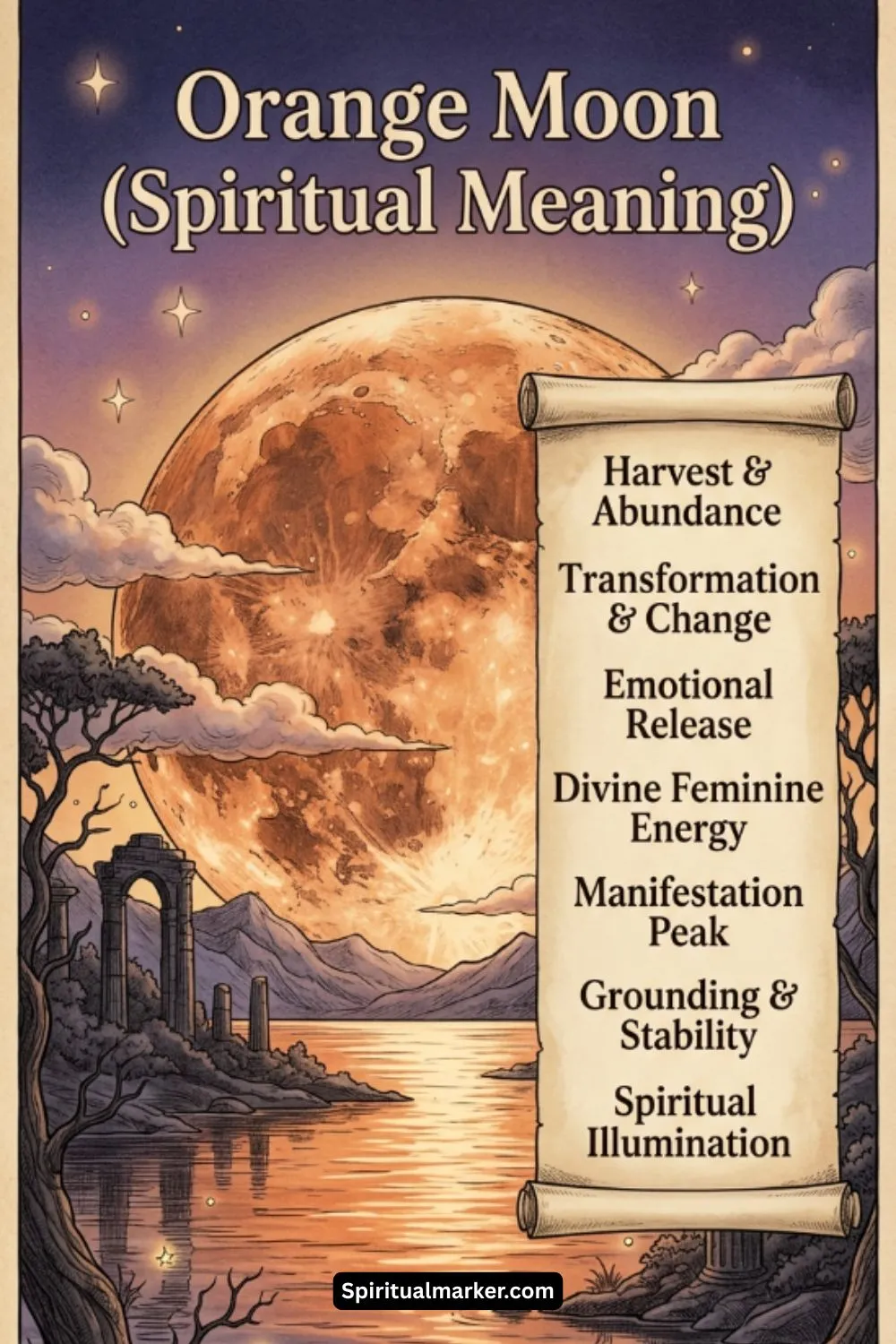
7 Spiritual Meanings of the Orange Moon
1. Transformation and Personal Change
One of the strongest spiritual meanings associated with an orange moon is transformation. The moon itself represents cycles because it continually moves through phases of appearing, growing, becoming full, and gradually fading from view. An orange appearance can add another layer to that symbolism, creating an image of change that feels active and emotionally significant.
You may notice that periods of personal transition bring stronger emotions, unusual thoughts, or a desire to reconsider your direction. From a spiritual perspective, the orange moon can represent the point between what has been and what is beginning. It does not necessarily mean that a dramatic event is about to happen. Instead, it can symbolize an internal shift that has already started.
This interpretation is particularly meaningful during major life transitions, such as changing careers, ending relationships, moving to a new place, or developing a different sense of purpose. The orange moon becomes a reminder that change does not always happen suddenly. Sometimes transformation begins quietly, through a gradual change in priorities, beliefs, and emotional needs.
2. Emotional Awakening and Deeper Feelings
The second spiritual meaning of the orange moon relates to emotional awakening. Orange combines the warmth of yellow with the intensity associated with red, which gives the color a symbolic connection with passion, vitality, warmth, and emotional expression.
When people attach spiritual meaning to an orange moon, they may see its warm appearance as an invitation to pay closer attention to feelings that have been ignored or pushed aside. Anger, sadness, affection, longing, excitement, or uncertainty can all carry information about what is happening internally. Rather than viewing strong emotions as weaknesses, this interpretation treats them as signals that deserve attention.
This can be especially relevant when you have been functioning on routine and putting your emotional needs aside. The orange moon may symbolize a period of becoming more honest with yourself. Emotional awakening does not mean reacting to every feeling, but recognizing what those feelings are telling you about your relationships, choices, boundaries, and personal needs.
3. Abundance, Harvest, and Gratitude
Another important spiritual meaning of the orange moon is abundance. This interpretation connects strongly with the warm, harvest-like color of the moon. In many cultures, lunar cycles have historically been connected with agricultural seasons, planting, harvesting, and the changing conditions that shaped daily life.
The association with harvest gives the orange moon a natural connection to the idea of receiving the results of previous effort. Spiritually, this does not necessarily refer only to money or material wealth. Abundance can also mean supportive relationships, personal growth, opportunities, wisdom, health, meaningful experiences, or a greater sense of stability.
The symbolism also contains an important message about patience. A harvest does not appear immediately after seeds are planted. It requires time, care, and favorable conditions. In the same way, some areas of life require sustained effort before their results become visible. The orange moon can therefore represent gratitude for what has already grown while recognizing the work that made it possible.
4. Intuition and Inner Knowing
The fourth spiritual meaning of the orange moon concerns intuition and inner knowing. Moon symbolism has traditionally been connected with the inner world, reflection, dreams, mystery, and aspects of human experience that cannot always be explained through logic alone.
An orange moon can therefore become a symbolic reminder to listen to your instincts. There are moments when you may have a strong feeling about a person, decision, or situation before you can fully explain why. Spiritual traditions often describe this experience as intuition, although psychology may interpret some intuitive judgments as the brain recognizing patterns based on previous experiences.
These perspectives do not necessarily have to conflict. Whether you describe it as spiritual intuition or subconscious pattern recognition, paying attention to your internal response can provide useful information. The orange moon symbolizes a quieter form of awareness, encouraging you to create enough mental space to notice thoughts and feelings that ordinary distractions can easily drown out.
5. Creativity, Passion, and Inspiration
The fifth spiritual meaning of the orange moon is creative inspiration. Orange carries associations with warmth, energy, enthusiasm, and expression, making it a natural symbolic color for creative activity. The moon, meanwhile, has inspired poets, painters, musicians, writers, and storytellers for centuries.
For this reason, an orange moon can represent a period when imagination and emotional expression become more noticeable. Creative inspiration does not have to mean producing a major work of art. It may appear as a new idea, a desire to write, an interest in photography, a different approach to solving a problem, or simply a renewed curiosity about something you once enjoyed.
There is also a deeper connection between creativity and emotion. Creative work often gives people a way to process experiences that are difficult to express directly. In that sense, the orange moon can symbolize turning emotion into expression. Its warm appearance becomes a visual representation of energy moving from the inner world into something tangible.
6. Closure, Release, and Letting Go
The sixth spiritual meaning of the orange moon involves closure and release. This symbolism becomes particularly strong when the orange moon appears during seasonal transitions, especially periods associated with autumn and the end of a growing cycle.
Nature provides a powerful metaphor here. Trees lose leaves, daylight becomes shorter, and one season gradually gives way to another. Nothing about this process suggests failure. Instead, it demonstrates that letting go can be part of a natural cycle of renewal.
Spiritually, the orange moon can therefore represent the need to release emotional attachments, outdated beliefs, unhealthy patterns, or situations that no longer fit your life. This does not mean forgetting the past or pretending that difficult experiences never mattered. Rather, closure means accepting what happened without allowing it to control what comes next.
For someone going through the end of a relationship, a major life chapter, or a period of uncertainty, this symbolism can feel particularly powerful. The orange moon becomes a reminder that making room for something new sometimes requires releasing something old.
7. Grounding and Stability During Change
The final spiritual meaning of the orange moon is grounding amid change. This meaning brings together many of the themes associated with the other six interpretations. Transformation can create excitement, but it can also produce uncertainty. Emotional awakening can bring clarity, yet it can also make feelings feel more intense. Creativity can open new possibilities, while change can make the future feel unfamiliar.
Orange offers a useful symbolic balance because it combines qualities traditionally associated with red and yellow. Red can represent energy, strength, and physical vitality, while yellow often symbolizes warmth, optimism, and mental brightness. Together, these qualities create an image of movement without losing a sense of warmth and stability.
From a spiritual perspective, the orange moon can therefore serve as a checkpoint between where you have been and where you are going. It represents the idea that personal growth does not require losing your sense of identity. You can change while remaining connected to your values, relationships, responsibilities, and inner sense of stability.
Orange Moon Meaning and Symbolism Across Cultures and Religions
Cultures around the world have interpreted the orange moon through their own spiritual lenses for thousands of years. In Chinese tradition, the moon holds a central place during the Mid-Autumn Festival, where its warm glow represents family reunion and gratitude. The orange hue at this time of year is celebrated as a symbol of completeness and harmony.
Native American traditions often referred to the autumn orange moon as the harvest moon or hunter’s moon, marking essential seasonal transitions. These names reflected practical survival needs, yet they also carried spiritual respect for the moon’s role in guiding agricultural and hunting cycles. The Farmers’ Almanac still documents many of these traditional lunar names today.
In Hindu spirituality, the moon, or Chandra, governs the mind and emotions. An orange tinted moon is sometimes interpreted as a heightened emotional or intuitive period, encouraging devotees to engage in reflective practices. Hindu festivals such as Karva Chauth place direct spiritual significance on the moon’s appearance and color during specific rituals.
Celtic and pagan traditions associated the orange harvest moon with the goddess archetype tied to fertility and the cycle of life. Seasonal festivals like Samhain drew heavily on lunar symbolism, with the moon’s color believed to reflect the thinning veil between worlds. Meanwhile, in many African spiritual traditions, the moon’s changing colors were read as messages from ancestors, with warmer tones often linked to protection and guidance.
Orange Moon Symbolism in World Mythologies
Mythological stories frequently use the moon’s color to foreshadow major events or divine intervention. In Greek mythology, the moon goddess Selene was said to drive her glowing chariot across the night sky. Ancient writers described unusual lunar colors as moments when Selene’s emotions or divine will became visible to mortals below.
Japanese folklore tells of the rabbit in the moon, a tale tied closely to the autumn harvest moon’s warm orange glow. This story reinforces themes of selflessness and sacrifice, values closely linked to the season in which this moon typically appears.
Norse mythology presents Mani as the personification of the moon, chased eternally across the sky by wolves. Some interpretations suggest that a reddish or orange tint to the moon represented moments of danger or impending change within Norse cosmology. These mythological threads share a common pattern. An orange moon almost always signals something significant is unfolding, whether that means divine attention, seasonal transition, or emotional revelation.
Orange Moon Biblical Meaning and Significance
Biblical scripture references the moon’s color directly in several prophetic passages. The Book of Joel states that the moon will turn to blood before significant divine events occur, a passage echoed again in Acts 2:20. While this passage technically describes a red moon, many theologians group orange and red lunar phenomena together when discussing prophetic symbolism.
In broader biblical symbolism, the moon often represents reflected light rather than its own independent source, much like believers are called to reflect divine light rather than generate it themselves. An orange or warm toned moon, within this framework, can represent a season of spiritual fire or renewed devotion. Christian commentary sources often connect unusual moon colors to seasons of repentance, awakening, or divine warning.
Some readers interpret the harvest references throughout scripture, such as in the Book of Ruth, as spiritually tied to the same autumn season when orange moons most frequently appear. This reinforces the biblical theme of reaping what has been sown, both literally and spiritually.
Types of Orange Moons and Their Spiritual Meanings
Not every orange moon carries the same spiritual weight. The harvest moon, appearing closest to the autumn equinox, symbolizes gratitude, completion, and reward for sustained effort. This is the most commonly recognized form of orange moon and tends to evoke feelings of warmth and closure.
The hunter’s moon, following shortly after the harvest moon, often glows with a similar fiery tone. Spiritually, this moon represents preparation and strategic action, encouraging you to plan carefully for what lies ahead. A lunar eclipse can also cause the moon to appear deep orange or copper colored, a phenomenon sometimes called a blood moon. NASA explains this occurs because Earth’s atmosphere bends red and orange light onto the lunar surface during totality.
Spiritually, an eclipse paired orange moon intensifies whatever meaning the moon already represents. Many practitioners view this combination as a powerful portal for deep transformation, urging you to release old patterns quickly and decisively. Smoke and wildfire induced orange moons, while less traditional, are sometimes interpreted spiritually as warnings to slow down and reassess your current direction before pushing forward.
Dreaming About an Orange Moon: Spiritual and Psychological Meanings
Dreaming of an orange moon often points toward unresolved emotional energy that your waking mind has not fully processed. According to dream symbolism research, the moon frequently represents the subconscious, while orange adds layers of passion, creativity, and occasionally hidden frustration.
Psychologically, this dream may surface during periods of major life transition, echoing the same transformative themes seen in waking spiritual interpretations. If the orange moon in your dream felt comforting, this often suggests you are emotionally prepared for an upcoming change. If it felt unsettling or oversized, this may reflect anxiety about losing control during a transition you cannot yet predict.
Spiritually, many dream interpreters connect this imagery to a message about trusting your intuition over logic for a specific decision currently weighing on you. Carl Jung’s work on archetypal symbolism, discussed extensively by the Jungian analytic community, suggests lunar dream imagery often relates to the feminine, intuitive aspects of the psyche regardless of the dreamer’s gender. An orange tint within that imagery adds urgency and emotional intensity to whatever message your subconscious is trying to deliver.
Orange Moon as a Sign in Astrology
Astrologers frequently tie unusual moon colors to heightened lunar energy within a birth chart. According to astrology resources, the moon governs emotional patterns, intuition, and subconscious habits regardless of its visible color. An orange moon appearing during a personally significant astrological transit can intensify these themes considerably.
If you notice this moon during a full moon phase specifically, astrologers suggest paying close attention to whatever emotional pattern feels most active in your life at that moment. Full moons traditionally represent culmination, meaning an orange full moon may amplify feelings of release, reward, or emotional clarity tied directly to the seven core spiritual meanings discussed earlier in this article.
How to Spiritually Respond to an Orange Moon Sighting
Spiritual traditions across the world generally agree that observation matters more than fear when an orange moon appears. Sitting quietly outdoors, journaling your immediate emotional reaction, or simply pausing to breathe deeply are common practices recommended by spiritual teachers during this lunar event. Mindfulness based lunar rituals often suggest setting a brief intention focused on release or gratitude during this specific moon phase.
You do not need elaborate ceremonies to honor this moment. A short walk, a few quiet minutes of reflection, or even a simple thank you whispered toward the sky carries genuine spiritual weight according to most traditional practices. The goal is presence, not performance.
A Final Note
The orange moon carries a message that feels both ancient and deeply personal. It speaks to transformation, gratitude, intuition, and the quiet courage required to release what no longer fits your life. Whether you witnessed this glowing moon during harvest season, an eclipse, or a simple hazy evening, your reaction to it likely says something true about where you currently stand.
If this sighting stirred something in you, consider taking a few quiet moments tonight to reflect on what feels ready to shift in your own life. Journaling your thoughts, sitting outside under the night sky, or simply naming one thing you feel grateful for can turn a passing astronomical event into something genuinely meaningful for your personal growth.