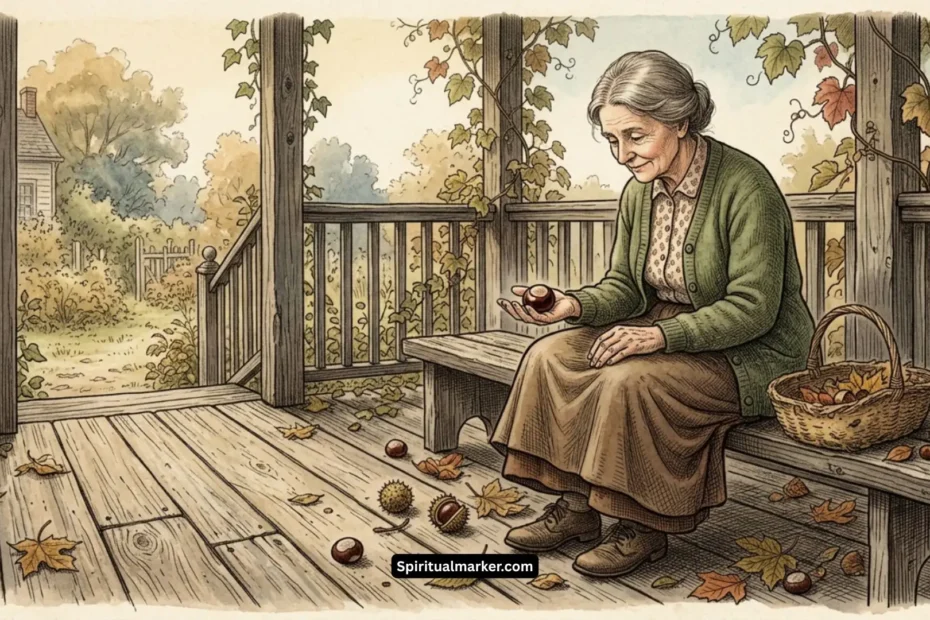
You spot it on a forest path, half hidden under fallen leaves. A small, glossy brown seed with a pale circle staring back at you like an eye. Something about it stops you mid step. You pick it up, roll it between your fingers, and wonder why a simple seed feels so significant. That feeling is not random. The buckeye seed spiritual meaning has followed humans for centuries, from Native American medicine traditions to modern pockets carried for luck. This small seed carries a surprisingly large story.
People rarely forget the moment a buckeye finds them. Maybe a grandmother handed you one as a child and told you it would keep you safe. Maybe you found one during a hard season and felt strangely comforted. Whatever the moment, that pull is worth examining. This article breaks down the full buckeye seed symbolism, from its biblical undertones to its place in hoodoo conjure bags, Native American healing, and modern dream interpretation.
Stick with this piece, and you will walk away understanding exactly why this unassuming nut has earned a permanent spot in folklore, faith, and personal ritual across the world.
Key Takeaways
- The buckeye seed spiritually represents luck, protection, and divine watchfulness, largely because of its eye-shaped marking.
- Native American tribes, especially the Lenape, named the seed “hetuck,” meaning a buck’s eye, and used it in healing practices long before settlers arrived.
- Hoodoo and Southern conjure traditions still use the buckeye nut today inside mojo bags for gambling luck, money drawing, and protection.
- In dream symbolism, a buckeye often points toward untapped potential, hidden wisdom, or a season of personal growth waiting to unfold.
- While the Bible never names the buckeye directly, its seed imagery echoes biblical teachings on faith, growth, and the word of God taking root.

What Is a Buckeye Seed and Does It Hold Spiritual Power?
The buckeye seed comes from Aesculus glabra, commonly called the Ohio buckeye tree. This tree grows natively across the Midwest and lower Great Plains, often near streambanks and shaded woodlands. Each autumn, a spiky green husk splits open and releases a smooth, dark brown nut with a lighter tan patch at its center. That patch is the detail that changed everything. It resembles the eye of a male deer, and that single resemblance is the reason this seed carries the weight of folklore it does today.
Spiritual traditions rarely assign meaning at random. They notice patterns in nature and build belief systems around what those patterns suggest. A seed shaped like a watching eye naturally became associated with vigilance, protection, and awareness of unseen forces. The buckeye nut’s resemblance to a deer’s eye gave Native Americans their original name for it, and that single observation carried forward into nearly every spiritual reading that followed.
Does the seed hold actual metaphysical power on its own? That depends entirely on your worldview. What is not up for debate is how consistently people across very different traditions, separated by centuries and continents, arrived at similar conclusions about this seed. Protection. Luck. Growth from something small. When unrelated cultures keep landing on the same symbolism, it tells you something about how deeply human beings are wired to read meaning into the natural world around them.
What Does Finding a Buckeye Seed Symbolize or Represent?
Finding a buckeye seed on your path often signals that protection is being placed around you. Many practitioners view an unexpected buckeye sighting as a quiet nudge from the universe, or from a guiding spirit, reminding you that you are watched over even during uncertain seasons. This reading makes sense once you consider the seed’s entire backstory. A nut shaped like a watching eye, found by chance underfoot, naturally reads as a sign rather than a coincidence.
There is also a strong undercurrent of luck and fortune tied to this discovery. According to long standing American folklore, carrying a buckeye in your pocket attracts good fortune the same way a four-leaf clover or rabbit’s foot might. People who find one unexpectedly often interpret the moment as confirmation that a stretch of good luck is approaching, particularly around money, opportunity, or unexpected wins.
Beyond luck, a buckeye discovery frequently represents untapped potential. The seed itself contains everything needed to grow into a towering, decades old tree, yet it sits quietly until conditions are right. Spiritually, finding one can be read as encouragement to trust your own dormant abilities. You may be carrying more capability than you currently realize, and the buckeye arrives as a reminder to nurture that potential rather than dismiss it.
7 Spiritual Meanings of the Buckeye Seed
The buckeye seed carries more than one message. Its symbolism branches into several distinct spiritual lessons, each one rooted in either its appearance, its growth pattern, or its long folkloric history. Below are seven of the most significant meanings tied to this seed.
1. Protection From Negative Energy
Protection sits at the very center of buckeye symbolism. Its eye shaped marking has been read for generations as a symbol of watchfulness, almost like a sentinel guarding against harm. People have carried a buckeye nut in a pocket, hung one near a doorway, or placed one on an altar specifically to create what folklore describes as an invisible shield against bad luck and harmful intentions.
This belief did not stay confined to one culture. Both Native American traditions and later European settlers treated the buckeye nut as a protective talisman, shielding the bearer from negative energy and misfortune. Carrying one becomes less about superstition and more about intention. The seed gives you something tangible to hold onto when you need a reminder that you are not unguarded against whatever the day brings.
2. Good Luck and Financial Fortune
Few American folk symbols carry as strong a luck association as the buckeye. Its connection to fortune grew so strong in Ohio that a 2014 casino promotion gave away tens of thousands of buckeyes after gamblers swore the nuts improved their odds. One man reportedly walked away with more than three thousand dollars after carrying one into a casino. Coincidence or not, that story spread fast precisely because it confirmed what people already believed.
This luck symbolism extends well past gambling. Hoodoo and Southern conjure traditions list the buckeye nut among gambler’s charms used to draw money and improve fortune in games requiring skill and dexterity. Some practitioners drill a small hollow into the nut, fill it with a pinch of mercury or a silver dime, then seal it shut before carrying it for luck. Whether or not you put stock in the ritual itself, the underlying message stays consistent. Small, humble things can carry outsized fortune when intention is placed behind them.
3. Divine Wisdom and Understanding
Spiritually, the buckeye is often tied to clarity and deeper understanding. Some spiritual traditions describe the buckeye as a symbol of divine understanding, offered to people who struggle to make sense of complicated spiritual matters or major life decisions. The seed’s hidden complexity beneath a plain exterior mirrors how wisdom itself often works. Real insight is rarely loud or obvious. It waits beneath the surface until you are ready to access it.
This meaning resonates with anyone moving through a season of confusion. A buckeye crossing your path during a period of doubt can serve as a quiet signal that answers are closer than they feel. Forcing clarity through sheer effort rarely works. Wisdom tends to arrive only after patience, much like the seed itself waits for the right season before it ever has a chance to root and grow.
4. Strength and Resilience
The buckeye tree itself models resilience in a way the seed inherits. According to botanical records from native plant societies, the Ohio buckeye thrives in ravines, river valleys, and rocky upland slopes, conditions that would stunt many other species. It forms a deep taproot early in its life, anchoring itself firmly before it ever grows tall. That single detail carries a powerful spiritual lesson. Real strength starts underground, quietly, long before anyone notices growth above the surface.
People drawn to buckeye symbolism during hard chapters often describe feeling steadied by this resilience theme. You do not need visible progress to know that growth is happening. Roots take time. Strength accumulates in private before it ever becomes obvious to others, and the buckeye reminds you to trust that invisible groundwork rather than measuring your worth only by outward results.
5. Healing and Restoration
Healing runs deep through buckeye history. The Lenape people carried buckeye nuts in their pockets specifically to treat rheumatism, and they prepared an infusion from ground nuts mixed with sweet oil to ease earaches, according to documented Native American herbal practices. That medicinal history feeds directly into the seed’s spiritual reputation as a symbol of restoration and physical wellbeing.
Modern spiritual practitioners extend that healing symbolism into emotional territory as well. A buckeye kept near your bed or carried during a hard recovery is sometimes described as drawing out negative energy that contributes to sickness or fatigue. Whether the relief comes from genuine energetic shift or simply the comfort of ritual, the seed’s long association with healing gives it a steady place in wellness traditions that blend folk medicine with spiritual practice.
6. Abundance and Fertility
A single mature buckeye tree produces seeds generously every autumn, and that natural abundance shaped much of its symbolism around fertility and plenty. The seed’s rich, glossy color has long been compared to a nurturing womb, reinforcing its connection to new life emerging from something small and unassuming. This reading turns the buckeye into more than a luck charm. It becomes a reminder that scarcity thinking rarely matches how nature actually operates.
People navigating financial anxiety or fear around not having enough sometimes adopt the buckeye specifically for this reason. Its message stays simple and direct. Abundance is the natural state of growth, and scarcity is usually a mindset rather than a permanent condition. Holding a buckeye becomes a small physical anchor for a much larger shift in perspective.
7. Personal Growth and New Beginnings
Every buckeye seed holds the entire blueprint for a tree that can live for over a century. Spiritually, this makes the seed one of the strongest symbols of potential and personal transformation available in plant folklore. Nothing about the seed’s plain, brown exterior hints at the scale of what it can eventually become, and that gap between appearance and potential is precisely the lesson many practitioners take from it.
If a buckeye keeps appearing during a season of change, many readers interpret it as encouragement to trust an unfolding process rather than rush it. Growth that matters rarely happens overnight. You are not behind simply because your transformation looks slower than you would like. The seed itself spent months underground before anyone could see what it was becoming, and that patient unfolding remains its most enduring spiritual lesson.
Buckeye Seed Meaning and Symbolism Across Cultures
Long before Ohio claimed the buckeye as its state symbol, Indigenous nations had already built deep meaning around this seed. The Lenape people, native to the Ohio River Valley and surrounding regions, called the nut “hetuck,” which translates to a buck’s eye. That name was not just descriptive. It reflected an entire worldview in which natural objects carried spiritual weight based on their resemblance to animals respected for their alertness and survival instincts. A deer’s eye, after all, represents constant awareness of danger.
This naming tradition produced an unexpected ripple effect in American history. According to accounts preserved by the Ohio Historical Society, Indigenous attendees at an early Ohio court session greeted a tall, imposing settler named Ebenezer Sproat with shouts of “Hetuck, Hetuck,” comparing his stature to that of a sturdy buckeye tree. He wore the nickname proudly for the rest of his life, and it eventually spread to settlers across the territory, later shaping Ohio’s identity entirely.
European immigrants brought their own overlapping beliefs into the mix. German and Dutch settlers already held strong superstitions about the closely related horse chestnut, believing it cured headaches, rheumatism, and arthritis. Folklore historians suggest these beliefs simply transferred onto the similar looking buckeye once immigrants settled in regions where it grew wild. Two unrelated cultural traditions essentially merged into one shared symbol, which is part of why buckeye folklore feels so deeply rooted in American soil today.
Different Types of Buckeye Seeds and Their Subtle Meanings
Not every buckeye seed comes from the same tree, and the variations carry their own subtle shifts in symbolism. The Ohio buckeye, Aesculus glabra, produces the dark brown seed most associated with American folklore and Ohio state identity. According to university extension research on native buckeye species, this variety grows a warty, prickly husk and remains the seed most commonly used in protection and luck rituals.
The yellow buckeye, Aesculus flava, grows taller than its Ohio cousin and produces a smoother, larger husk without the same prickly texture. Folk practitioners sometimes treat yellow buckeye seeds as carrying a gentler version of the same protective energy, fitting given the softer, less aggressive appearance of the husk itself. Meanwhile, the red buckeye, Aesculus pavia, blooms early in spring with vivid red flowers that attract hummingbirds, and many spiritual practitioners associate this variety more closely with vitality, passion, and renewed energy rather than pure protection, likely influenced by its striking color.
A closely related European cousin, the horse chestnut, Aesculus hippocastanum, deserves mention too, since its folklore directly shaped American buckeye beliefs. German and Dutch immigrants already carried strong convictions about the horse chestnut’s healing properties before ever encountering the buckeye in North America, and that imported belief system transferred almost seamlessly onto the new world seed they found waiting for them. Regardless of which variety you encounter, the underlying spiritual themes of protection, luck, and quiet strength remain remarkably consistent across the entire buckeye family.
The Buckeye Seed in Hoodoo and Southern Conjure Traditions
Nowhere does buckeye symbolism stay more active today than within hoodoo and Southern conjure practice. According to documented hoodoo history, this rootwork tradition freely absorbed the European belief that buckeye nuts cure rheumatism, blending it seamlessly with African spiritual practices brought to America during slavery. Hoodoo has never been a closed system. It draws from whatever proves spiritually effective, regardless of origin, and the buckeye fit naturally into that approach.
Inside a traditional mojo bag, also called a conjure hand or toby, buckeye nuts sit alongside other curios believed to draw luck and protection. Root workers list the buckeye among items used specifically in gambler’s charms meant to sharpen fortune in games requiring skill, alongside rare ingredients like Lucky Hand root and lodestone dressed in magnetic sand. Some practitioners anoint the buckeye in oil daily, allowing it to deepen into a rich brown color over time, treating the ritual itself as part of the seed’s growing spiritual potency.
According to herbal folk magic references, the buckeye nut also appears in spells meant to ease arthritis and headaches, echoing its much older medicinal reputation. Practitioners sometimes wrap a buckeye with currency, folding the bill inward to symbolically draw money back toward the bearer. These practices remain alive today, carried forward by root workers who treat hoodoo not as relic folklore but as a living, evolving spiritual tradition still practiced with care and reverence.
Buckeye Symbolism in World Mythology and Folk Belief
Trees that produce eye shaped seeds tend to attract mythological attention, and the buckeye is no exception. While it lacks a single defining myth the way oak trees do in Celtic tradition or olive trees do in Greek legend, the buckeye fits comfortably into a much older mythological pattern. Across many cultures, eyes embedded in nature, whether on tree bark, in stones, or in seeds, were read as evidence that the natural world watches and participates in human affairs rather than existing as a passive backdrop.
This pattern shows up far beyond North America. Mediterranean folk traditions developed the well known evil eye belief, where an eye shaped amulet wards off harmful intentions directed at the wearer. Mexican and Central American folk magic uses a similar object called the ojo de venado, or deer’s eye seed, taken from an entirely different plant yet carrying nearly identical protective symbolism to the North American buckeye. Two unrelated plant traditions, continents apart, arrived at the same conclusion. An eye shaped seed protects the person who carries it.
This cross cultural overlap matters because it suggests the buckeye’s symbolism was never an isolated American invention. It taps into something closer to a universal human instinct, one that reads watchful, eye like patterns in nature as protective rather than threatening. Folklorists studying global amulet traditions, including research compiled in archives documenting worldwide talismans, consistently find this same eye centered protective logic repeating across cultures that never had contact with one another.
Closer to home, regional American folklore added its own layer of legend on top of the older protective symbolism. Stories collected from Appalachian and Midwestern oral tradition describe buckeyes gifted between family members as tokens meant to keep loved ones safe during long journeys or military service. Soldiers carrying a buckeye from home into wartime is a recurring theme in this folklore, blending personal sentiment with the seed’s older reputation for protection. Whether or not the charm itself did anything measurable, the ritual gave families a tangible way to extend care across distance, which is arguably what most protective folklore accomplishes regardless of culture.
Buckeye Seed Biblical Meaning and Significance
Scripture never names the buckeye directly, since this tree is native to North America and absent from the biblical world. Even so, the Bible speaks extensively about seeds in ways that shape how many believers read the buckeye’s spiritual symbolism today. The most direct connection comes from the Parable of the Sower, found in Matthew 13, Mark 4, and Luke 8. In it, Jesus describes seed falling onto four different types of ground, with only the seed planted in good soil producing a lasting harvest.
Jesus explained that the seed itself represents the word of the kingdom, while the different soils represent the condition of a person’s heart when that word is received. This framing gives the buckeye an extra layer of meaning for believers. A seed that looks identical on the outside can produce wildly different outcomes depending entirely on where it lands and how it is nurtured. The same principle applies to faith, patience, and personal growth.
Galatians 6:9 reinforces this seed centered theology directly, encouraging believers not to grow weary in doing good, since a harvest comes only in due season. The buckeye’s own growth pattern mirrors this teaching closely. It sits dormant through winter, takes months to root, and shows no visible progress until conditions finally align. Many believers find quiet encouragement in that parallel, especially when waiting on answered prayer or a long awaited breakthrough feels discouraging.
The image of a watchful eye also carries scriptural weight worth noting. Psalm 32:8 describes God guiding His people while keeping a watchful eye over them. Whether or not this connection feels like more than coincidence, the symbolism lines up naturally. A seed shaped like an eye, found unexpectedly during a hard season, easily becomes a personal reminder that you remain seen and guided even when circumstances feel uncertain.
Seeds appear throughout scripture as a consistent metaphor for faith itself, not only in the Parable of the Sower. Matthew 17:20 uses the mustard seed, one of the smallest seeds known, to illustrate how even a tiny amount of genuine faith can move mountains. The buckeye fits this same metaphor naturally. It is not an impressive looking object on its own. Yet what it contains, given enough time and the right conditions, vastly outweighs its humble appearance. Believers who lean on this comparison often describe the buckeye as a physical reminder that small, consistent faith eventually produces results disproportionate to its starting size.
1 Corinthians 15:36-38 goes even further, using a seed’s death and transformation as a direct picture of resurrection itself. Paul writes that what is sown does not stay as it was, but God gives it a new body suited to what it becomes. A buckeye seed must, in a sense, break open and stop being only a seed before it can become anything resembling the towering tree hidden inside it. Many believers find this particular passage comforting when life feels like it is falling apart rather than coming together, since scripture frames that breaking as a necessary part of transformation rather than an ending in itself.
None of this means the Bible endorses buckeyes as literal spiritual objects, and readers should hold that distinction clearly. What scripture does offer is a rich vocabulary around seeds, soil, faith, and patient transformation that many believers naturally map onto a seed sitting in their own hand. The buckeye becomes a teaching tool rather than a sacred relic, useful precisely because its growth story mirrors language scripture already uses to describe spiritual growth.
Dreaming About Buckeye Seeds: Spiritual and Psychological Meanings
Dreams involving seeds, nuts, or small natural objects tend to carry meaning tied to potential and self development, according to Jungian dream analysis. Carl Jung viewed certain images as relatively fixed symbols across the collective unconscious, and objects like seeds often point toward renewal, possibility, and the birth of something new within the dreamer’s life. A buckeye appearing in a dream fits squarely into this symbolic category.
Jung also emphasized that dreams serve a prospective function, meaning they often point toward future potential rather than only reflecting past experience. According to Jungian dream theory, the unconscious mind absorbs far more information than we consciously register, and dreams sometimes use that hidden information to nudge us toward paths we have not yet consciously considered. A buckeye dream, given the seed’s strong association with untapped potential, fits this prospective function well.
If you dream of receiving a buckeye as a gift, many spiritual readers interpret this as a sign that you already carry abilities you have not fully recognized. Dreaming of planting one often points toward a decision you are weighing, with the dream encouraging patience rather than rushing the outcome. A dream where you find a buckeye unexpectedly, similar to waking life discoveries, frequently signals incoming protection or quiet reassurance during a stressful period. Across nearly every interpretation, the underlying message stays consistent. Something valuable is growing, even if you cannot see clear evidence of it yet.
Carrying or Using a Buckeye Seed for Spiritual Purposes
People who want to work with buckeye symbolism personally usually start simply, by carrying one nut in a pocket, purse, or small charm bag. This practice traces directly back through generations of American folklore, where the act of carrying the seed mattered just as much as the belief behind it. Over time, a carried buckeye naturally wrinkles and darkens, and many practitioners view this aging process as a sign of the seed absorbing and holding protective energy rather than a flaw to avoid.
Others place a buckeye near an entryway specifically for home protection, following older folk traditions that treated the seed as a guard against unwanted energy crossing the threshold. Some root workers incorporate it into a small altar space, occasionally alongside other protective curios. If toxicity concerns come up, it is worth noting clearly that buckeyes are mildly poisonous if eaten, so any spiritual use should stay limited to carrying, displaying, or ritual handling rather than consumption.
Whichever approach resonates with you, the spiritual value tends to come from consistent, intentional use rather than the object alone. A buckeye sitting forgotten in a drawer carries little personal meaning. One carried daily, touched during moments of doubt, becomes a steady anchor point you return to whenever you need a physical reminder of protection, patience, or quiet growth.
A Final Note
The buckeye seed earns its spiritual reputation honestly. It carries genuine history through Indigenous medicine, hoodoo conjure work, European folk belief, and quiet biblical parallels around seeds, soil, and patient growth. Few natural objects this small manage to hold that much layered meaning across so many unrelated traditions, and that consistency is exactly what makes the symbolism worth taking seriously rather than dismissing as coincidence.
If a buckeye has recently found its way into your life, through a forest walk, a gift, or even a dream, take a quiet moment to notice what season you are currently in. Pay attention to where you feel unprotected, where your own potential feels dormant, or where patience is being tested. You might keep a small journal tracking when and where these moments happen, since patterns tend to surface only with time. Trust what this humble little seed has represented for generations, and let it remind you that real growth, the kind that lasts, almost always begins quietly, underground, long before anyone can see it.