
Biting your tongue in sleep is a painful and puzzling experience. You wake with a sore spot and wonder how it happened. Beyond dental issues, many people sense a spiritual message.
The spiritual meaning of biting your tongue in sleep often involves suppressed words, regret, or a need to speak your truth. The tongue is the organ of speech, so injury there can signal a need to pay attention. A spiritual meaning of black spots on the tongue shares that tongue-focused symbolism, though spots are different from injury.
Some superstitions say biting your tongue means you have said something you regret. Others view it as a sign to watch your words. The frequency and severity can add detail.
If this happens often, it may be a call to address what you are holding back. A spiritual meaning of sleep talking also deals with sleep-related mouth activity, though talking is different from biting.
Why Biting Your Tongue in Sleep Feels Significant
At first, it may seem like a random accident. However, many people notice patterns. It may happen during stressful times or after intense emotional days. That connection makes the experience feel meaningful.
Your tongue plays a key role in communication. It helps you express truth, emotions, and thoughts. When you bite it during sleep, it can feel like a sign of blocked expression or unspoken words.
Moreover, sleep is when your subconscious becomes active. It processes what you avoid during the day. Because of this, physical reactions during sleep often connect to deeper mental or spiritual states.
As a result, tongue biting does not feel random. Instead, it feels like a signal that deserves attention.
What Does Biting Tongue in Sleep Represent Spiritually?
Spiritually, biting your tongue in sleep often points to suppressed communication. It suggests that you may be holding back words, feelings, or truths in your waking life.
In many interpretations, the act symbolizes self-restraint. You might be stopping yourself from speaking up due to fear, guilt, or doubt. At the same time, it can reflect inner tension between what you want to say and what you actually express.
Another perspective links it to spiritual warnings. Some traditions believe that biting your tongue serves as a reminder to think before speaking. It acts as a subtle push toward mindfulness and awareness.
Additionally, it can relate to emotional overload. When feelings build up without release, the body may react during sleep. Therefore, the bite becomes a physical sign of inner pressure.
In simple terms, the spiritual meaning often revolves around silence, control, and hidden emotions.
10 Spiritual Meanings of Biting Tongue in Sleep
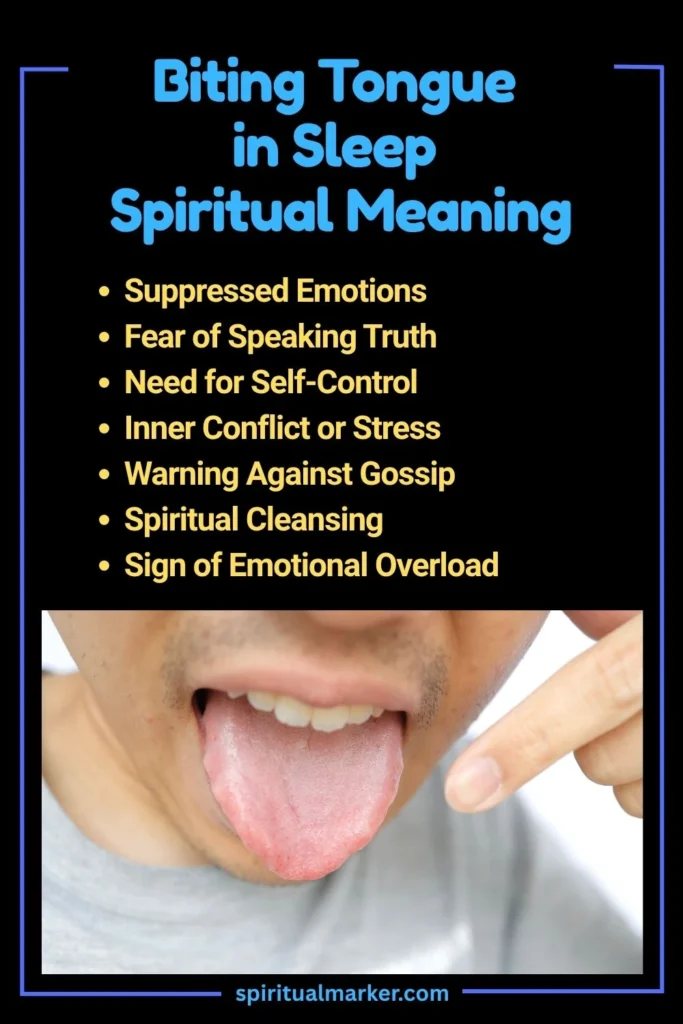
Biting your tongue in sleep carries various spiritual interpretations across traditions, often symbolizing subconscious messages about speech, emotions, and inner balance. These meanings draw from diverse cultural, biblical, and esoteric sources, urging self-reflection.
1. Suppressed Emotions
When you bite your tongue in sleep, your body may be reacting to emotions you have pushed aside. During the day, you might stay busy, distracted, or even avoid certain feelings. However, at night, your subconscious does not stay silent.
Instead, it brings those buried emotions to the surface.
This physical reaction can act as a release point. It tells you that something inside needs attention. For example, unspoken anger, hidden sadness, or even guilt can build pressure over time. Then, your body expresses it in subtle but noticeable ways.
Because of this, you should take a moment to reflect. Ask yourself what you have been holding back. When you identify it, you create space for healing and emotional clarity.
2. Fear of Speaking Truth
Sometimes, biting your tongue symbolizes hesitation. You may know the truth, yet you feel afraid to speak it. This fear can come from possible conflict, rejection, or judgment.
So, instead of expressing yourself openly, you stay silent.
Your subconscious, however, does not accept that silence easily. It pushes back, often through physical signals like this. In a spiritual sense, this becomes a call for courage.
You do not need to speak harshly. Still, you should aim for honesty. When you express your truth calmly, you free yourself from internal tension. Over time, this builds confidence and strengthens your voice.
3. Need for Self-Control
In many spiritual teachings, the tongue represents power. Words can heal, but they can also harm. Because of that, biting your tongue in sleep can serve as a reminder to practice restraint.
You may have spoken impulsively recently. Or perhaps you felt tempted to say something you later regretted.
This experience pushes you to pause and think before speaking. It encourages discipline, not silence. There is a difference. Self-control does not mean hiding your voice. It means using it wisely.
When you practice this, your relationships improve. People begin to trust your words more.
4. Inner Conflict or Stress
Inner tension often finds its way into the body. If you feel torn between decisions or overwhelmed by responsibilities, your mind may struggle to rest.
As a result, your body reacts.
Biting your tongue during sleep can reflect this internal conflict. It mirrors the mental pressure you carry. In a way, it acts like a signal light, asking you to slow down and address what is bothering you.
Instead of ignoring the stress, try to face it step by step. Break problems into smaller parts. When you reduce mental overload, your body also begins to relax.
5. Warning Against Gossip
Words hold weight. In many spiritual beliefs, careless speech carries consequences. If you engage in gossip or negative talk, even unintentionally, your subconscious may respond.
Biting your tongue can act as a warning.
It reminds you to be mindful of what you say about others. Even small comments can leave lasting effects. Because of this, the message becomes clear. Speak with intention, not impulse.
When you choose kind and honest words, you create positive energy around you. That energy often returns in unexpected ways.
6. Spiritual Cleansing
Pain often feels negative, yet it can also mark transformation. In a spiritual sense, biting your tongue may symbolize cleansing.
It suggests that your body and spirit are releasing built-up negativity.
This process may not feel comfortable. However, it often leads to renewal. Think of it as clearing out emotional clutter. Once that weight lifts, you feel lighter and more balanced.
During this time, it helps to stay aware of your thoughts. Try to replace negative patterns with calm and positive ones. Over time, this strengthens your inner peace.
7. Sign of Emotional Overload
At times, life becomes too much. You may handle multiple responsibilities, emotions, and expectations all at once. Even if you manage well during the day, your body still feels the pressure.
That pressure needs an outlet.
Biting your tongue can signal that you have reached your emotional limit. It tells you to pause before burnout sets in. Instead of pushing harder, give yourself space to rest.
You can talk to someone you trust. You can also write your thoughts down. These simple steps help release tension and bring back balance.
8. Reminder to Listen More
Communication is not only about speaking. Listening plays an equally important role. If you often rush to respond or interrupt others, your subconscious may step in.
Biting your tongue can act as a gentle correction.
It encourages you to slow down and truly hear what others say. When you listen carefully, you understand people better. As a result, your responses become more thoughtful.
This shift improves both personal and professional relationships. It builds respect and deeper connections over time.
9. Unresolved Personal Issues
Sometimes, problems do not disappear. They simply hide beneath the surface. These can include past conflicts, unresolved arguments, or even personal regrets.
Your mind keeps returning to them, even if you try to move on.
Biting your tongue in sleep can point directly to these hidden issues. It asks you to confront them instead of avoiding them. While this may feel uncomfortable, it brings long-term relief.
When you address these problems, you free yourself from emotional weight. You also gain clarity and peace of mind.
10. Energy Imbalance
From a spiritual viewpoint, balance matters. When your emotional, mental, and spiritual energies fall out of sync, your body reacts.
Biting your tongue can reflect this imbalance.
You may feel self-doubt, pressure to be perfect, or constant worry. These feelings disrupt your inner harmony. Because of that, your body sends a signal to restore balance.
You can start with small changes. Practice self-compassion. Accept imperfections. Spend time in calm activities like meditation or quiet reflection.
As your inner balance returns, your body also begins to settle.
Common Myths and Superstitions About Biting Tongue in Sleep
Many cultures have created beliefs around tongue biting during sleep. These ideas often mix fear, mystery, and symbolism.
One common superstition says that someone is talking about you when you bite your tongue at night. People believe the pain reflects hidden conversations happening behind your back.
Another belief suggests that it means you almost revealed a secret. The bite acts as a warning that you should stay silent about something important.
In some traditions, tongue biting is seen as a sign of bad luck or negative energy. It is thought that harmful forces may be trying to disturb your peace during sleep.
There is also a myth that connects it to lying or dishonesty. If you have not been truthful, the bite is believed to be a form of spiritual correction.
Some people even think it predicts arguments or conflicts. The idea is that tension in your life shows up physically while you sleep.
Cultural and Religious Interpretations Across Traditions
Different cultures offer unique explanations for biting your tongue in sleep. These interpretations add depth and variety to its meaning.
In many Eastern spiritual traditions, the body reflects energy flow. Tongue biting may signal a blockage in the throat chakra. This energy center connects to truth and expression.
In Hindu beliefs, physical signs during sleep can relate to karma or emotional imbalance. Tongue biting may suggest unresolved thoughts or past actions affecting your mind.
Within some Christian perspectives, the tongue holds strong symbolic meaning. It represents the power of words. Biting it may act as a reminder to control speech and avoid harmful language.
In certain African traditions, unusual sleep behaviors can link to spiritual interference. Tongue biting may be seen as a sign that spiritual protection is needed.
In Chinese cultural beliefs, body reactions often connect to internal balance. Tongue biting may indicate stress, imbalance, or excess energy in the system.
Meanwhile, in folk traditions across Europe, the act sometimes relates to gossip or hidden truths. People may interpret it as a warning to stay cautious in conversations.
Emotional and Psychological Reasons Behind Tongue Biting in Sleep
While spiritual meanings offer insight, emotional and psychological factors also play a major role.
Stress is one of the biggest causes. When your mind feels overwhelmed, your body reacts even during rest. This can lead to clenching, grinding, or sudden movements that result in biting your tongue.
Anxiety also contributes to this issue. If you often worry or overthink, your muscles may stay tense at night. That tension increases the chance of accidental bites.
In some cases, it may relate to sleep disorders like bruxism or restless sleep patterns. These conditions cause involuntary movements, including jaw clenching.
Emotional suppression is another factor. When you hold back feelings during the day, your subconscious tries to process them at night. This may trigger physical reactions such as tongue biting.
Therefore, while the experience may feel spiritual, it often connects deeply with your mental and emotional state.
What Should You Do After Biting Your Tongue in Sleep?
First, take care of the physical side. Clean the area and allow it to heal properly. Avoid spicy or sharp foods that may worsen the irritation.
Next, reflect on your current emotions. Ask yourself if you are holding back something important. Are there words you need to say but avoid?
It also helps to manage stress before sleep. Try calming activities such as reading, deep breathing, or quiet reflection. These habits relax your body and reduce nighttime tension.
Pay attention to patterns. If it happens often, consider improving your sleep routine. Consistent sleep schedules and a relaxed mind can make a big difference.
At the same time, listen to the symbolic message. Whether you believe in spiritual meaning or not, the experience can still guide you toward better self-awareness.
Final Thoughts
Biting your tongue in sleep may seem small, yet it carries layered meaning. On one side, it reflects stress, tension, and subconscious activity. On the other, it holds spiritual symbolism tied to communication and inner balance.
When you look deeper, a clear theme appears. The experience often points to unspoken thoughts and emotional pressure. It invites you to reflect, express yourself, and restore balance in your life.
Instead of ignoring it, treat it as a gentle signal. Your body and mind may be working together to guide you toward clarity and peace.
You Might Also Like
1) The Spiritual Meaning of Black Spots on the Tongue
2) Meanings of Birthmarks – Types, Shapes, Locations & Colors
3) Spiritual Meaning of Burping and Biblical Symbolism
4) Spiritual Meaning of Choking on Food or Saliva
5) Types of Sleeping Positions and Their Spiritual Meanings
References
- https://www.auntyflo.com/superstition-dictionary/biting-tongue-spiritual-meaning
- https://spiritualnexus.net/spiritual-meanings-of-biting-the-tongue-in-sleep/
- https://www.wikihow.com/Biting-Tongue-in-Sleep-Spiritual-Meaning
- https://neurolaunch.com/biting-tongue-in-sleep-spiritual-meaning/
- https://www.quranmualim.com/biting-tongue-in-sleep-spiritual-meaning/
- https://happylifelogic.com/biting-tongue-in-sleep-spiritual-meanings/
- https://www.youtube.com/watch?v=1alNaRDa2OE
- https://www.yourtango.com/self/spiritual-meaning-biting-tongue
FAQs
1. What does it mean spiritually to bite your tongue in sleep?
Spiritually, biting your tongue in sleep often relates to self-expression and communication. You might be struggling to say something important in your waking life. The bite could indicate repressed feelings or unspoken truths. It might also suggest that you are saying things you regret or that you need to be more careful with your words. Some traditions see it as a sign of inner conflict or emotional stress. The bite serves as a physical reminder to examine your communication patterns. Addressing these issues can bring relief and understanding.
2. Is biting your tongue in sleep a sign of stress?
Yes, biting your tongue in sleep can be a sign of stress or anxiety. Emotional tension often manifests physically during sleep. Grinding teeth and biting the tongue are common stress responses. If you are going through a difficult time, this might explain the habit. Addressing the root cause of your stress can help reduce episodes. Relaxation techniques, journaling, and talking to a trusted friend can be beneficial. Remember to also consult a doctor if the biting becomes frequent or severe.
3. What are the superstitions about biting your tongue?
Various superstitions exist about biting your tongue. Some people believe it means someone is gossiping about you. Others think it signals that you have said something wrong or hurtful. A few traditions interpret it as a warning to watch your words carefully. There is also a belief that biting your tongue means a secret will be revealed. These superstitions come from old folk traditions. While they are not scientific, they offer a way to think about the experience. They remind us of the power of words and communication.
4. How can I stop biting my tongue in sleep?
If you frequently bite your tongue in sleep, there are practical steps you can take. Stress reduction techniques can help if stress is the cause. Your dentist might recommend a mouthguard to protect your tongue. Some people find that sleeping in a different position helps. Avoiding caffeine before bed might also reduce tension. If the problem persists, consult a doctor or dentist. They can check for underlying issues like sleep disorders. Taking care of your physical health is always important.