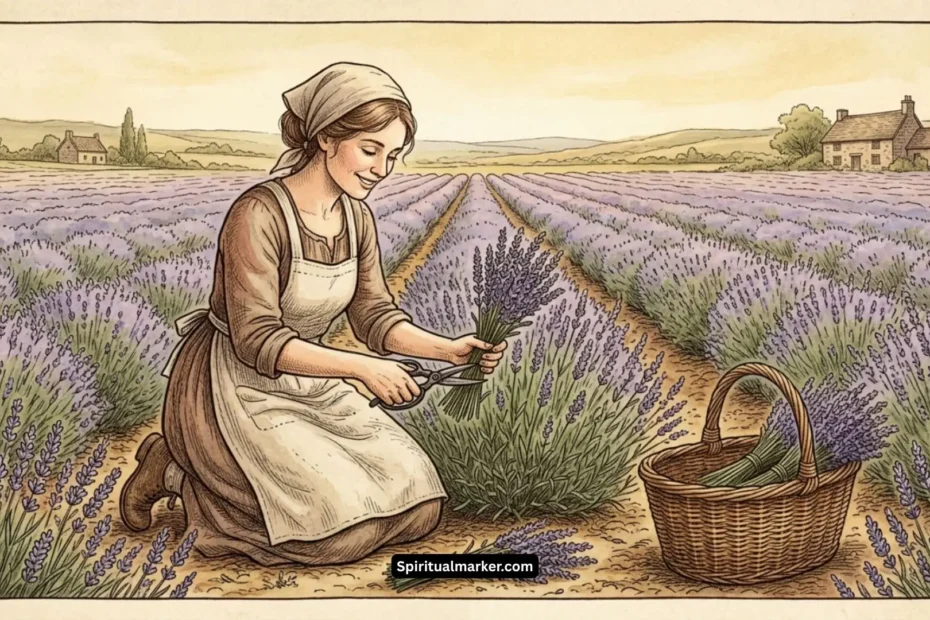
You have probably smelled lavender and felt something shift inside you. Maybe your shoulders dropped. Maybe your breathing slowed. That is not a coincidence, and it is not just chemistry at work.
Lavender has been one of the most spiritually significant plants in human history. Ancient Egyptians used it in mummification rituals. Romans bathed in lavender-scented water before prayer. Early Christians associated it with purity and divine protection. This small, purple-flowering herb has carried an enormous spiritual weight across thousands of years and dozens of cultures.
Today, lavender shows up in aromatherapy, meditation practices, altar arrangements, and healing rituals. People burn it, wear it, dream about it, and plant it near their homes intentionally. And yet, most people never pause to ask: what does lavender actually mean on a spiritual level?
This post answers that question fully. You will learn the spiritual meanings and symbolism of lavender, how different cultures and religions have interpreted it, what it means in dreams, and what genuine spiritual benefits it can bring to your life. Whether you are new to herbalism or deeply immersed in spiritual practice, lavender has something to offer you.
Key Takeaways
- Lavender spiritually represents purity, calm, and divine protection, and has been used in sacred rituals across Egypt, Rome, Greece, and the Christian tradition for thousands of years.
- The color and scent of lavender both carry distinct symbolic meanings, with purple linked to spiritual awareness and the scent associated with peace, healing, and psychic clarity.
- Lavender holds a prominent place in dream symbolism, often signaling emotional healing, romantic connection, or incoming messages from the spiritual realm.
- Across multiple world religions including Christianity, Islam, and various pagan traditions, lavender is seen as a plant of spiritual purification and sacred energy.
- The spiritual benefits of lavender extend beyond relaxation and include enhancing intuition, clearing negative energy, supporting grief, and deepening meditation practice.
What Is Lavender and Why Does It Hold Spiritual Significance?
Lavender (Lavandula angustifolia) is a flowering plant native to the Mediterranean region. It belongs to the mint family and produces the distinctively fragrant purple flowers recognized worldwide. But lavender is far more than a garden ornament or a popular candle scent.
The plant’s spiritual significance is rooted in a powerful combination: its distinctive purple color, its uniquely calming fragrance, and its long history of use in sacred spaces. Purple, across most spiritual traditions, is the color of higher consciousness, royalty, and divine connection. The scent of lavender has been shown in research to reduce anxiety and lower heart rate, physiologically preparing the body for states of prayer, meditation, and deep reflection.
Ancient peoples did not understand neuroscience, but they understood the effect. They noticed that lavender made sacred spaces feel sacred. It made the mind quiet and the spirit receptive. So they wove it into their rituals, their offerings, and their prayers. That instinct was not superstition. It was spiritual attunement at its most practical.
The name “lavender” itself derives from the Latin lavare, meaning “to wash.” This etymology is spiritually loaded. Lavender was not just used for physical cleanliness. It was used for ritual and spiritual purification, the washing away of negative energy, sin, grief, and spiritual impurity. That cleansing function remains central to lavender’s spiritual identity today.
What Does Lavender Symbolize and Represent Spiritually?
At its core, lavender symbolizes spiritual purity, tranquility, and healing. These three themes run through nearly every cultural and religious interpretation of the plant. But lavender’s symbolism is layered, and different traditions have added their own nuances to its meaning.
Lavender represents devotion and love, particularly the quiet, faithful kind. It has been associated with romantic loyalty and long-lasting affection throughout European folklore. In the Victorian language of flowers, known as floriography, lavender was used to communicate devotion and mistrust simultaneously. Giving someone lavender carried a message: “I am devoted to you, but I watch carefully.” This duality makes lavender one of the more psychologically complex plants in symbolic tradition.
The plant also represents spiritual vision and psychic awareness. Its purple hue connects it to the third eye chakra, the energy center associated with intuition, foresight, and inner knowing. Many energy healers and crystal practitioners pair lavender with amethyst specifically because both share this connection to heightened perception and spiritual clarity.
Lavender further symbolizes grief, remembrance, and the passage of the soul. In many cultures, it was placed near the dead or used in mourning rituals to ease the grief of the living and comfort the spirit of the departed. This makes lavender a plant that bridges two worlds, the living and the dead, the earthly and the divine.
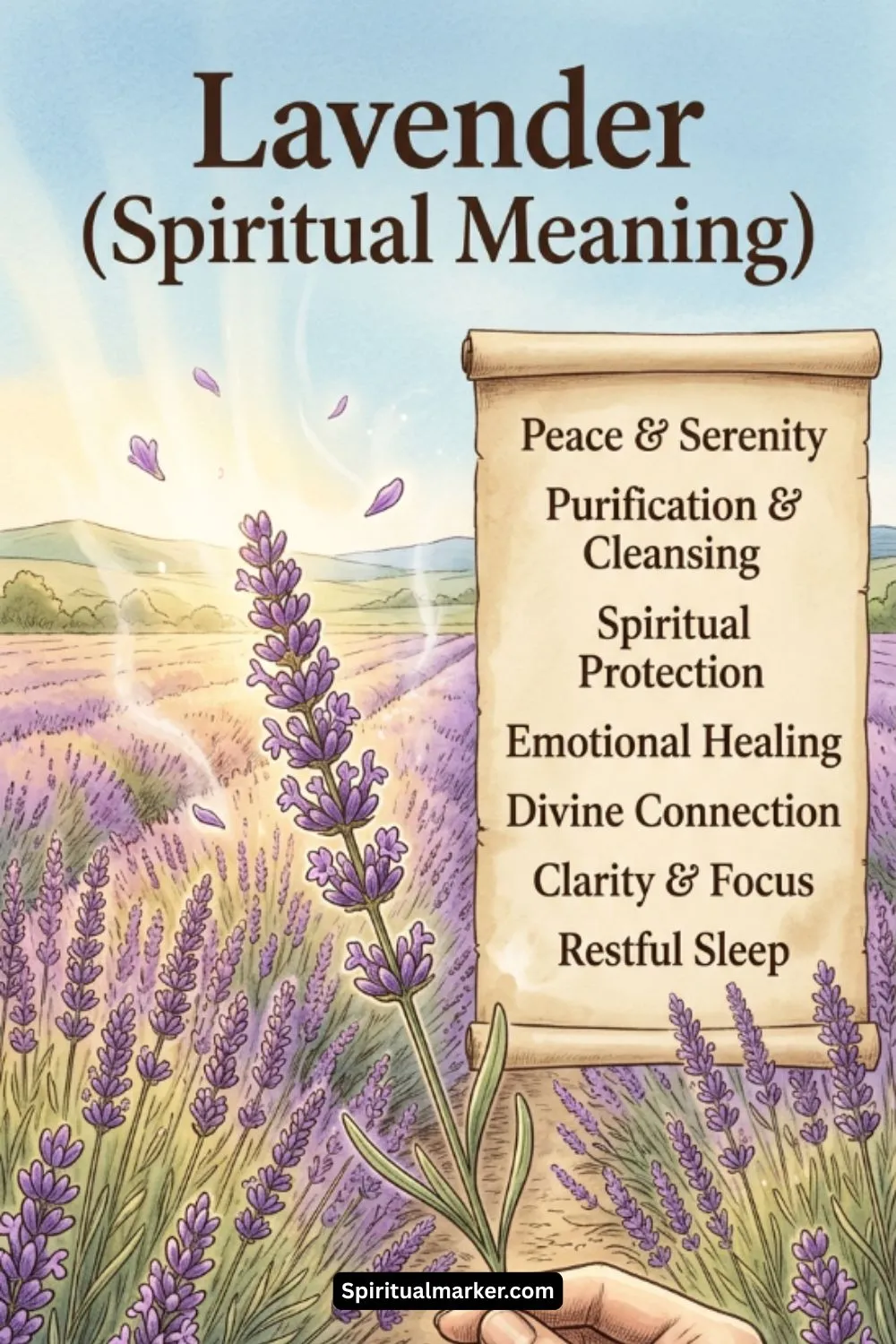
7 Spiritual Meanings of Lavender
1. Purification and Cleansing of the Spirit
The most ancient and consistent spiritual meaning of lavender is purification. From Egyptian embalming rituals to Roman bathing customs to medieval Christian ceremonies, lavender was used to cleanse both physical and spiritual impurity. When you burn dried lavender or diffuse its essential oil before prayer or meditation, you are participating in a practice that stretches back millennia.
Spiritually, purification is not just about removing dirt. It is about clearing the energetic field of residue: fear, grief, resentment, and spiritual stagnation. Lavender accomplishes this with remarkable gentleness. Unlike some purifying herbs that feel intense or abrasive in their energy, lavender cleanses softly. It does not strip the spirit bare. It washes it clean while leaving warmth behind.
Many energy practitioners use lavender in space clearing rituals, burning it like sage to move stagnant energy out of a room or home. The Romans added lavender to their baths before entering temples, believing it prepared the body and spirit to receive divine presence. That practice speaks to something real. Purification is about becoming a clearer vessel for the sacred.
You can bring this meaning into your own practice by burning lavender before important spiritual work, using lavender water to cleanse your altar space, or simply inhaling the scent deeply and setting an intention to release what no longer serves you.
2. Peace and Emotional Healing
Lavender is perhaps the most universally recognized symbol of peace in the plant kingdom. This is not simply because its scent is calming, though it is. It is because lavender has held the energetic frequency of peace for so long, in so many cultures, that the symbolism has become almost archaic and innate.
Spiritually, peace is not the absence of conflict. It is the presence of inner stillness despite outer turbulence. Lavender supports exactly this state. It helps the nervous system release the grip of anxiety while keeping the mind alert and present. This balance is precisely what deep spiritual practice requires.
Lavender’s role in emotional healing is particularly significant. Grief, heartbreak, and trauma create spiritual wounds that the body carries long after the mind tries to move on. Research published in the Journal of Alternative and Complementary Medicine has shown that lavender aromatherapy significantly reduces anxiety and emotional distress. Spiritually, this confirms what healers have known intuitively: lavender reaches the wounded places that words and reasoning cannot access.
In healing ceremonies and grief rituals across multiple traditions, lavender appears as a plant that softens the sharpest edges of sorrow. It does not erase grief. It creates a container within which grief can be felt fully without becoming overwhelming.
3. Divine Protection
Lavender has long been considered a plant of spiritual protection. In medieval Europe, people tucked lavender into doorways and windows to ward off evil spirits and negative influences. Mothers placed it near sleeping infants. Travelers carried it as a protective talisman on long journeys.
This protective quality is tied to lavender’s purity symbolism. Spiritually, what is pure repels what is corrupt. Lavender’s clean, high-vibration energy creates an environment where lower, heavier energies struggle to take root. Many spiritual practitioners today use lavender in protective rituals, placing it at the threshold of their homes, carrying dried bundles, or anointing doorways with lavender essential oil.
In some folk magic traditions, lavender is considered particularly protective for women and children, who were historically seen as more spiritually vulnerable. This is not because lavender is exclusive to them, but because the plant’s gentle, nurturing energy was understood to resonate strongly with those who needed protection without aggression.
The protective symbolism of lavender also extends to the emotional and psychological realm. Carrying lavender or keeping it in your space can shield you from emotional manipulation, psychic drain, and the heavy energy of other people’s fear and anger. It acts as a gentle but effective spiritual boundary.
4. Devotion and Spiritual Love
In the language of flowers, lavender speaks of devotion, and this meaning reaches beyond romantic love into the spiritual realm. Lavender represents the kind of love that is patient, consistent, and enduring. It is the love of a committed spiritual practice, of a faithful relationship with the divine, of showing up even when faith feels distant.
Many monastic traditions in Europe cultivated lavender in their gardens precisely because of this association. Monks and nuns used lavender in prayers and offerings as a symbol of their devotion to God. The plant’s long growing season and tendency to return year after year without much intervention made it a living metaphor for faithful, steadfast love.
Spiritually, lavender invites you to examine the quality of your own devotion. Not just to people you love, but to your spiritual path, your values, and your relationship with the sacred. It asks whether you are showing up with consistency and tenderness, or only when conditions feel favorable. The quiet, persistent flowering of the lavender plant carries a teaching in itself.
This meaning also makes lavender a powerful plant to use in prayer and intention-setting rituals centered on love. Whether you are seeking to cultivate self-love, deepen a romantic partnership, or reconnect with a sense of divine love in your life, lavender holds the right energetic frequency for that work.
5. Intuition and Psychic Awareness
Lavender is one of the most recognized plants for enhancing spiritual perception. Its connection to the third eye chakra and the crown chakra makes it a natural ally for anyone seeking to deepen their intuitive gifts, expand psychic awareness, or access higher states of consciousness.
The third eye chakra, located between the eyebrows, governs inner vision, foresight, and the ability to perceive beyond the physical senses. When this chakra is blocked, people often feel spiritually disconnected, unable to trust their instincts, or cut off from meaningful inner guidance. Lavender, with its purple vibration, is believed to gently activate and balance this energy center.
Many spiritual practitioners burn lavender incense or apply diluted lavender oil to the forehead before divination work, meditation, or dream journaling. The scent is thought to thin the veil between conscious and subconscious awareness, making it easier to receive impressions, images, and guidance that the rational mind often filters out.
This intuition-enhancing quality also makes lavender useful for anyone navigating a significant life decision. When your analytical mind is overloaded and clarity feels unreachable, lavender can create the stillness needed for inner knowing to surface. It quiets the noise so you can hear what you already know at a deeper level.
6. Remembrance and Honoring the Dead
Lavender has appeared in death rituals and mourning practices across cultures for centuries. The ancient Egyptians used lavender in the mummification process, believing it would ease the soul’s transition to the afterlife. Romans placed lavender on funeral pyres and grave sites. In Victorian England, lavender was a standard inclusion in mourning bouquets and memorial wreaths.
This association with death is not morbid. It reflects a deep spiritual understanding: lavender sits at the threshold between worlds. Its cleansing and calming energy makes it an ideal companion for souls in transition and for the living who are processing loss.
Spiritually, using lavender to honor the dead is an act of love and respect. Placing lavender on a grave, burning it during a memorial, or keeping dried lavender near a photograph of a deceased loved one creates a sacred connection across the boundary of death. It says: I remember you. Your spirit is still present in my life.
Many who work with ancestral healing use lavender as a primary offering on their ancestor altars. The plant’s ability to both purify and comfort makes it ideal for creating a clean, loving space where ancestral spirits are welcomed and honored. Lavender does not just mark the end of life. It honors the fullness of it.
7. Transformation and Spiritual Growth
The final and perhaps deepest spiritual meaning of lavender is transformation. Lavender does not rush. It grows steadily, year after year, deepening its roots and expanding its reach. It blooms fully in summer, releasing its most potent fragrance, and then retreats in winter without disappearing. This cycle is a powerful metaphor for the rhythm of spiritual growth itself.
Transformation in the spiritual sense is rarely dramatic or sudden. It happens in the quiet, consistent work of showing up for your practice, releasing old patterns, and allowing yourself to change slowly over time. Lavender supports exactly this kind of growth. Its gentle but persistent energy encourages you to trust the process of becoming, even when the results are not yet visible.
The plant’s transformation from a small silver-green seedling into a sprawling, fragrant shrub mirrors the soul’s journey from confusion and disconnection toward clarity and wholeness. Many spiritual traditions use lavender in initiation rituals and rites of passage, marking the crossing of thresholds in a person’s spiritual development.
Using lavender during periods of personal transition, whether you are leaving a relationship, beginning a new spiritual path, or recovering from a significant loss, can provide both comfort and courage. It reminds you that growth and change are natural, that beauty emerges from patient, rooted effort, and that your transformation is already unfolding.
Lavender Meaning and Symbolism Across Cultures and Religions
Ancient Egypt
The Egyptians held lavender in exceptionally high regard. They used it in the mummification process, packing it with the body to preserve and purify. This was not merely practical. It reflected the belief that lavender could protect the soul during its journey through the afterlife and present it to the gods in a state of cleanliness. Lavender was also used in perfumes and offerings at temple altars, where its fragrance was considered pleasing to the gods.
Ancient Greece and Rome
The Greeks and Romans used lavender extensively in bathing, healing, and religious practice. The name’s Latin root, lavare, reflects how central the act of washing was to Roman spiritual culture. Romans purified their temples with lavender smoke and added it to the water used for ritual bathing before prayer. Greek healers used it to treat nervous ailments and anxiety, recognizing its calming spiritual as well as physical properties.
Medieval Europe and Christianity
In medieval Christian Europe, lavender became associated with the Virgin Mary and spiritual purity. According to tradition, Mary laid the baby Jesus’s garments on a lavender bush to dry, and the plant absorbed his divine fragrance. From that point, lavender was considered a holy and protective plant in Christian households. Monks cultivated it in monastery gardens both for medicinal use and as a symbol of virtue and devotion.
Islamic Tradition
In Islamic tradition, cleanliness is foundational to spiritual life, and lavender has been used historically in Arab perfumery and healing as a purifying agent. The great medieval physician Ibn Sina (Avicenna) documented lavender’s medicinal and purifying properties in his canon of medicine. While lavender is not explicitly mentioned in the Quran, its use in cleansing rituals aligns with Islamic principles of tahara, or ritual purity.
Victorian England
The Victorians developed an elaborate symbolic language of flowers called floriography, and lavender held a nuanced position within it. Lavender communicated devotion, love, and also caution. Giving someone lavender could signal deep affection paired with a watchful awareness. The Victorians also used lavender extensively in mourning practices, tucking it into funeral wreaths and memorial sachets as a symbol of lasting remembrance.
Lavender Symbolism in World Mythologies
Mythology offers some of the richest portrayals of lavender’s symbolic power. In Greek mythology, lavender was associated with Hecate, the goddess of magic, crossroads, and the underworld. Hecate’s sacred herbs included those that straddled the boundary between life and death, and lavender’s dual association with purity and mourning made it fitting. Offerings to Hecate sometimes included lavender as part of protection and psychic work rituals.
In Roman mythology, lavender was linked to Venus, goddess of love, beauty, and desire. This connection reinforced lavender’s role as a symbol of romantic devotion and spiritual love. Roman women reportedly used lavender in love spells and in baths meant to attract or deepen romantic connections.
Celtic traditions recognized lavender as a plant of magical boundaries. The Celts believed that certain plants held power at the threshold between the natural and supernatural worlds. Lavender, with its ability to both protect and open perception, was seen as a guardian plant that could keep malevolent spirits at bay while allowing benevolent ones to pass.
In Norse folk tradition, lavender was used to ensure peace within the home and to protect family members during sleep. It was placed beneath pillows and near hearths to create an atmosphere of spiritual safety and rest, a practice that reflects the deep human instinct to use this plant as a spiritual shield.
Lavender’s Connection to Chakras and Energy Healing
In modern spiritual practice, lavender’s connection to the chakra system is one of its most widely recognized qualities. The chakra system, rooted in Hindu and yogic traditions, identifies seven main energy centers in the body. Lavender resonates most powerfully with two of these centers.
The third eye chakra (Ajna) sits at the center of the forehead and governs intuition, inner vision, and spiritual perception. Lavender’s purple color and its reputation for enhancing psychic awareness align directly with this chakra. Practitioners use lavender oil, incense, and dried flowers to stimulate and balance the third eye during meditation, yoga, and energy healing sessions.
The crown chakra (Sahasrara) sits at the top of the head and represents the point of connection between individual consciousness and universal divine energy. Purple and violet are the primary colors associated with this chakra. Lavender, sitting at this color frequency, supports spiritual connection, cosmic awareness, and the dissolution of the ego during deep meditative states.
Working with lavender during chakra meditation can help you access deeper states of spiritual awareness more readily. Many practitioners report that adding lavender to their practice creates a noticeable shift in the quality of their inner experience, a quieting of mental chatter and a deepening of presence.
Lavender in Biblical Meaning and Significance
The Bible does not mention lavender by name, but spikenard, which some biblical scholars and botanists believe may have been a lavender-related plant, appears in several significant passages. In the Gospel of John, Mary of Bethany anointed Jesus’s feet with spikenard oil, an act of profound devotion and spiritual significance (John 12:3). The fragrance filled the entire room, a detail the text emphasizes to convey the sacred quality of the act.
The Song of Solomon references fragrant herbs and flowers as symbols of divine love and spiritual beauty. Whether or not these references include what we today call lavender, the plant’s place in the broader biblical symbolic landscape of purification, devotion, and divine encounter is well established through its historical use in Christian practice.
Medieval Christian texts frequently referenced lavender’s ability to ward off evil and consecrate sacred space. The plant was burned in churches, used to scent holy water, and woven into devotional garlands. Early Christians wore lavender to ward off the plague, believing that spiritual protection and physical healing were inseparable gifts from the divine.
The biblical virtue of peace (shalom in Hebrew) is one of the most recurring spiritual concepts in both the Old and New Testaments. Lavender’s identity as a peace plant gives it an implicit biblical resonance, even when not named directly. The kind of deep, rooted peace that lavender symbolizes is precisely what the biblical tradition promises as a gift of spiritual alignment.
Dreaming About Lavender: Spiritual and Psychological Meanings
Dreams are one of the primary ways the subconscious and spiritual realms communicate with waking consciousness. When lavender appears in a dream, the message is almost always tied to healing, peace, or spiritual guidance.
Dreaming of a field of lavender in full bloom is widely interpreted as a sign of incoming peace and emotional resolution. If you have been carrying heavy feelings or navigating a difficult season, this dream often signals that a period of healing and relief is approaching. The vastness of a lavender field amplifies the message: this peace is not minor or temporary.
Smelling lavender in a dream, even without seeing the plant, carries significant meaning. Scent in dreams is considered one of the most spiritually potent experiences because the sense of smell bypasses the rational mind more directly than sight or sound. Smelling lavender in a dream may signal that a spirit guide, ancestor, or divine presence is nearby, offering comfort or confirmation.
Dreaming of giving lavender to someone often reflects deep love, care, and a desire to bring healing to that person. It may also indicate that you are processing your relationship with them at a spiritual level, particularly if the relationship has been strained. Receiving lavender in a dream suggests that someone, whether in the physical world or the spiritual realm, is sending you love and healing energy.
If you dream of dying or wilting lavender, the message is worth paying attention to. This type of dream can signal spiritual neglect, a sense that you have drifted from your practice, your purpose, or an important relationship. It is an invitation to reconnect before the disconnection deepens. It is not a warning of doom but a gentle nudge toward renewal.
From a psychological perspective, lavender in dreams often surfaces during periods of significant transition or emotional processing. Dream researchers note that the brain frequently uses symbolic imagery drawn from the dreamer’s cultural and personal associations. For most people, lavender is deeply associated with calm, care, and healing. Its appearance in a dream reflects the psyche’s own movement toward those states.
Spiritual Benefits of Lavender
Deepening Meditation and Prayer
Lavender is one of the most effective natural aids for deepening spiritual practice. Its calming effect on the nervous system creates the physiological conditions necessary for sustained meditation and prayer: slow breathing, reduced mental chatter, and a relaxed but alert body. Diffusing lavender oil during meditation or holding a sprig of dried lavender during prayer can measurably shift the quality of your inner experience.
Many experienced meditators report that lavender helps them reach deeper states more quickly. This is likely a combination of lavender’s neurological effects and its powerful conditioned association with peace and sacredness. Over time, the scent itself becomes a trigger for a meditative state, making it easier to drop into depth with less effort.
Clearing Negative Energy
Lavender is a powerful tool for energetic cleansing. Burning dried lavender as a smudge herb, similar to white sage, clears stagnant and negative energy from a space. Unlike sage, which has a strong, often polarizing scent, lavender’s fragrance is gentle and universally pleasant. This makes it an excellent choice for regular space clearing without overwhelming sensitivity.
You can also use lavender water, made by steeping dried lavender in spring water, to cleanse your hands before spiritual work, to spray around a room, or to wipe down surfaces on your altar. This practice carries both the purification symbolism of lavender’s ancient use and a practical energetic function.
Supporting Grief and Loss
Few plants are as spiritually suited to grief work as lavender. Its combination of purification, remembrance, and peace symbolism makes it a natural companion for anyone navigating loss. Placing lavender on a grief altar, burning it during a memorial, or simply keeping it near while you cry creates a sacred container for sorrow.
Spiritually, grief is not just an emotional experience. It is a passage through which the soul must travel. Lavender does not short-circuit that passage. It illuminates the path through it, offering comfort without numbness, peace without bypassing. Many grief counselors and spiritual directors recommend lavender aromatherapy as part of an integrated healing approach.
Enhancing Intuition and Spiritual Clarity
Regular use of lavender in spiritual practice gradually strengthens intuitive awareness. By consistently working with a plant associated with the third eye and spiritual perception, you signal to your deeper self that you are cultivating this capacity. Over time, many practitioners report increased dream vividness, stronger gut feelings, and clearer inner guidance.
Lavender can be used before any practice that calls for inner listening: journaling, tarot reading, prayer, channeling, or simply sitting in nature and paying attention. Its role is to quiet the noise of the rational mind so that subtler forms of knowing can be heard.
Promoting Spiritual Protection
Using lavender for protection is one of its most ancient spiritual applications. Hanging dried lavender bundles at doorways, placing sachets under pillows, or anointing the body with lavender oil creates a field of protective energy around a person or space. This protection is not aggressive. It works by raising the vibration of the space so that lower energies simply do not find purchase.
This benefit is particularly relevant for empaths and highly sensitive people who frequently absorb the emotional and energetic residue of their environments. Lavender provides a gentle but effective boundary, a spiritual skin that filters out what does not belong without shutting out genuine connection.
How to Use Lavender in Your Spiritual Practice
Smudging and Space Clearing
Burn dried lavender bundles to clear your home, meditation space, or altar area. Move slowly through the space, allowing the smoke to reach corners and thresholds. Set a clear intention as you go, naming what you are releasing and what you are inviting in. You can combine lavender with rosemary for stronger purification or with rose petals for a heart-centered cleansing.
Anointing and Ritual Bathing
Add lavender essential oil to a carrier oil and anoint your forehead, throat, and heart before spiritual work. Alternatively, add ten to fifteen drops of lavender oil to a warm bath along with sea salt for a full spiritual cleansing ritual. Soak for at least twenty minutes, visualizing any heaviness or negativity dissolving into the water.
Altar Work and Offerings
Dried lavender is one of the most versatile altar offerings available. Place it in a small dish near candles or sacred objects. Offer it to ancestors, spirit guides, or deities you work with. Lavender is particularly appropriate for altars dedicated to peace, healing, love, and spiritual vision. Refresh the dried lavender regularly, composting the old and bringing in the new as a symbol of renewal.
Sleep and Dream Work
Place a lavender sachet under your pillow to support restful sleep and vivid, spiritually meaningful dreams. Before sleep, take three slow breaths over dried lavender, set an intention for what guidance you seek, and release the expectation of how that guidance will arrive. Keep a dream journal nearby to capture what comes.
Meditation with Lavender
Hold a sprig of fresh or dried lavender during seated meditation, or diffuse lavender essential oil in your meditation space. Use the scent as an anchor for your attention, similar to how breath is used in mindfulness meditation. When the mind wanders, gently return your focus to the fragrance. Over time, this creates a deep sensory-spiritual association that makes entering meditation increasingly effortless.
Lavender and the Art of Spiritual Self-Care
Spiritual self-care is the practice of intentionally tending to your inner life, your energy, your connection to the sacred, and your emotional health. Lavender is one of the most accessible tools for this work. It does not require special training or expensive equipment. A small bunch of dried lavender from a local market or a quality essential oil is enough to begin.
The key is intentionality. Lavender is not magic in the passive sense. Its spiritual benefits deepen when you engage with it consciously, when you smell it with awareness rather than habit, burn it with prayer rather than routine, and place it on your altar with reverence rather than decoration. The plant meets you at the level of your attention.
Building lavender into your daily or weekly spiritual rhythm creates a ritual anchor, a reliable point of reconnection to your spiritual life even when everything else feels chaotic. Lighting a lavender candle each morning during prayer, keeping a sachet in your car for stressful commutes, or ending each week with a lavender bath are all simple ways to let this plant support your inner life consistently.
A Final Note
Lavender is a plant that has earned its sacred status through millennia of faithful service to human spiritual life. From Egyptian burial chambers to medieval monastery gardens to the modern meditation room, lavender has consistently offered the same gifts: purification, peace, protection, love, intuition, remembrance, and transformation.
You do not need to be an expert in herbalism or a seasoned spiritual practitioner to benefit from lavender’s symbolic and energetic gifts. You simply need to show up with awareness and intention. Hold a sprig of lavender and breathe slowly. Burn a bundle and set an intention to release what weighs you down. Place it on your altar as an act of devotion. Let its fragrance carry you inward.
If you are drawn to lavender, trust that instinct. Spiritual attunement often begins with attraction, with the inexplicable pull toward a color, a scent, a plant, or a symbol. Lavender has been calling people toward peace, healing, and divine connection for thousands of years. It is calling you now for a reason.
For further reading, you might explore the broader history of herbalism and spiritual plants, the tradition of plant spirit medicine, or the science of aromatherapy and the brain. Each of these threads will deepen your relationship with lavender and with the wider world of plant wisdom that has supported human spiritual life from the very beginning.
Lavender does not demand anything dramatic from you. It asks only that you slow down, breathe, and pay attention. In that simplicity, it holds everything.