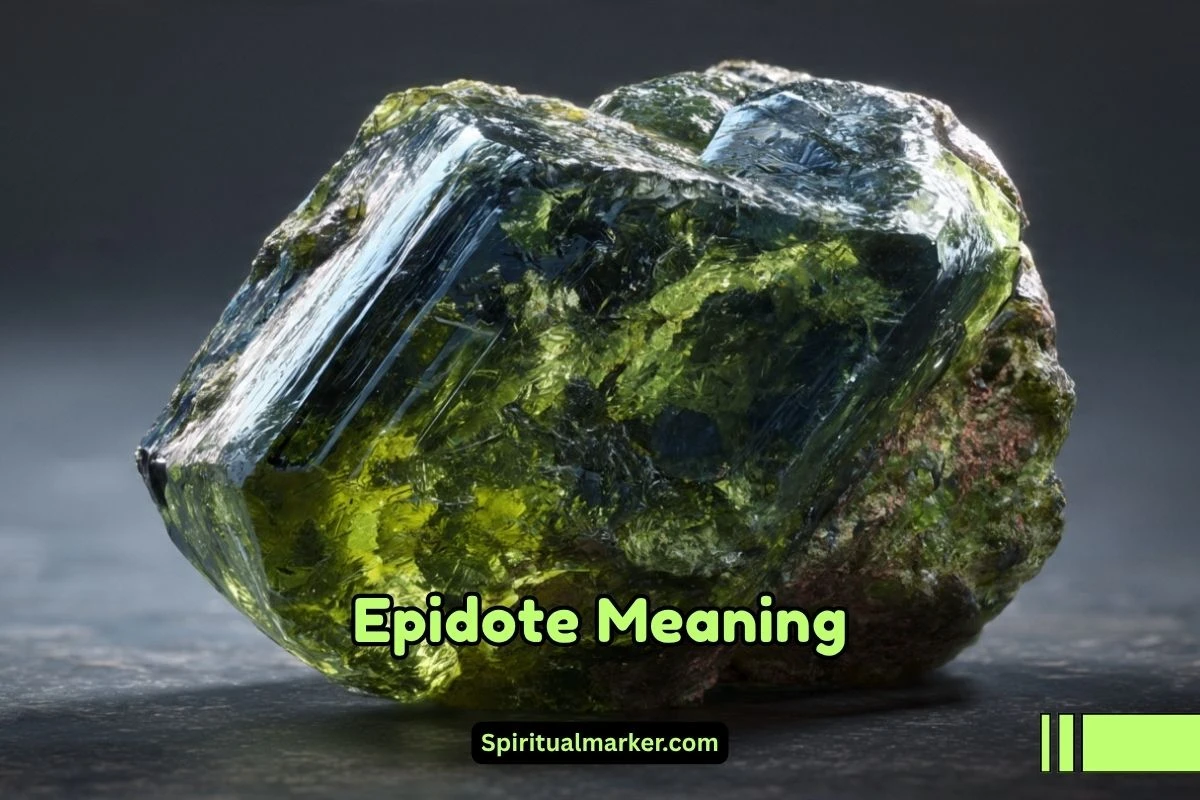
Some stones command attention the moment you see them. Epidote is one of them. Its rich, pistachio-green color carries a raw, earthy intensity that feels both ancient and alive. Many people feel an immediate pull toward this stone, even without knowing its name or history. That instinctive attraction is not coincidental.
For centuries, epidote has been associated with growth, abundance, transformation, and personal power. It holds a reputation in crystal traditions for amplifying energy, both the positive and the unresolved. This makes it a deeply honest stone. Epidote does not simply soothe. It reflects. It reveals. It accelerates whatever energy you carry, which is why working with it intentionally matters.
Spiritual practitioners across different traditions have connected epidote with themes of emotional release, manifestation, and expanded awareness. Some describe it as a stone of personal truth, one that pushes people toward growth even when growth feels uncomfortable. Its energy is not aggressive. But it is direct. Epidote spiritually represents the kind of growth that happens when you stop avoiding what needs to change.
This article covers the full meaning of epidote, its spiritual symbolism, healing properties, historical roots, and practical ways to use it for personal and spiritual development. You will also find guidance on wearing epidote jewelry and maintaining its beauty over time.
5 Key Takeaways
- Epidote symbolizes growth, amplification, abundance, and personal transformation.
- Many spiritual traditions connect epidote with the heart chakra and the root chakra, supporting both emotional and physical grounding.
- Epidote amplifies existing energy, making intentional use especially important.
- The stone has a hardness of approximately 6 to 7 on the Mohs scale, making it moderately durable.
- Wearing or carrying epidote may support manifestation, emotional clarity, and spiritual awareness during periods of change.
What Is Epidote?
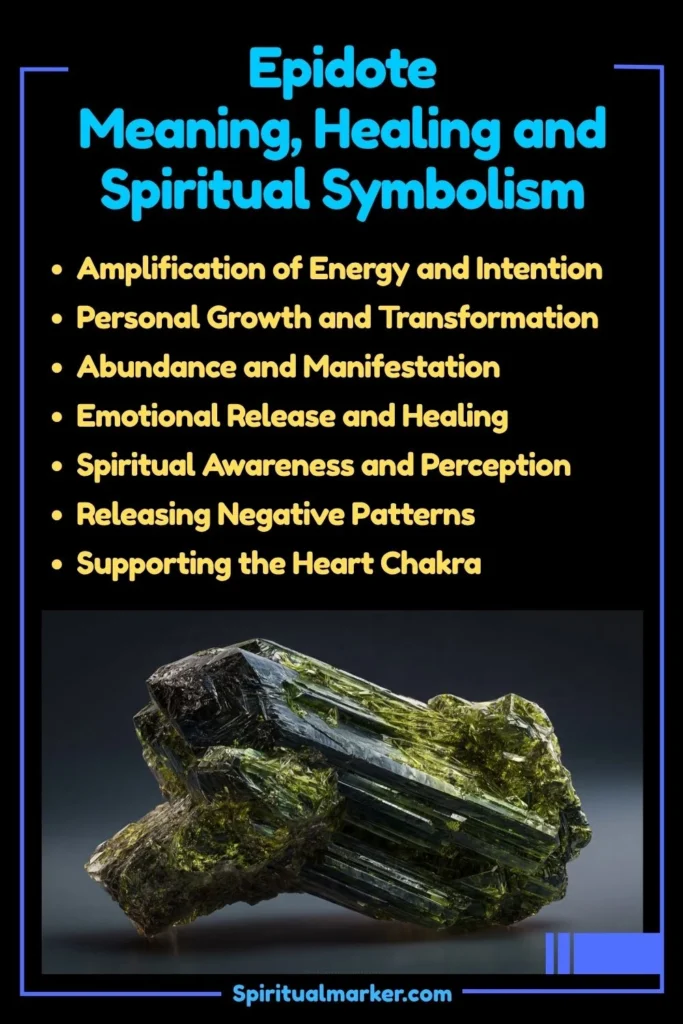
Epidote is a calcium aluminum iron silicate mineral that forms in metamorphic and igneous rock environments. Its name comes from the Greek word epidosis, meaning “addition” or “increase.” Early mineralogists chose this name because of the stone’s unique crystal structure, where one side of its base is longer than the other. That structural characteristic of increase quietly mirrors the stone’s spiritual reputation for amplification and growth.
Visually, epidote is striking. Its color ranges from yellowish-green to deep pistachio green, sometimes appearing almost black in darker specimens. Crystals often form in elongated, striated columns that catch light at interesting angles. The stone can appear translucent or opaque depending on its iron content, and its natural luster gives it a distinctly raw, mineral presence.
Many people confuse epidote with other green minerals like tourmaline, zoisite, or chlorite. However, epidote carries a more complex internal structure and a slightly resinous to vitreous luster that sets it apart on close inspection. Spiritually, epidote also carries a more intense and amplifying reputation compared to the softer emotional energy of stones like green aventurine or green opal.
Origins and Formation of Epidote
Epidote forms primarily in metamorphic rocks subjected to low to medium-grade heat and pressure. It also appears in contact zones where hot igneous intrusions meet surrounding rock. This formation process takes place deep within the earth over long geological timescales, which adds to the stone’s symbolic association with deep personal transformation and endurance.
Major deposits of epidote exist across multiple continents. Pakistan, Austria, Norway, Russia, Brazil, Mexico, and the United States all produce notable specimens. Pakistan and Austria are particularly well known for producing high-quality, well-formed epidote crystals prized by both collectors and spiritual practitioners.
The stone frequently forms alongside minerals like quartz, calcite, feldspar, and garnet. This natural association with other powerful minerals has contributed to its spiritual reputation as a stone that works synergistically with surrounding energies. In crystal healing traditions, epidote is sometimes used in combination with other stones precisely because of this amplifying quality.
Because epidote forms under intense geological pressure, it spiritually carries the symbolism of strength born through challenge. Its formation is a physical reminder that growth often requires pressure, time, and deep internal process before it becomes visible.
Key Properties of Epidote
| Property | Details |
|---|---|
| Color | Pistachio green, yellowish-green, dark green, blackish-green |
| Composition | Calcium aluminum iron silicate |
| Hardness | 6 to 7 on the Mohs scale |
| Chakra Association | Heart chakra, root chakra |
| Symbolism | Growth, amplification, abundance, transformation |
| Common Sources | Pakistan, Austria, Norway, Brazil, Russia, Mexico, USA |
| Transparency | Translucent to opaque |
| Energy Style | Amplifying, grounding, transformational |
Historical Use of Epidote
Epidote does not carry the long decorative history of more commercially popular gemstones like amethyst or turquoise. However, its presence in historical mineral collections and metaphysical traditions dates back centuries. Early European mineralogists formally described and classified the stone in the late 18th century, though the mineral itself had been observed in natural rock formations long before formal scientific naming.
In older folk traditions, green stones were broadly associated with fertility, nature, prosperity, and life force. Epidote’s vivid green tones placed it within this symbolic category in regional folk practices across parts of Europe and Central Asia. People in these traditions often viewed green minerals as carrying the energy of growing things, fertile soil, and natural abundance.
In modern metaphysical and crystal healing traditions, epidote’s reputation shifted toward its amplifying properties. Practitioners began recognizing that the stone did not simply carry one fixed emotional energy. Instead, it intensified whatever energy surrounded it. This reputation made epidote both respected and approached with intention. Used thoughtfully, its amplifying quality became a tool for manifestation and personal growth. Used without awareness, it could equally amplify unresolved emotional patterns.
Contemporary crystal communities continue using epidote in manifestation rituals, energy work, meditation practices, and abundance ceremonies. Its raw, mineral appearance appeals to people who prefer working with less polished, more visually honest stones that feel connected to the earth.
5 Spiritual Meanings of Epidote
1. Amplification of Energy and Intention
The most widely recognized spiritual meaning of epidote centers on its ability to amplify. In crystal traditions, amplification refers to the stone’s reputation for intensifying whatever energy is already present. This characteristic sets epidote apart from many other healing stones. Most crystals carry a specific, directional energy, calm, protective, uplifting, or grounding. Epidote’s primary spiritual function is different. It takes what exists and makes it larger, louder, and more visible.
This quality carries profound implications for spiritual practice. When you bring clear intention, positive focus, or healing energy into your work with epidote, that energy expands. Practitioners who use it during manifestation rituals often describe a heightened sense of clarity and focus around their goals. The stone spiritually functions as a mirror that reflects intention back at amplified strength.
However, this same quality applies to unresolved emotional patterns. People who carry suppressed grief, lingering resentment, unprocessed fear, or emotional avoidance may find that epidote brings those feelings closer to the surface. Many crystal healers view this not as a negative effect but as part of the stone’s deeper spiritual function. Amplifying hidden emotional weight is one way epidote encourages healing. What cannot be seen cannot be addressed. What surfaces can be released.
This amplifying nature makes epidote a stone that rewards emotional honesty. People who approach it with awareness and willingness tend to experience its energy as clarifying and growth-oriented. Its spiritual symbolism aligns closely with the idea that genuine transformation begins when people stop suppressing what is real and start engaging with it directly.
2. Personal Growth and Transformation
Epidote holds strong spiritual symbolism related to personal growth. Its very name, rooted in the Greek concept of increase and addition, reflects this meaning at a foundational level. Spiritually, the stone represents the kind of growth that requires active participation. It does not symbolize passive comfort. It symbolizes the courage to move forward, even when staying still feels easier.
Many people are drawn to epidote during periods of significant life transition. Career changes, relationship shifts, geographic moves, spiritual awakenings, or periods of deep personal questioning often coincide with an attraction toward this stone. Crystal practitioners believe epidote supports these transitions by strengthening the energetic foundation beneath the change. Growth requires both rooting down and reaching upward simultaneously, and epidote spiritually reflects this dual process.
The stone’s connection to transformation also involves releasing outdated patterns. People frequently hold onto emotional habits, belief systems, relationship dynamics, or self-perceptions long after those patterns stop serving genuine growth. Epidote spiritually represents the process of identifying and releasing what no longer contributes to authentic development. This is rarely comfortable. But it is necessary for real personal evolution.
In many healing traditions, growth and discomfort are inseparable. Epidote reflects this understanding with honesty. Its energy does not cushion the process of change. Instead, it provides energetic support for moving through it with greater awareness, clarity, and personal strength. People who work with this stone during transformational periods often describe feeling more aligned with their deeper values and long-term direction.
3. Abundance and Manifestation
Epidote carries a longstanding spiritual reputation connected with abundance and manifestation. Within crystal healing traditions, abundance is not simply a financial concept. It refers to a broader state of energetic alignment where people attract what matches their inner focus and intention. Epidote spiritually supports this process through its amplifying properties, which strengthen the energetic signal behind conscious intention.
Many practitioners use epidote during manifestation work, vision board ceremonies, or focused meditation on goals and desires. The stone is believed to strengthen the energetic clarity behind what a person is working toward. When someone holds a specific and emotionally genuine intention, epidote’s amplifying energy may increase the momentum and focus behind that intention.
However, spiritual traditions that work with epidote also emphasize an important nuance. Abundance requires alignment. A person cannot effectively manifest from a place of emotional contradiction, where outward goals conflict with internal fears or unresolved emotional patterns. Epidote’s amplifying nature addresses this directly by surfacing misalignment rather than bypassing it. This makes it a stone that supports deep, authentic manifestation rather than surface-level wishful thinking.
The stone’s green color reinforces its abundance symbolism. Green is universally associated with fertile growth, natural abundance, and living vitality. Across multiple cultural and spiritual traditions, green minerals have long carried the symbolic weight of prosperity, harvest, and life force. Epidote carries this symbolism in its most raw, earthy, and honest form.
4. Emotional Release and Healing
While epidote is not typically described as a gentle emotional stone in the way that rose quartz or green opal often are, it carries deep significance in emotional healing practices. Its approach to healing is more honest than soft. Rather than soothing difficult emotions into the background, epidote spiritually brings them into sharper focus so they can be acknowledged, processed, and released.
Many people carry long-held emotional weight without fully realizing how much it affects their daily experience. Grief that was never properly processed. Anger that became resentment. Disappointment that quietly became a limiting belief. These emotional residues can sit below conscious awareness for years, shaping decisions, relationships, and self-perception without ever being directly addressed. Epidote’s amplifying quality spiritually brings these buried patterns to the surface.
This process can feel intense for some people, particularly those who have spent significant time avoiding difficult emotions. Crystal healers who work with epidote often recommend approaching it with patience, self-awareness, and emotional support. The discomfort of emotional surfacing is not the stone’s endpoint. Spiritual traditions view it as the necessary first stage of genuine emotional release and healing.
Once difficult emotions surface and receive honest attention, epidote’s energy spiritually supports the release and integration that follows. People frequently describe a sense of emotional lightness after working through what the stone reveals. This pattern of surfacing, acknowledgment, and release forms the core of epidote’s emotional healing symbolism. It is a stone for people ready to do the real emotional work rather than those seeking temporary relief.
5. Spiritual Awareness and Perception
Epidote holds spiritual meaning connected with heightened awareness and expanded perception. Many practitioners describe working with this stone as a process of seeing more clearly, both internally and in their broader circumstances. This quality of expanded clarity is closely tied to the stone’s amplifying energy. When awareness itself is amplified, people often begin noticing patterns, connections, and truths that previously remained invisible.
In spiritual terms, perception and reality are deeply linked. What people consistently focus on shapes what they experience, attract, and create in their lives. Epidote spiritually supports clearer, more conscious perception by intensifying awareness around existing thought patterns and belief systems. This can feel revelatory for individuals who have been operating unconsciously within limiting perceptions.
Some practitioners connect epidote with the concept of spiritual discernment, the ability to distinguish between what genuinely serves growth and what merely feels comfortable or familiar. Many people confuse familiarity with rightness. Long-held patterns feel natural simply because they have been present for a long time, not necessarily because they support authentic well-being. Epidote’s energy spiritually strengthens the capacity to see this distinction more clearly.
This heightened awareness also extends outward. Some crystal traditions associate epidote with greater sensitivity to environmental energy, interpersonal dynamics, and spiritual signals. People who feel called to develop their intuitive awareness or spiritual perception often find epidote particularly resonant. Its energy supports a more awake, engaged, and intentional relationship with the spiritual dimensions of daily experience.
6 Healing Properties of Epidote
1. Amplifying Positive Energy
One of the primary healing properties of epidote centers on its reputation for amplifying positive energy and intention. Within crystal healing traditions, working with epidote during periods of focused personal development is believed to strengthen the energetic momentum behind growth-oriented goals. People pursuing career transformation, relationship improvement, creative projects, or spiritual development often use epidote to intensify their energetic alignment with those intentions.
This amplifying quality also applies to the healing process itself. When a person has already begun emotional or spiritual healing work, epidote’s energy is believed to accelerate progress. It does not replace the foundational work of healing but may deepen and intensify its effects. Practitioners describe this as the stone turning up the volume on whatever internal healing is already in motion.
Keeping epidote in a meditation space, creative workspace, or personal growth environment is a common practice among those who work with it intentionally. The stone serves as an energetic reminder of focused intention while spiritually supporting the amplification of that focus throughout daily practice.
2. Releasing Negative Patterns
Epidote’s healing symbolism also includes a strong association with releasing negative energetic patterns. Because the stone amplifies what is present, it naturally brings unresolved or counterproductive patterns into sharper awareness. In healing traditions, this is viewed as the necessary first step toward releasing those patterns permanently.
Negative patterns in this context include habitual self-doubt, chronic emotional avoidance, fear-based decision-making, resentment cycles, and self-limiting belief systems. These patterns often develop as protective responses to past pain. Over time, however, they can become barriers to growth, connection, and well-being. Epidote’s energy spiritually confronts these patterns by making them more visible and difficult to ignore.
Crystal healers often describe this quality as energetically honest rather than comfortable. Epidote does not support spiritual bypassing, the practice of using spiritual concepts to avoid difficult emotional truths. It encourages genuine engagement with what needs to change. This directness is why some people find epidote challenging at first, and why others describe it as one of the most genuinely transformational stones they have worked with.
3. Supporting the Heart Chakra
Epidote is associated with the heart chakra in crystal healing traditions. The heart chakra governs love, compassion, emotional trust, forgiveness, empathy, and the capacity for meaningful connection. When this energy center feels blocked or imbalanced, people may experience emotional detachment, difficulty trusting others, chronic resentment, or an inability to give and receive love freely.
Epidote’s connection to heart chakra healing differs from softer heart stones like rose quartz. Rather than gently soothing emotional blockages, epidote is believed to amplify heart awareness, making emotional blockages more visible so they can be addressed directly. This approach suits people who are ready for deeper emotional work rather than surface-level emotional comfort.
The stone also carries root chakra associations in some traditions. The root chakra governs grounding, physical stability, and a sense of safety in the body and the world. Epidote’s earthy, mineral quality supports this grounding energy. The combination of heart and root chakra associations makes epidote particularly meaningful for people working on emotionally grounded healing, healing that is both deeply felt and physically anchored.
4. Strengthening Manifestation Practice
In spiritual healing traditions, epidote holds a specific reputation for strengthening manifestation practice. Manifestation refers to the process of bringing desired outcomes into reality through aligned thought, emotion, and action. Epidote’s amplifying energy is believed to intensify the clarity and emotional resonance behind a person’s intentions, which many practitioners consider essential to effective manifestation.
Effective manifestation is not simply about positive thinking. It requires deep emotional alignment between what a person consciously desires and their underlying beliefs. When those two elements conflict, manifestation efforts often stall. Epidote’s energy addresses this by amplifying both the conscious intention and the underlying emotional reality simultaneously, making misalignment impossible to overlook.
Many practitioners use epidote alongside practices like journaling, visualization, affirmation, and meditation specifically because its amplifying quality deepens the emotional authenticity of those practices. The stone does not create results independently. It strengthens the energetic quality of intentional practice already in motion.
5. Encouraging Courageous Action
Epidote is sometimes associated with the healing quality of courage and forward momentum. While the stone is not typically categorized as a courage stone the way carnelian or tiger’s eye might be, its amplifying energy supports bold action by strengthening clarity around personal values and direction. When you clearly understand what matters most, taking aligned action becomes easier.
Many people remain stuck not because they lack the desire for change but because fear and unclear vision create inertia. Epidote’s energy spiritually addresses this by amplifying clarity. When personal values, long-term goals, and emotional truths become more visible through the stone’s intensifying influence, the path forward tends to feel less ambiguous and more compelling.
This quality makes epidote meaningful for people in creative, professional, or personal transitions where courageous decision-making is necessary. The stone does not remove fear. But its spiritual energy may help people act from clarity despite the presence of fear, which is the practical definition of courage in most genuine human experience.
6. Grounding Spiritual Energy
Despite its amplifying reputation, epidote also carries grounding energy that connects people to the physical earth and present-moment reality. Its deep mineral origins, formed under geological pressure over immense timescales, give it an inherently earthy energetic quality. Many practitioners use epidote specifically because it amplifies without causing energetic overwhelm, provided it is approached with intention and awareness.
Grounding in spiritual practice refers to maintaining emotional balance and mental presence during deeper spiritual or energetic experiences. Without grounding, spiritual work can leave people feeling scattered, disconnected, or emotionally destabilized. Epidote’s earthy, root-oriented energy spiritually supports stability during these experiences.
Many crystal practitioners combine epidote with strongly grounding stones like black tourmaline, hematite, or smoky quartz when working with its amplifying energy intensively. This combination is believed to support both expanded awareness and physical stability simultaneously, creating a more balanced energetic foundation for deep healing and growth work.
How to Wear Epidote Jewelry for Spiritual Growth
Wearing epidote jewelry allows consistent physical contact with the stone throughout the day. Many practitioners favor this approach because sustained proximity is believed to deepen the stone’s energetic influence over time. The way you wear epidote can also align with specific spiritual intentions.
Because of its heart chakra connection, epidote pendants worn close to the chest carry strong symbolism. The stone sits near the emotional center of the body, reinforcing intentions related to emotional healing, compassion, and heart-centered growth. This placement also keeps the stone’s amplifying energy near the area most associated with feeling and relational awareness.
Epidote bracelets offer a different practical benefit. Worn on the wrist, the stone remains in constant contact with the skin while staying visible during daily activities. Many people find that visual reminders of intentional practice strengthen conscious engagement with their spiritual goals throughout the day. Rings set with epidote carry similar benefits, particularly for those who use their hands expressively in creative or healing work.
Some practitioners pair epidote with complementary stones for more targeted energetic support. Clear quartz may further amplify epidote’s already intensifying energy. Black tourmaline adds grounding stability. Rose quartz softens the emotional honesty of epidote with gentler heart energy. Citrine combines abundance symbolism with epidote’s manifestation-supporting qualities. The combination chosen depends entirely on individual intention and spiritual focus.
Caring for Epidote Jewelry
Epidote has a hardness of 6 to 7 on the Mohs scale, which places it in a moderately durable category. It can withstand regular wear but requires thoughtful care to prevent scratching, chipping, or long-term surface damage. Store epidote jewelry separately from harder gemstones like diamonds, sapphires, or topaz that could scratch its surface.
Clean epidote gently using lukewarm water, mild soap, and a soft cloth or brush. Avoid ultrasonic cleaners and steam cleaning machines, as these methods may cause damage to the stone’s internal structure or surface polish over time. Harsh chemical cleaners should also be avoided entirely.
Remove epidote jewelry before intense physical activity, swimming, or exposure to harsh household chemicals. While the stone is reasonably durable, repeated impact or chemical exposure can weaken its structural integrity gradually. Consistent gentle care extends the life and appearance of epidote pieces significantly.
Many people who use epidote spiritually also practice energetic cleansing to clear accumulated energy from the stone. Common methods include placing the stone in moonlight overnight, using sound cleansing with singing bowls or bells, burying it briefly in dry earth, or placing it near cleansing herbs like sage. Energetic cleansing practices vary widely based on personal belief systems and spiritual traditions.
Epidote Meaning at a Glance
| Aspect | Details |
|---|---|
| Primary Meaning | Amplification, growth, and transformation |
| Chakra Association | Heart chakra, root chakra |
| Main Spiritual Symbolism | Abundance, manifestation, emotional release, expanded awareness |
| Common Colors | Pistachio green, yellowish-green, dark green |
| Hardness | 6 to 7 Mohs |
| Main Sources | Pakistan, Austria, Norway, Brazil, Russia, Mexico, USA |
| Emotional Associations | Courage, clarity, emotional honesty, personal power |
| Popular Jewelry Types | Pendants, bracelets, rings |
| Spiritual Uses | Manifestation, energy work, emotional release, grounding |
| Care Needs | Gentle cleaning, separate storage, avoid impact |
A Final Note
Epidote stands apart because it does not promise easy comfort. It promises honest growth. Its spiritual meaning centers on amplification, transformation, abundance, and the kind of emotional healing that requires real engagement rather than avoidance. That directness is precisely what draws people to it during significant life transitions and periods of deep personal reckoning.
If you feel called to work with epidote, consider beginning with clear intention. Reflect on what you genuinely want to grow, release, or transform. The stone’s amplifying energy responds to the clarity you bring. Approaching it with honesty and awareness tends to yield the most meaningful results.
You might wear epidote as a daily reminder of your growth intentions. You might keep it in a meditation space where focused reflection happens regularly. Some people simply carry it as a touchstone during challenging transitions, returning to it physically whenever they need grounding and clarity in equal measure.
Whether you approach epidote through a metaphysical lens or appreciate it purely as a striking natural mineral, its symbolism of growth and honest transformation continues to resonate across different traditions and belief systems. Some stones soothe. Epidote strengthens. That distinction is worth paying attention to.