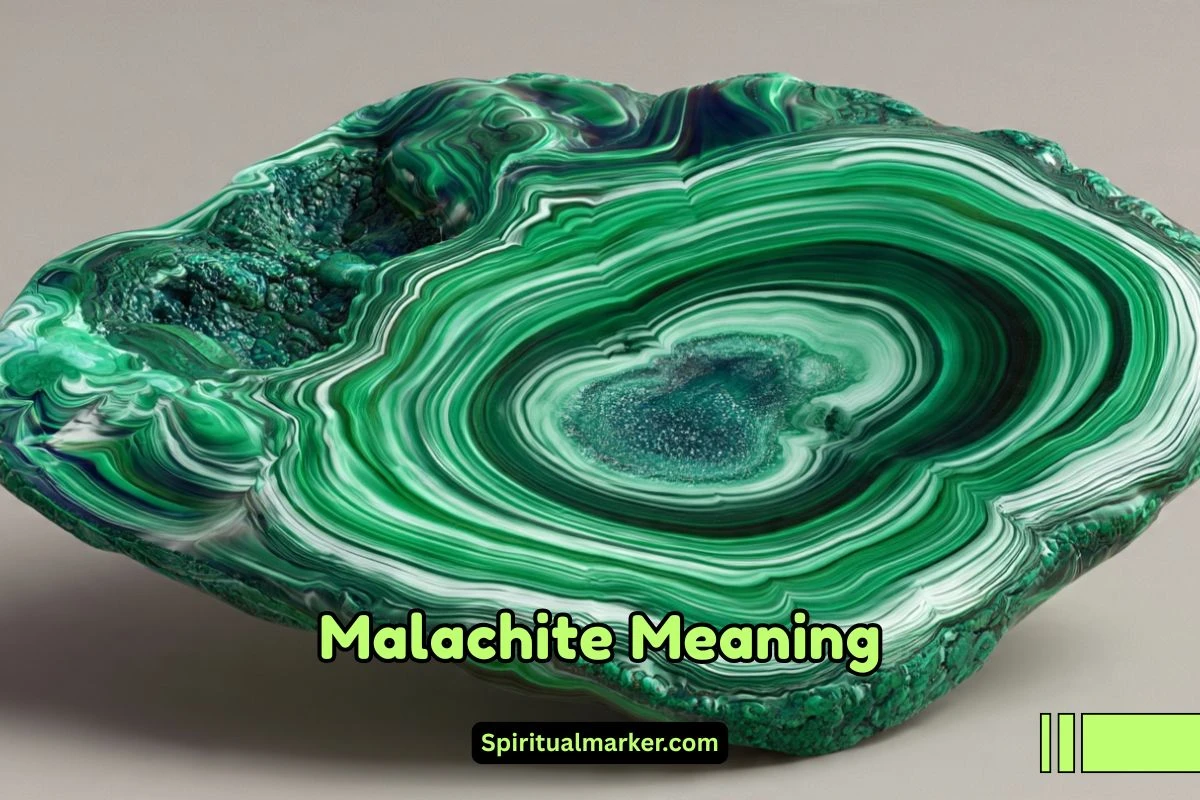
Malachite is a stone of transformation and protection. Its banded green patterns evoke nature and growth. In spiritual practice, this stone carries powerful and cleansing energy.
The malachite meaning often involves transformation, protection, and emotional healing. It is a stone of the heart chakra, helping to release negativity and invite change. A spiritual meaning of green tourmaline shares that green-stone focus, though tourmaline carries a more grounding energy.
Malachite is used in crystal healing to absorb negativity, support physical healing, and boost confidence. It can also symbolize change and renewal. The stone's energy is intense and transformative.
If you feel drawn to malachite, it may signal a need for change. A spiritual meaning of green fluorite also deals with green stones, though fluorite carries a more mental energy.
Key Takeaways
- Malachite symbolizes transformation, protection, emotional courage, and spiritual growth.
- Many healing traditions connect malachite with the heart chakra and the solar plexus chakra.
- People use malachite during meditation, emotional healing work, protection rituals, and personal transformation.
- Malachite is a copper carbonate mineral with vibrant green banding patterns unique to each stone.
- Wearing or carrying malachite may strengthen emotional awareness, personal power, and energetic boundaries.

What Is Malachite?
Malachite is a copper carbonate hydroxide mineral known for its striking green color and distinctive banding patterns. No two pieces look exactly alike. Each stone carries its own unique arrangement of concentric rings, swirling arcs, and flowing green layers ranging from pale mint to almost black-green.
Its name most likely comes from the Greek word moloche, meaning mallow plant, referencing the stone’s rich green color. Some historians also trace the name to the Greek word malakos, meaning soft, which reflects its relatively moderate hardness on the Mohs scale.
Malachite forms in the upper oxidized zones of copper ore deposits. As copper-rich water reacts with limestone and other carbonate rocks over long periods, malachite slowly crystallizes in layered formations. These formations create the banded patterns that make each piece visually remarkable.
Metaphysically, malachite carries a reputation for being one of the most energetically intense gemstones available. It is not considered a beginner stone in many crystal traditions because its energy moves quickly and pushes emotional truth to the surface. This intensity is part of what makes it so deeply valued in serious healing and spiritual practices.
Origins and Formation
Malachite deposits appear on nearly every continent. However, certain regions have become especially significant for producing high-quality material. The Democratic Republic of Congo remains one of the world’s most important malachite sources. Russia, particularly the Ural Mountains, produced extraordinary malachite for centuries. Russian tsars decorated entire palace rooms with it during the 18th and 19th centuries.
Other significant sources include Zambia, Australia, Chile, Mexico, Arizona in the United States, and Namibia. Copper-rich environments around the world continue producing malachite wherever the right geological conditions exist.
Because malachite forms within copper deposits, it often appears alongside other copper-based minerals such as azurite, chrysocolla, and turquoise. These mineral companions frequently create visually stunning combination stones such as azurite-malachite, which carries its own distinct metaphysical reputation.
The stone’s formation process mirrors its spiritual symbolism. Malachite builds itself layer by layer under immense geological pressure. Each band represents slow, steady growth over vast amounts of time. Spiritually, this reflects malachite’s strong association with transformation that builds through consistent effort rather than sudden change.
Key Properties
| Property | Details |
|---|---|
| Color | Light green, emerald green, dark green, black-green |
| Composition | Copper carbonate hydroxide |
| Hardness | 3.5 to 4 on the Mohs scale |
| Chakra Association | Heart chakra, solar plexus chakra |
| Symbolism | Transformation, protection, courage, truth |
| Common Sources | DR Congo, Russia, Zambia, Australia, Chile, USA |
| Transparency | Opaque |
| Energy Style | Bold, intense, transformative, protective |
Historical Use of Malachite
Malachite carries one of the longest documented histories of any gemstone used by humans. Its bold color and widespread availability made it attractive to ancient civilizations across multiple continents.
Ancient Egypt holds the deepest historical relationship with malachite. Egyptians mined it in the Sinai Peninsula as early as 4000 BCE. They ground it into a fine powder for kohl, the dark eye pigment worn by royalty and everyday people alike. They also used powdered malachite in ritual contexts, associating it with Re, the sun god, and with protection during the afterlife journey. The color green itself represented fertility, resurrection, and new life within Egyptian spiritual cosmology.
Ancient Greeks and Romans associated malachite with Venus and Aphrodite, the goddesses of love and beauty. They carved it into amulets, decorative objects, and protective talismans. Wearing malachite was believed to protect children from illness and evil influences.
In medieval Europe, malachite was associated with protective power against dark forces, curses, and negative spiritual influences. Travelers wore it for protection on long journeys. Mothers placed it near children’s beds to ward off danger.
Russian imperial history produced some of the most spectacular malachite use ever recorded. The Hermitage Museum in Saint Petersburg contains the famous Malachite Room, constructed during the 19th century using extraordinary volumes of malachite mined from the Ural Mountains. Russian nobles and craftsmen regarded malachite as a stone of nobility, strength, and imperial power.
In African spiritual traditions, malachite held protective and healing significance in several cultures near the Congo Basin. Its deep association with copper and earth energies connected it with ancestral wisdom, grounding, and protection from harm.
5 Spiritual Meanings of Malachite
1. Transformation and Personal Growth
Transformation stands as malachite’s most defining spiritual meaning. Almost every healing tradition that works with this stone acknowledges its powerful connection with change, growth, and the sometimes difficult journey toward becoming more fully yourself.
Malachite is frequently called the Stone of Transformation in crystal healing communities, and that title is not given lightly. The stone does not gently suggest change. Many practitioners describe it as energetically confrontational in the most purposeful sense. It brings what needs attention directly to the surface.
This quality makes malachite spiritually significant for people who feel emotionally stagnant. Life periods that feel repetitive, emotionally flat, or creatively empty often reflect patterns that have overstayed their welcome. Old belief systems, unhealthy emotional habits, outdated relationships, or self-limiting behaviors can keep people locked in familiar but unfulfilling cycles. Malachite symbolically pushes against that stagnation.
The transformation malachite represents is not always comfortable. Many crystal practitioners are clear about this. Genuine personal growth rarely feels pleasant in its early stages. It often begins with honest self-examination, the kind that requires emotional courage rather than emotional avoidance. Malachite spiritually supports that courageous honesty.
Its banded patterns reinforce this symbolism visually. Each layer of malachite formed through slow, sustained geological processes. Spiritually, this mirrors human transformation. Real personal change builds through consistent effort, honest self-reflection, and gradual emotional evolution rather than overnight awakening.
Many people are drawn to malachite during significant life transitions. Career changes, relationship endings, spiritual awakenings, and major personal reinventions often bring people to this stone. Spiritually, malachite symbolizes not just the willingness to change but the courage to continue changing even when the process demands emotional strength.
2. Protection From Negative Energy
Throughout its long history, malachite has carried strong protective symbolism across nearly every culture that worked with it. Ancient Egyptians wore it to protect the soul in the afterlife. Medieval Europeans used it to guard against dark spiritual forces. Roman soldiers wore it as an amulet before battle. This protective reputation has remained remarkably consistent across thousands of years and entirely different cultural contexts.
In modern crystal traditions, malachite is often described as an energetic bodyguard. Many practitioners believe it absorbs negative energy from the surrounding environment and from direct energetic contact with other people. Empathic individuals who frequently absorb other people’s emotional energy sometimes keep malachite close as a protective boundary stone.
Its protective symbolism also extends inward. Malachite is believed to help protect people from their own self-destructive emotional patterns. Fear-based thinking, self-sabotage, emotional avoidance, and habitual negativity are forms of internal harm. Spiritually, malachite represents protection from those internal forces as much as from external ones.
The copper content within malachite plays a significant role in its protective energy within metaphysical traditions. Copper has been associated with energetic conductivity, electromagnetic sensitivity, and healing properties across many ancient cultures. Crystal practitioners often describe copper-based stones as particularly effective for shielding, grounding, and energetic boundary work.
Malachite is also traditionally associated with safe travel. Sailors and travelers carried it historically as protection against accidents, storms, and misfortune on long journeys. Some crystal practitioners continue this tradition today, keeping a piece of malachite in vehicles, bags, or carry-on luggage while traveling.
Its protective properties require attention to one important detail. Because malachite is believed to absorb negative energy, practitioners emphasize the importance of regular energetic cleansing. A stone thought to absorb negative influences needs consistent clearing to remain energetically effective.
3. Emotional Courage and Truth
Malachite’s relationship with emotional truth and courage distinguishes it from softer emotional stones like rose quartz or green opal. Where those stones encourage emotional gentleness and gradual healing, malachite pushes for honesty, even when that honesty feels challenging.
Many people carry emotional truths that feel too heavy, too complex, or too painful to examine directly. Unspoken grief, denied anger, suppressed creativity, unexpressed love, or long-buried resentment can quietly shape behavior, relationships, and personal well-being for years. Spiritually, malachite is believed to encourage the emotional courage needed to look at those truths honestly.
This symbolism makes malachite particularly meaningful for people who struggle with emotional suppression. Suppressing emotions rarely eliminates them. Instead, suppressed feelings tend to resurface indirectly through physical tension, relationship difficulties, anxiety, or creative blocks. Malachite spiritually represents the courage to feel what actually needs to be felt rather than continuing to suppress emotional experience.
Its connection to truth extends into communication as well. Many practitioners associate malachite with authentic self-expression. Speaking honestly in relationships, asserting personal needs without apology, ending situations that no longer serve growth, and expressing creative or spiritual truth all fall within the symbolic territory of this stone.
Emotional courage is not the same as emotional aggression. Malachite does not symbolize forcing confrontation or becoming emotionally reckless. Its energy encourages honest, grounded emotional expression rather than reactive emotional outbursts. The courage it represents is steady and purposeful, not impulsive or careless.
For people in counseling, therapy, or personal healing work, malachite is sometimes used to support the emotional bravery required for difficult conversations. Looking honestly at old trauma, acknowledging personal patterns, or expressing long-suppressed emotional truths all require a form of inner strength. Malachite spiritually reflects and encourages that specific kind of strength.
4. Heart Chakra and Solar Plexus Activation
Malachite holds a unique position among green stones because it is associated with two energy centers simultaneously. Most green stones primarily connect with the heart chakra. Malachite connects strongly with both the heart chakra and the solar plexus chakra, which explains much of its distinctive energetic character.
The heart chakra governs love, compassion, emotional trust, forgiveness, and interpersonal connection. When this energy center feels open and balanced, people generally experience emotional warmth, empathy, and healthy relational boundaries. When blocked, emotional coldness, resentment, fear of intimacy, and difficulty giving or receiving love often emerge.
The solar plexus chakra governs personal power, self-confidence, willpower, and personal identity. A balanced solar plexus creates a strong sense of self, healthy assertiveness, and emotional stability. Imbalances in this center may appear as low self-esteem, people-pleasing behavior, difficulty making decisions, or giving personal power away to others.
Malachite’s ability to work with both energy centers simultaneously creates a distinctive healing effect. It combines emotional openness with personal empowerment. This combination means it supports not just emotional healing but also the confidence and self-trust needed to act on emotional truths once recognized.
In spiritual practice, this dual association explains why malachite is often recommended for people who love easily but lose themselves in relationships. Healing the heart chakra while simultaneously strengthening the solar plexus helps people remain emotionally open without becoming emotionally dependent on others for validation or direction.
Many crystal practitioners work with malachite specifically to address the gap between emotional awareness and decisive action. A person may understand their emotional patterns intellectually while still feeling powerless to change them. Malachite’s solar plexus connection provides the energetic push that transforms emotional insight into courageous behavioral change.
5. Spiritual Awakening and Intuition
Malachite carries a strong association with spiritual awareness and deepened intuition across many traditions. Ancient Egyptians connected it with divine protection and the afterlife. Several European esoteric traditions associated it with visionary experiences and heightened psychic sensitivity. Modern practitioners frequently place it among stones believed to amplify spiritual perception.
Its deep green color connects visually and symbolically with the natural world, which many spiritual traditions view as a living, communicative system. Nature-based spiritual practices often emphasize the importance of paying attention to signals, cycles, and subtle energetic information in the environment. Malachite symbolically heightens sensitivity to these quieter forms of awareness.
Many meditation practitioners use malachite because they believe it helps clear mental and energetic obstacles that interfere with genuine spiritual insight. Rather than creating spiritual experiences artificially, its symbolism centers on removing the emotional blocks that prevent people from accessing intuition they already possess.
This is a meaningful distinction. Malachite does not traditionally symbolize dependence on external mystical experiences. Its spiritual symbolism focuses more on honest internal clarity. When emotional suppression, fear, or self-deception are reduced, intuitive awareness tends to sharpen naturally. Malachite’s role in spiritual growth involves supporting that honest inner clarity.
Several healing traditions also associate malachite with dream awareness and symbolic communication. Some practitioners place it near sleeping areas to encourage vivid, meaningful dreams that may carry personal or spiritual insight. While individual experiences vary widely, this tradition reflects the stone’s broader association with heightened inner awareness.
Its intensity as a spiritual stone means many practitioners recommend building a relationship with it gradually rather than using it constantly from the beginning. Its energy can feel emotionally powerful, and some individuals need time to acclimate to its directness before using it in extended meditation or sleep practices.
6 Healing Properties of Malachite
1. Emotional Healing and Release
Malachite’s most celebrated healing property centers on emotional release and processing. It carries a reputation as one of the most effective stones for bringing suppressed emotions to the surface where they can finally be acknowledged and worked through.
Emotional wounds do not disappear through denial. They tend to accumulate. Years of unexpressed grief, unprocessed anger, buried shame, or suppressed disappointment create layers of emotional weight that affect energy, relationships, and physical health over time. Malachite is believed to gently but firmly move that accumulated emotional material upward into conscious awareness.
Many people describe initial experiences with malachite as emotionally intense. Feelings that have been suppressed for long periods may suddenly feel closer to the surface. Old memories, unresolved emotions, or long-avoided realizations may become more present during periods of regular malachite use. Crystal practitioners generally view this as part of the stone’s healing function rather than a negative side effect.
The key is working with those surfacing emotions rather than being overwhelmed by them. Many healers recommend pairing malachite use with journaling, therapy, breathwork, or other grounding practices that provide structured space for emotional processing. The stone symbolizes bringing difficult emotions into the light, but integration requires personal effort and sometimes professional support.
Malachite’s emotional healing properties are also connected with its heart chakra association. Emotional healing work centered on the heart often involves releasing old hurt, softening protective emotional walls, and rebuilding the capacity for emotional trust. Malachite symbolically supports this process while also providing the solar plexus energy needed to handle difficult emotional revelations with courage.
2. Protection From Environmental and Energetic Stress
In metaphysical traditions, malachite carries a strong reputation as an absorber of environmental and energetic stress. This healing property is particularly valued by people who feel energetically sensitive, who work in emotionally demanding environments, or who regularly interact with people in emotional pain or distress.
Many energy workers, therapists, caregivers, teachers, and healthcare professionals keep malachite close during their work. The stone is believed to help maintain energetic boundaries by absorbing negative energy before it settles into the user’s own energetic field. While this remains outside the scope of conventional medicine, many practitioners find the practice personally meaningful and supportive.
Its historical use as a protective amulet in ancient cultures reflects this same healing intention. Egyptian priests wore it in ritual contexts. Medieval physicians sometimes used powdered malachite in healing preparations. Protective symbolism surrounding malachite has appeared across widely separated cultures and time periods, suggesting a cross-cultural recognition of something about this stone’s distinctive energy.
Environmental stress protection also extends to electromagnetic sensitivity in modern crystal traditions. Some practitioners keep malachite near computers, phones, and electronic devices based on beliefs about copper-based stones offering protection from electromagnetic frequencies. While scientific evidence does not support this claim, the tradition reflects malachite’s deep historical connection with protective energy.
Because malachite absorbs negative energy, regular cleansing is considered essential by most practitioners. Leaving malachite uncleansed for long periods is thought to reduce its effectiveness and potentially reverse its protective properties. Cleansing methods are covered later in this article.
3. Physical Healing Associations
Throughout history, malachite has been associated with physical healing, though modern safety concerns about raw malachite dust require important precautions. Polished malachite stones are generally considered safe for handling, but the raw mineral contains copper compounds that become toxic if inhaled as dust or ingested. Any internal use of malachite in historical healing traditions is not recommended in modern practice.
With that important caution in place, many crystal traditions associate polished malachite with circulation, joint health, and nervous system support as part of a complementary approach alongside conventional medical care. Some practitioners believe malachite supports the body’s natural healing processes during recovery from illness or physical exhaustion.
Ancient Egyptian physicians incorporated malachite into various healing preparations. Historically, crushed malachite appeared in preparations intended to address skin conditions, eye complaints, and infections. These historical applications reflect how deeply embedded malachite was in ancient medical tradition, even though modern medicine does not support those specific uses.
Important note: Malachite should never replace qualified medical care. For any physical health concern, consulting a licensed healthcare professional remains essential. Crystal healing practices function best as complementary approaches to conventional care rather than as substitutes.
4. Supporting Mental Clarity and Decision-Making
Malachite’s connection with truth and clarity gives it a reputation as a stone that supports clearer thinking and more decisive action. Many practitioners describe it as mentally clarifying, particularly during periods of confusion, indecision, or mental fog.
Emotional clutter frequently interferes with clear thinking. When unresolved feelings, fear-based assumptions, or old emotional patterns operate beneath conscious awareness, they can distort perception and make decisions feel overwhelming. Malachite’s healing work on emotional truth is believed to also clear mental confusion by reducing the emotional interference that clouds judgment.
This property makes malachite valuable for people facing difficult choices, creative blocks, or professional challenges that feel paralyzingly complex. By encouraging honest emotional assessment first, the stone is thought to help people access clearer, more grounded perspectives about their actual situations and real priorities.
Many people use malachite during journaling sessions, problem-solving work, or pre-meeting preparation when clarity and honest self-assessment feel especially important. Keeping it nearby during focused intellectual or creative work is a common practice among crystal enthusiasts who appreciate this mentally clarifying property.
5. Empowerment and Breaking Unhealthy Patterns
One of malachite’s most practically significant healing properties involves its association with breaking unhealthy behavioral and emotional patterns. Few stones in crystal traditions carry as strong a reputation for interrupting repetitive negative cycles as malachite does.
Unhealthy patterns are rarely chosen consciously. People develop them as adaptive responses to difficult experiences, emotional wounds, or environments that once required specific coping strategies. Over time, those adaptive responses can become habitual even when the original circumstances no longer exist. Fear-based choices, people-pleasing behavior, emotional avoidance, self-sabotage, and chronic negativity are common examples.
Malachite’s intense energy is believed to accelerate the recognition of these patterns by making their emotional roots more visible. When a pattern’s underlying emotional driver becomes clear, people gain more genuine choice about whether to continue it. This recognition process can feel uncomfortable but represents meaningful movement toward lasting personal change.
Its solar plexus connection adds an empowerment dimension to this healing work. Recognizing an unhealthy pattern requires insight. Actually changing it requires personal power, willpower, and consistent action. Malachite’s dual connection with the heart and solar plexus symbolically addresses both the emotional recognition and the personal empowerment needed to transform behavior at a deeper level.
6. Emotional Balance During Grief and Loss
Malachite carries particular significance in healing traditions involving grief, loss, and the emotional aftermath of significant endings. Whether someone is processing the loss of a relationship, a death, a career, an identity, or a phase of life, malachite is often associated with supporting the emotional courage required to move through grief honestly.
Grief is rarely linear. People frequently cycle through shock, denial, anger, sadness, and acceptance in unpredictable patterns rather than moving cleanly from one stage to the next. Malachite’s symbolism acknowledges this complexity. It does not promise a smooth or comfortable grief process. Instead, it represents the strength to remain emotionally present with difficult feelings rather than retreating into numbness.
Many grief counselors who also work in crystal healing integrate malachite into their practice because of its dual properties of emotional release and personal empowerment. The stone’s energy encourages honest emotional expression while simultaneously supporting the inner strength needed to continue functioning through difficult periods.
Its association with transformation reinforces this connection to grief work. Every significant loss involves transformation. The person who existed before a major loss is never quite the same person who emerges on the other side of grieving. Malachite spiritually represents honoring that transformation rather than denying or rushing past it.
How to Wear Malachite Jewelry for Spiritual Growth
People wear malachite jewelry in several ways depending on their spiritual intentions and personal preferences. Its bold visual character makes it a striking choice for statement pendants, rings, bracelets, and earrings.
Because malachite connects strongly with the heart chakra, pendants worn close to the chest carry particular spiritual significance. Heart-level placement is believed to align the stone’s energy directly with emotional healing, compassion, and courageous emotional expression.
Malachite bracelets allow consistent physical contact throughout the day, which many practitioners believe strengthens the stone’s protective and transformative influence during daily interactions and decision-making moments.
Some people wear malachite rings on the dominant hand to reinforce personal power, confident communication, and assertive self-expression. Others prefer the non-dominant hand to focus on receiving emotional insight and healing energy.
Malachite pairs powerfully with stones that balance its intensity. Black tourmaline adds grounding and additional protection. Rose quartz softens malachite’s bold energy with gentler compassion. Clear quartz amplifies and focuses malachite’s transformative properties. Chrysocolla complements its copper-based energy with calming emotional communication.
Because malachite’s energy moves quickly and intensely, some practitioners recommend wearing it in shorter sessions initially, particularly during emotional healing work, and gradually building up to longer periods of contact as comfort with its energy increases.
Caring for Malachite Jewelry
Malachite requires thoughtful care due to its moderate softness of 3.5 to 4 on the Mohs scale and its sensitivity to acids, heat, and certain chemicals. It scratches more easily than harder gemstones and reacts to acidic substances including common household cleaning products.
Store malachite separately from harder gemstones to prevent surface scratching. Soft fabric pouches or padded compartments in jewelry boxes work well. Avoid storing it with harder stones such as quartz, sapphire, or topaz.
Clean malachite gently using a soft, barely damp cloth. Avoid soaking it in water, using ultrasonic cleaners, steam cleaning equipment, or any acidic or chemical cleaning products. Even mild soaps can dull the surface over time with repeated use.
Remove malachite jewelry before swimming, exercising, gardening, or doing household cleaning. Chlorine, saltwater, acids, and harsh chemicals can damage the stone’s polished surface significantly.
Keep malachite away from prolonged direct sunlight and high heat sources. Extended sun exposure may gradually fade its vivid green color, which is part of what makes each piece visually distinctive.
For energetic cleansing, many practitioners use moonlight exposure, sound cleansing with singing bowls, smudging with sage or palo santo, or placing it near protective herbs. Because malachite is believed to absorb negative energy, consistent energetic cleansing is considered especially important by most crystal practitioners. Many recommend cleansing it more frequently than other stones for this reason.
One critical safety note: Never use malachite in gem elixirs or crystal water infusions. The copper content in malachite makes it toxic if dissolved in water intended for drinking. Only use external contact methods when working with this stone.
Table: Meaning of Malachite at a Glance
| Aspect | Details |
|---|---|
| Primary Meaning | Transformation and personal growth |
| Chakra Association | Heart chakra, solar plexus chakra |
| Main Spiritual Symbolism | Protection, emotional courage, truth, empowerment |
| Common Colors | Emerald green, dark green, light green banding |
| Hardness | 3.5 to 4 Mohs |
| Main Sources | DR Congo, Russia, Zambia, Australia, Chile |
| Emotional Associations | Courage, honesty, emotional release, strength |
| Popular Jewelry Types | Pendants, rings, bracelets, statement earrings |
| Spiritual Uses | Meditation, protection, transformation, grief support |
| Care Needs | Soft cloth cleaning only, avoid acids and chemicals |
| Safety Note | Never use in water infusions or elixirs |
A Final Note
Malachite stands apart from most gemstones because its energy makes no apologies for being bold. It does not soften its message to make people comfortable. It pushes emotional truth forward, accelerates transformation, and demands a kind of courageous honesty that many people find both challenging and deeply liberating.
Its spiritual meaning centers on transformation, protection, emotional courage, and authentic personal power. Whether viewed through a metaphysical lens or appreciated for its extraordinary natural beauty, malachite has earned its place among the most historically significant and spiritually powerful stones in the world.
If malachite keeps drawing your attention, that pull may reflect something your inner self already recognizes. Some people keep it nearby during major life transitions. Others wear it as a daily reminder to live more honestly and act more courageously. Many simply feel steadier and more grounded in its presence.
What matters most is what feels true for you. You might consider starting with a small tumbled piece and noticing what shifts in your awareness, emotional life, or decision-making patterns as you work with it over time.