
Green aventurine shimmers with a soft, sparkling green. Its color evokes spring leaves and new opportunities. In spiritual practice, this stone carries lucky and growth-oriented energy.
The green aventurine meaning often involves prosperity, luck, and emotional healing. It is a stone of the heart chakra, helping to attract abundance and release fear. A spiritual meaning of green jade shares that green-stone focus, though jade carries a more protective energy.
Green aventurine is used in crystal healing to attract money, support physical healing, and boost creativity. It can also symbolize opportunity and resilience. The stone's energy is vibrant and uplifting.
If you feel drawn to green aventurine, it may signal a need for luck. A spiritual meaning of green tourmaline also deals with green stones, though tourmaline carries a more grounding energy.
Key Takeaways
- Green aventurine is widely known as the Stone of Opportunity, symbolizing luck, growth, and emotional renewal.
- It connects strongly with the heart chakra, supporting emotional healing, compassion, and self-worth.
- People use green aventurine during meditation, manifestation work, grief recovery, and personal transformation.
- Its signature shimmer comes from light-reflecting minerals called fuchsite or mica, making each stone visually unique.
- Wearing green aventurine close to the heart or carrying it daily may support feelings of optimism, emotional calm, and confident decision-making.
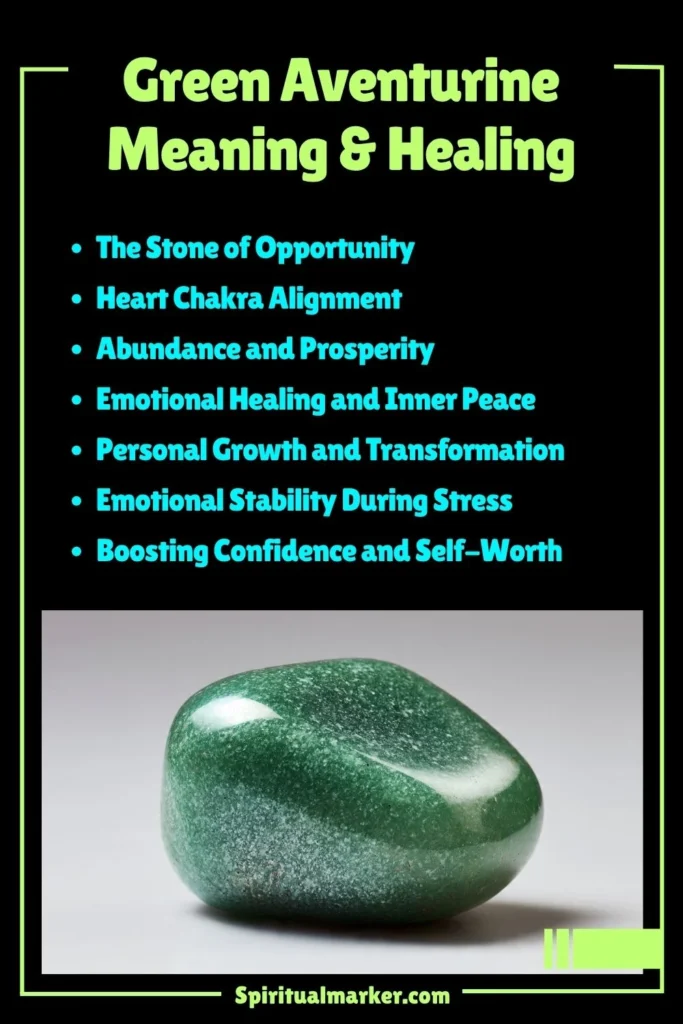
What Is Green Aventurine?
Green aventurine is a variety of quartz distinguished by a sparkling optical effect called aventurescence. Tiny reflective platelets of mica or fuchsite suspended within the stone create that distinctive glittery shimmer. No two stones look exactly alike. Some appear deep forest green with strong sparkle. Others present softer mint tones with a more subtle sheen.
Unlike many gemstones prized for transparency, green aventurine typically appears opaque to translucent. Its appeal comes from its rich color, textural warmth, and the way light dances across its surface. Many people describe it as having a living quality, something that seems to breathe with the earth itself.
Chemically, aventurine is silicon dioxide, the same base material as common quartz. The green color comes primarily from fuchsite inclusions, a chromium-rich variety of muscovite mica. The more fuchsite present, the deeper and more vivid the green.
Origins and Formation
Green aventurine forms within metamorphic and sedimentary rock layers over millions of years. As silica-rich solutions move through cracks in host rock, they carry mineral particles along with them. When those solutions cool and crystallize, the fuchsite platelets become locked within the quartz structure. This slow, pressured process gives the stone both its physical durability and its symbolic link to patience and growth over time.
India remains the world’s largest producer of green aventurine and has been a primary source for centuries. Other significant deposits exist in Brazil, Russia, Tanzania, Austria, and Nepal. Indian green aventurine tends toward a richer, darker green. Brazilian specimens often present with slightly lighter tones and coarser fuchsite inclusions.
The stone’s hardness of 6.5 to 7 on the Mohs scale makes it durable enough for everyday jewelry wear, which is one reason it appears in so many different formats, from tumbled pocket stones to carved figurines and polished cabochons.
Key Properties at a Glance
| Property | Details |
|---|---|
| Primary Meaning | Opportunity, luck, emotional healing |
| Chakra Association | Heart chakra (Anahata) |
| Main Symbolism | Growth, abundance, compassion, renewal |
| Color Range | Mint green, forest green, olive green |
| Hardness | 6.5 to 7 on the Mohs scale |
| Main Sources | India, Brazil, Russia, Tanzania, Austria |
| Transparency | Opaque to translucent |
| Mineral Composition | Quartz with fuchsite or mica inclusions |
| Energy Style | Uplifting, grounding, heart-centered |
Historical Significance of Green Aventurine
Green aventurine has appeared in human history for thousands of years. Ancient Tibetan statues were sometimes decorated with aventurine to represent vision and improved sight, both physical and spiritual. Many carvings used it to create figures meant to bring prosperity to the people who held them.
In ancient China, green aventurine was linked to Guanyin, the goddess of compassion. It was used in ornamental carvings and ceremonial objects connected with healing and benevolence. The Chinese cultural relationship with green stones runs deep. Green has historically symbolized growth, vitality, and favorable fortune across Chinese spiritual traditions.
Ancient Greeks and Romans also used aventurine-type stones for amulets and jewelry. They believed that wearing green stones protected the wearer from negative energy and attracted favorable outcomes in trade, relationships, and travel.
By the 18th century in Europe, Italian craftsmen in Murano accidentally discovered how to create a glass that imitated aventurine’s sparkle. They named it after the Italian word “avventura,” meaning chance or luck. Some historians believe the stone’s name actually came from this glassmaking accident. The story itself reflects the stone’s longstanding association with fortune.
In modern crystal healing practices, green aventurine became one of the most recognized and widely used stones worldwide. Its reputation for attracting opportunity while simultaneously supporting emotional healing gave it a dual purpose that most other stones cannot easily replicate.
5 Spiritual Meanings of Green Aventurine
1. The Stone of Opportunity
Green aventurine’s most famous spiritual title is the Stone of Opportunity. This name carries significant weight in crystal traditions because opportunity is not simply about luck arriving from nowhere. It also involves being emotionally and mentally ready to act when possibilities appear.
Many people associate green aventurine with creating the internal conditions for favorable outcomes. When people feel emotionally blocked, fearful, or trapped in mental patterns of scarcity, they often miss opportunities that are right in front of them. Green aventurine symbolizes shifting that internal landscape. It represents openness to possibility rather than passive waiting for good fortune to arrive.
This symbolism makes particular sense when you consider the stone’s heart chakra connection. Opportunity in life often depends on emotional readiness. A person closed off by grief, self-doubt, fear, or resentment may intellectually recognize good opportunities but emotionally resist taking action. Green aventurine spiritually represents releasing that emotional resistance so that forward movement becomes more natural.
Research from positive psychology consistently shows that people who maintain optimistic outlooks are more likely to notice and pursue opportunities, even in challenging circumstances. This mirrors green aventurine’s spiritual reputation closely. The stone does not manufacture luck artificially. It symbolizes the emotional and mental clarity that makes people more receptive to favorable circumstances.
Many practitioners carry green aventurine during job interviews, important meetings, new business ventures, or major life decisions. Its symbolic presence reminds the carrier to remain open, calm, and confident rather than contracting emotionally during high-stakes moments.
2. Heart Chakra Alignment and Emotional Balance
In crystal healing traditions, green aventurine connects primarily with the heart chakra, known in Sanskrit as Anahata. This energy center governs love, compassion, emotional trust, forgiveness, empathy, and meaningful human connection. When the heart chakra feels balanced and open, emotional life tends to flow with greater ease. When it feels blocked, relationship difficulties, emotional withdrawal, and fear of vulnerability often follow.
Green aventurine’s connection to heart chakra healing is not simply symbolic. Its green color naturally aligns with the heart chakra’s color in many energy healing systems. Practitioners who work with chakra balancing often choose green stones specifically because the visual and energetic properties reinforce each other during meditation and healing work.
Blocked heart energy can show up in many subtle ways. Some people experience emotional numbness after prolonged stress or trauma. Others develop patterns of emotional over-giving while neglecting their own needs. Some become so guarded after emotional pain that vulnerability feels impossible. Green aventurine symbolizes the gradual reopening of emotional pathways without forcing premature emotional exposure.
Many people also connect this stone with the ability to set healthy emotional boundaries. A balanced heart chakra does not simply mean giving love freely. It also means receiving love without guilt and recognizing when emotional boundaries are necessary for personal well-being. Green aventurine spiritually supports both dimensions of this balance.
Crystal practitioners frequently use green aventurine during chakra meditation by placing it over the heart center while lying down. This practice is intended to encourage emotional release, heart opening, and energetic alignment. Whether or not you hold metaphysical beliefs, the practice of quiet meditation with focused attention on emotional awareness carries real psychological benefit.
3. Abundance and Prosperity
Green aventurine holds one of the strongest reputations for attracting abundance and prosperity among all crystal stones. This meaning operates on multiple levels. Some people associate it specifically with financial abundance. Others interpret prosperity more broadly as emotional richness, fulfilling relationships, creative flow, and meaningful life experiences.
The prosperity symbolism of green aventurine reflects an important spiritual principle. True abundance begins internally. People who cultivate emotional confidence, optimism, and a genuine belief in their own value tend to create more favorable external circumstances over time. Green aventurine symbolizes cultivating that internal abundance mentality rather than simply waiting for external circumstances to improve.
In many wealth-attracting rituals across different spiritual traditions, green stones play a central role. Green connects symbolically with growth, fertility, and earth energy, all forces associated with expansion and flourishing. Green aventurine carries this symbolism in a form that also integrates emotional healing, making it one of the more multidimensional prosperity stones available.
Many feng shui practitioners place green aventurine in the wealth corner of a home or workspace, which typically corresponds to the southeast area according to Bagua principles. The stone’s presence is meant to support the flow of abundant energy through a space.
It is worth noting that abundance work with green aventurine is rarely passive. Practitioners often combine the stone with clear intentions, goal-setting, visualization, and practical action. The stone symbolizes opening to abundance while also holding the emotional steadiness needed to follow through on opportunities as they emerge.
4. Emotional Healing and Inner Peace
Beyond its reputation for luck, green aventurine carries deep roots in emotional healing. People frequently turn to this stone during emotionally difficult chapters. Grief recovery, relationship endings, burnout, anxiety, and prolonged emotional stress represent some of the most common situations where people seek its support.
Green aventurine’s emotional healing symbolism differs from more dramatically intense healing stones. It does not represent sudden emotional catharsis or overwhelming energetic shifts. Instead, its energy is often described as gradual, stabilizing, and deeply calming. People who feel emotionally flooded by difficult feelings often respond to green aventurine because it symbolizes a quiet form of emotional steadiness that feels safe rather than overwhelming.
Emotional resilience research shows that recovery from emotional pain rarely follows a straight line. People move through periods of feeling better, then feeling worse, then stabilizing again. Green aventurine spiritually mirrors this nonlinear healing process. It does not promise instant emotional resolution. It represents the steady, patient rebuilding of emotional balance over time.
Many crystal healers associate green aventurine with the process of releasing suppressed emotional pain. Years of carrying unresolved grief, resentment, fear, or disappointment can create emotional heaviness that people may not even consciously recognize. The stone is believed to gently create emotional space for those buried feelings to surface and eventually move through rather than remaining permanently lodged beneath the surface.
Inner peace associated with green aventurine is also connected with slowing down mental overactivity. Modern life frequently keeps minds in a state of constant stimulation. Stress, information overload, decision fatigue, and emotional pressure create a baseline mental noise that many people accept as normal. Green aventurine’s gentle energy symbolizes stepping back from that noise and reconnecting with quieter internal awareness.
5. Personal Growth and Transformation
Green aventurine symbolizes personal growth that happens through consistent effort, emotional honesty, and willingness to change. This meaning resonates particularly strongly with people standing at major crossroads in life. Career transitions, relationship changes, identity shifts, and personal reinvention all represent situations where green aventurine’s symbolism feels most relevant.
Growth is rarely comfortable. Many people begin significant personal transformation during painful or destabilizing periods rather than during times of comfort. Green aventurine spiritually acknowledges this reality. It does not represent effortless success or painless change. Instead, it symbolizes developing the emotional courage and resilience needed to move through difficulty without abandoning personal growth.
The stone’s connection to nature reinforces this theme powerfully. Plants do not grow overnight. Seeds spend time developing root systems below the surface long before any visible growth appears above the soil. Entire growing seasons pass through phases of growth, rest, decay, and renewal. Green aventurine carries all of these natural metaphors within its symbolic meaning. Growth takes time. Rest is part of the process. Transformation happens in layers rather than all at once.
Many people also connect green aventurine with releasing outdated patterns. Old habits, limiting beliefs, fear-based decisions, and emotional patterns from past wounds can hold people back from the growth they genuinely seek. The stone symbolizes gradually letting go of what no longer serves while creating internal space for new possibilities to take root.
6 Healing Properties of Green Aventurine
1. Emotional Stability During Stress
Green aventurine has a well-established reputation for supporting emotional stability during stressful periods. Many people describe its energy as calming without being sedating. It encourages emotional steadiness rather than emotional suppression, a distinction that matters significantly in healing work.
Stress affects the body, mind, and emotional state simultaneously. When emotional stress goes unaddressed for long periods, it can contribute to chronic anxiety, sleep disruption, reduced immunity, and relationship strain. Green aventurine’s symbolism focuses on addressing the emotional dimension of stress by encouraging calm, grounded awareness rather than emotional reactivity.
Crystal practitioners frequently use green aventurine in workplace environments, study spaces, or creative areas where mental pressure tends to accumulate. The stone’s quiet stabilizing energy is believed to reduce emotional tension and support clearer thinking during demanding circumstances.
Its connection to nature’s calming qualities strengthens this healing association. Studies consistently demonstrate that exposure to natural environments reduces cortisol levels, heart rate, and perceived stress. Green aventurine’s earthy appearance and symbolism create a similar psychological anchor, connecting people energetically to natural rhythms of calm and restoration even while indoors.
2. Boosting Confidence and Self-Worth
One of green aventurine’s lesser-known but profoundly meaningful healing properties involves rebuilding confidence and self-worth. After rejection, failure, prolonged criticism, or emotional trauma, many people develop a quietly diminished sense of their own value. That diminishment often operates beneath conscious awareness. It influences decisions, relationships, and self-expression in ways that limit personal growth.
Green aventurine’s connection with the heart chakra extends into self-love as much as love for others. Many spiritual teachers emphasize that a healthy relationship with oneself forms the foundation of healthy relationships with everyone else. When self-worth erodes, everything else tends to follow. Green aventurine symbolizes the rebuilding of that inner foundation through emotional gentleness, self-acceptance, and patient healing.
Practitioners often recommend carrying green aventurine during periods of job searching, creative vulnerability, or entering new relationships because its energy symbolizes approaching those situations with confidence rather than fear. This does not mean forcing confidence artificially. It means working internally with emotional clarity and self-compassion so that genuine confidence has the space to develop naturally.
Its symbolism also addresses emotional authenticity. People with low self-worth often hide their true personalities, needs, and emotions out of fear of rejection. Green aventurine spiritually encourages emotional honesty and authentic self-expression as pathways to rebuilding a solid internal sense of personal value.
3. Supporting Heart Health Symbolically
Many crystal healing traditions draw connections between stones associated with specific chakras and the physical organs located near them. Because green aventurine aligns with the heart chakra, practitioners sometimes associate it symbolically with heart health and circulatory well-being.
It is important to state clearly that green aventurine is not a medical treatment. It should never replace professional medical care for any heart condition or physical health concern. However, the stress-reducing and emotional-calming properties associated with green aventurine do carry indirect relevance to cardiovascular well-being.
Medical research consistently shows that chronic emotional stress, anxiety, and depression contribute to elevated cardiovascular risk. Managing emotional health is therefore not separate from physical health but deeply intertwined with it. To the extent that green aventurine supports emotional calm and stress reduction, its broader connection to heart health symbolism carries a certain logic even beyond purely metaphysical frameworks.
Some practitioners use green aventurine as part of mind-body wellness practices that integrate meditation, breathwork, and emotional processing. These practices have documented physiological benefits, including reduced blood pressure, improved heart rate variability, and lower stress hormone levels.
4. Enhancing Creativity and Mental Clarity
Green aventurine carries an underappreciated association with creative thinking and mental clarity. Many creative professionals, artists, writers, musicians, and entrepreneurs report feeling drawn to this stone during periods when creative output feels blocked or uninspired.
Creative blocks frequently have emotional roots. Fear of judgment, perfectionism, past criticism, emotional exhaustion, and lack of confidence can all shut down creative flow. Because green aventurine addresses emotional barriers and self-worth issues, its influence on creativity makes symbolic sense. Clearing emotional blocks often reopens creative channels that stress and fear had temporarily closed.
Mental clarity in the context of green aventurine relates to reducing decision-making anxiety rather than increasing cognitive speed. Many people feel paralyzed by choices during uncertain periods. They overthink options, second-guess instincts, and eventually feel mentally frozen. Green aventurine’s calming energy symbolizes making decisions from a place of emotional groundedness rather than emotional fear.
Many practitioners use green aventurine during brainstorming sessions, journaling practices, or morning rituals designed to set a positive, open-minded tone for the day ahead. The stone’s symbolism encourages fresh perspectives and a willingness to approach challenges with curiosity rather than anxiety.
5. Supporting Relationship Healing
Green aventurine’s heart chakra connection naturally extends into relationship healing. Relationships of all kinds, romantic partnerships, family bonds, friendships, and professional relationships, carry the potential for emotional wounds, misunderstandings, unspoken resentment, and accumulated tension. Green aventurine symbolizes approaching relationship repair with emotional patience, compassion, and willingness to be vulnerable.
Many practitioners believe the stone encourages emotional honesty without aggression. This balance matters because difficult relationship conversations often escalate when one or both parties feel emotionally defensive. Approaching these conversations with calmer emotional groundedness creates more space for genuine connection and understanding.
The stone also symbolizes forgiveness, both giving and receiving it. Forgiveness in spiritual traditions rarely means excusing harmful behavior or pretending painful events did not happen. It more often refers to releasing the emotional weight of resentment that continues hurting the person carrying it long after the original wound occurred. Green aventurine is associated with this kind of emotional release, supporting relationships by helping people let go of stored bitterness.
Relationship healing with green aventurine also involves self-relationship. The way people treat themselves emotionally directly influences how they show up in relationships with others. A person practicing self-compassion and emotional honesty tends to communicate more clearly and receive others with greater empathy. Green aventurine’s symbolism begins with internal emotional healing and naturally extends outward from there.
6. Attracting Positive Energy and Optimism
Green aventurine is widely regarded as one of the most optimism-supporting stones in crystal traditions. Its reputation for attracting positive energy reflects both its symbolic associations and the way many people describe feeling when they work with it regularly.
Optimism is not the same as denial. Genuine optimism does not mean ignoring problems or pretending difficult situations do not exist. Research by psychologists such as Martin Seligman shows that optimistic people acknowledge challenges clearly but believe in their capacity to navigate them successfully. This form of optimism correlates with better mental health outcomes, stronger relationships, greater professional achievement, and higher life satisfaction.
Green aventurine symbolizes this evidence-based form of optimism. It does not represent wishful thinking or emotional avoidance. Instead, it represents approaching life’s uncertainties with emotional confidence and an underlying belief that favorable outcomes remain possible.
Many people place green aventurine in entranceways, living spaces, or meditation areas as a symbolic anchor for positive energy. The stone’s visual warmth and earthy green color create an emotionally welcoming atmosphere that reinforces its energetic symbolism of abundance, growth, and openness.
How to Wear Green Aventurine Jewelry for Spiritual Benefits
Wearing green aventurine as jewelry is one of the most popular and practical ways to connect with its energy throughout daily life. Because the stone aligns primarily with the heart chakra, pendants and necklaces worn near the chest remain the most recommended formats. Placing green aventurine close to the heart symbolically strengthens its connection to emotional healing, compassion, and openness.
Bracelets represent another popular option. Wearing green aventurine on the wrist allows constant physical contact with the stone, which many practitioners believe strengthens its energetic influence during emotionally demanding parts of the day. Some people specifically wear the bracelet on the left wrist because many traditions associate the left side of the body with receiving energy inward.
Rings with green aventurine carry symbolic meaning related to commitment, intention, and presence. Some people wear them as reminders to stay emotionally grounded and open during interactions with others. The stone’s calming symbolism becomes an accessible touchstone during stressful or emotionally charged situations.
Many people wear green aventurine jewelry during meditation, yoga sessions, important conversations, job interviews, or new beginnings of any kind. The physical presence of the stone serves as a symbolic anchor to the emotional and spiritual intentions connected with it.
Caring for Green Aventurine Jewelry
Green aventurine’s hardness makes it relatively resilient compared to softer crystals. However, proper care still matters for preserving both its appearance and longevity.
Store green aventurine jewelry separately from harder stones such as diamonds, sapphires, or topaz to prevent surface scratching. Soft fabric pouches or lined jewelry boxes work well for individual storage.
Clean green aventurine gently using lukewarm water, mild soap, and a soft cloth. Avoid harsh chemical cleaners, ultrasonic cleaning machines, or abrasive materials. Rinse thoroughly and dry completely before storing.
Remove green aventurine jewelry before swimming, intense physical activity, or working with household chemicals. While the stone is durable, prolonged exposure to chlorine, salt water, or harsh substances can dull its surface over time.
Avoid extended exposure to direct sunlight. Although green aventurine is more stable than some softer crystals, prolonged UV exposure may gradually fade its color, particularly in lighter-toned specimens.
Many people who work with green aventurine spiritually also cleanse it energetically on a regular basis. Common methods include placing it under moonlight overnight, using sound cleansing with singing bowls, or leaving it near cleansing herbs such as rosemary or lavender. Running it briefly under cool water while setting a clear intention is another simple and widely practiced approach.
Combining Green Aventurine With Other Crystals
Green aventurine works harmoniously alongside several other crystals, allowing practitioners to create intentional combinations for specific purposes.
Rose quartz pairs naturally with green aventurine because both stones connect with the heart chakra. Rose quartz carries gentle love energy and deep compassion symbolism. Together, the two stones create a powerful combination for relationship healing, self-love work, and emotional softening after painful experiences.
Citrine complements green aventurine’s abundance symbolism by adding solar, confidence-boosting energy. This pairing is popular during manifestation work, business growth intentions, and abundance rituals. Citrine’s uplifting energy enhances green aventurine’s optimistic qualities significantly.
Clear quartz amplifies the energy of any stone placed near it. Combining clear quartz with green aventurine is believed to strengthen and clarify the healing intentions you are working with. It is a useful pairing during meditation or focused intention-setting practices.
Amethyst and green aventurine together create a balance between heart and mind. Amethyst supports spiritual clarity, intuition, and calm mental focus. Green aventurine anchors the heart. Together, they support decision-making processes that integrate both emotional wisdom and clear thinking.
Black tourmaline paired with green aventurine combines protection and opportunity. Black tourmaline’s grounding and protective energy shields against negative emotional environments, while green aventurine maintains emotional openness and positive momentum. This pairing is especially helpful for highly sensitive individuals working in emotionally demanding environments.
Green Aventurine Stone Meaning at a Glance
| Aspect | Details |
|---|---|
| Primary Meaning | Opportunity, luck, emotional healing |
| Chakra Association | Heart chakra |
| Main Spiritual Symbolism | Growth, abundance, compassion, optimism |
| Emotional Associations | Confidence, calm, self-worth, forgiveness |
| Popular Uses | Meditation, manifestation, relationship healing |
| Common Jewelry Types | Pendants, bracelets, rings |
| Best Crystal Pairings | Rose quartz, citrine, amethyst, clear quartz |
| Spiritual Practices | Chakra work, abundance rituals, grounding |
| Care Requirements | Mild cleaning, soft storage, limited sun exposure |
| Key Affirmation | “I am open to growth, healing, and new possibilities.” |
A Final Note
Green aventurine is not simply a lucky talisman. Its meaning runs deeper than any single title suggests. It represents the emotional readiness to receive good things. It stands for the patience required to heal properly. It honors the quiet courage needed to grow through difficult seasons of life.
People are drawn to this stone for deeply personal reasons. Some seek it during periods of grief or transition. Others bring it into abundance practices and creative work. Many simply appreciate the gentle warmth it carries.
If green aventurine has caught your attention, that pull likely reflects something true about where you are right now. You might consider keeping a tumbled stone in your pocket during a challenging week, placing one on your desk during a creative project, or wearing it as a pendant when your heart needs a reminder to stay open.
Whatever your reason for connecting with it, green aventurine continues to earn its reputation as one of the most accessible, meaningful, and genuinely beautiful stones in the crystal world.