Colors surround us every day. They shape our moods, our choices, and our memories. Across cultures, colors carry deep spiritual meaning and symbolism.
The popular spiritual meaning of colors often involves specific emotions and energies. Blue may signal calm and truth, while red points to passion and action. A color blue spiritual meaning gives a closer look at one end of that spectrum.
Some colors appear often, like green, yellow, and purple. Others, like gold and silver, carry more specific messages. Each hue adds a layer to your personal and spiritual story.
If a color keeps appearing in your life, it may carry a message. A color green spiritual meaning can help you interpret growth and healing, though every color has its own voice.
What Do Colors Symbolize in Daily Life?
Colors change mood quicker than language can. Take red as an example. It can make your heart beat faster.
Blue, on the other hand, often soothes a busy mind. Green usually brings a sense of relief after feeling strained. Due to these effects, many spiritual traditions view colors as signals of energy.
In everyday living, colors help direct our choices. They impact whether a space feels secure or threatening.
Personal confidence can be shaped by color. Inward emotional or spiritual conditions are frequently reflected outwardly through color.
Symbolism and Spiritual Meanings of All Colors
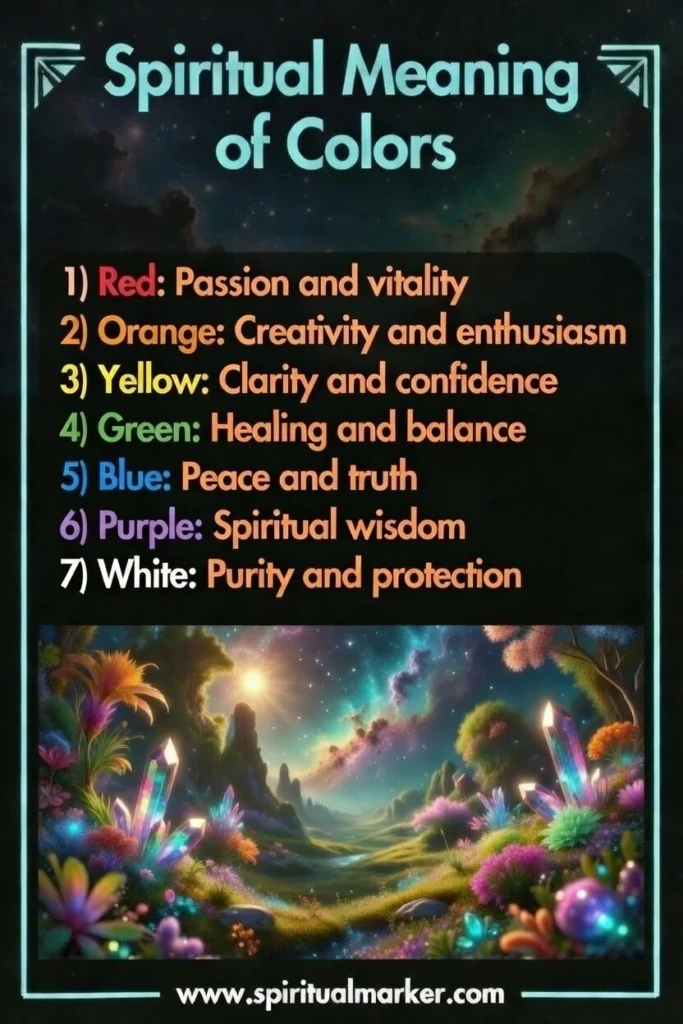
Each color carries layered meanings. Here, we link ideas from spirituality, chakra systems, aura energy, and healing practices. We also include myths and historical context.
1) The Spiritual Meaning of Red
Red sits at the very base of spiritual energy. It is the pulse that keeps us alive, the instinct that tells us to stand our ground, and the fire that pushes us forward when fear tries to stop us. Spiritually, red is tied to the root chakra, the energetic center connected to safety, survival, and belonging. When this chakra feels steady, life feels solid beneath your feet. You trust yourself. You move with purpose.
When red energy becomes excessive, emotions can turn sharp. Anger, impatience, or restlessness may rise. When it weakens, the opposite happens. You might feel insecure, disconnected, or constantly worried about the future. Red asks one simple question: do you feel safe in your body and in your life?
In aura readings, red auras often belong to people driven by passion and action. These individuals rarely wait around. They initiate, protect, and lead. In healing traditions, stones like garnet, red jasper, and ruby are used to awaken courage and physical strength. They are often recommended during exhaustion, grief, or major life transitions.
Across history, red carried immense weight. Warriors painted themselves in red before battle. Ancient rituals used blood as a sacred symbol of sacrifice and rebirth. In myths, red frequently marks death that leads to renewal. Something ends, yet life continues stronger than before.
2) The Spiritual Meaning of Yellow
Yellow moves upward into the realm of thought, confidence, and self awareness. It connects directly with the solar plexus chakra, the energetic center of willpower, identity, and personal authority. Yellow energy encourages you to trust your decisions and honor your inner voice.
When balanced, yellow feels light and empowering. You think clearly, act decisively, and believe in your ability to shape your path. When blocked, self doubt creeps in. Overthinking replaces clarity. Fear of judgment grows louder than intuition.
People with yellow auras often radiate curiosity and enthusiasm. They enjoy learning, teaching, and exchanging ideas. Crystals such as citrine and yellow topaz are commonly used to sharpen focus and dissolve mental fog. These stones are popular during study periods, career shifts, or moments requiring confidence.
Ancient cultures closely tied yellow to the sun. It represented life giving energy, divine intelligence, and sacred knowledge. In spiritual stories and myths, yellow often marks moments of awakening. Truth comes into the light. Confusion fades. Insight arrives quietly, then changes everything.
3) The Spiritual Meaning of Green
Green rests at the center of the chakra system, bridging body and spirit. It aligns with the heart chakra, the energetic space of love, empathy, and emotional balance. Green energy supports healing that unfolds slowly and deeply, the kind that rebuilds rather than rushes.
When green flows freely, forgiveness becomes easier. Emotional wounds soften. You feel connected to others without losing yourself. When this energy is blocked, resentment or emotional withdrawal may appear. The heart closes as a form of protection.
A green aura reflects harmony and compassion. These individuals often serve as quiet healers in their circles. Stones like emerald, jade, and green aventurine are used to restore emotional balance and invite renewal. They are especially helpful after loss, heartbreak, or prolonged stress.
Historically, green symbolized fertility, abundance, and life cycles. Fields turning green marked survival and prosperity. Many myths describe green beings as guardians of forests and natural rhythms. Green reminds us that healing follows seasons. Growth happens when patience replaces pressure.
4) The Spiritual Meaning of Blue
Blue carries the energy of calm expression and inner truth. It resonates with the throat chakra, which governs communication, honesty, and self expression. Blue encourages speaking with clarity while also listening with presence.
Balanced blue energy brings peace to the mind. Thoughts slow down. Words feel aligned with intention. When blocked, communication breaks down. You may feel unheard, misunderstood, or hesitant to speak openly. When excessive, silence can turn into emotional distance.
Those with blue auras often project wisdom and sincerity. Others naturally trust them. In spiritual practices, stones like lapis lazuli and aquamarine support clear communication and intuitive insight. They are commonly used during meditation, writing, or difficult conversations.
Throughout history, blue symbolized protection and sacred authority. Royalty wore blue to signify divine favor. In myths, blue appears in skies, oceans, and holy waters. It represents the vast unknown, inviting trust in forces larger than the self.
5) The Spiritual Meaning of Brown
Brown brings spiritual focus back to the earth. It symbolizes stability, humility, and grounded presence. While it does not link directly to a single chakra, brown supports the entire energetic system by anchoring it in reality.
Brown energy offers reassurance. It reminds you to slow down, care for basic needs, and find comfort in simplicity. When balanced, it creates reliability and patience. When stagnant, it may reflect resistance to change or emotional heaviness.
A brown aura often belongs to individuals who value responsibility and consistency. They are dependable, even during chaos. Stones like smoky quartz and petrified wood help release tension and reconnect with the present moment.
Historically, brown represented labor, craftsmanship, and survival. It was the color of soil, homes, and tools. In folklore, brown frequently appears in stories of earth guardians and ancestors. It symbolizes roots, reminding us that strength often comes from where we began.
6) The Spiritual Meaning of Orange
Orange carries a lively, expressive energy that sits between the fire of red and the brightness of yellow. Spiritually, it speaks to creative flow, emotional balance, and confident self expression. Many traditions link orange with the sacral chakra, the energy center tied to pleasure, desire, intimacy, and how freely emotions move through you. When this chakra stays balanced, life feels vibrant rather than overwhelming.
On an emotional level, orange encourages openness. It helps people process feelings without suppressing them or letting them spill out chaotically. That is why orange often appears during phases of healing relationships, rediscovering joy, or rebuilding self worth after emotional setbacks.
An orange aura often reflects warmth, enthusiasm, and a natural ability to uplift others. People with this aura tend to thrive in social settings and creative pursuits. They draw energy from connection, laughter, and shared experiences. Spiritually, they act as bridges between people, easing tension and restoring harmony.
Crystals amplify this energy. Carnelian fuels motivation, courage, and creative momentum. Orange calcite clears emotional blockages and renews optimism. In ancient cultures, orange symbolized transformation and renewal, especially during rites of passage. Many myths describe orange as the meeting point of earthly desire and spiritual awakening, a reminder that growth often begins in the body before rising into higher awareness.
7) The Spiritual Meaning of Indigo
Indigo holds a quiet, introspective power. Spiritually, it represents intuition, inner truth, and heightened awareness. Closely connected with the third eye chakra, indigo governs perception beyond logic. It helps people see patterns, meanings, and subtle signals that remain hidden at surface level.
This color often appears during periods of deep reflection. Indigo energy encourages silence, meditation, and trust in inner guidance. When balanced, it sharpens discernment and strengthens spiritual confidence. When blocked, it may show up as confusion, self doubt, or difficulty trusting one’s instincts.
An indigo aura suggests sensitivity and wisdom. These individuals often feel drawn to spiritual study, psychology, or healing practices. They sense emotional undercurrents in rooms and conversations, sometimes without knowing why. Their challenge lies in grounding insights into daily life.
Certain stones support indigo energy. Amethyst enhances spiritual clarity and calm awareness. Sodalite strengthens intuition while promoting rational understanding. Historically, indigo dye carried sacred importance due to its rarity and depth. In myths and ancient stories, indigo robes marked seers, mystics, and visionaries, people believed to walk between the visible world and the unseen.
8) The Spiritual Meaning of Purple
Purple resonates with spiritual depth, mystery, and expanded consciousness. It aligns with the crown chakra, the energy center associated with divine connection and higher awareness. Purple invites reflection beyond material concerns and encourages trust in universal wisdom.
Spiritually, this color represents transcendence. It often appears during moments of awakening, spiritual curiosity, or inner questioning. Purple energy helps individuals release ego driven desires and tune into something greater than personal ambition.
A purple aura signals spiritual sensitivity and intuitive strength. People with this aura often feel drawn to meditation, philosophy, or symbolic thinking. They seek meaning rather than surface success. While this depth brings insight, it also calls for balance to stay grounded in daily life.
Crystals such as amethyst calm the mind and deepen meditation, while charoite supports spiritual transformation and emotional resilience. Throughout history, purple symbolized royalty and divine authority due to its rarity and cost. Myths often link purple to sacred knowledge, cosmic power, and hidden truths reserved for those ready to receive them.
9) The Spiritual Meaning of Pink
Pink carries a gentle, soothing vibration rooted in love, compassion, and emotional healing. It connects closely with heart energy but without the intensity often associated with red. Pink nurtures softness, forgiveness, and emotional safety.
Spiritually, pink supports healing after emotional pain. It encourages kindness toward others and toward oneself. This color often appears during times when the soul needs comfort, reassurance, and patience rather than bold action.
A pink aura reflects empathy and emotional openness. These individuals often act as caregivers or peacemakers. They sense emotional shifts easily and respond with understanding rather than judgment. Their strength lies in emotional intelligence and sincere connection.
Rose quartz embodies pink energy by promoting self love, harmony, and emotional balance. Historically, pink symbolized innocence, affection, and youthful hope. In folklore, pink often appeared in stories of reconciliation and emotional renewal, representing the heart’s ability to heal without losing its tenderness.
10) The Spiritual Meaning of Gray
Gray represents neutrality, balance, and transition. Spiritually, it occupies the space between extremes, neither light nor dark, neither active nor passive. Gray energy invites pause, reflection, and thoughtful evaluation.
This color often appears during periods of uncertainty or change. Gray does not push for immediate answers. Instead, it encourages observation and patience. Spiritually, it teaches acceptance of complexity and reminds people that clarity often arrives after stillness.
A gray aura suggests calm thinking and emotional restraint. These individuals tend to approach life logically, weighing options carefully. They provide stability during chaos but may struggle with emotional expression if overly guarded.
Grounding stones such as hematite help anchor gray energy, promoting mental clarity and emotional balance. Historically, gray symbolized wisdom, maturity, and age, reflecting experience earned over time. In myths, gray often appears as the threshold between the known and the unknown, a quiet gateway where insight forms before revelation.
11) The Spiritual Meaning of Black
Black is often misunderstood as purely negative, but its spiritual significance is layered and profound. At its core, black represents mystery, protection, and endings. It acts as a shield, absorbing negative energies around us and helping maintain personal boundaries. Spiritually, black can mark transformation—it signifies the completion of cycles, the clearing of old patterns, and preparation for new beginnings.
In the aura system, black auras indicate resilience, independence, and a deep connection to the unknown. People with black energy often have a strong sense of self-reliance, a reflective personality, and a heightened ability to navigate challenges. They may also be exploring profound personal transformations or spiritual awakenings.
Black crystals are particularly potent in protection. Obsidian and black tourmaline absorb harmful energies, shield against psychic attacks, and ground spiritual energy to the Earth. These stones are widely used in rituals for cleansing spaces or personal energy fields.
Historically, black has symbolized power, authority, and the mysteries of the cosmos. Ancient civilizations, from Egyptians to Mesopotamians, associated black with the fertile soil of life and death alike. In mythology, black often appears in tales of death and rebirth, cosmic voids, and hidden truths. It reminds us that endings are not merely closures—they are opportunities for renewal.
12) The Spiritual Meaning of White
White embodies purity, peace, and spiritual clarity. It is the color of light, containing all colors of the spectrum, which makes it a symbol of wholeness, unity, and divine energy. Spiritually, white energy acts as a cleanser—it clears emotional clutter, resets your energy field, and facilitates healing.
White auras often suggest spiritual openness, clarity of mind, and a strong connection to higher consciousness. Individuals with white auras are usually seekers of truth, devoted to spiritual practice, or drawn toward helping others in subtle, compassionate ways.
Crystals like clear quartz amplify the spiritual and healing properties of white. Quartz works to magnify intention, cleanse energy, and align the body’s vibrations with higher frequencies.
Throughout history, white has been associated with holiness, sacredness, and innocence. Religious traditions across the world use white in ceremonies to symbolize purity, such as in weddings or initiation rituals. Mythology frequently casts white as divine light or truth—angels, celestial beings, and spiritual guides are often depicted in white garments, reflecting enlightenment and protection.
13) The Spiritual Meaning of Gold
Gold radiates abundance, wisdom, and divine energy. It represents illumination, prosperity, and spiritual success. Unlike other colors, gold carries a dual meaning: material wealth and spiritual richness. Its glow draws attention to the sacred, the divine, and the eternal.
A gold aura indicates high spiritual vibration, confidence, and alignment with one’s purpose. People with golden energy often have natural charisma, clarity of vision, and a sense of inner wisdom.
Crystals like pyrite resonate with gold energy, supporting manifestation, personal empowerment, and the realization of goals. They inspire confidence while connecting material abundance with spiritual insight.
Historically, gold has symbolized immortality, divine authority, and enlightenment. Ancient civilizations, from the Egyptians to the Aztecs, used gold in sacred rituals, temples, and objects to represent eternal light and the favor of the gods. Mythologies frequently link gold with gods, sacred treasures, and divine rewards, underscoring its association with both spiritual and earthly richness.
14) The Spiritual Meaning of Silver
Silver is the color of intuition, reflection, and feminine energy. It mirrors the cycles of the moon and embodies subtle wisdom, emotional insight, and adaptability. Spiritually, silver supports inner reflection, guiding us to recognize hidden truths within ourselves.
A silver aura suggests sensitivity, balance, and heightened intuition. Individuals with silver energy are often in tune with emotions, psychic impressions, or subtle energies around them. They may be natural counselors, healers, or visionaries.
Moonstone and silver crystals enhance intuition, emotional clarity, and spiritual insight. They encourage meditation, dream work, and alignment with natural rhythms.
Historically, silver symbolized protection, reflection, and spiritual guidance. In many cultures, silver was believed to repel negative forces and guide souls safely through transitions. Myths frequently associate silver with lunar deities, mystical mirrors, and objects that bridge the material and spiritual worlds.
Color Meanings at a Glance
| Color | Core Spiritual Theme | Primary Chakra | Associated Crystal |
|---|---|---|---|
| Red | Survival, strength | Root | Garnet |
| Yellow | Confidence, clarity | Solar Plexus | Citrine |
| Green | Healing, love | Heart | Emerald |
| Blue | Truth, calm | Throat | Lapis Lazuli |
| Purple | Spiritual awareness | Crown | Amethyst |
| Black | Protection, transformation | Root/All | Obsidian, Black Tourmaline |
| White | Purity, clarity | Crown | Clear Quartz |
| Gold | Abundance, divine energy | Solar Plexus/Crown | Pyrite |
| Silver | Intuition, reflection | Third Eye | Moonstone |
Cultural and Religious Significance of Colors
Colors carry sacred and symbolic roles across cultures. White, for example, symbolizes mourning in parts of Asia, while in Western traditions, it is associated with weddings and innocence. Black represents grief in the West, yet in ancient Egypt, it symbolized fertility and life after death. Red marks weddings and celebrations in many Asian societies, reflecting passion and vitality. Blue often appears in protective symbols, amulets, and religious attire.
Religious texts imbue colors with spiritual authority. Gold signifies divinity, perfection, and illumination. Green is linked to paradise, fertility, and healing. Purple denotes spiritual authority, power, and sacred knowledge. These symbolic meanings continue to influence rituals, art, and spiritual practice globally.
Interesting Facts, Myths, and Omens Associated with Colors
- Repeated exposure to a color may highlight emotional or spiritual focus.
- Colors in dreams often reveal subconscious thoughts or guidance.
- Sudden attraction to certain colors may indicate chakra imbalance or energy shifts.
- Changes in aura colors reflect emotional transitions, growth, or healing.
- Ancient civilizations often interpreted colors as omens, connecting them with fate, fortune, or divine messages.
Final Thoughts
Colors speak a language beyond words. They mirror inner emotions, highlight energetic imbalances, and guide spiritual growth. Paying attention to the colors around you—whether in nature, clothing, or your aura—can illuminate hidden aspects of your inner life.
Knowing the spiritual meaning of colors provides a subtle yet powerful framework for self-awareness. It allows you to navigate life with intuition, recognize cycles of transformation, and align with your higher self. Every color carries a message; learning to read it deepens your connection to the world and yourself.
You Might Also Like
1) Red Butterfly Spiritual Meaning and Symbolism
2) Black and White Butterfly Spiritual Meaning & Symbolism
3) Blue Butterfly Spiritual Meaning, Symbolism & Significance
4) Spiritual Meaning of Finding a Grey Feather & Symbolism
5) Burning Eyes Spiritual Meaning (Right & Left)
FAQs
1. What is the spiritual meaning of colors in general?
Colors carry spiritual meaning through their vibration, symbolism, and emotional impact. Each color resonates with different energy frequencies that affect our mood and consciousness. Red represents passion, action, and life force energy. Blue connects with peace, truth, and spiritual communication. Green symbolizes healing, growth, and balance. Yellow brings clarity, optimism, and mental focus. Purple represents intuition, spirituality, and higher consciousness. White signifies purity, new beginnings, and divine connection. Black represents protection, mystery, and the unknown. These meanings appear across cultures with remarkable consistency. Understanding color energy helps you choose colors intentionally for your spiritual practice.
2. How do colors affect our spiritual energy?
Colors affect our spiritual energy through their unique vibration and frequency. Each color has a specific wavelength that interacts with our energy centers or chakras. Red and orange stimulate the root and sacral chakras, enhancing physical energy and creativity. Blue and purple influence the throat and crown chakras, supporting communication and spiritual connection. Green works on the heart chakra, promoting love and healing. Yellow activates the solar plexus chakra, boosting personal power and confidence. When you surround yourself with certain colors, you can influence your energy in specific ways. This awareness allows you to use colors to balance your energy and support your spiritual growth.
3. Can wearing certain colors affect my spiritual state?
Yes, wearing certain colors can affect your spiritual state and energy throughout the day. The colors you wear interact with your aura and energy field. Wearing red might make you feel more confident and energetic. Blue clothing can promote calm communication and peace. Yellow clothing might enhance your mental clarity and optimism. Green clothing supports heart-centered energy and emotional balance. Purple attire can help you feel more intuitive and spiritually connected. White clothing often brings a sense of purity and fresh energy. You can choose colors based on how you want to feel or what you need to focus on. This simple practice helps align your outer appearance with your inner intentions.
4. What does it mean if I am drawn to a particular color spiritually?
Being consistently drawn to a particular color carries spiritual meaning about your current needs and energy. If you are drawn to blue, you might be seeking peace or clearer communication. A pull toward green could indicate a need for healing or growth. Attraction to red might suggest you need more passion or courage in your life. A preference for purple often indicates spiritual seeking or intuitive development. Your color preferences can also change based on what you need at different times. Pay attention to color attractions as potential messages from your higher self. They might indicate areas of your life that need attention or support. Trust these preferences as guidance for your spiritual journey.