A stuffy nose makes breathing feel like work. A cold nose can feel odd, especially when the rest of your body is warm.
The spiritual meaning of a stuffy nose or cold nose often connects to blocked emotions, unspoken words, or a lack of warmth in your life. Superstition sometimes links a cold nose to someone thinking about you. A related symptom appears in spiritual meaning of common cold or runny nose.
The nose is linked to pride, intuition, and the ability to smell truth. A blocked nose may signal that you are ignoring something important.
If the issue moves into your sinuses, spiritual meanings of sinus infection offers a deeper look.
What Does Stuffy Nose or Cold Nose Symbolize Metaphysically?
Metaphysically, the nose relates to intuition and discernment. It helps you “sense” what feels right. It also connects to survival instincts. Animals rely on smell to detect danger. Humans still carry that ancient wiring.
A stuffy nose can symbolize emotional congestion. You may feel unable to process certain feelings. Instead of expressing grief or anger, you push it down. Over time, that emotional pressure shows up physically.
A cold nose often symbolizes withdrawal. You may feel disconnected from warmth, love, or comfort. Spiritually, coldness can reflect fear or insecurity. When you guard your heart, your body may mirror that chill.
Breath also carries life force energy. In many traditions, breath equals spirit. When breathing feels restricted, energy flow may feel restricted too. This can suggest blocked chakras, especially around the heart or throat.
Therefore, your nose becomes more than a body part. It becomes a signal.
10 Spiritual Meanings of a Cold or Stuffy Nose
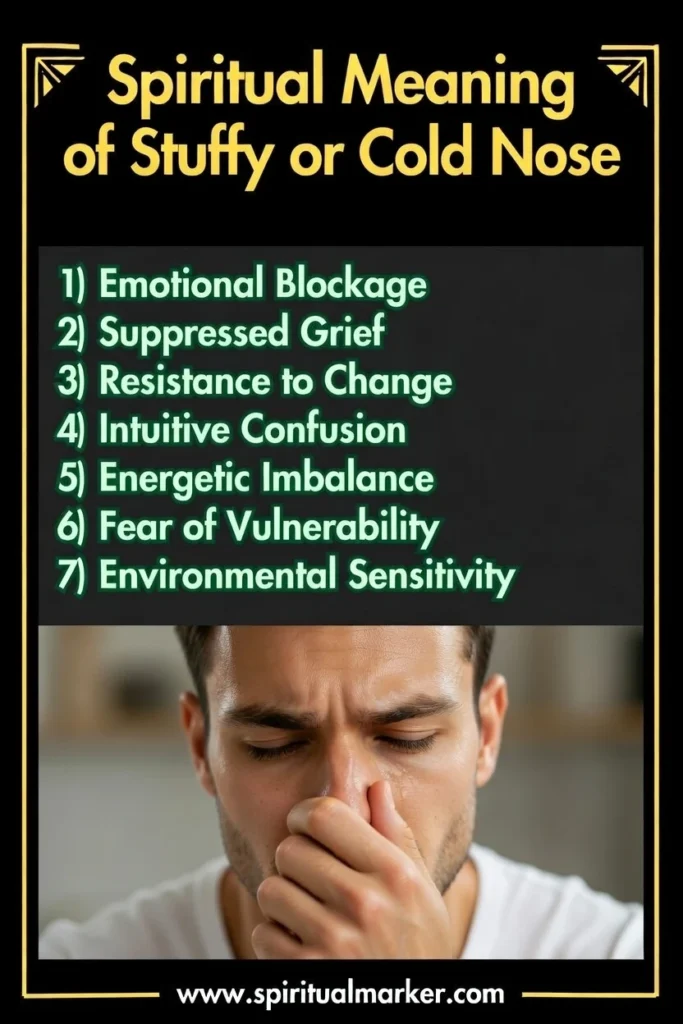
A cold or stuffy nose often carries deeper spiritual significance beyond physical causes, signaling messages from the body, emotions, and energy field. These 10 spiritual meanings of a cold or stuffy nose reveal hidden insights for healing and growth.
1) Emotional Blockage
A stuffy nose often reflects emotional blockage, pointing to feelings that have nowhere to go. When emotions stay trapped, they behave like thick fog inside the chest and head. You may keep smiling on the outside, yet inside you feel tight, pressured, and mentally crowded.
Breathing represents life force. In many spiritual traditions, breath connects the body and soul. In practices like Yoga, controlled breathing clears inner channels. When your nose feels blocked, it can symbolize blocked emotional energy. You may hold in frustration. You may avoid difficult conversations. Or, you may silence your own needs.
Life changes often trigger this pattern. A new job, a breakup, or a move can overwhelm you. Instead of processing the stress, you push it aside. However, the body keeps score. Congestion then becomes a physical mirror of emotional congestion.
To clear this, start simple. Write what you feel without editing yourself. Practice slow breathing. Sit quietly and notice what rises. As you acknowledge hidden feelings, the inner flow gradually returns.
2) Suppressed Grief
When you experience suppressed grief, it can manifest as nasal congestion. Grief does not always cry loudly. Sometimes it hides in the body for years.
Loss changes us. You may lose a loved one, a friendship, or even a dream. If you do not fully grieve, sorrow can settle like cold air inside the sinuses. Spiritually, congestion may signal that old pain wants recognition.
Tears cleanse. When tears stay locked behind emotional walls, the body may react. Nasal stuffiness can represent uncried tears. In spiritual counseling traditions, grief often surfaces physically when the soul asks for closure.
Therefore, give yourself permission to mourn. Light a candle. Speak the name of what you lost. Talk to a trusted friend or therapist. When you honor grief instead of hiding it, you release both emotional and energetic pressure.
3) Resistance to Change
A blocked nose can indicate resistance to change, which connects strongly with breath. Breath symbolizes acceptance. When you resist life, breathing may feel restricted.
Change scares many people. You might cling to the familiar even when it no longer serves you. As a result, your body tightens. Congestion can reflect that inner refusal to let fresh air in.
Spiritually, growth requires openness. Trees bend with the wind. Water flows around obstacles. If you stiffen against new opportunities, energy stagnates.
Pause and ask yourself: What am I avoiding? What feels uncomfortable but necessary? When you shift from fear to curiosity, your inner airways symbolically open. Acceptance restores movement in both life and spirit.
4) Intuitive Confusion
Nasal stuffiness sometimes points to intuitive confusion, suggesting mental and spiritual fog. When your inner guidance feels unclear, your breathing may feel cloudy too.
Intuition speaks softly. Yet constant noise, stress, and distraction drown it out. You may overthink decisions. You may doubt your instincts. That scattered state can show up as congestion.
In spiritual practice, clarity often comes through silence. Traditions such as Buddhism teach that calm awareness sharpens perception. When you meditate, your thoughts slow down. When thoughts slow down, insight rises.
Therefore, reduce mental clutter. Spend time in nature. Pray. Meditate. Journal your dreams. As your mind clears, the symbolic fog lifts.
5) Energetic Imbalance
A cold or stuffy nose often reveals an energetic imbalance related to blocked life force. Many healing systems describe energy flowing through the body. When it stagnates, physical symptoms may appear.
In Ayurveda, imbalances in vital energies can influence breathing and immunity. Similarly, in Traditional Chinese Medicine, blocked energy in lung pathways affects nasal health. Although these systems differ, they share one idea: energy must move.
Emotional suppression, chronic stress, and negative environments disturb that flow. Consequently, the body reacts.
You can restore balance through gentle rituals. Practice deep breathing. Try energy healing methods like Reiki. Stretch your body. Spend time near water or trees. Movement, both physical and emotional, helps energy circulate again.
6) Fear of Vulnerability
Congestion can stem from a fear of vulnerability, highlighting emotional self-protection. When you feel unsafe opening your heart, you may unconsciously shut down.
Coldness often symbolizes emotional distance. A cold nose can reflect guarded feelings. Perhaps you fear rejection. Perhaps you avoid deep conversations. Over time, emotional walls become physical tension.
Connection requires softness. However, softness feels risky. You cannot control how others respond. Yet isolation costs more than vulnerability.
Start with small steps. Share one honest feeling with someone you trust. Practice self-compassion. Gradually, as your heart opens, your breath feels freer.
7) Spiritual Awakening Symptoms
Sometimes a stuffy nose accompanies spiritual awakening symptoms during periods of intense inner growth. Many people report flu-like sensations when their beliefs and identity shift.
During awakening, old emotional patterns surface. The body detoxifies stored tension. Congestion may symbolize clearing outdated energies.
In spiritual circles, people sometimes link these experiences to rising consciousness or expanded awareness. Whether you interpret it symbolically or psychologically, the message remains similar: transformation can feel uncomfortable.
Rest becomes essential. Drink water. Sleep more. Reflect on changes happening within you. Growth stretches the soul, yet patience supports the process.
8) Environmental Sensitivity
Nasal congestion can arise from environmental sensitivity, suggesting that you absorb surrounding energy easily. Some individuals react strongly to negativity, conflict, or chaotic spaces.
If you enter a tense room and instantly feel heavy, your body may respond. Congestion can act as a subtle alarm system. It signals that something in your environment drains you.
Spiritual traditions often recommend grounding practices. Stand barefoot on natural earth. Visualize protective light around you. Cleanse your space through prayer or mindful intention.
Boundaries matter as well. Limit exposure to toxic conversations. Protect your peace. As you guard your energy, your body may feel less burdened.
9) Need for Rest and Reflection
A cold or stuffy nose often signals a need for rest and reflection in a very practical way. Sometimes the body simply demands pause.
Stress weakens the immune system. Constant activity exhausts both mind and spirit. When you ignore fatigue, your body may slow you down through congestion.
Think of it as a red light. Stop. Breathe. Recover.
Instead of pushing through, create quiet space. Turn off devices. Sleep earlier. Reflect on what truly matters. When you honor rest, you restore alignment.
10) Disconnection from Inner Truth
A blocked nose can point to a disconnection from inner truth regarding authenticity. When you live against your values, inner tension builds.
Perhaps you say yes when you want to say no. Perhaps you follow expectations instead of your calling. Over time, that misalignment creates stress.
Breath connects to voice. If you silence your truth, breathing can symbolically tighten. Congestion may represent hesitation to speak honestly.
Reconnect by asking clear questions. What do I truly want? What feels right in my body? As you answer honestly and act with integrity, your energy aligns with your core self.
Cultural and Religious Significance of Stuffy Nose
Across cultures, breath carries sacred value. In the Bible, God breathes life into Adam. In Hindu philosophy, prana flows through breath. Similarly, in Buddhism, mindful breathing anchors awareness.
When breath feels blocked, some interpret it as spiritual misalignment. For example, yogic traditions link nasal passages to energy channels called nadis. If these channels feel blocked, practitioners believe energy cannot circulate freely.
In Ayurveda, congestion may relate to excess Kapha energy. Kapha represents heaviness and stagnation. Spiritually, stagnation can reflect attachment or emotional holding.
In certain African folk beliefs, persistent congestion may signal spiritual interference. Elders may suggest cleansing rituals to restore balance.
Some Native American traditions view breath as a sacred exchange with nature. If breathing becomes difficult, it may symbolize disharmony with surroundings.
In parts of Eastern Europe, a sudden cold nose once suggested someone spoke about you. While this sounds playful, it reflects a belief that the body reacts to unseen energies.
Japanese folk belief sometimes associates cold extremities with low life force. Though modern medicine explains circulation, spiritual thinkers still connect warmth with vitality.
Christian mystics often described spiritual dryness as a form of inner coldness. While they did not focus on the nose specifically, the symbolism of cold remains relevant.
Myths and Superstitions Associated with Stuffy Nose
Superstitions grow from observation mixed with imagination. A common belief says a cold nose means someone misses you. Another claims congestion appears when you ignore your intuition.
In some communities, elders warned that repeated colds meant you resisted destiny. They believed the body forced you to slow down.
Another superstition suggests that if only one nostril blocks, it predicts an argument. Though there is no scientific proof, people still share these ideas.
Interestingly, many superstitions focus on attention. They treat symptoms as messages rather than accidents. Whether true or not, they encourage reflection.
You might ask yourself what feels unresolved. You might consider whether stress overwhelms you. Even superstition can spark healthy self awareness.
Chinese Medicine Insights on Stuffy or Cold Nose
Traditional Chinese Medicine offers a detailed view of nasal health. It connects the nose to the Lung meridian. The lungs govern Qi, which means life energy.
When Lung Qi weakens, symptoms like congestion appear. Practitioners also link the nose to the Large Intestine meridian. This may sound surprising. Yet both organs relate to release.
If you struggle to let go emotionally, the body may mirror that struggle physically. Grief especially affects the lungs in Chinese thought.
Cold invasion also plays a role. External cold can disrupt internal balance. However, emotional coldness can do the same.
Acupuncture and herbal formulas aim to restore flow. They do not treat only the symptom. They treat the pattern beneath it.
This holistic view blends physical and spiritual awareness seamlessly.
Spiritual Remedies for a Cold or Stuffy Nose
If you sense a spiritual layer behind your symptoms, start gently. First, pause and breathe slowly. Even shallow breaths deserve attention.
Practice mindful breathing daily. Sit quietly for five minutes. Focus only on air entering and leaving your body. This calms both mind and energy.
Next, journal your emotions. Ask yourself what you avoid. Write honestly. Hidden feelings often create internal pressure.
Energy cleansing may also help. Some people burn sage or palo santo. Others prefer prayer or mantra chanting. Choose what aligns with your belief system.
Warmth matters too. Take warm baths. Drink herbal teas. Surround yourself with comforting environments. Physical warmth can support emotional warmth.
Forgiveness work can release deep congestion. Holding resentment tightens the chest. Letting go softens breath.
However, always rule out medical causes first. Spiritual insight should complement healthcare, not replace it.
Final Thoughts
A stuffy or cold nose may seem minor. Still, your body rarely acts without reason. Sometimes the reason is simple biology. Other times it carries emotional or spiritual layers.
When breathing feels blocked, consider your inner world. Are you holding grief? Are you resisting change? Do you feel disconnected from warmth?
Listen without fear. Reflect without judgment. Small symptoms can teach powerful lessons.
In the end, the goal is balance. Clear breath often follows clear emotion. When energy flows freely, both body and spirit feel lighter.
You Might Also Like
1) Spiritual Meaning of Waking Up at 4 AM (with Biblical Explanation)
2) Itchy Forehead Superstition and Spiritual Meaning You Didn’t Know
3) Spiritual Meaning of Mole on the Nose for Females & Males
4) Nose Twitching Superstition and Spiritual Meaning
5) Nose Burning Spiritual Meaning and Superstition
References
- https://spiritualmojo.com/blocked-nose-spiritual-meaning/
- https://insighttimer.com/juliepeterswellness/guided-meditations/exploring-the-spiritual-meaning-of-colds-and-flus
- https://sworthley.com/signs-and-symptoms-of-spiritual-awakening-ascension-series-2/
- https://greendoorrelaxation.net/2015/02/19/a-cold-your-body-speaks-your-mind/
- https://awakeninghealth.ca/a-cold-your-body-speaks-your-mind