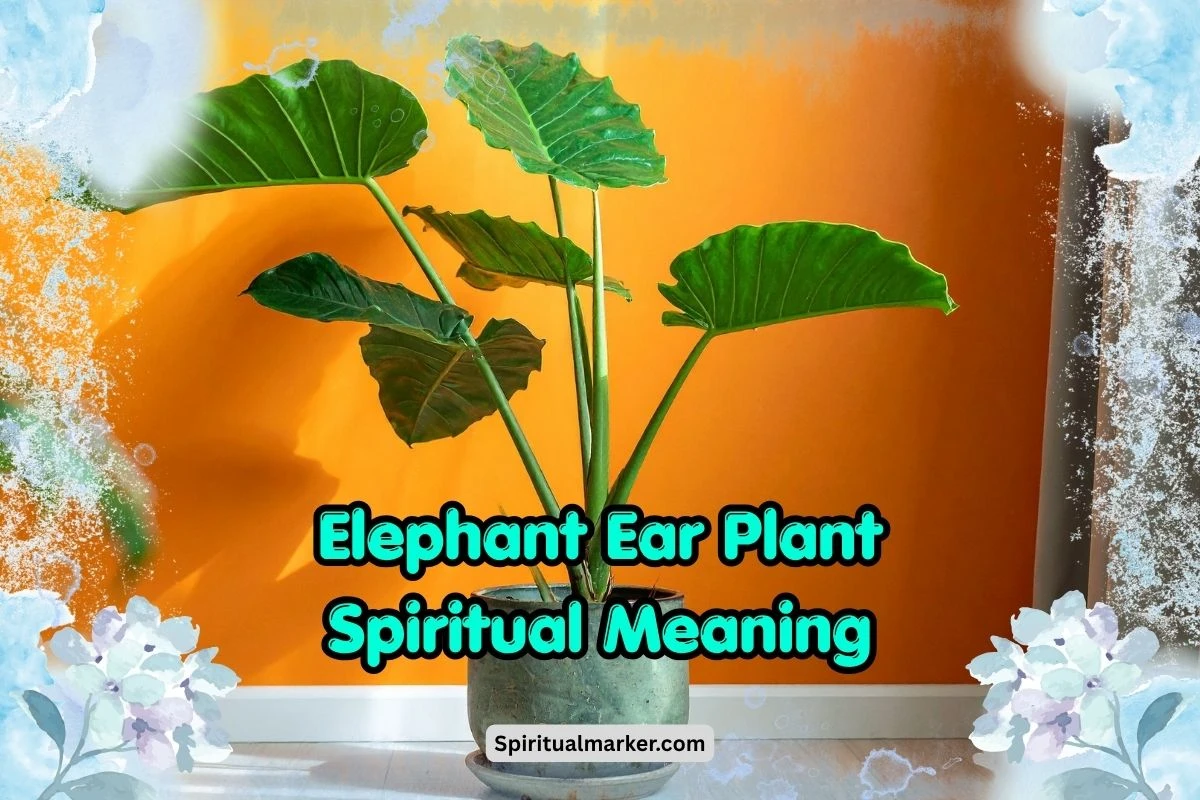
The elephant ear plant is known for its massive, heart-shaped leaves. Its dramatic foliage makes a bold statement in any garden or home. Across cultures, this plant carries deep spiritual meaning and symbolism.
The elephant ear plant spiritual meaning often involves abundance, protection, and grounding. The large leaves are shaped like ears, so they can symbolize listening and receptivity. A spiritual meaning of mushrooms and their symbolism shares that plant-focused symbolism, though mushrooms carry a different, more hidden energy.
Some traditions view the elephant ear plant as a guardian of the home or a symbol of financial prosperity. Others see it as a call to listen more deeply. The size and health of the plant can add detail.
If you keep an elephant ear plant, it may bring grounding energy. A spiritual meaning of a snake plant also deals with houseplants, though snake plants carry a more protective, sharp energy.
Key Takeaways
- The elephant ear plant symbolizes protection and emotional shielding, often associated with creating safe energetic boundaries in your environment.
- Its large leaves reflect abundance and expansion, making it a common symbol of growth, both material and spiritual.
- In metaphysical traditions, it connects strongly to grounding energy while also encouraging emotional openness.
- Different colors, particularly white and black varieties, carry distinct spiritual meanings related to purity, mystery, and transformation.
- Placement and care are believed to influence its energetic impact, especially in home environments and spiritual practices.
What Does Elephant Ear Plant Represent Metaphysically?
From a metaphysical perspective, the elephant ear plant represents a balance between openness and protection. This duality is central to its symbolism. On one hand, the expansive leaves suggest receptivity, like a willingness to absorb light, energy, and life itself. On the other hand, those same leaves act like shields, symbolizing boundaries and emotional resilience.
Many spiritual interpretations connect the plant to grounding energy. Its roots anchor deeply into the soil, while its leaves stretch outward, creating a visual bridge between earth and air. This makes it a symbol of stability paired with growth. You remain grounded while reaching for something greater.
There is also an emotional dimension to its meaning. The shape of the leaves, often compared to a heart, links the plant to compassion and emotional awareness. It invites you to reflect on how you protect your feelings and how open you allow yourself to be. In this way, the elephant ear plant becomes a quiet teacher, reminding you that strength and softness can coexist.
In energy work and spiritual symbolism, plants like this are sometimes viewed as absorbers of stagnant or heavy energy. While this idea varies across traditions, the general belief is that broad-leaf plants can help create a sense of calm and emotional clarity in a space.
9 Spiritual Meanings of Elephant Ear Plant
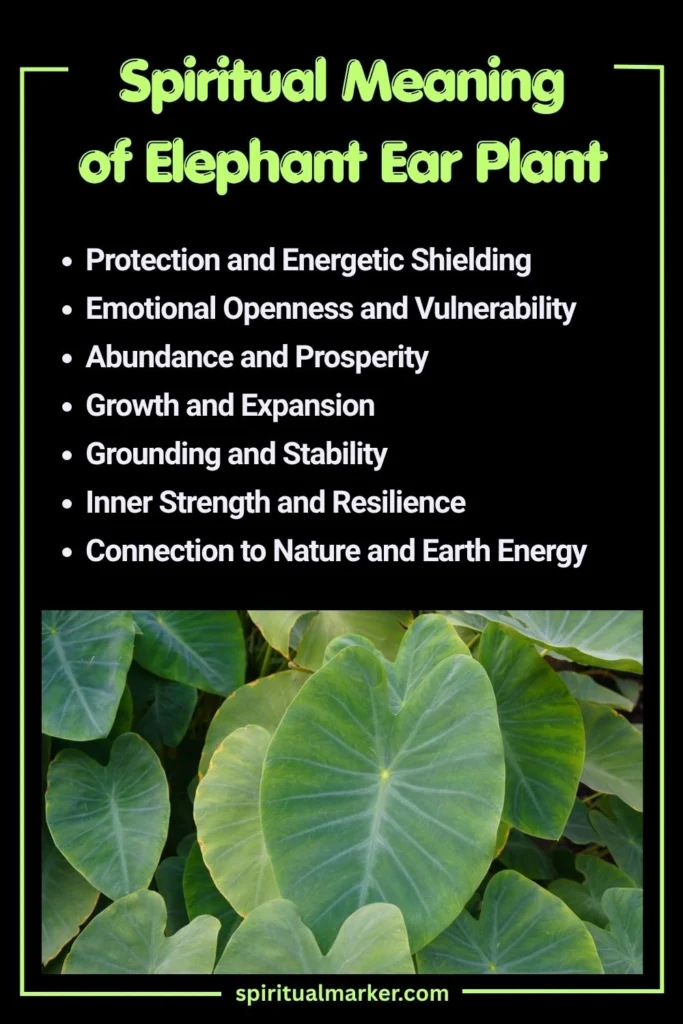
We are often drawn to plants not just for their beauty, but for what they seem to reflect back to us. The elephant ear plant, with its dramatic leaves and grounding presence, feels almost symbolic at first glance. Its meanings are layered, shaped by cultural traditions, ecological behavior, and the way humans interpret nature as a mirror of inner life. When we look closely, each spiritual meaning reveals something deeper about how we relate to protection, growth, emotion, and balance.
1. Protection and Energetic Shielding
If you have ever stood near an elephant ear plant, you may have noticed how its large leaves naturally create a sense of enclosure. This physical quality becomes the foundation of its spiritual interpretation as a protective force. Across folk traditions and energy-based practices, broad leaves are often seen as natural shields, absorbing and deflecting unwanted influences.
This symbolism is not only visual but experiential. In many cultures, homes are arranged with intention, and certain plants are placed near entrances to act as energetic gatekeepers. The elephant ear plant fits this role seamlessly. Its presence suggests a boundary that is not rigid or aggressive, but steady and watchful. It does not repel the world entirely. Instead, it filters what enters, allowing supportive energy while softening what may feel overwhelming.
At a deeper level, this meaning reflects an internal truth. Protection is not always about building walls. Sometimes it is about cultivating awareness and resilience so that external negativity loses its impact. The plant becomes a living reminder that you can remain open to life while still maintaining a strong sense of personal space and energetic integrity.
2. Emotional Openness and Vulnerability
There is something undeniably expressive about the elephant ear plant’s leaves. They do not curl inward or hide. They expand outward, wide and receptive, almost like open hands. This physical openness has long been associated with emotional vulnerability and authenticity.
In spiritual and psychological interpretations, vulnerability is often misunderstood as weakness. Yet many traditions, including mindfulness-based practices, frame it as a form of courage. The elephant ear plant embodies this idea visually. Its leaves are delicate in appearance, yet the plant itself is remarkably hardy. This contrast mirrors the human experience of feeling deeply while still remaining strong.
When people use this plant as a focal point in meditation or reflective practices, it often becomes a symbol of emotional permission. It invites you to consider where you may be holding back, where fear has created unnecessary barriers, and how openness might actually deepen your connections. At the same time, it acknowledges that vulnerability must exist within a safe environment. Just as the plant thrives in supportive conditions, emotional openness flourishes when there is trust and care.
3. Abundance and Prosperity
The association between lush plant growth and abundance is nearly universal. The elephant ear plant, with its large and plentiful leaves, naturally aligns with this symbolism. In Feng Shui and similar traditions, visual cues play an important role in shaping intention, and a thriving plant often represents expansion, wealth, and opportunity.
However, abundance in this context extends beyond financial gain. While many people place elephant ear plants in areas linked to prosperity, such as the southeast corner of a home, the deeper symbolism speaks to a broader sense of richness. It reflects the idea that life can be full in many ways, including relationships, creativity, health, and personal fulfillment.
There is also a cyclical aspect to this meaning. The plant’s growth depends on consistent care, proper environment, and time. This mirrors how abundance tends to unfold in real life. It rarely appears suddenly or without effort. Instead, it builds gradually, often in ways that are not immediately visible. The elephant ear plant, then, becomes a quiet symbol of trust in this process, reminding you that sustained growth often leads to lasting prosperity.
4. Growth and Expansion
Few plants demonstrate expansion as dramatically as the elephant ear. Its leaves can grow rapidly, sometimes transforming a space within a short period. This visible growth makes it a powerful metaphor for personal and spiritual development.
In many traditions, growth is not seen as linear. It involves periods of rapid change, followed by moments of stillness or consolidation. The elephant ear plant reflects this rhythm. It can surge forward under the right conditions, yet it also requires time to root itself deeply before expanding further.
Spiritually, this meaning often relates to stepping beyond comfort zones. Growth requires a willingness to stretch, to take risks, and to embrace the unknown. The plant’s bold presence suggests that expansion is not something to hide. It is something to embody fully.
At the same time, this symbolism carries a note of balance. Growth that is too fast without proper grounding can become unstable. The elephant ear plant reminds us that true expansion is supported by strong roots, both literally and metaphorically.
5. Grounding and Stability
Despite its large and expressive leaves, the elephant ear plant is deeply rooted in the earth. It thrives in rich, moist soil, drawing strength from its connection to the ground. This duality between expansive growth and deep grounding forms the basis of its symbolism in many spiritual systems.
Grounding is often associated with emotional stability, presence, and a sense of belonging. In a world that can feel fast-paced and unpredictable, the idea of being anchored becomes especially meaningful. The elephant ear plant visually reinforces this concept. Its weight, its structure, and its reliance on the earth all point toward steadiness.
Spending time with or caring for such a plant can evoke a subtle shift in awareness. It encourages you to slow down, to notice your surroundings, and to reconnect with the physical world. This is particularly relevant in practices that emphasize mindfulness or earth-based spirituality, where the goal is to return to the present moment.
At a symbolic level, grounding does not mean resisting change. Instead, it means having a stable foundation from which change can occur. The elephant ear plant embodies this balance, showing that you can grow and evolve without losing your sense of center.
6. Inner Strength and Resilience
Resilience often reveals itself not in ideal conditions, but in the ability to adapt and persist through challenges. The elephant ear plant, which can thrive in varied environments including low light or high humidity, has become a natural symbol of this quality.
What makes this symbolism particularly compelling is its subtlety. The plant does not appear rugged or defensive. Its leaves are soft and flowing, yet it continues to grow even when conditions are less than perfect. This contrast reflects a deeper understanding of strength. True resilience is not always forceful. It can be flexible, patient, and enduring.
In spiritual interpretations, this meaning often resonates during times of personal difficulty. The plant becomes a reminder that growth does not stop simply because circumstances are challenging. Instead, it adapts. It finds ways to continue.
This perspective shifts how we view hardship. Rather than seeing it as a barrier, it becomes part of the process that shapes strength. The elephant ear plant stands as a quiet example of this truth, showing that resilience can coexist with gentleness.
7. Connection to Nature and Earth Energy
There is an unmistakable sense of vitality in the elephant ear plant. Its tropical origins, its dependence on water and sunlight, and its expansive leaves all contribute to a feeling of being deeply alive. This vitality forms the basis of its association with nature and earth energy.
In many spiritual traditions, connecting with nature is seen as a way to restore balance and perspective. The elephant ear plant serves as a bridge in this process. It brings a piece of the natural world into your immediate environment, making that connection more accessible.
This meaning also touches on a broader ecological awareness. When you observe the plant closely, you begin to notice its relationship with its surroundings. It responds to light, moisture, and care. This interdependence reflects a larger truth about life. Nothing exists in isolation.
For those exploring eco-spirituality or simply seeking a deeper connection with the world around them, the elephant ear plant becomes more than decoration. It becomes a reminder of belonging, of being part of a living system that extends far beyond individual experience.
8. Transformation and Renewal
The life cycle of the elephant ear plant offers a powerful visual metaphor for transformation. In certain climates, it may die back or appear dormant, only to return with renewed growth when conditions improve. This cycle mirrors the human experience of endings and beginnings.
Transformation is often romanticized, yet it can involve periods of uncertainty, loss, or stillness. The elephant ear plant reflects this reality. Its periods of dormancy are not failures. They are part of its natural rhythm.
Spiritually, this meaning is often associated with letting go. Old patterns, beliefs, or circumstances may need to fade before new growth can emerge. The plant’s renewal then becomes a symbol of hope. It suggests that even after periods of inactivity or decline, life can return in a new and often more vibrant form.
This perspective encourages patience. Transformation rarely happens instantly. It unfolds over time, often in ways that are not immediately visible. The elephant ear plant reminds you to trust this process, even when it feels slow or uncertain.
9. Balance Between Giving and Receiving
The shape of the elephant ear leaf, wide and slightly cupped, has inspired interpretations related to exchange and reciprocity. It appears to hold space, neither completely closed nor entirely exposed. This balance becomes a metaphor for how energy flows in relationships and in life.
In many spiritual teachings, imbalance between giving and receiving is a common source of tension. Giving too much can lead to depletion, while receiving without giving can create disconnection. The elephant ear plant symbolizes a middle ground, where both actions coexist in harmony.
This meaning extends beyond interpersonal relationships. It also relates to how you engage with the world. Are you allowing yourself to receive support, opportunities, and care, or are you constantly in a position of output? Conversely, are you contributing meaningfully, or holding back?
The plant’s presence serves as a gentle reflection of these dynamics. It does not demand a specific answer. Instead, it invites awareness. By observing this natural balance, you are reminded that a healthy flow involves both offering and accepting, creating a cycle that sustains rather than drains.
Cultural and Feng Shui Interpretations
Across cultures, the symbolism of the elephant ear plant often overlaps with broader meanings associated with elephants themselves, such as wisdom, strength, and protection. While the plant is not always directly tied to elephant symbolism in every tradition, the visual resemblance creates a natural connection.
In Southeast Asian cultures, where the plant grows abundantly, it is often associated with fertility and nourishment. Its rapid growth and large leaves reflect the idea of life flourishing under the right conditions. This makes it a subtle symbol of prosperity and sustenance.
In African traditions, large-leaf plants are sometimes linked to ancestral protection and spiritual presence. While interpretations vary widely across regions, the idea of plants acting as intermediaries between the physical and spiritual world is a recurring theme.
From a Feng Shui perspective, the elephant ear plant is generally seen as a positive addition to the home. Its large, rounded leaves are believed to promote the flow of chi, or life energy. Rounded shapes in Feng Shui are associated with harmony and softness, which can help balance sharper or more rigid elements in a space.
Placement plays an important role in Feng Shui interpretation. When positioned in areas linked to wealth or family, the plant is thought to amplify growth and stability. Its presence can symbolize expansion, both in terms of material success and emotional well-being.
There are also contrasting views. Some practitioners caution that overly large plants can overwhelm a space if not balanced properly. This reflects a broader principle in Feng Shui, where harmony depends on proportion and intentional placement rather than simply adding more elements.
Spiritual Benefits of White Vs Black Elephant Ear Plant
The color of the elephant ear plant can subtly shift its symbolic meaning, adding another layer to its spiritual interpretation.
White elephant ear plants are often associated with purity, clarity, and spiritual illumination. The lighter tones reflect light more visibly, which symbolically aligns with truth, awareness, and higher consciousness. If you are drawn to white varieties, it may reflect a desire for clarity in your life or a deeper connection to spiritual understanding.
Black elephant ear plants, on the other hand, carry a more mysterious and introspective energy. Their dark leaves are often linked to protection, transformation, and the unseen aspects of the self. In many traditions, darker colors are not negative but rather symbolic of depth, shadow work, and hidden wisdom.
The contrast between white and black varieties mirrors a broader spiritual theme. Light represents awareness and expansion, while darkness represents introspection and transformation. Both are essential. Together, they create balance.
For you, the choice may come down to what you feel drawn to. That instinct often reflects what your inner world is seeking, whether it is clarity, protection, or transformation.
Is It Good to Keep Elephant Ear Plant at Home?
For many people, keeping an elephant ear plant at home feels naturally comforting. Its lush appearance softens a space and brings a sense of vitality that is hard to replicate with artificial decor.
From a spiritual standpoint, the plant is generally considered beneficial. It is associated with grounding energy, emotional balance, and protection. These qualities make it a popular choice for living spaces, especially in areas where you want to feel calm and supported.
However, interpretations can vary. Some believe that very large plants can dominate a room’s energy if not placed thoughtfully. This does not mean the plant is negative, but rather that balance matters. Just as in life, too much of anything can disrupt harmony.
There is also a practical consideration. Elephant ear plants can be toxic if ingested, so households with pets or small children need to take precautions. While this is not a spiritual concern, it is an important part of creating a safe and balanced environment.
Ultimately, whether it is good to keep this plant at home depends on how it fits into your space and your intentions. When placed thoughtfully, it can enhance both the aesthetic and emotional atmosphere of your home.
Spiritual Care and Placement Tips
Caring for an elephant ear plant goes beyond watering and sunlight when viewed through a spiritual lens. It becomes an act of intention.
Placement often reflects purpose. When you place the plant near an entryway, it can symbolize protection and the filtering of external energy. In living areas, it may represent openness and connection, encouraging a sense of warmth and welcome.
Light plays a symbolic role as well. A well-lit plant often represents clarity and vitality, while a neglected one can reflect stagnation. This does not mean the plant directly controls energy, but it can mirror the care and attention you bring into your space.
Regular care can also become a grounding ritual. Watering, cleaning leaves, and observing growth can create moments of mindfulness. These small actions connect you to the present and to the natural rhythms of life.
The key idea is intention. When you care for the plant with awareness, it becomes more than decoration. It becomes part of the emotional and energetic environment you are consciously shaping.
Table: Meaning of Elephant Ear Plant
| Aspect | Spiritual Meaning | Key Insight |
|---|---|---|
| Protection | Shielding energy | Creates a sense of safety |
| Growth | Expansion and abundance | Reflects personal and material development |
| Emotional Energy | Openness and balance | Encourages vulnerability with strength |
| Cultural Symbolism | Fertility and prosperity | Linked to thriving environments |
| Feng Shui | Flow of positive energy | Supports harmony in space |
| White Variety | Purity and clarity | Associated with awareness |
| Black Variety | Mystery and transformation | Represents depth and introspection |
| Home Placement | Stability and comfort | Enhances emotional atmosphere |
Final Thoughts
The spiritual meaning of the elephant ear plant is not fixed or rigid. It evolves depending on your perspective, your environment, and your intention. For some, it is simply a beautiful plant. For others, it becomes a symbol of protection, growth, and emotional balance.
What makes it truly powerful is its ability to reflect something back to you. Its broad leaves remind you to stay open, yet protected. Its steady growth encourages patience and resilience. And, its presence invites you to create a space that feels both grounded and alive.
If you choose to bring an elephant ear plant into your home, consider what it represents for you. Let it be more than decoration. Let it be a quiet companion in your journey toward balance, clarity, and growth.
References
- https://spiritualall.com/elephant-ear-plant-spiritual-meaning/
- https://www.meaningfulspirit.com/spiritual-meanings-of-elephant-ear-plant/
- https://indigowholefoods.com/discovering-tranquility-the-transformative-power-of-the-elephants-ear-plant
- https://thespiritualdiscoveries.com/elephant-ear-plant-spiritual-meaning/
- https://www.facebook.com/magicmarleyhealingplace/posts/fun-fact-elephant-ear-plants-symbolize-protection-prosperity-and-wisdom-while-th/10239885873828968/
- https://spiritualmojo.com/elephant-ears-spiritual-meaning/
- https://www.youngplant.cn/a-news-alocasia-plant-exploring-the-symbolism-and-cultural-significance-of-elephant-ears.html