Back pain often feels physical. It pulls your attention to muscles, posture, or strain. Yet many people sense something deeper. They feel their body speaks in quiet signals. That is where the spiritual meaning of back pain becomes worth exploring.
Your back supports your entire body. It helps you stand, move, and carry weight. Because of that, it also connects strongly to emotional and spiritual burdens. When stress builds, your body often stores it silently. Over time, that stress may appear as pain in different parts of the back.
Many spiritual traditions suggest that pain is not random. Instead, it reflects imbalance. It may point to fear, guilt, pressure, or emotional overload. While medical care remains important, understanding the spiritual layer can offer deeper healing.
So, what is your back trying to tell you?
What Does Back Pain Symbolize Metaphysically?
Metaphysically, back pain often represents burdens, responsibilities, and emotional weight. Your back carries you through life. Symbolically, it also carries your struggles, fears, and expectations.
Lower back pain may relate to survival concerns like money or security. Mid-back pain can reflect emotional wounds or unresolved guilt. Upper back pain often connects to lack of support or feeling unappreciated.
In many belief systems, the spine acts as an energy channel. When emotions remain blocked, energy flow gets disturbed. This disruption may show up as tension or pain.
In simple terms, your back may hurt when life feels too heavy to carry.
10 Spiritual Meanings of Back Pain
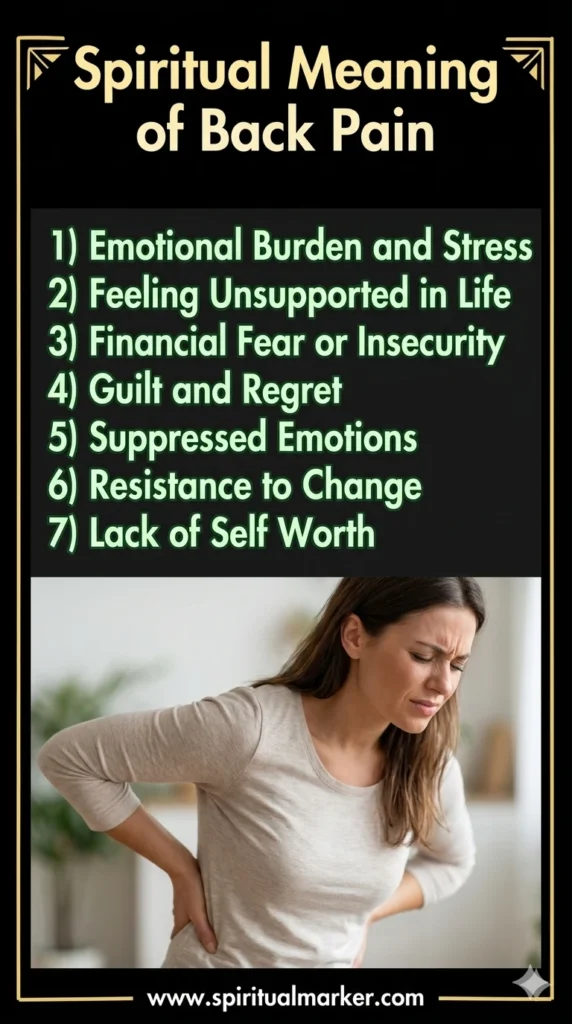
Back pain often carries spiritual interpretations linked to emotional and energetic blockages. These meanings stem from holistic traditions viewing the body as a map of unresolved inner states.
1) Emotional Burden and Stress
Back pain often begins where pressure builds quietly. You may not notice it at first. A tight shoulder. A dull ache after a long day. Yet, over time, emotional weight settles into the body, especially along the spine. When you carry too many worries, your muscles respond by tightening. This is not random. It is your body speaking in a language that does not use words.
As stress grows, the nervous system stays alert. Because of this, your body forgets how to relax. The back, which supports your entire structure, starts to absorb that tension. Slowly, pain becomes a physical reflection of everything you are holding inside. Not only work stress, but also relationship struggles and silent fears.
However, this pain can guide you. It invites you to pause. It asks you to release what feels too heavy. When you begin to process emotions, the body responds. Breathing deeply, slowing down, and becoming aware of your thoughts can soften this burden. In time, the back no longer needs to carry what your mind refuses to face.
2) Feeling Unsupported in Life
There are moments when life feels unstable. You may feel alone even in a crowded room. During such times, the back often reacts. Spiritually, the back represents support. It holds you upright, just as support in life keeps you steady. When that support feels missing, discomfort begins to appear.
This pain is not only physical. It reflects a deeper emotional gap. You might feel that no one truly understands you. Or perhaps you feel overwhelmed by responsibilities without help. As a result, your body mirrors this lack of support through tension and stiffness.
Still, there is a deeper message here. The pain encourages you to rebuild trust. This can start within yourself. When you believe in your own strength, the feeling of support grows from inside. At the same time, opening up to others can create real connections. Gradually, as emotional support increases, the body begins to relax.
3) Financial Fear or Insecurity
Money worries can sit deeper than we expect. They do not stay in the mind alone. Instead, they travel into the body. Often, the lower back becomes the center of this tension. This area connects to your sense of safety and stability.
When you fear losing control over your finances, your body reacts as if survival is at risk. Because of this, the muscles tighten. The lower back becomes stiff, almost as if it is trying to protect you from falling. This reaction comes from a deep instinct tied to security.
Yet, this pain also invites a shift in thinking. When you focus only on fear, the body stays tense. However, when you begin to trust in your ability to manage and grow, that tension slowly fades. Practical steps, along with a calmer mindset, create balance. Over time, both your thoughts and your body feel more grounded.
4) Guilt and Regret
Guilt has a quiet but heavy presence. It does not always show on the surface. Instead, it hides in the subconscious. Even so, the body feels it. The back, especially, carries this emotional weight.
When you hold onto regret, your posture changes. You may lean forward slightly or feel a constant pull in your muscles. This happens because your body is responding to unresolved emotions. It is as if you are carrying a weight you cannot put down.
However, healing begins with acknowledgment. When you face what you regret, the burden starts to lift. Forgiveness plays a powerful role here. Not only forgiving others, but also yourself. As you release these emotions, the back relaxes. The body no longer needs to hold onto the past.
5) Suppressed Emotions
Not all emotions find their way out easily. Some stay hidden. Anger, sadness, and frustration often get pushed aside. Over time, these emotions do not disappear. Instead, they settle into the body.
The back becomes a storage space for these unspoken feelings. Muscles tighten. Movement feels restricted. This is the body’s way of expressing what the mind avoids. When emotions are blocked, energy flow becomes limited.
Still, there is a path to release. When you allow yourself to feel without judgment, the body responds. Talking, writing, or even deep breathing can help. As emotions move freely, the tension in the back begins to ease. Gradually, both body and mind regain flexibility.
6) Resistance to Change
Change can feel uncomfortable. Even when it is necessary, the mind often resists it. This resistance does not stay mental. It becomes physical. The back, which supports movement and progress, reacts strongly.
When you resist change, your body stiffens. The spine loses its natural flow. This creates pain that reflects inner rigidity. It is as if your body is saying that something needs to shift, yet you are holding on too tightly.
However, when you begin to accept change, everything starts to soften. Letting go does not mean losing control. Instead, it means allowing growth. As your mindset becomes more flexible, your body follows. The back regains its natural ease and movement.
7) Lack of Self Worth
Self worth shapes how you carry yourself, both emotionally and physically. When you feel unworthy, it shows in your posture. The back may feel weak or strained. This happens because your inner belief affects your physical strength.
When confidence is low, the body reflects it. You may feel unsupported even when help is available. The back, which should feel strong, begins to struggle. This creates discomfort that mirrors inner doubt.
Yet, this pain also offers insight. It reminds you to reconnect with your value. When you start to appreciate yourself, your posture improves. You stand taller. The back feels stronger. Over time, building self belief creates both emotional and physical support.
8) Over Responsibility
Taking care of others is important. However, carrying too much can become overwhelming. When you take on responsibilities beyond your limit, your back often pays the price.
This pain acts as a signal. It shows that you are carrying more than you should. Not only physical tasks, but also emotional burdens from others. The spine, which supports your body, becomes overloaded.
Still, balance is possible. When you learn to set boundaries, the pressure reduces. Sharing responsibilities does not make you weak. Instead, it creates space for rest and recovery. As you lighten your load, the back begins to feel relief.
9) Fear of Failure
Fear can be powerful. It can stop you from taking action. It can also settle into your body. Often, this fear gathers in the lower back, where stability and confidence should exist.
When you doubt your ability to succeed, your body reacts with tension. The lower back tightens as if preparing for a fall. This creates discomfort that reflects inner uncertainty.
However, shifting your perspective can change this pattern. When you see failure as part of growth, fear loses its grip. Confidence builds slowly. As your mindset becomes stronger, the body relaxes. The back no longer needs to hold onto that fear.
10) Energy Imbalance in the Body
The body is not only physical. It also carries energy. When this energy flows smoothly, you feel balanced. However, when it becomes blocked, discomfort appears. The back often becomes a key area where this imbalance shows.
Emotional experiences, especially painful ones, can disrupt energy flow. These experiences stay stored in the body. Over time, they create tension along the spine. This leads to persistent pain that feels difficult to explain.
Even so, restoring balance is possible. Gentle movement, deep breathing, and mindful awareness help energy flow again. As balance returns, the body begins to heal. The back feels lighter, more open, and more aligned with your inner state.
Spiritual Meaning of Lower Back Pain
Lower back pain often connects to your foundation and sense of safety. This area relates closely to survival needs like money, home, and stability. When these areas feel uncertain, your body may respond with tension in the lower back.
For example, financial stress can create constant worry. That worry may not always feel intense, yet it stays in the background. Over time, it builds pressure. Your lower back absorbs that pressure like a silent sponge.
Another strong connection lies in control and fear. When you feel out of control in life, your body reacts. You may hold tension without realizing it. That tension tightens muscles and reduces flexibility, both physically and emotionally.
In addition, lower back pain can reflect lack of support. If you feel alone in handling responsibilities, your body mirrors that feeling. It signals that you need help, rest, or reassurance.
Healing begins when you address both the physical and emotional layers. Ask yourself simple questions. Do you feel secure? Do you trust your path? Even small awareness can create powerful shifts.
Spiritual Meaning of Mid-Back Pain
Mid-back pain often sits at the center of emotional experience. This area connects closely to the heart and emotional balance. When emotions remain unexpressed, they tend to settle here.
One common cause is guilt. Many people carry guilt without noticing it. It may come from past actions, missed chances, or unresolved conflicts. That emotional weight can quietly turn into physical discomfort.
Another strong factor is emotional pain from relationships. Hurt, betrayal, or disappointment can stay stored in the mid-back. You may move on mentally, yet your body remembers the experience.
Also, mid-back pain may signal difficulty letting go. When you hold onto past experiences, your energy flow becomes restricted. This restriction may appear as stiffness or discomfort.
Interestingly, this area also links to self-love. If you struggle with accepting yourself, tension can build. Your body asks you to release judgment and practice compassion.
As you explore this pain, focus on emotional release. Writing, talking, or even quiet reflection can help. Your body often responds quickly when emotions find a safe outlet.
Spiritual Meaning of Upper Back Pain
Upper back pain usually connects to support, love, and emotional pressure. This area reflects how supported you feel in life.
When you feel unappreciated, your upper back may tighten. You may give a lot to others yet receive little in return. That imbalance creates stress, which the body holds near the shoulders and upper spine.
Another common link is emotional overload. If you carry others’ problems, your body reacts. You may feel responsible for everything, even things beyond your control. Over time, this leads to pain.
Upper back pain can also point to closed-off emotions. When you struggle to express love or accept it, energy flow becomes restricted. This restriction creates tension in the upper body.
Interestingly, posture plays a symbolic role here. Slouching often reflects emotional heaviness. Standing tall reflects confidence and openness. Your body posture can mirror your emotional state.
To heal, focus on balance. Give, but also receive. Support others, yet allow yourself to be supported too.
Spiritual Lessons Your Back Pain May Be Teaching You
Back pain often carries lessons, even if they feel uncomfortable at first. One important lesson is learning to release control. You cannot carry everything alone.
Another lesson involves setting boundaries. When you take on too much, your body reacts. Pain reminds you to pause and reassess your limits.
It also teaches self-awareness. You begin to notice patterns. You see how stress affects your body. This awareness helps you make better choices.
In many cases, back pain encourages emotional honesty. Instead of hiding feelings, you learn to face them. This process may feel challenging, yet it brings relief.
Finally, it teaches balance. Life works best when effort and rest exist together. Your body pushes you toward that balance through discomfort.
Cultural and Religious Interpretations of Back Pain
Different cultures view back pain through unique spiritual lenses. Yet many share similar themes.
In Ayurvedic philosophy, back pain often relates to imbalance in energy, especially Vata. When energy becomes unstable, it affects movement and the nervous system.
In Traditional Chinese Medicine, the back connects to kidney energy. Weakness in this energy may lead to fear and fatigue, which can show as lower back pain.
Many Buddhist teachings view physical pain as a reflection of attachment and resistance. When you resist reality, your body may respond with tension.
In Christian thought, burdens often symbolize emotional or spiritual struggles. Carrying heavy loads may represent guilt or lack of faith.
Some indigenous traditions see back pain as a sign of disconnection from community or nature. When support systems weaken, the body expresses it.
In yogic philosophy, the spine acts as an energy channel. Blocked chakras can lead to discomfort in specific areas of the back.
Practical Spiritual Practices to Heal Back Pain Naturally
Healing back pain requires a gentle and consistent approach. Start with mindful breathing. Deep breathing calms the nervous system and releases tension. Even five minutes can make a difference.
Next, try meditation. It helps you observe thoughts without judgment. Over time, it reduces emotional stress stored in the body.
Energy healing practices such as Reiki or chakra balancing can also help. They aim to restore energy flow and reduce blockages.
Movement plays a key role too. Gentle yoga or stretching keeps the spine flexible. It also helps release stored emotions.
You may also benefit from journaling. Writing down thoughts can uncover hidden stress. Once you see it clearly, it becomes easier to release.
Affirmations can shift your mindset. Simple phrases like “I am supported” or “I release all burdens” can create subtle yet powerful changes.
Finally, focus on rest. Your body heals when you allow it to slow down. Sleep, relaxation, and quiet moments matter more than you think.
Final Thoughts
Back pain may begin as a physical issue, yet it often carries deeper meaning. It reflects stress, emotions, and life pressures that build over time. When you listen carefully, your body reveals what needs attention.
Exploring the spiritual meaning of lower, mid, and upper back pain adds another layer of understanding. It does not replace medical care, but it complements it. Together, they create a more complete path to healing.
Your body speaks in subtle ways. Pain is one of its strongest messages. When you respond with awareness, patience, and care, healing becomes more than possible. It becomes a journey of growth.
You Might Also Like
1) Spiritual Meaning of Head Itching (Different Areas)
2) Left & Right Eye Spiritual Meaning: Signs and Symbolism
3) Spiritual Meaning of Foot Pain: Right and Left
4) Spiritual Meaning of Painting Or Picture Falling Off the Wall
5) Spiritual Meaning of Ear Pain and Superstition: Right & Left
References
- https://www.houstonphysicianshospital.com/exploring-the-correlation-between-stress-and-back-pain/
- https://www.spaenergieforme.com/en/post/emotional-weight-the-influence-of-mood-on-back-pain-and-muscle-tension
- https://jeannenangle.com/spiritual-meaning-of-back-pain
- https://www.indiatoday.in/amp/health/story/hidden-link-between-stress-and-back-pain-how-emotional-strain-shows-up-in-the-body-2849371-2026-01-12
- https://www.yourtango.com/self/back-pain-spiritual-meanings
- https://intermountainhealthcare.org/blogs/article/help-treat-the-emotional-toll-of-back-pain
- https://www.healthline.com/health/stress/can-stress-cause-back-pain
- https://elementalnest.com/lower-back-pain-spiritual-meaning/